Kirjojen hintavertailu. Mukana 11 717 486 kirjaa ja 12 kauppaa.

Kirjahaku

Etsi kirjoja tekijän nimen, kirjan nimen tai ISBN:n perusteella.

32 kirjaa tekijältä Marina Warner

Sanctuary

Sanctuary

Marina Warner

HARPERCOLLINS PUBLISHERS
2025
sidottu
This is a book about sanctuary: what it means for people in desperate situations today, and what refuge and displacement has meant for people throughout history, and the canons of literature and myth.
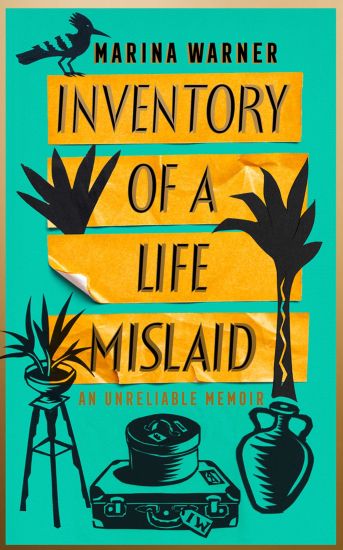
Inventory of a Life Mislaid

Inventory of a Life Mislaid

Marina Warner

HARPERCOLLINS PUBLISHERS
2021
sidottu
A luminous memoir of post-war childhood, adventure and loss on the banks of the Nile. ââ?¬Ë?Wonderful ââ?¬â?? a brave, inventive, touching distillation of memory and imaginationââ?¬â?¢ JENNY UGLOW
Dragon Empress

Dragon Empress

Marina Warner

Vintage Publishing
1993
pokkari
From 1861 to 1908 a woman, the Empress Dowager Tz'u-hsi, born the daughter of a minor mandarin, held the supreme power in China. THE DRAGON EMPRESS also portrays a China in rapid decline as poverty, civil war and foreign exploitation and invasion brought about the fall of the Ch'ing dynasty.
Leto Bundle

Leto Bundle

Marina Warner

Vintage Publishing
2002
pokkari
When a mummy in the Museum of Albion is unpacked it is found to contain a bundle of curious objects and documents which tell of the wanderings of an unknown woman, Leto.
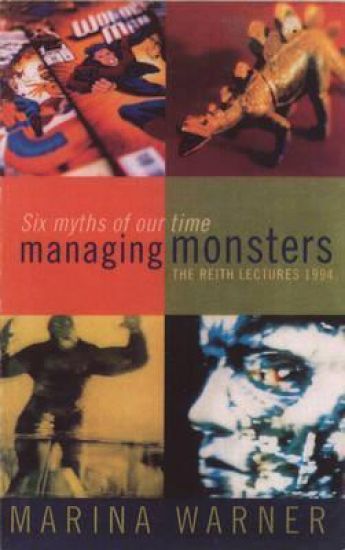
Managing Monsters

Managing Monsters

Marina Warner

Vintage
1994
pokkari
Marina Warner's 1994 Reith Lectures, in which she offered a definition of myth and its many contemporary faces, exploring the monster, children, mothers, strangers, and the idea of home.
SignsWonders

SignsWonders

Marina Warner

Vintage
2004
pokkari
Since the early 1970s, Marina Warner has been one of the most challenging, subtle and profound commentators on the culture of past and present, unravelling our webs of images, ideas and beliefs, and making new and provocative connections.
Wonder Tales

Wonder Tales

Marina Warner

Vintage Publishing
2010
pokkari
Marina Warner has gathered together a magical collection of fairy tales by the great women storytellers of the 17th and 18th centuries. These are passionate, extraordinary, and occasionally proto-feminist retellings of classic fairy stories by women who ingeniously used the fairy tale genre to comment on their own times and experiences.
Monuments And Maidens

Monuments And Maidens

Marina Warner

Vintage
1996
pokkari
As her book shows, these stony ladies can be persuaded to yield surprisingly interesting answers' - Lorna Sage, ObserverAn entertaining and enlightening book about the relationship between allegory and female form from one of the great feminists and cultural historians of our time, Marina Warner.
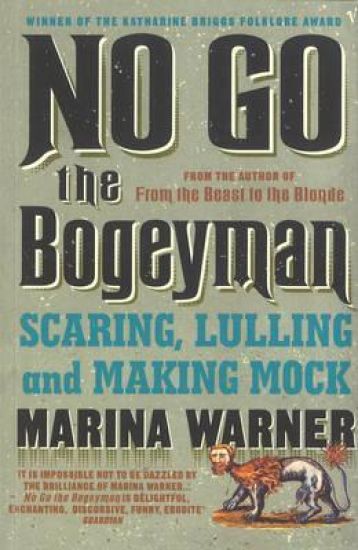
No Go the Bogeyman

No Go the Bogeyman

Marina Warner

Vintage
2000
pokkari
Ogres, giants and bogeymen embody some of our deepest fears, dominating popular storytelling in various media, from classic fairy tales such as 'Puss in Boots' to the cannibal monster Hannibal Lecter, and from Frankenstein to Men in Black.
Lost Father

Lost Father

Marina Warner

Vintage Publishing
1998
pokkari
Like Visconti's film The Leopard, this magnificent novel paints in sensuous colours the story of a family. It brings to new life the ancient disparaged south of the Italian peninsula, weakened by emigration, silenced by fascism. According to family legend, David Pittagora died as a result of a duel.
Alone of All Her Sex

Alone of All Her Sex

Marina Warner

Oxford University Press
2016
nidottu
This unique study of the cult of the Virgin Mary offers a way of thinking about the interrelations of Catholicism and ideas of ideal femininity over the longue duree. An ambitious history of the changing symbolism of the Mother of God, Alone of All Her Sex holds up to the light different emphases occurring at different times, and highlights that the apparent archetype of a magna mater is constantly in play with social and historical conditions and values. Marina Warner's interesting perspective was forged in the aftermath of significant postwar developments in history, anthropology, and feminism and the book inspired fierce debates when it was first published in 1976. Alone of All Her Sex is also an emotive, personal statement, arising from Warner's own upbringing as a Catholic. It picks up on classic accounts such as Mary MacCarthy's Memoirs of a Catholic Girlhood and Antonia White's Frost in May, as well as the author's own experiences at a Catholic boarding school. Highly controversial in conservative quarters, the book's arguments were welcomed and recognised by many readers who shared Warner's experiences. In this new edition, Marina Warner has written a new preface which reviews the book in the light of the current debate about secularism, faith, nations, and social identities. She takes issue with her original mistaken conclusion that the modern age would see the cult of Mary fade away and revises it in the light of recent popes' enthusiasm for the Mother of God, a fresh wave of visions and revelations, a new generation of female saints, and the reorientation of theological approaches to the woman question.
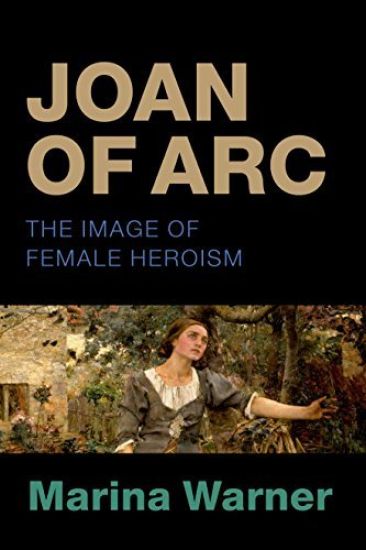
Joan of Arc

Joan of Arc

Marina Warner

Oxford University Press
2016
nidottu
The fame of Joan of Arc began in her lifetime and, though it has dipped a little now and then, she has never vanished from view. Her image acts as a seismograph for the shifts and settlings of personal and political ideals: Joan of Arc is the heroine every movement has wanted as their figurehead. In France, anti-semitic, xenophobic, extreme right parties have claimed her since the Action Francaise in the 19th century. By contrast, Socialists, feminists, and liberal Catholics rallied to her as the champion of the dispossessed and the wrongly accused. Joan of Arc has also played a crucial role in changing visions of female heroism. She has proved an inexhaustible source of inspiration for writers, playwrights, film-makers, performers, and composers. In a single, brief life, several of the essential mythopoiec characteristics that throughout history have defined the charismatic leader and saint are powerfully and intensely condensed. Even while Joan of Arc was still alive, but far more so after her death, the heroic part of her story sparked narratives of all kinds, in pictures, ballads, plays, and also satires. This was only heightened in 1841-9 by the publication of the Inquisition trial which had examined Joan for witchcraft and heresy. The transcript of the interrogations gives us the voice of this young woman across the centuries with almost unbearable immediacy; her spirit leaps from the page, uncompromising in its frankness, good sense, courage, and often breathtaking in its simple effectiveness. Joan of Arc into one of the most fully and vividly present personalities in history, about whom a great more is known, in her own words and at first hand, than is, for example, about Shakespeare. However, this has not stopped the flow of fictions and fantasies about her. Marina Warner analyses the symbolism of the Maid in her own time and in her rich afterlife in popular culture. The cultural expressions are part of an ongoing historical struggle to own the symbol - you could say, the brand. In a new preface to her study, Marina Warner takes stock of the continuing contention, in politics and culture, for this powerful symbol of virtue. Joan of Arc's multiple resurrections and transformations show how vigorous the need for figures like her remains, and how crucial it is to meet that need with thoughtfulness. She argues that abandoning the search to identify heroes and define them, out of a kind of high-minded distaste for propaganda, lets dangerous political factions manipulate them to their own ends. When Marine Le Pen calls on Joan of Arc's name, she needs to be confronted about her bad faith and her abuse of history.
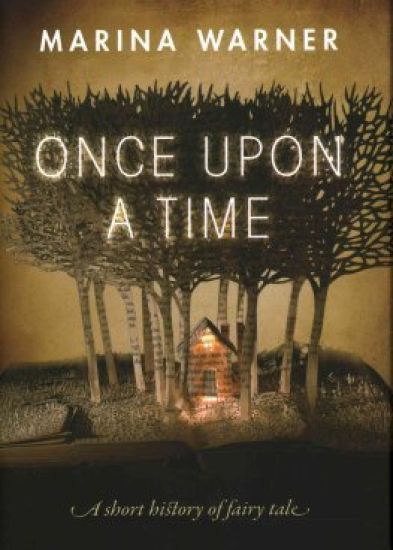
Once Upon a Time

Once Upon a Time

Marina Warner

Oxford University Press
2016
nidottu
From wicked queens, beautiful princesses, elves, monsters, and goblins to giants, glass slippers, poisoned apples, magic keys, and mirrors, the characters and images of fairy tales have cast a spell over readers and audiences, both adults and children, for centuries. These fantastic stories have travelled across cultural borders, and been passed on from generation to generation, ever-changing, renewed with each re-telling. Few forms of literature have greater power to enchant us and rekindle our imagination than a fairy tale. But what is a fairy tale? Where do they come from and what do they mean? What do they try and communicate to us about morality, sexuality, and society? The range of fairy tales stretches across great distances and time; their history is entangled with folklore and myth, and their inspiration draws on ideas about nature and the supernatural, imagination and fantasy, psychoanalysis, and feminism. Marina Warner has loved fairy tales over a long writing life, and she explores here a multitude of tales through the ages, their different manifestations on the page, the stage, and the screen. From the phenomenal rise of Victorian and Edwardian literature to contemporary children's stories, Warner unfolds a glittering array of examples, from classics such as Red Riding Hood, Cinderella, and The Sleeping Beauty, the Grimm Brothers' Hansel and Gretel, and Hans Andersen's The Little Mermaid, to modern-day realizations including Walt Disney's Snow White and gothic interpretations such as Pan's Labyrinth. In ten succinct chapters, Marina Warner digs into a rich hoard of fairy tales in their brilliant and fantastical variations, in order to define a genre and evaluate a literary form that keeps shifting through time and history. Her book makes a persuasive case for fairy tale as a crucial repository of human understanding and culture.
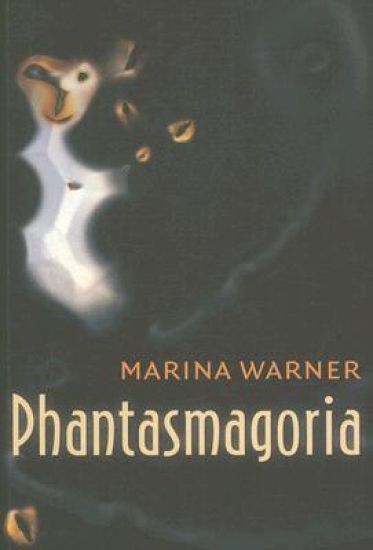
Phantasmagoria

Phantasmagoria

Marina Warner

Oxford University Press
2008
nidottu
Phantasmagoria explores ideas of spirit and soul since the Enlightenment; it traces metaphors that have traditionally conveyed the presence of immaterial forces, and reveals how such pagan and Christian imagery about ethereal beings is embedded in a logic of the imagination, clothing spirits in the languages of air, clouds, light and shadow, glass, and ether itself. Moving from Wax to Film, the book discusses key questions of imagination and cognition, and probes the perceived distinctions between fantasy and deception; it uncovers a host of spirit forms -- angels, ghosts, fairies, revenants, and zombies -- that are still actively present in contemporary culture. It reveals how their transformations over time illuminate changing idea about the self. Phantasmagoria also tells the accompanying story about the means used to communicate such ideas, and relates how the new technologies of the Victorian era were applied to figuring the invisible and the impalpable, and how magic lanterns (the phantasmagoria shows themselves), radio, photography and then moving pictures spread ideas about spirit forces. As the story unfolds, the book features many eminent scientists and philosophers who applied their considerable energies to the question of other worlds and other states of mind: they staged trance séances in which mediums produced spirit phenomena, including ectoplasm. Phantasmagoria shows how this often surprising story connects with some of the important scientific discoveries of a fertile age, in psychology and physics, and continues to influence contemporary experience.
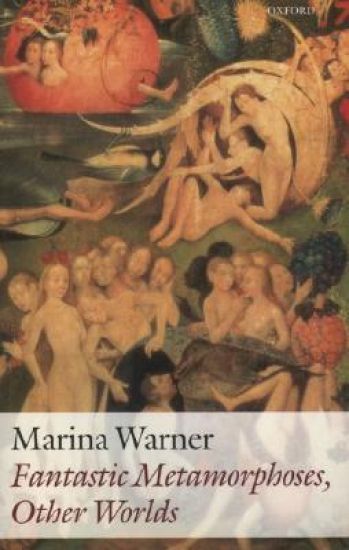
Fantastic Metamorphoses, Other Worlds

Fantastic Metamorphoses, Other Worlds

Marina Warner

Oxford University Press
2004
nidottu
Metamorphosis is a dynamic principle of creation, vital to natural processes of generation and evolution, growth and decay, yet it also threatens personal identity if human beings are subject to a continual process of bodily transformation. Shape-shifting also belongs in the landscape of magic, witchcraft, and wonder, and enlivens classical mythology, early modern fairy tales and uncanny fictions of the nineteenth and twentieth centuries. This collection of essays, given as the Clarendon Lectures in English 2001, takes four dominant processes of metamorphosis: Mutating, Hatching, Splitting, and Doubling, and explores their metaphorical power in the evication of human personality. Marina Warner traces this story against a background of historical encounters with different cultures, especially with the Caribbean. Beginning with Ovid's great poem, The Metamorphoses, as the founding text of the metamorphic tradition, she takes us on a journey of exploration, into the fantastic art of Hieronymous Bosch, the legends of the Taino people, the life cycle of the butterfly, the myth of Leda and the Swan, the genealogy of the Zombie, the pantomime of Aladdin, the haunting of doppelgangers, the coming of photography, and the late fiction of Lewis Carroll.
Fairy Tale

Fairy Tale

Marina Warner

Oxford University Press
2018
nidottu
From wicked queens, beautiful princesses, elves, monsters, and goblins, to giants, glass slippers, poisoned apples, magic keys, and mirrors, the characters and images of fairy tales have cast a spell over readers and audiences, both adults and children, for centuries. These fantastic stories have travelled across cultural borders, and been passed on from generation to generation, ever-changing, renewed with each re-telling. Few forms of literature have greater power to enchant us and rekindle our imagination than a fairy tale. But what is a fairy tale? Where do they come from and what do they mean? What do they try and communicate to us about morality, sexuality, and society? The range of fairy tales stretches across great distances and time; their history is entangled with folklore and myth, and their inspiration draws on ideas about nature and the supernatural, imagination and fantasy, psychoanalysis, and feminism. In this Very Short Introduction, Marina Warner digs into a rich hoard of fairy tales in all their brilliant and fantastical variations, in order to define a genre and evaluate a literary form that keeps shifting through time and history. Drawing on a glittering array of examples, from classics such as Red Riding Hood, Cinderella, and The Sleeping Beauty, the Grimm Brothers' Hansel and Gretel, and Hans Andersen's The Little Mermaid, to modern-day realizations including Walt Disney's Snow White, Warner forms a persuasive case for fairy tale as a crucial repository of human understanding and culture. ABOUT THE SERIES: The Very Short Introductions series from Oxford University Press contains hundreds of titles in almost every subject area. These pocket-sized books are the perfect way to get ahead in a new subject quickly. Our expert authors combine facts, analysis, perspective, new ideas, and enthusiasm to make interesting and challenging topics highly readable.