Kirjojen hintavertailu. Mukana 11 244 527 kirjaa ja 12 kauppaa.

Kirjahaku

Etsi kirjoja tekijän nimen, kirjan nimen tai ISBN:n perusteella.

7 kirjaa tekijältä Mario Barrera

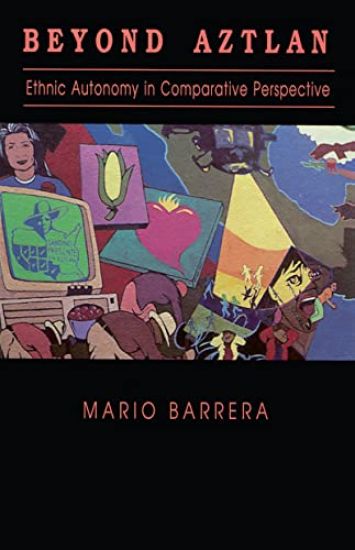
Beyond Aztlan

Beyond Aztlan

Mario Barrera

University of Notre Dame Press
1990
nidottu
**Does achieving equality in a multiethnic society require the complete loss of a minority's cultural identity? ** Mario Barrera strives to answer that question with full historical context in his provocative book Beyond Aztlan. Barrera identifies the goals of the Mexican American population at large—community and equality—and lays out the complicated history of achieving these goals throughout the 20th century. As focus has shifted to equality over community, the Mexican American cultural identity has fragmented and begun to erode. Barrera explores varied trends, such as the revival of community identity during the Chicano Movement, as well as cultural fragmentation and radicalization. To fully understand and answer the question of economic equality over cultural identity, Barrera looks at minorities in four other countries to compare to the United States: Canada, China, Switzerland, and Nicaragua. He argues that while equality is not easy to attain and even harder to hold onto, a group can still preserve cultural identity while being treated as equals.
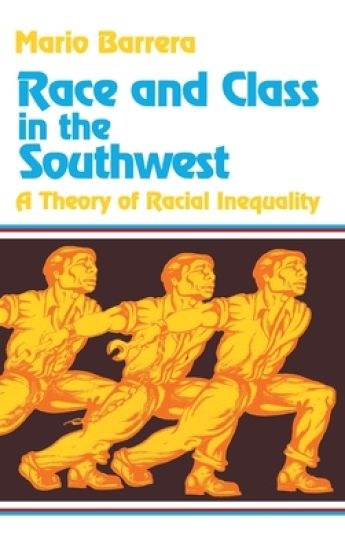
Race and Class in the Southwest

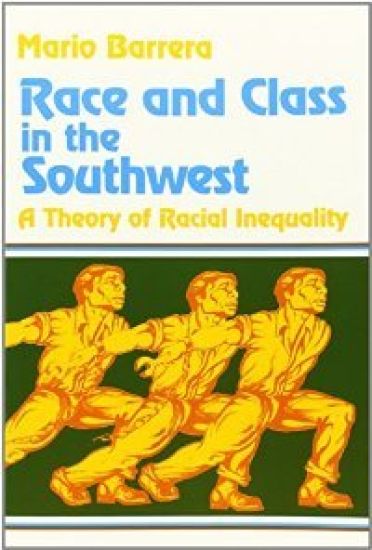
Race and Class in the Southwest

Mario Barrera

University of Notre Dame Press
1989
nidottu
Focusing on the economic foundations of inequality as they have affected Chicanos in the Southwest from the Mexican-American War to the present, Mario Barrera develops his theory as a synthesis of class and colonial analyses.
Beyond Aztlan

Beyond Aztlan

Mario Barrera

University of Notre Dame Press
1990
sidottu
**Does achieving equality in a multiethnic society require the complete loss of a minority's cultural identity? ** Mario Barrera strives to answer that question with full historical context in his provocative book Beyond Aztlan. Barrera identifies the goals of the Mexican American population at large—community and equality—and lays out the complicated history of achieving these goals throughout the 20th century. As focus has shifted to equality over community, the Mexican American cultural identity has fragmented and begun to erode. Barrera explores varied trends, such as the revival of community identity during the Chicano Movement, as well as cultural fragmentation and radicalization. To fully understand and answer the question of economic equality over cultural identity, Barrera looks at minorities in four other countries to compare to the United States: Canada, China, Switzerland, and Nicaragua. He argues that while equality is not easy to attain and even harder to hold onto, a group can still preserve cultural identity while being treated as equals.
Race and Class in the Southwest

Race and Class in the Southwest

Mario Barrera

University of Notre Dame Press
1979
sidottu
Focusing on the economic foundations of inequality as they have affected Chicanos in the Southwest from the Mexican-American War to the present, Mario Barrera develops his theory as a synthesis of class and colonial analyses.
Beyond Aztlan

Beyond Aztlan

Mario Barrera

Praeger Publishers Inc
1988
sidottu
Does the achievement of economic equality in a multiethnic society require the complete loss of a minority's cultural identity? Beyond Aztlan argues that American society has historically viewed a distinctive cultural identity as something that an ethnic group gives up in order to achieve economic and political parity. Mexican Americans, who have scored limited gains in their struggle for equality since the 1940s, are proving to be no exception to the rule. However, Barrera compares the situation of Mexican Americans to that of minority groups in four other countries and concludes that equality does not necessarily require assimilation.
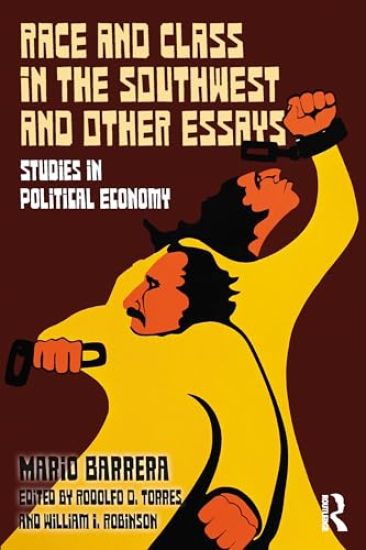
Race and Class in the Southwest and Other Essays
In Race and Class in the Southwest and Other Essays, Mario Barrera puts forth his seminal theory of racial inequality based on a synthesis of class and colonial analysis together with several essays and selections from Barrera’s memoir that show how his thinking developed throughout his work.Reprinted here for the first time after becoming a modern classic of Chicano studies, Race and Class in the Southwest focuses on the economic foundations of inequality as they have affected Chicanos in the Southwest from the Mexican-American War to the present. Barrera reviews the economic history of Chicanos, their relegation to a subordinate position in the labor force segmented along racial lines, their displacement from the land, the effects of waves of immigration from Mexico, the role of an emerging Chicano middle class, and state policies designed to reproduce the subordinate status of Chicanos. He reviews competing theories of racial inequality and concludes that an “internal colonialism” model that focuses on the institutional subordination of Chicanos offers the greatest explanatory value for understanding the political economy of Chicanos in the Southwest.The Editors, Rodolfo Torres and William I. Robinson, provide both an important historical and contextual introduction to the work, as well as thorough annotation that brings the scholarship into contemporary conversation with further theoretical development and highlights Barrera's significant contribution to recent and new debates that reflect his legacy at a time of rising social inequalities, political conflict and mass migration into the United States from Latin America.
Race and Class in the Southwest and Other Essays
In Race and Class in the Southwest and Other Essays, Mario Barrera puts forth his seminal theory of racial inequality based on a synthesis of class and colonial analysis together with several essays and selections from Barrera’s memoir that show how his thinking developed throughout his work.Reprinted here for the first time after becoming a modern classic of Chicano studies, Race and Class in the Southwest focuses on the economic foundations of inequality as they have affected Chicanos in the Southwest from the Mexican-American War to the present. Barrera reviews the economic history of Chicanos, their relegation to a subordinate position in the labor force segmented along racial lines, their displacement from the land, the effects of waves of immigration from Mexico, the role of an emerging Chicano middle class, and state policies designed to reproduce the subordinate status of Chicanos. He reviews competing theories of racial inequality and concludes that an “internal colonialism” model that focuses on the institutional subordination of Chicanos offers the greatest explanatory value for understanding the political economy of Chicanos in the Southwest.The Editors, Rodolfo Torres and William I. Robinson, provide both an important historical and contextual introduction to the work, as well as thorough annotation that brings the scholarship into contemporary conversation with further theoretical development and highlights Barrera's significant contribution to recent and new debates that reflect his legacy at a time of rising social inequalities, political conflict and mass migration into the United States from Latin America.