Kirjojen hintavertailu. Mukana 11 244 527 kirjaa ja 12 kauppaa.

Kirjahaku

Etsi kirjoja tekijän nimen, kirjan nimen tai ISBN:n perusteella.

7 kirjaa tekijältä Mario DiGangi

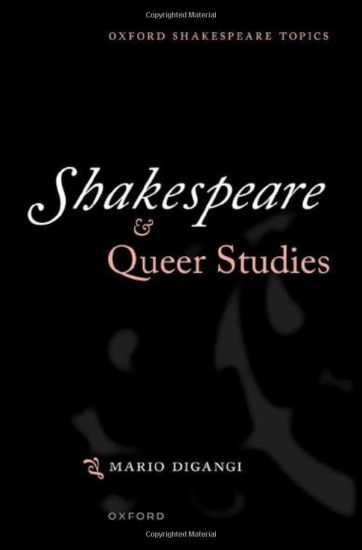
Shakespeare and Queer Studies

Shakespeare and Queer Studies

Mario DiGangi

Oxford University Press
2025
sidottu
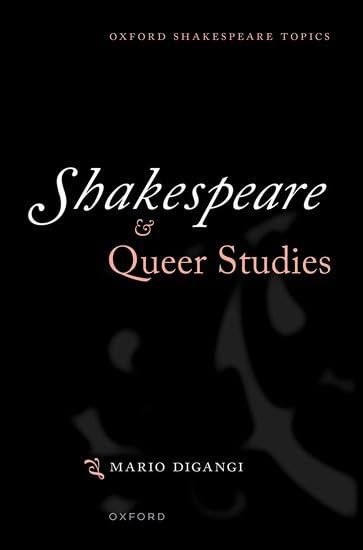
Shakespeare and Queer Studies offers an accessible, comprehensive, and non-polemical account of queer approaches to Shakespeare's plays and poems. Addressing the strategies and stakes of different modes of queer critique, it encourages readers to develop their own interpretive strategies for reading sexuality and gender in Shakespeare. Mario DiGangi demonstrates how concepts such as queer temporality, reproductive futurism, and intersectionality can provide new ways of understanding same-sex relations in Shakespeare. At the same time, it avoids some of the ethical and intellectual pitfalls of an insufficiently capacious queer critical practice by examining the social and political power dynamics of same-sex relationships. Critiques of queer studies from the perspectives of critical race studies, trans studies, and asexuality studies have stressed the limitations of “homonormative” or otherwise exclusionary queer approaches. Shakespeare and Queer Studies argues that the full potential of queer as an analytic for the sexually non-normative in Shakespeare can be realized only when we acknowledge the importance of intersecting axes of embodied difference (such as size, species, race, or ability); non-dyadic, non-monogamous, and promiscuous relationships; embodied transgender experiences; the asexual or celibate rejection of marriage and compulsory sexuality; and the multiplicity of sexual acts and erotic pleasures that have no socially ameliorative or reproductive function. By devoting significant attention to all of these issues, Shakespeare and Queer Studies offers new insights into the queerness of erotic experience in Shakespeare's plays and poems.
Shakespeare and Queer Studies

Shakespeare and Queer Studies

Mario DiGangi

Oxford University Press
2025
nidottu
Shakespeare and Queer Studies offers an accessible, comprehensive, and non-polemical account of queer approaches to Shakespeare's plays and poems. Addressing the strategies and stakes of different modes of queer critique, it encourages readers to develop their own interpretive strategies for reading sexuality and gender in Shakespeare. Mario DiGangi demonstrates how concepts such as queer temporality, reproductive futurism, and intersectionality can provide new ways of understanding same-sex relations in Shakespeare. At the same time, it avoids some of the ethical and intellectual pitfalls of an insufficiently capacious queer critical practice by examining the social and political power dynamics of same-sex relationships. Critiques of queer studies from the perspectives of critical race studies, trans studies, and asexuality studies have stressed the limitations of “homonormative” or otherwise exclusionary queer approaches. Shakespeare and Queer Studies argues that the full potential of queer as an analytic for the sexually non-normative in Shakespeare can be realized only when we acknowledge the importance of intersecting axes of embodied difference (such as size, species, race, or ability); non-dyadic, non-monogamous, and promiscuous relationships; embodied transgender experiences; the asexual or celibate rejection of marriage and compulsory sexuality; and the multiplicity of sexual acts and erotic pleasures that have no socially ameliorative or reproductive function. By devoting significant attention to all of these issues, Shakespeare and Queer Studies offers new insights into the queerness of erotic experience in Shakespeare's plays and poems.
The Homoerotics of Early Modern Drama

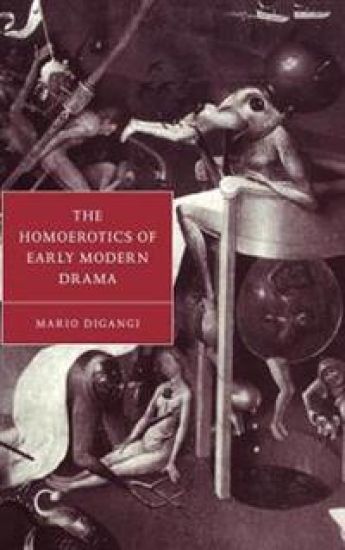
The Homoerotics of Early Modern Drama

Mario DiGangi

Cambridge University Press
1997
sidottu
This book is the first comprehensive account of homoeroticism in Renaissance drama. Mario DiGangi analyses the relation between homoeroticism and social power in a wide range of literary and historical texts from the 1580s to the 1620s, drawing on the insights of materialist, feminist and queer theory. Each chapter focuses on the homoerotics of a major dramatic genre (Ovidian comedy, satiric comedy, tragedy and tragicomedy) and studies the ideologies and institutions it characteristically explores. DiGangi examines distinctions between orderly and disorderly forms of homoerotic practice in both canonical and unfamiliar texts. In these readings, the various proliferating forms of homoeroticism are indentified in relation to sodomy, against which there were cultural and legal prohibitions in the period. DiGangi's study illuminates, through a diverse range of plays, the centrality of homoerotic practices to household, court and city life in early modern England.
The Homoerotics of Early Modern Drama

The Homoerotics of Early Modern Drama

Mario DiGangi

Cambridge University Press
1997
pokkari
This book is the first comprehensive account of homoeroticism in Renaissance drama. Mario DiGangi analyses the relation between homoeroticism and social power in a wide range of literary and historical texts from the 1580s to the 1620s, drawing on the insights of materialist, feminist and queer theory. Each chapter focuses on the homoerotics of a major dramatic genre (Ovidian comedy, satiric comedy, tragedy and tragicomedy) and studies the ideologies and institutions it characteristically explores. DiGangi examines distinctions between orderly and disorderly forms of homoerotic practice in both canonical and unfamiliar texts. In these readings, the various proliferating forms of homoeroticism are indentified in relation to sodomy, against which there were cultural and legal prohibitions in the period. DiGangi's study illuminates, through a diverse range of plays, the centrality of homoerotic practices to household, court and city life in early modern England.
Sexual Types

Sexual Types

Mario DiGangi

University of Pennsylvania Press
2011
sidottu
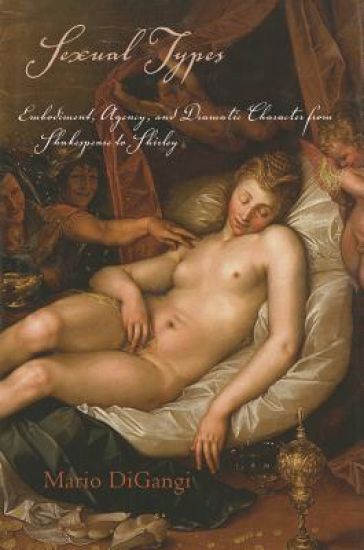
Sexual types on the early modern stage are at once strange and familiar, associated with a range of "unnatural" or "monstrous" sexual and gender practices, yet familiar because readily identifiable as types: recognizable figures of literary imagination and social fantasy. From the many found in early modern culture, Mario DiGangi here focuses on six types that reveal in particularly compelling ways, both individually and collectively, how sexual transgressions were understood to intersect with social, gender, economic, and political transgressions. Building on feminist and queer scholarship, Sexual Types demonstrates how the sodomite, the tribade (a woman-loving woman), the narcissistic courtier, the citizen wife, the bawd, and the court favorite function as sites of ideological contradiction in dramatic texts. On the one hand, these sexual types are vilified and disciplined for violating social and sexual norms; on the other hand, they can take the form of dynamic, resourceful characters who expose the limitations of the categories that attempt to define and contain them. In bringing sexuality and character studies into conjunction with one another, Sexual Types provides illuminating new readings of familiar plays, such as Shakespeare's A Midsummer Night's Dream and The Winter's Tale, and of lesser-known plays by Fletcher, Middleton, and Shirley.
The Winter’s Tale: Language and Writing

The Winter’s Tale: Language and Writing

Mario DiGangi

BLOOMSBURY PUBLISHING PLC
2022
sidottu
Through expert guidance on understanding, interpreting, and writing about Shakespeare’s language, this book makes The Winter’s Tale accessible and exciting for students. It demonstrates that careful attention to Shakespeare’s complex dramatic language can clarify the structure and concerns of the play, as well as provide deep and satisfying engagement with the social, political and ethical questions Shakespeare raises. Each chapter features a 'Writing Matters' section designed to connect analysis of Shakespeare’s language to students’ development of their own writing strategies. The book examines topics in the play such as tragicomic genre; women’s assertion of social and political agency; obedience and resistance to rulers; the virtues and risks of following festivity, and disputes over the proper forms of religious devotion.
The Winter’s Tale: Language and Writing

The Winter’s Tale: Language and Writing

Mario DiGangi

BLOOMSBURY PUBLISHING PLC
2024
nidottu
Through expert guidance on understanding, interpreting, and writing about Shakespeare’s language, this book makes The Winter’s Tale accessible and exciting for students. It demonstrates that careful attention to Shakespeare’s complex dramatic language can clarify the structure and concerns of the play, as well as provide deep and satisfying engagement with the social, political and ethical questions Shakespeare raises. Each chapter features a 'Writing Matters' section designed to connect analysis of Shakespeare’s language to students’ development of their own writing strategies. The book examines topics in the play such as tragicomic genre; women’s assertion of social and political agency; obedience and resistance to rulers; the virtues and risks of following festivity, and disputes over the proper forms of religious devotion.