Kirjojen hintavertailu. Mukana 11 244 527 kirjaa ja 12 kauppaa.

Kirjahaku

Etsi kirjoja tekijän nimen, kirjan nimen tai ISBN:n perusteella.

7 kirjaa tekijältä Mario Erasmo

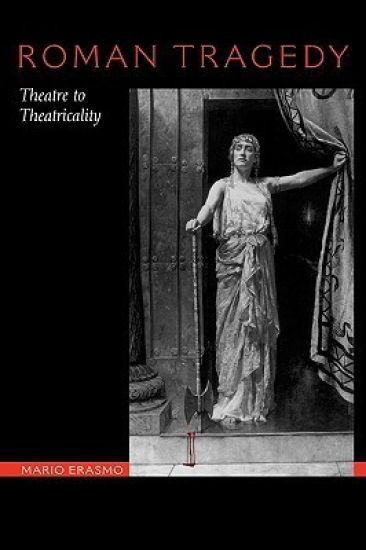
Roman Tragedy

Roman Tragedy

Mario Erasmo

University of Texas Press
2004
pokkari
Roman tragedies were written for over three hundred years, but only fragments remain of plays that predate the works of Seneca in the mid-first century C.E., making it difficult to define the role of tragedy in ancient Roman culture. Nevertheless, in this pioneering book, Mario Erasmo draws on all the available evidence to trace the evolution of Roman tragedy from the earliest tragedians to the dramatist Seneca and to explore the role played by Roman culture in shaping the perception of theatricality on and off the stage. Performing a philological analysis of texts informed by semiotic theory and audience reception, Erasmo pursues two main questions in this study: how does Roman tragedy become metatragedy, and how did off-stage theatricality come to compete with the theatre? Working chronologically, he looks at how plays began to incorporate a rhetoricized reality on stage, thus pointing to their own theatricality. And he shows how this theatricality, in turn, came to permeate society, so that real events such as the assassination of Julius Caesar took on theatrical overtones, while Pompey's theatre opening and the lavish spectacles of the emperor Nero deliberately blurred the lines between reality and theatre. Tragedy eventually declined as a force in Roman culture, Erasmo suggests, because off-stage reality became so theatrical that on-stage tragedy could no longer compete.
Reading Death in Ancient Rome

Reading Death in Ancient Rome

Mario Erasmo

Ohio State University Press
2020
pokkari
In Reading Death in Ancient Rome, Mario Erasmo considers both actual funerary rituals and their literary depictions in epic, elegy, epitaphs, drama, and prose works as a form of participatory theater in which the performers and the depicters of rituals engage in strategies to involve the viewer/reader in the ritual process, specifically by invoking and playing on their cultural associations at a number of levels simultaneously. He focuses on the associative reading process-the extent to which literary texts allude to funeral and burial ritual, the narrative role played by the allusion to recreate a fictive version of the ritual, and how the allusion engages readers' knowledge of the ritual or previous literary intertexts. Such a strategy can advance a range of authorial agendas by inviting readers to read and reread assumptions about both the surrounding Roman culture and earlier literature invoked through intertextual referencing. By (re)defining their relation to the dead, readers assume various roles in an ongoing communion with the departed. Reading Death in Ancient Rome makes an important and innovative contribution to semiotic theory as applied to classical texts and to the emerging field of mortality studies. It should thus appeal to classicists as well as to advanced undergraduate and graduate students in art history and archeology.
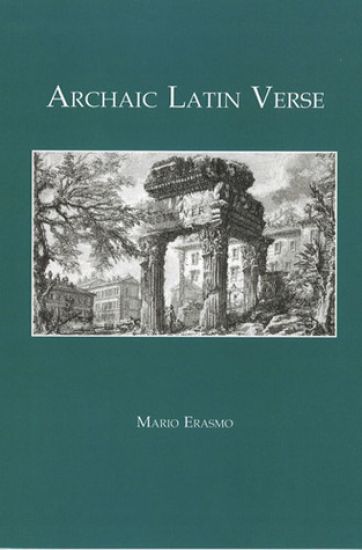
Archaic Latin Verse

Archaic Latin Verse

Mario Erasmo

Focus Publishing/R Pullins Co
2001
nidottu
Archaic Latin Verse offers commentary of the earliest surviving Latin work with selections from oral verse of Livius, Naevius, Ennius, Caecilius, Accius, Pacuvius, and Lucilius.
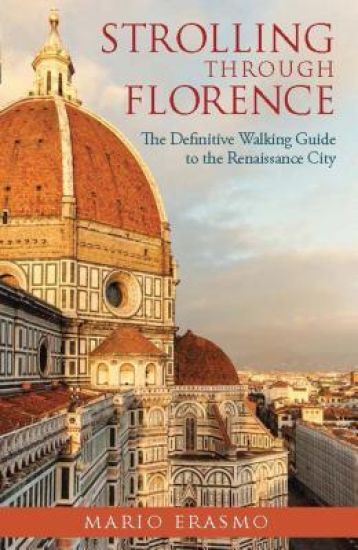
Strolling through Florence

Strolling through Florence

Mario Erasmo

I.B. Tauris
2017
nidottu
To walk through Florence is to step into one of the most remarkable histories of any European city. From its establishment by Julius Caesar in the first century BC, through its Golden Age at the epicentre of the Italian Renaissance, to its position as an iconic cultural destination in the twenty-first century, Florence is a small city that packs a lot of punch. This is the city of Dante and Boccaccio, Leonardo da Vinci and Michelangelo, the Medici, Botticelli, Donatello and the `Mad Monk' Savonarola. Their stories permeate every corner of Florence, but the city's contemporary scene is just as alluring, from cutting edge art and fashion to food. It is only by exploring Florence on foot that the visitor can truly experience everything the city has to offer.
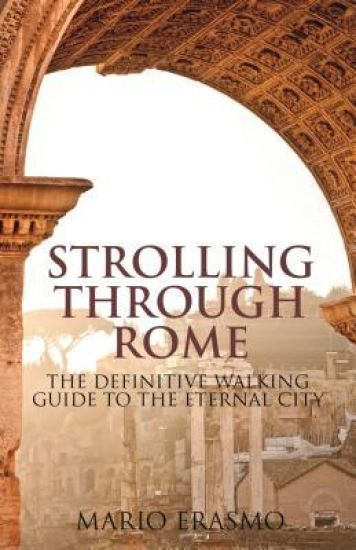
Strolling Through Rome

Strolling Through Rome

Mario Erasmo

Tauris Parke
2019
nidottu
A rich cultural history of Rome that brings its epic past alive, illuminating the extraordinary sights and fascinating secrets of one of Europe's most beguiling cities.Rome, the Eternal City - birthplace of western civilisation and soul of the ancient world - has a history that stretches back two thousand five hundred years. It is also one of the most-visited places in the world, but where does one begin to delve into two millennia of history, culture, art and architecture, whilst also navigating the vibrant modern city?Mario Erasmo guides the traveller through Rome's many layers of history, exploring the streets, museums, piazze, ruins and parks of this 'city of the soul'. Punctuated with anecdote, myth and legend, these unique walks often retrace the very steps taken by ancient Romans, early Christians, medieval pilgrims, Renaissance artists and aristocrats on the Grand Tour. Here is a rich cultural history of Rome that brings its epic past alive, illuminating the extraordinary sights and fascinating secrets of one of Europe's most beguiling cities.
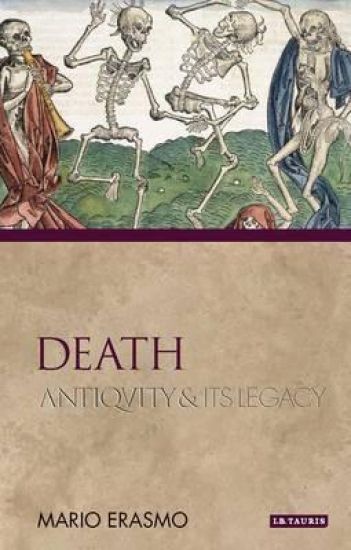
Death

Death

Mario Erasmo

I.B. Tauris
2012
sidottu
Personal and yet utterly universal, inevitable and yet unknowable, death has been a dominant theme in all cultures, since earliest times. Different societies address death and the act of dying in culturally diverse ways; yet, remarkably, across the span of several millennia, we can recognize in the customs of ancient Greece and Rome ceremonies and rituals that have enduring present-day resonance. For example, preparing the corpse of the deceased, holding a memorial service, the practice of cremation and of burial in 'resting places' are all liminal processes that can trace their origin to ancient practices. Such rites - described by Cicero and Herodotus, among others - have defined traditional modern funerals. Yet of late there has been a shift away from classical ritual and sombre memorialization as the dead are transformed into spectacles. Ad hoc roadside shrines, 'virtual' burials, online guest-books and even jazz memorial processions and firework displays have come to the fore as new modes of marking, even celebrating, bereavement. What is causing this change, and how do urbanisation, economic factors and the rise of individualism play a part? Mario Erasmo creatively explores the nexus between classical and contemporary approaches to dying, death and interment. From theme funerals in St Louis to Etruscan sarcophagi, he offers a rich and insightful discussion of finitude across the ages.
Death

Death

Mario Erasmo

I.B. Tauris
2012
nidottu
Personal and yet utterly universal, inevitable and yet unknowable, death has been a dominant theme in all cultures, since earliest times. Different societies address death and the act of dying in culturally diverse ways; yet, remarkably, across the span of several millennia, we can recognize in the customs of ancient Greece and Rome ceremonies and rituals that have enduring present-day resonance. For example, preparing the corpse of the deceased, holding a memorial service, the practice of cremation and of burial in 'resting places' are all liminal processes that can trace their origin to ancient practices. Such rites - described by Cicero and Herodotus, among others - have defined traditional modern funerals. Yet of late there has been a shift away from classical ritual and sombre memorialization as the dead are transformed into spectacles. Ad hoc roadside shrines, 'virtual' burials, online guest-books and even jazz memorial processions and firework displays have come to the fore as new modes of marking, even celebrating, bereavement. What is causing this change, and how do urbanisation, economic factors and the rise of individualism play a part? Mario Erasmo creatively explores the nexus between classical and contemporary approaches to dying, death and interment. From theme funerals in St Louis to Etruscan sarcophagi, he offers a rich and insightful discussion of finitude across the ages.