Kirjojen hintavertailu. Mukana 11 342 296 kirjaa ja 12 kauppaa.

Kirjahaku

Etsi kirjoja tekijän nimen, kirjan nimen tai ISBN:n perusteella.

10 kirjaa tekijältä Mario T. García

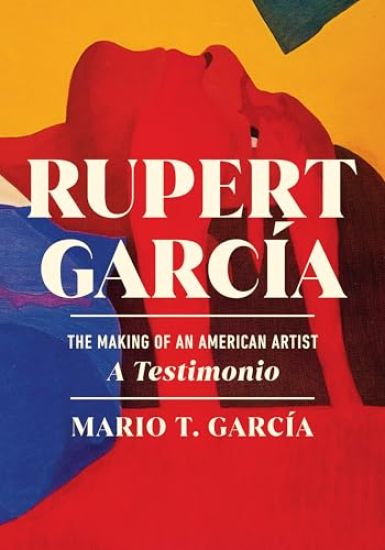
Rupert García

Rupert García

Mario T. García

RUTGERS UNIVERSITY PRESS
2026
sidottu
Rupert García: The Making of an American Artist, a Testimonio is a compelling story of a working-class Mexican American from California’s Central Valley who became a major American artist with national and international recognition. Mario T. García’s oral history of Rupert García, based on extensive interviews over many years, provides a compelling autobiographical narrative of the life and times of an American artist. This testimonio places Rupert García’s art in historical perspective, spanning his beginnings in Stockton, California and his time in the Air Force, including participating in the U.S. war in Vietnam, to his experience at San Francisco State during the historic San Francisco State student strike in 1968-69. Influenced by history and politics, Rupert García’s art speaks to a changing America through the eyes of an artist, speaking to issues of race, class, imperialism, war, and the role of the artist in society.
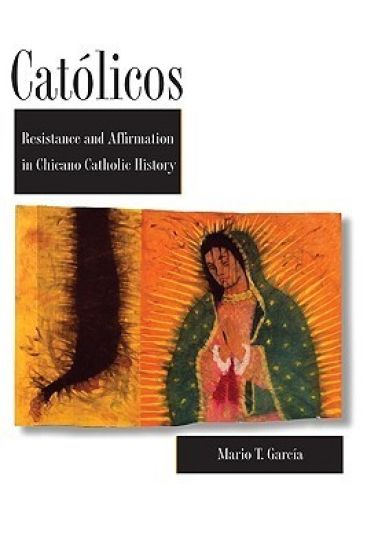
Católicos

Católicos

Mario T. García

University of Texas Press
2008
pokkari
Chicano Catholicism-both as a popular religion and a foundation for community organizing-has, over the past century, inspired Chicano resistance to external forces of oppression and discrimination including from other non-Mexican Catholics and even the institutionalized church. Chicano Catholics have also used their faith to assert their particular identity and establish a kind of cultural citizenship. Based exclusively on original research and sources, Mario T. GarcÍa here offers the first major historical study to explore the various dimensions of the role of Catholicism in Chicano history in the twentieth century. This is also one of the first significant studies in the still limited field of Chicano religious history. Topics range from how early Chicano Catholic intellectuals and civil rights leaders were influenced by Catholic Social Doctrine, to the role that popular religion has played in the lives of ordinary men and women in both rural and urban areas. GarcÍa also examines faith-based Chicano community movements like CatÓlicos Por La Raza in the 1960s and the Sanctuary movement in Los Angeles in the 1980s. While Latino/a history and culture has been, for the most part, inextricably linked with the tenets and practices of Catholicism, there has been very little written, until recently, about Chicano Catholic history. GarcÍa helps to fill that void and explore the impact-both positive and negative-that the Catholic experience has had on the Chicano community.
Luis Leal

Luis Leal

Mario T. García

University of Texas Press
2000
pokkari
Professor Luis Leal is one of the most outstanding scholars of Mexican, Latin American, and Chicano literatures and the dean of Mexican American intellectuals in the United States. He was one of the first senior scholars to recognize the viability and importance of Chicano literature, and, through his perceptive literary criticism, helped to legitimize it as a worthy field of study. His contributions to humanistic learning have brought him many honors, including Mexico's Aquila Azteca and the United States' National Humanities Medal. In this testimonio or oral history, Luis Leal reflects upon his early life in Mexico, his intellectual formation at Northwestern University and the University of Chicago, and his work and publications as a scholar at the Universities of Illinois and California, Santa Barbara. Through insightful questions, Mario García draws out the connections between literature and history that have been a primary focus of Leal's work. He also elicits Leal's assessment of many of the prominent writers he has known and studied, including Mariano Azuela, William Faulkner, Octavio Paz, Carlos Fuentes, Juan Rulfo, Gabriel García Márquez, Jorge Luis Borges, Tomás Rivera, Rolando Hinojosa, Rudolfo Anaya, Elena Poniatowska, Sandra Cisneros, Richard Rodríguez, and Ana Castillo.
Desert Immigrants

Desert Immigrants

Mario T. García

Yale University Press
1982
pokkari
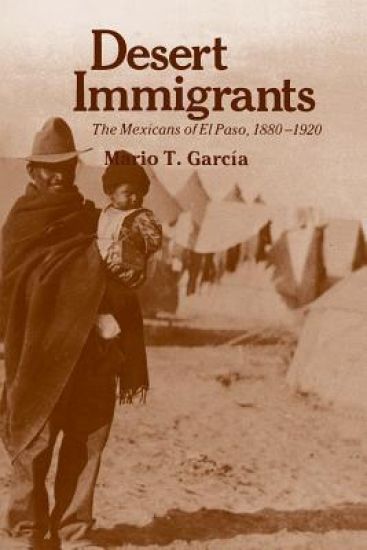
García explores the relationship of class, race, and labor in El Paso, documenting the evolution of work, housing, education, politics, and culture in the Mexican community. Desert Immigrants makes a significant contribution not only to Chicano and Mexican history, but to the history of immigration and labor and urban studies as well.
Mexican Americans

Mexican Americans

Mario T. García

Yale University Press
1991
pokkari
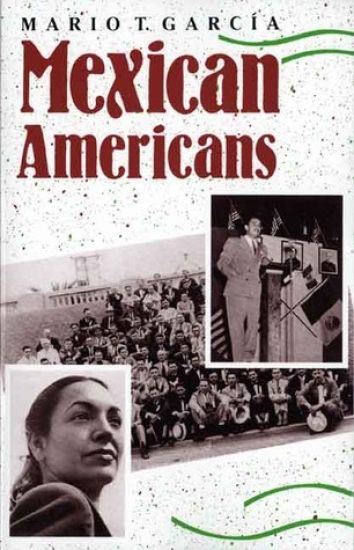
A pioneering political and intellectual history of the Chicano leaders who emerged from the barrios of the Southwest between 1930 and 1960—Ignacio L. López, George I. Sanchez, Josefina Fierro de Bright, and others—and of their effort to capture first-class citizenship for Mexican Americans. Drawing extensively on archival material and oral history, Mario T. García discusses the key figures, organizations, and issues of the movement; in so doing he casts new light not only on Chicano history but also on the histories of American ethnicity and civil rights movements.
The Chicano Generation

The Chicano Generation

Mario T. García

University of California Press
2015
sidottu
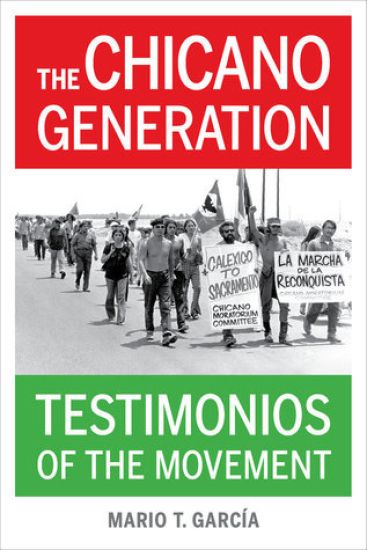
In The Chicano Generation, veteran Chicano civil rights scholar Mario T. Garcia provides a rare look inside the struggles of the 1960s and 1970s as they unfolded in Los Angeles. Based on in-depth interviews conducted with three key activists, this book illuminates the lives of Raul Ruiz, Gloria Arellanes, and Rosalio Munoz their family histories and widely divergent backgrounds; the events surrounding their growing consciousness as Chicanos; the sexism encountered by Arellanes; and the aftermath of their political histories. In his substantial introduction, Garcia situates the Chicano movement in Los Angeles and contextualizes activism within the largest civil rights and empowerment struggle by Mexican Americans in US history a struggle that featured Cesar Chavez and the farm workers, the student movement highlighted by the 1968 LA school blowouts, the Chicano antiwar movement, the organization of La Raza Unida Party, the Chicana feminist movement, the organizing of undocumented workers, and the Chicano Renaissance. Weaving this revolution against a backdrop of historic Mexican American activism from the 1930s to the 1960s and the contemporary black power and black civil rights movements, Garcia gives readers the best representations of the Chicano generation in Los Angeles.
The Chicano Generation

The Chicano Generation

Mario T. García

University of California Press
2015
pokkari
In The Chicano Generation, veteran Chicano civil rights scholar Mario T. Garcia provides a rare look inside the struggles of the 1960s and 1970s as they unfolded in Los Angeles. Based on in-depth interviews conducted with three key activists, this book illuminates the lives of Raul Ruiz, Gloria Arellanes, and Rosalio Munoz their family histories and widely divergent backgrounds; the events surrounding their growing consciousness as Chicanos; the sexism encountered by Arellanes; and the aftermath of their political histories. In his substantial introduction, Garcia situates the Chicano movement in Los Angeles and contextualizes activism within the largest civil rights and empowerment struggle by Mexican Americans in US history a struggle that featured Cesar Chavez and the farm workers, the student movement highlighted by the 1968 LA school blowouts, the Chicano antiwar movement, the organization of La Raza Unida Party, the Chicana feminist movement, the organizing of undocumented workers, and the Chicano Renaissance. Weaving this revolution against a backdrop of historic Mexican American activism from the 1930s to the 1960s and the contemporary black power and black civil rights movements, Garcia gives readers the best representations of the Chicano generation in Los Angeles.
The Making of a Mexican American Mayor

The Making of a Mexican American Mayor

Mario T. García

University of Arizona Press
2018
nidottu
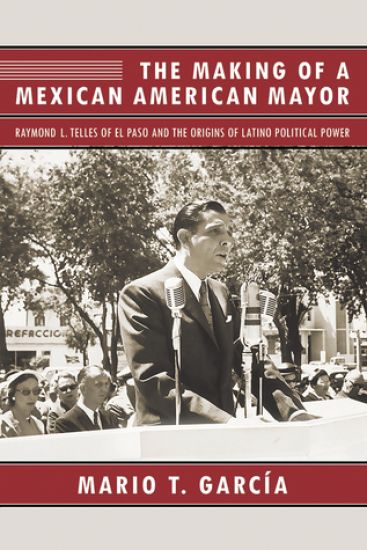
Raymond L. Telles was the first Mexican American mayor of a major U.S. city. Elected mayor of El Paso in 1957 and serving for two terms, he went on to become the first Mexican American ambassador in U.S. history, heading the U.S. delegation to Costa Rica. Historian Mario T. García brings Telles's remarkable story to life in this newly updated edition of his pioneering biography, The Making of a Mexican American Mayor. In the border metropolis of El Paso, more than half the population is Mexican American, yet this group had been denied effective political representation. Mexican Americans broke this barrier and achieved the ""politics of status"" through Telles's stunning 1957 victory. This book captures the excitement of that long-awaited election. The Making of a Mexican American Mayor also examines Telles's story as a microcosm of the history of Mexican Americans before and after World War II—the Mexican American Generation. As mayor and ambassador, Telles symbolized this generation's striving for political participation, and his legacy is evident in the growing number of Latinas/os holding office today.
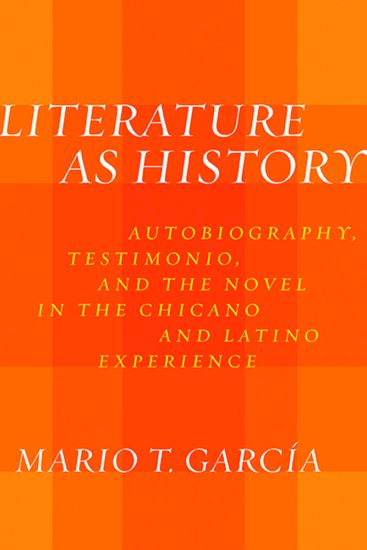
Literature as History

Literature as History

Mario T. García

University of Arizona Press
2018
nidottu
Historical documents—and, for that matter, historical sources—exist in many forms. The traditional archival sources such as official documents, newspapers, correspondence, and diaries can be supplemented by personal archives, oral histories, and even works of fiction in order for historians to illuminate the past.Literature as History offers a critical new path for Chicano and Latino history. Historian Mario T. García analyzes prominent works of Chicano fiction, nonfiction, and autobiographical literature to explore how they can sometimes reveal even more about ordinary people's lives. García argues that this approach can yield personal insights into historical events that more formal documents omit, lending insights into such diverse issues as gender identity, multiculturalism, sexuality, and the concerns of the working class.In a stimulating and imaginative look at the intersection of history and literature, García discusses the meaning and intent of narratives. Literature as History represents a unique way to rethink history. García, a leader in the field of Chicano history and one of the foremost historians of his generation, explores how Chicano historians can use Chicano and Latino literature as important historical sources. Autobiography, testimonio, and fiction are the genres the author researches to obtain new and insightful perspectives on Chicano history at the personal and grassroots levels. Breaking the boundaries between history and literature, García provides a thought-provoking discussion of what constitutes a historical source.
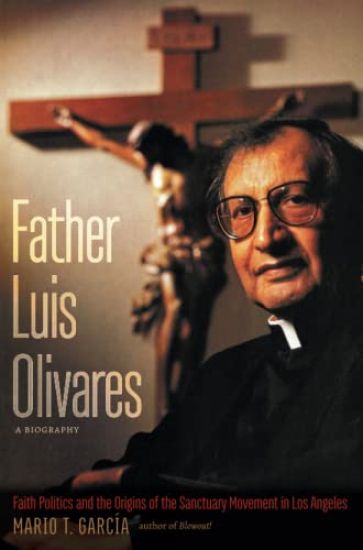
Father Luis Olivares, a Biography

Father Luis Olivares, a Biography

Mario T. García

THE UNIVERSITY OF NORTH CAROLINA PRESS
2022
pokkari
This is the amazing untold story of the Los Angeles sanctuary movement's champion, Father Luis Olivares (1934–1993), a Catholic priest and a charismatic, faith-driven leader for social justice. Beginning in 1980 and continuing for most of the decade, hundreds of thousands of Salvadoran and Guatemalan refugees made the hazardous journey to the United States, seeking asylum from political repression and violence in their home states. Instead of being welcomed by the "country of immigrants," they were rebuffed by the Reagan administration, which supported the governments from which they fled. To counter this policy, a powerful sanctuary movement rose up to provide safe havens in churches and synagogues for thousands of Central American refugees.Based on previously unexplored archives and over ninety oral histories, this compelling biography traces the life of a complex and constantly evolving individual, from Olivares's humble beginnings in San Antonio, Texas, to his close friendship with legendary civil rights leader Cesar Chavez and his historic leadership of the United Neighborhoods Organization and the sanctuary movement.