Kirjojen hintavertailu. Mukana 11 699 587 kirjaa ja 12 kauppaa.

Kirjahaku

Etsi kirjoja tekijän nimen, kirjan nimen tai ISBN:n perusteella.

19 kirjaa tekijältä Marion Milner

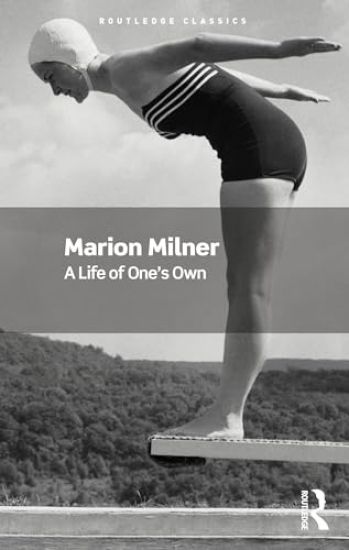
A Life of One's Own

A Life of One's Own

Marion Milner

Routledge
2011
sidottu
How often do we ask ourselves, ‘What will make me happy? What do I really want from life?’ In A Life of One’s Own Marion Milner explores these questions and embarks on a seven year personal journey to discover what it is that makes her happy. On its first publication, W. H. Auden found the book ‘as exciting as a detective story’ and, as Milner searches out clues, the reader quickly becomes involved in the chase. Using her own personal diaries, kept over many years, she analyses moments of everyday life and discovers ways of being, of looking, of moving, that bring surprising joy – ways which can be embraced by anyone.With a new introduction by Rachel Bowlby this classic remains a great adventure in thinking and living and will be essential reading for all those interested in reflecting on the nature of their own happiness – whether readers from a literary, an artistic, a historical, an educational or a psychoanalytic/psychotherapeutic background.
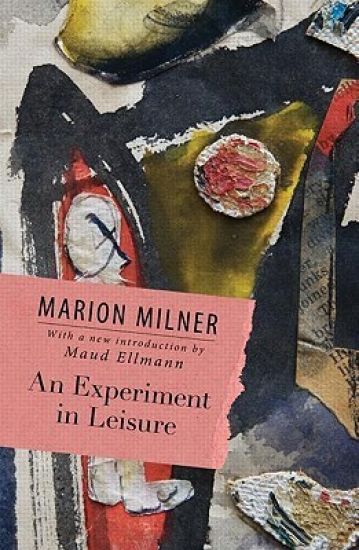
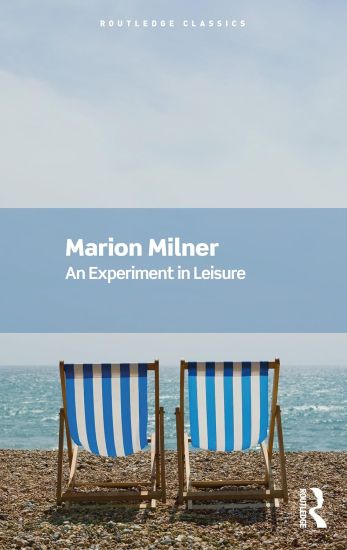
An Experiment in Leisure

An Experiment in Leisure

Marion Milner

Routledge
2011
nidottu
What is it that stops people from knowing what they want? How often do we wonder where we are going and what our world is all about?Written in 1936 as a companion piece to A Life of One’s Own, An Experiment in Leisure further charts Marion Milner’s illuminating and rewarding investigation into how we lead our lives. Instead of drawing on her daily diary, she turns to memory images – images not only from her own life but also from books, mythology, travel and religion that seem to point to a suspension of ordinary, everyday awareness. From this condition of emptiness springs an increasing imaginative appreciation both of being alive and of the world we live in.With a new introduction by Maud Ellmann, An Experiment in Leisure remains a great adventure in thinking and living and will be essential reading for all those from a literary, an artistic, a historical, an educational or a psychoanalytic/psychotherapeutic background.
The Hands of the Living God

The Hands of the Living God

Marion Milner

Routledge
2010
sidottu
At once autobiographical and psychoanalytic, The Hands of the Living God, first published in 1969, provides a detailed case study of Susan who, during a 20-year long treatment, spontaneously discovers the capacity to do doodle drawings.An important focus of the book is the drawings themselves, 150 of which are reproduced in the text, and their deep unconscious perception of the battle between sanity and madness. It is these drawings, linked with Milner’s sensitive and lucid record of the therapeutic encounter, that give the book its unique and compelling interest.With a new introduction by Adam Phillips, The Hands of the Living God is essential reading for all those with an interest in the fields of psychoanalysis and psychotherapy and, more widely, to those involved in therapy and the arts.
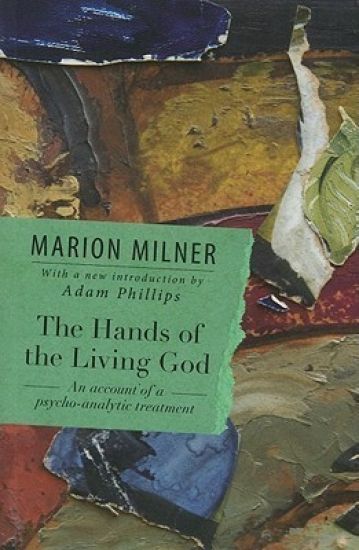
The Hands of the Living God

The Hands of the Living God

Marion Milner

Routledge
2010
nidottu
At once autobiographical and psychoanalytic, The Hands of the Living God, first published in 1969, provides a detailed case study of Susan who, during a 20-year long treatment, spontaneously discovers the capacity to do doodle drawings.An important focus of the book is the drawings themselves, 150 of which are reproduced in the text, and their deep unconscious perception of the battle between sanity and madness. It is these drawings, linked with Milner’s sensitive and lucid record of the therapeutic encounter, that give the book its unique and compelling interest.With a new introduction by Adam Phillips, The Hands of the Living God is essential reading for all those with an interest in the fields of psychoanalysis and psychotherapy and, more widely, to those involved in therapy and the arts.
Eternity's Sunrise

Eternity's Sunrise

Marion Milner

Routledge
2011
sidottu
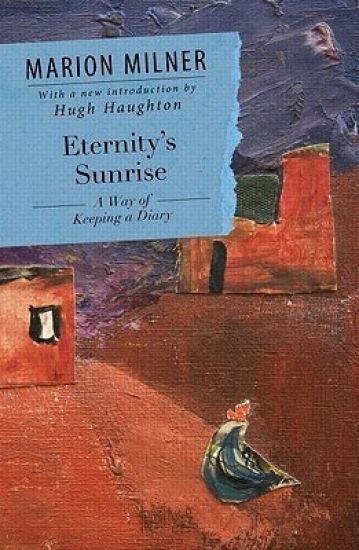
Following on from A Life of One’s Own and An Experiment in Leisure, Eternity’s Sunrise explores Marion Milner’s way of keeping a diary. Recording small private moments, she builds up a store of ‘bead memories.’ A carved duck, a sprig of asphodel, moments captured in her travels in Greece, Kashmir and Israel, circus clowns, a painting - each makes up a 'bead' that has a warmth or glow which comes in response to asking the simple question: What is the most important thing that happened yesterday? From these beads – sacred, horrific, profane, funny – grows a sense of an ‘answering activity’, the result of turning one’s attention inwards to experience real joy. What Marion Milner conveys so vividly and inspirationally is her lifelong intention to live as completely as possible in the moment. With a new introduction by Hugh Haughton, Eternity’s Sunrise will be essential reading for all those interested in reflecting on the nature of their own happiness – whether readers from a literary, an artistic, a historical, an educational or a psychoanalytic/psychotherapeutic background.
Eternity's Sunrise

Eternity's Sunrise

Marion Milner

Routledge
2011
nidottu
Following on from A Life of One’s Own and An Experiment in Leisure, Eternity’s Sunrise explores Marion Milner’s way of keeping a diary. Recording small private moments, she builds up a store of ‘bead memories.’ A carved duck, a sprig of asphodel, moments captured in her travels in Greece, Kashmir and Israel, circus clowns, a painting - each makes up a 'bead' that has a warmth or glow which comes in response to asking the simple question: What is the most important thing that happened yesterday? From these beads – sacred, horrific, profane, funny – grows a sense of an ‘answering activity’, the result of turning one’s attention inwards to experience real joy. What Marion Milner conveys so vividly and inspirationally is her lifelong intention to live as completely as possible in the moment. With a new introduction by Hugh Haughton, Eternity’s Sunrise will be essential reading for all those interested in reflecting on the nature of their own happiness – whether readers from a literary, an artistic, a historical, an educational or a psychoanalytic/psychotherapeutic background.
On Not Being Able to Paint

On Not Being Able to Paint

Marion Milner

Routledge
2010
sidottu
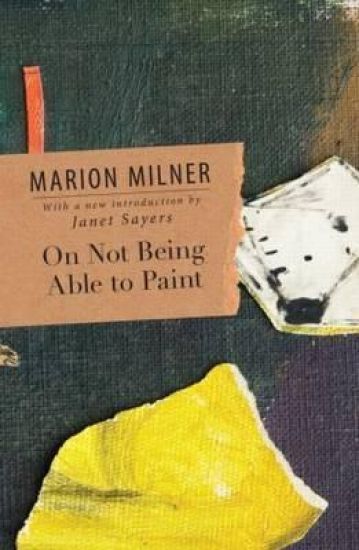
Milner’s great study, first published in 1950, discusses the nature of creativity and those forces which prevent its expression. In focusing on her own beginner’s efforts to draw and paint, she analyses not the mysterious and elusive ability of the genius but – as the title suggests – the all too common and distressing situation of ‘not being able’ to create.With a new introduction by Janet Sayers, this edition of On Not Being Able to Paint brings the text to the present generation of readers in the fields of psychoanalysis, education and all those, specialist and general audiences alike, with an interest or involvement in the creative process and those impulses impeding it in many fields.
On Not Being Able to Paint

On Not Being Able to Paint

Marion Milner

Routledge
2010
nidottu
Milner’s great study, first published in 1950, discusses the nature of creativity and those forces which prevent its expression. In focusing on her own beginner’s efforts to draw and paint, she analyses not the mysterious and elusive ability of the genius but – as the title suggests – the all too common and distressing situation of ‘not being able’ to create.With a new introduction by Janet Sayers, this edition of On Not Being Able to Paint brings the text to the present generation of readers in the fields of psychoanalysis, education and all those, specialist and general audiences alike, with an interest or involvement in the creative process and those impulses impeding it in many fields.
Bothered By Alligators

Bothered By Alligators

Marion Milner

Routledge
2012
sidottu
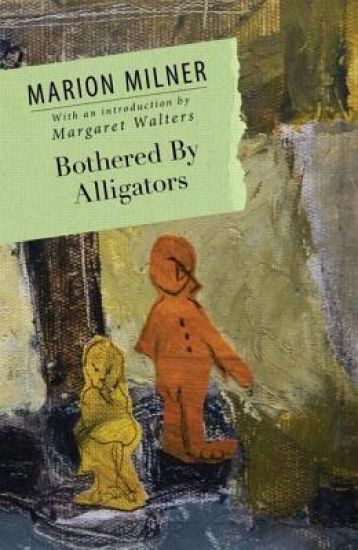
Milner's final text, Bothered by Alligators, came about when, in her nineties, she unexpectedly came across a diary she had kept during the early years of her son's life, recording his conversations and play between the ages of two and nine. With it was a storybook written and illustrated by him when he was about seven years old. Whilst working on the material, Milner gradually realised that both diary and storybook were provoking questions she realised had scarcely been asked, let alone answered in her own analysis. Through her memories, her notebooks and by interpreting her own previously discarded drawings and paintings, she reaches a point of awareness that they were depicting things she did not know in herself, addressing her relationships not only with her son but also with her husband, her father, and in particular, her mother. Like many of Milner's earlier books there is a deeply personal quality to Bothered by Alligators, but it is a quality that transcends the personal and reveals insights and conclusions that will be both interesting and useful to clinicians; and fascinating to readers from a psychological, a literary, an artistic or an educational background, and, in particular, those with an interest in psychoanalysis and autobiography and in Milner's work.
Bothered By Alligators

Bothered By Alligators

Marion Milner

Routledge
2012
nidottu
Milner's final text, Bothered by Alligators, came about when, in her nineties, she unexpectedly came across a diary she had kept during the early years of her son's life, recording his conversations and play between the ages of two and nine. With it was a storybook written and illustrated by him when he was about seven years old. Whilst working on the material, Milner gradually realised that both diary and storybook were provoking questions she realised had scarcely been asked, let alone answered in her own analysis. Through her memories, her notebooks and by interpreting her own previously discarded drawings and paintings, she reaches a point of awareness that they were depicting things she did not know in herself, addressing her relationships not only with her son but also with her husband, her father, and in particular, her mother. Like many of Milner's earlier books there is a deeply personal quality to Bothered by Alligators, but it is a quality that transcends the personal and reveals insights and conclusions that will be both interesting and useful to clinicians; and fascinating to readers from a psychological, a literary, an artistic or an educational background, and, in particular, those with an interest in psychoanalysis and autobiography and in Milner's work.
An Experiment in Leisure

An Experiment in Leisure

Marion Milner

TAYLOR FRANCIS LTD
2024
nidottu
'Before I began this experiment I had always been haunted by the feeling that the surface of life, what everyone said about it, was quite different from the reality of life, that the important things that were happening all the time were on the whole quite different from what was said about them.' - Marion MilnerWhat is it that stops people from knowing what they want? How much of our experience is shaped by images, symbols, and early memories – and do such things help or hinder one becoming an adult? Written in 1936, An Experiment in Leisure continues Marion Milner’s unique and compelling investigation into how we lead our lives, complementing the account she began in A Life of One’s Own.Attempting to understand the gap between what she memorably describes as ‘the poverty of words and the reality of living’, she draws on memory images – in books, mythology, religious experience, travel, and even going to the theatre – that seem to point to a suspension of ordinary, everyday awareness. From this state of emptiness springs an increasing imaginative appreciation of being alive and, as Milner concludes, of being a woman.With a new Foreword by Akshi Singh, An Experiment in Leisure remains a striking and captivating adventure in thinking and living with uncertainty, whose insights remain fresh and relevant today.
A Life of One's Own

A Life of One's Own

Marion Milner

TAYLOR FRANCIS LTD
2024
nidottu
'This is what I really want. I want to discover ways to discriminate the important things in human life. I want to find ways of getting past this blind fumbling with existence.' - Marion Milner, from A Life of One’s Own.How often do we really ask ourselves, 'What will make me happy? What do I really want from life?' In A Life of One’s Own Marion Milner, a renowned British psychoanalyst, artist and autobiographer, takes us on an extraordinary and compelling seven-year inward journey to discover what it is that makes her happy.On its first publication, W. H. Auden found the book 'as exciting as a detective story' and, as Milner searches out clues, the reader quickly becomes involved in the chase. Using her own personal diaries, she analyses moments of everyday life that can bring surprising joy, such as walking, listening to music, and drawing. She also records, in a disarmingly clear and insightful manner, the struggle between the urge to order and control one’s thoughts and standing back to let them wander where they may.A pioneering account of lived experience that also anticipates the contemporary phenomenon of mindfulness, A Life of One’s Own is a great adventure in thinking and living whose insights remain as fresh today as they were on the book’s first publication in the 1930s.This Routledge Classics edition includes a revised Introduction by Rachel Bowlby.
An Experiment in Leisure

An Experiment in Leisure

Marion Milner

TAYLOR FRANCIS LTD
2024
sidottu
'Before I began this experiment I had always been haunted by the feeling that the surface of life, what everyone said about it, was quite different from the reality of life, that the important things that were happening all the time were on the whole quite different from what was said about them.' - Marion MilnerWhat is it that stops people from knowing what they want? How much of our experience is shaped by images, symbols, and early memories – and do such things help or hinder one becoming an adult? Written in 1936, An Experiment in Leisure continues Marion Milner’s unique and compelling investigation into how we lead our lives, complementing the account she began in A Life of One’s Own.Attempting to understand the gap between what she memorably describes as ‘the poverty of words and the reality of living’, she draws on memory images – in books, mythology, religious experience, travel, and even going to the theatre – that seem to point to a suspension of ordinary, everyday awareness. From this state of emptiness springs an increasing imaginative appreciation of being alive and, as Milner concludes, of being a woman.With a new Foreword by Akshi Singh, An Experiment in Leisure remains a striking and captivating adventure in thinking and living with uncertainty, whose insights remain fresh and relevant today.
A Life of One's Own

A Life of One's Own

Marion Milner

TAYLOR FRANCIS LTD
2024
sidottu
'This is what I really want. I want to discover ways to discriminate the important things in human life. I want to find ways of getting past this blind fumbling with existence.' - Marion Milner, from A Life of One’s Own.How often do we really ask ourselves, 'What will make me happy? What do I really want from life?' In A Life of One’s Own Marion Milner, a renowned British psychoanalyst, artist and autobiographer, takes us on an extraordinary and compelling seven-year inward journey to discover what it is that makes her happy.On its first publication, W. H. Auden found the book 'as exciting as a detective story' and, as Milner searches out clues, the reader quickly becomes involved in the chase. Using her own personal diaries, she analyses moments of everyday life that can bring surprising joy, such as walking, listening to music, and drawing. She also records, in a disarmingly clear and insightful manner, the struggle between the urge to order and control one’s thoughts and standing back to let them wander where they may.A pioneering account of lived experience that also anticipates the contemporary phenomenon of mindfulness, A Life of One’s Own is a great adventure in thinking and living whose insights remain as fresh today as they were on the book’s first publication in the 1930s.This Routledge Classics edition includes a revised Introduction by Rachel Bowlby.
The Human Problem in Schools (1938)
Published in 1938, this book documents a psychological study carried out on behalf of the Girls’ Public Day School Trust. Comprising 25 schools, the trust set the standard for girls’ education for the first decade of the twentieth century and the pioneering study was set to serve the cause of national education.Marion Milner documents the study and her findings across four sections with topics covered including: intelligence testing, classroom observations, interpretation of material, varying effects of the environment and interviewing techniques. Sections also discuss practical implications from the research, and the importance of the psychologist in the classroom.This book provides a detailed study of mental development and education in adolescent girls in the 1930’s as well as considering how important it can be to have a psychologist in the classroom. An original study that will still be of interest to researchers and academics in the fields of education, psychology and gender studies today.
The Human Problem in Schools (1938)
Published in 1938, this book documents a psychological study carried out on behalf of the Girls’ Public Day School Trust. Comprising 25 schools, the trust set the standard for girls’ education for the first decade of the twentieth century and the pioneering study was set to serve the cause of national education.Marion Milner documents the study and her findings across four sections with topics covered including: intelligence testing, classroom observations, interpretation of material, varying effects of the environment and interviewing techniques. Sections also discuss practical implications from the research, and the importance of the psychologist in the classroom.This book provides a detailed study of mental development and education in adolescent girls in the 1930’s as well as considering how important it can be to have a psychologist in the classroom. An original study that will still be of interest to researchers and academics in the fields of education, psychology and gender studies today.