Kirjojen hintavertailu. Mukana 12 119 681 kirjaa ja 12 kauppaa.

Kirjahaku

Etsi kirjoja tekijän nimen, kirjan nimen tai ISBN:n perusteella.

8 kirjaa tekijältä Marius B. Jansen

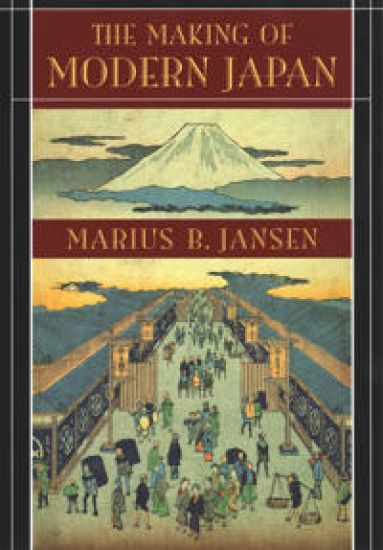
The Making of Modern Japan

The Making of Modern Japan

Marius B. Jansen

The Belknap Press
2002
nidottu
Magisterial in vision, sweeping in scope, this monumental work presents a seamless account of Japanese society during the modern era, from 1600 to the present. A distillation of more than fifty years’ engagement with Japan and its history, it is the crowning work of our leading interpreter of the modern Japanese experience.Since 1600 Japan has undergone three periods of wrenching social and institutional change, following the imposition of hegemonic order on feudal society by the Tokugawa shogun; the opening of Japan’s ports by Commodore Perry; and defeat in World War II. The Making of Modern Japan charts these changes: the social engineering begun with the founding of the shogunate in 1600, the emergence of village and castle towns with consumer populations, and the diffusion of samurai values in the culture.Marius Jansen covers the making of the modern state, the adaptation of Western models, growing international trade, the broadening opportunity in Japanese society with industrialization, and the postwar occupation reforms imposed by General MacArthur. Throughout, the book gives voice to the individuals and views that have shaped the actions and beliefs of the Japanese, with writers, artists, and thinkers, as well as political leaders given their due.The story this book tells, though marked by profound changes, is also one of remarkable consistency, in which continuities outweigh upheavals in the development of society, and successive waves of outside influence have only served to strengthen a sense of what is unique and native to Japanese experience. The Making of Modern Japan takes us to the core of this experience as it illuminates one of the contemporary world’s most compelling transformations.
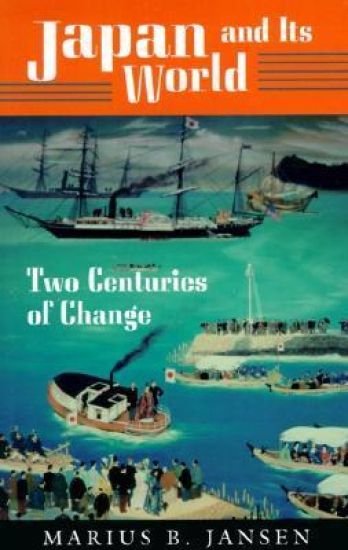
Japan and Its World

Japan and Its World

Marius B. Jansen

Princeton University Press
1995
pokkari
Long recognized as an authority on Japanese history, Marius Jansen synthesizes a lifetime of scholarship in this landmark book. Bringing together the series of Brown and Haley lectures delivered in 1975 at the University of Puget Sound, Japan and Its World continues to be a source of insight for anyone interested in the changing ideas the Japanese have had of themselves, the United States, and the Western world during the past two centuries.
Sakamato Ryoma and the Meiji Restoration

Sakamato Ryoma and the Meiji Restoration

Marius B. Jansen

Princeton University Press
2015
pokkari
The Meiji Restoration of mid-nineteenth-century Japan was the outgrowth of upheaval as vital as the American Civil War or the French Revolution, and marked the beginnings of Japan as a forward-looking, unified state. The author tells the story of this crucial period of Japanese history through the career of a national hero, Sakamoto Ryoma, with Sakamoto as a symbol of Japan's enlightened growth. Originally published in 1961. The Princeton Legacy Library uses the latest print-on-demand technology to again make available previously out-of-print books from the distinguished backlist of Princeton University Press. These editions preserve the original texts of these important books while presenting them in durable paperback and hardcover editions. The goal of the Princeton Legacy Library is to vastly increase access to the rich scholarly heritage found in the thousands of books published by Princeton University Press since its founding in 1905.
Sakamato Ryoma and the Meiji Restoration

Sakamato Ryoma and the Meiji Restoration

Marius B. Jansen

Princeton University Press
2016
sidottu
The Meiji Restoration of mid-nineteenth-century Japan was the outgrowth of upheaval as vital as the American Civil War or the French Revolution, and marked the beginnings of Japan as a forward-looking, unified state. The author tells the story of this crucial period of Japanese history through the career of a national hero, Sakamoto Ryoma, with Sakamoto as a symbol of Japan's enlightened growth. Originally published in 1961. The Princeton Legacy Library uses the latest print-on-demand technology to again make available previously out-of-print books from the distinguished backlist of Princeton University Press. These editions preserve the original texts of these important books while presenting them in durable paperback and hardcover editions. The goal of the Princeton Legacy Library is to vastly increase access to the rich scholarly heritage found in the thousands of books published by Princeton University Press since its founding in 1905.
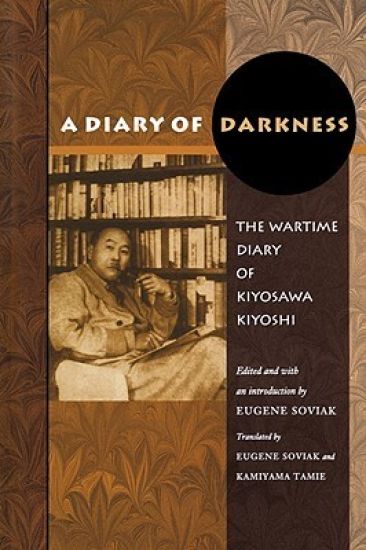
A Diary of Darkness

A Diary of Darkness

Kiyosawa Kiyoshi; Marius B. Jansen

Princeton University Press
2008
pokkari
A Diary of Darkness is one of the most important and compelling documents of wartime Japan. Between 1942 and 1945, the liberal journalist Kiyosawa Kiyoshi (1890-1945) kept at great personal risk a diary of his often subversive social and political observations and his personal struggles. The diary caused a sensation when it was published in Japan in 1948 and is today regarded as a classic. This is the first time it has appeared in English. Kiyosawa was an American-educated commentator on politics and foreign affairs who became increasingly isolated in Japan as militant nationalists rose to power. He began the diary as notes for a history of the war, but it soon became an "inadvertent autobiography" and a refuge for the bitter criticism of Japanese authoritarianism that he had to repress publicly. It chronicles growing bureaucratic control over everything from the press to people's clothing. Kiyosawa pours scorn on such leaders as Premiers Tojo and Koiso. He laments the rise of hysterical propaganda and relates his own and his friends' struggles to avoid arrest. He writes in gripping detail about increasing poverty, crime, and disorder. He records the sentiments of the local barber as faithfully as those of senior politicians. And all the while he traces the gradual disintegration of Japan's war effort and the looming certainty of defeat. A Diary of Darkness is a perceptive and courageous account of wartime Japan and a revealing record of the devastation wrought by total war.
Studies in the Institutional History of Early Modern Japan

Studies in the Institutional History of Early Modern Japan

John Whitney Hall; Marius B. Jansen

Princeton University Press
2015
pokkari
This study contains twenty-two essays by leading historians on the Tokugawa Period (1600-1868), eight of which have never before been published. The Tokugawa Period has long been seen as one of Eastern feudalism, awaiting the breakthrough that came with the Meiji enlightenment and the opening of Japan to the West. The general thrust of these papers is to show that in many institutional aspects Japan was far from backward before the Meiji Period, and that many of the preconditions of modernization were present and developing much earlier than has generally been believed. This collection will be particularly valuable to students and scholars of comparative and Japanese modernization. Originally published in 1968. The Princeton Legacy Library uses the latest print-on-demand technology to again make available previously out-of-print books from the distinguished backlist of Princeton University Press. These editions preserve the original texts of these important books while presenting them in durable paperback and hardcover editions. The goal of the Princeton Legacy Library is to vastly increase access to the rich scholarly heritage found in the thousands of books published by Princeton University Press since its founding in 1905.
Studies in the Institutional History of Early Modern Japan

Studies in the Institutional History of Early Modern Japan

John Whitney Hall; Marius B. Jansen

Princeton University Press
2016
sidottu
This study contains twenty-two essays by leading historians on the Tokugawa Period (1600-1868), eight of which have never before been published. The Tokugawa Period has long been seen as one of Eastern feudalism, awaiting the breakthrough that came with the Meiji enlightenment and the opening of Japan to the West. The general thrust of these papers is to show that in many institutional aspects Japan was far from backward before the Meiji Period, and that many of the preconditions of modernization were present and developing much earlier than has generally been believed. This collection will be particularly valuable to students and scholars of comparative and Japanese modernization. Originally published in 1968. The Princeton Legacy Library uses the latest print-on-demand technology to again make available previously out-of-print books from the distinguished backlist of Princeton University Press. These editions preserve the original texts of these important books while presenting them in durable paperback and hardcover editions. The goal of the Princeton Legacy Library is to vastly increase access to the rich scholarly heritage found in the thousands of books published by Princeton University Press since its founding in 1905.
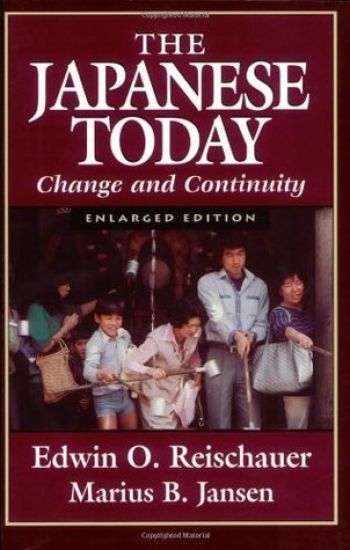
The Japanese Today

The Japanese Today

Edwin O. Reischauer; Marius B. Jansen

The Belknap Press
1995
nidottu
Japan, like the rest of the world, has undergone enormous changes in the last few years. The impact of the end of the Cold War has combined with a worldwide recession to create a fluid situation in which long-held assumptions about politics and policies no longer hold. A classic, short history of Japan, this book has been brought up-to-date by Marius Jansen, now our most distinguished interpreter of Japanese history. Jansen gives a lucid account and analysis of the events that have rocked Japan since 1990, taking the story through the election of Murayama as prime minister.About the previous edition:With the two-thousand-year history of the Japanese experience as his foundation, Edwin O. Reischauer brings us an incomparable description of Japan today in all its complexity and uniqueness, both material and spiritual. His description and analysis present us with the paradox that is present-day Japan: thoroughly international, depending for its livelihood almost entirely on foreign trade, its products coveted everywhere—yet not entirely liked or trusted, still feared for its past military adventurism and for its current economic aggressiveness.Reischauer begins with the rich heritage of the island nation, identifying incidents and trends that have significantly affected Japan’s modern development. Much of the geographic and historical material on Japan’s earlier years is drawn from his renowned study The Japanese, but the present book deepens and broadens that earlier interpretation: our knowledge of Japan has increased enormously in the intervening decade and our attitudes have become more ambivalent, while Japan too has changed, often not so subtly.Moving to contemporary Japanese society, Reischauer explores both the constants in Japanese life and the aspects that are rapidly changing. In the section on government and politics he gives pithy descriptions of the formal workings of the various organs of government and the decision-making process, as well as the most contentious issues in Japanese life—pollution, nuclear power, organized labor—and the elusive matter of political style.In what will become classic statements on business management and organization, Reischauer sketches the early background of trade and commerce in Japan, contrasts the struggling prewar economy with today’s assertive manufacturing, and brilliantly characterizes the remarkable postwar economic miracle of Japanese heavy industry, consumer product development, and money management. In a final section, “Japan and the World,” he attempts to explain to skeptical Westerners that country’s growing and painful dilemma between neutrality and alignment, between trade imbalance and “fair” practices, and the ever-vexing issue of that embodiment of Japanese specialness, a unique and difficult language that affects personal and national behavior.