Kirjojen hintavertailu. Mukana 11 717 486 kirjaa ja 12 kauppaa.

Kirjahaku

Etsi kirjoja tekijän nimen, kirjan nimen tai ISBN:n perusteella.

5 kirjaa tekijältä Marius Hentea

TaTa Dada

TaTa Dada

Marius Hentea

MIT Press
2014
pokkari
The first biography in English of Tristan Tzara, a founder of Dada and one of the most important figures in the European avant-garde.Tristan Tzara, one of the most important figures in the twentieth century's most famous avant-garde movements, was born Samuel Rosenstock (or Samueli Rosen?tok) in a provincial Romanian town, on April 16 (or 17, or 14, or 28) in 1896. Tzara became Tzara twenty years later at the Cabaret Voltaire in Zurich, when he and others (including Marcel Janco, Hugo Ball, Richard Huelsenbeck, and Hans Arp) invented Dada with a series of chaotic performances including multilingual (and nonlingual) shouting, music, drumming, and calisthenics. Within a few years, Dada (largely driven by Tzara) became an international artistic movement, a rallying point for young artists in Paris, New York, Barcelona, Berlin, and Buenos Aires. With TaTa Dada, Marius Hentea offers the first English-language biography of this influential artist. As the leader of Dada, Tzara created "the moment art changed forever." But, Hentea shows, Tzara and Dada were not coterminous. Tzara went on to publish more than fifty books; he wrote one of the great poems of surrealism; he became a recognized expert on primitive art; he was an active antifascist, a communist, and (after the Soviet repression of the Hungarian Revolution) a former communist. Hentea offers a detailed exploration of Tzara's early life in Romania, neglected by other scholars; a scrupulous assessment of the Dada years; and an original examination of Tzara's life and works after Dada. The one thing that remained constant through all of Tzara's artistic and political metamorphoses, Hentea tells us, was a desire to unlock the secrets and mysteries of language.
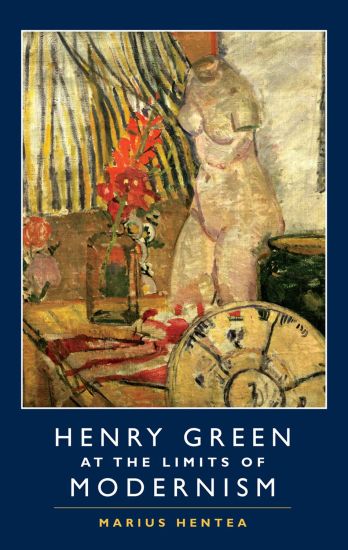
Henry Green at the Limits of Modernism

Henry Green at the Limits of Modernism

Marius Hentea

LIVERPOOL UNIVERSITY PRESS
2013
sidottu
Although Henry Green has been recognised by James Wood, David Lodge and John Updike as one of the most innovative writers of his time, his significant achievement remains largely neglected. Henry Green at the Limits of Modernism provides a theoretically sophisticated and historically nuanced reading of Green's novels and makes the case for Green's importance in reconsiderations of modernism, late modernism and post-war realism. This work is the most ambitious reassessment of Green's oeuvre to date and thus critical reading for scholars interested in modernism, late modernism, and the evolution of British post-war fiction. Arguing against the predominant view of Green's fiction as an autonomous literary construction, the work connects Green to a number of social and literary contexts, resulting in fresh readings of his novels and also a greater accessibility to an author long considered 'oblique' and 'elusive'. With significant investigations of Green's connection to his literary generation, his multifaceted and formally innovative handling of social class, his negotiations of narrative authority and authorship, and the importance of disability studies to understanding Green's fiction, this study charts the complex trajectories of Green's fiction against both social and literary contexts. The work also moves beyond the narrow confines of British literature to explore Green's connections to broader trends in European literature.
Henry Green at the Limits of Modernism

Henry Green at the Limits of Modernism

Marius Hentea

LIVERPOOL UNIVERSITY PRESS
2014
nidottu
Although Henry Green has been recognised by James Wood, David Lodge and John Updike as one of the most innovative writers of his time, his significant achievement remains largely neglected. Henry Green at the Limits of Modernism provides a theoretically sophisticated and historically nuanced reading of Green's novels and makes the case for Green's importance in reconsiderations of modernism, late modernism and post-war realism. This work is the most ambitious reassessment of Green's oeuvre to date and thus critical reading for scholars interested in modernism, late modernism, and the evolution of British post-war fiction. Arguing against the predominant view of Green's fiction as an autonomous literary construction, the work connects Green to a number of social and literary contexts, resulting in fresh readings of his novels and also a greater accessibility to an author long considered 'oblique' and 'elusive'. With significant investigations of Green's connection to his literary generation, his multifaceted and formally innovative handling of social class, his negotiations of narrative authority and authorship, and the importance of disability studies to understanding Green's fiction, this study charts the complex trajectories of Green's fiction against both social and literary contexts. The work also moves beyond the narrow confines of British literature to explore Green's connections to broader trends in European literature.
Literary Treason

Literary Treason

Marius Hentea

BLOOMSBURY PUBLISHING PLC
2026
nidottu
Can you commit treason by “mere words”? “Do civilized peoples shoot their poets?” Are there limits to free expression? Grappling with these questions, this open access book tells the fascinating story of how prominent authors and intellectuals found themselves singled out by national courts in the wake of World War II, for the crime of expressing opinions, both in print or over the radio. Rigorously researched and engagingly written, it examines cases of authors such as Ezra Pound, P.G. Wodehouse and Robert Brasillach, who were suspected or tried for treason in the wake of World War II. Bringing to light never-before-seen trial transcripts alongside a wealth of rich archival material, it considers how writing and speech was considered treasonous by bureaucracies and courts in the UK, US, France, Ireland, Norway and Romania. It also touches on issues such as the political responsibility of authors, the position of national and international author’s organizations, and emerging literary theories, including how the New Critics came to defend Pound’s poetry in the late 1940s. Six engrossing chapters provide a forensic examination of how “mere words” were cast as treason and explore what writing was deemed “acceptable” in the postwar period. The eBook editions of this book are available open access under a CC BY-NC-ND 4.0 licence on bloomsburycollections.com. Open access was funded by the University of Gothenburg.
Literary Treason

Literary Treason

Marius Hentea

BLOOMSBURY PUBLISHING PLC
2026
sidottu
Can you commit treason by “mere words”? “Do civilized peoples shoot their poets?” Are there limits to free expression? Grappling with these questions, this open access book tells the fascinating story of how prominent authors and intellectuals found themselves singled out by national courts in the wake of World War II, for the crime of expressing opinions, both in print or over the radio. Rigorously researched and engagingly written, it examines cases of authors such as Ezra Pound, P.G. Wodehouse and Robert Brasillach, who were suspected or tried for treason in the wake of World War II. Bringing to light never-before-seen trial transcripts alongside a wealth of rich archival material, it considers how writing and speech was considered treasonous by bureaucracies and courts in the UK, US, France, Ireland, Norway and Romania. It also touches on issues such as the political responsibility of authors, the position of national and international author’s organizations, and emerging literary theories, including how the New Critics came to defend Pound’s poetry in the late 1940s. Six engrossing chapters provide a forensic examination of how “mere words” were cast as treason and explore what writing was deemed “acceptable” in the postwar period. The eBook editions of this book are available open access under a CC BY-NC-ND 4.0 licence on bloomsburycollections.com. Open access was funded by the University of Gothenburg.