Kirjojen hintavertailu. Mukana 12 016 292 kirjaa ja 12 kauppaa.

Kirjahaku

Etsi kirjoja tekijän nimen, kirjan nimen tai ISBN:n perusteella.

3 kirjaa tekijältä Marius Jansen

Sakamoto Ryoma and the Meiji Restoration

Sakamoto Ryoma and the Meiji Restoration

Marius Jansen

Columbia University Press
1995
pokkari
Exploring a tumultuous time in Japanese 19th-century history, when the country began to emerge from self-imposed exile, this study profiles activists such as Sakamoto Ryoma and Nakaoka Shintaro, who played an important role in the development of a unified nation state.
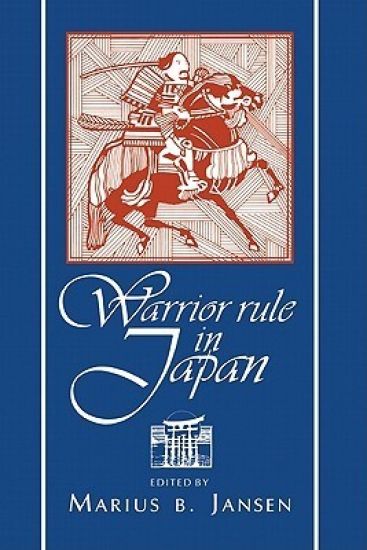
Warrior Rule in Japan

Warrior Rule in Japan

Marius Jansen

Cambridge University Press
1995
sidottu
Japan was ruled by warriors for the better part of a millenium. From the twelfth to the nineteenth century its political history was dominated by the struggle of competing leagues of fighting men. This paperback volume, comprised of chapters taken from volumes 3 and 4 of The Cambridge History of Japan, traces the institutional development of warrior rule and dominance. Fourteenth-century warfare weakened the aristocratic and clerical control over provincial estates, and the power of military governors grew steadily. By the eighteenth century, however, warrior rule had come full circle. Centuries of peace brought a transformation and bureaucratization of the samurai class. Although samurai malcontents resisted the Meiji Restoration, many of the Meiji government’s leaders were former samurai, and warrior values remained central to the ethical code of modern Japan.
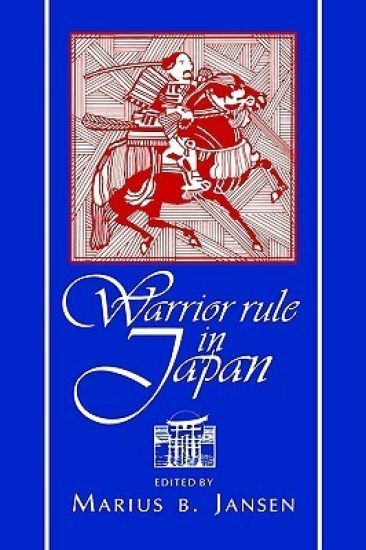
Warrior Rule in Japan

Warrior Rule in Japan

Marius Jansen

Cambridge University Press
1995
pokkari
Japan was ruled by warriors for the better part of a millenium. From the twelfth to the nineteenth century its political history was dominated by the struggle of competing leagues of fighting men. This paperback volume, comprised of chapters taken from volumes 3 and 4 of The Cambridge History of Japan, traces the institutional development of warrior rule and dominance. Fourteenth-century warfare weakened the aristocratic and clerical control over provincial estates, and the power of military governors grew steadily. By the eighteenth century, however, warrior rule had come full circle. Centuries of peace brought a transformation and bureaucratization of the samurai class. Although samurai malcontents resisted the Meiji Restoration, many of the Meiji government’s leaders were former samurai, and warrior values remained central to the ethical code of modern Japan.