Kirjojen hintavertailu. Mukana 12 416 412 kirjaa ja 12 kauppaa.

Kirjahaku

Etsi kirjoja tekijän nimen, kirjan nimen tai ISBN:n perusteella.

6 kirjaa tekijältä Marius Turda, Aaron Gillette

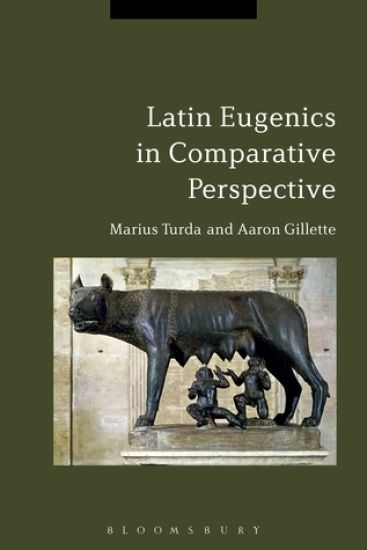
Latin Eugenics in Comparative Perspective

Latin Eugenics in Comparative Perspective

Marius Turda; Aaron Gillette

Bloomsbury Academic
2014
sidottu
Latin eugenics was a scientific, cultural and political programme designed to biologically empower modern European and American nations once commonly described as ‘Latin’, sharing genealogical, linguistic, religious, and cultural origins.Latin Eugenics in Comparative Perspective offers a comparative, nuanced approach to eugenics as a scientific programme as well as a cultural and political phenomenon. It examines the commonalities of eugenics in ‘Latin’ Europe and Latin America. As a program to achieve the social and political goals of modern welfare systems, Latin eugenics strongly influenced the complex relationship of the state to the individual. Drawing on a wide range of primary and secondary sources in many languages, this book offers the first history of Latin eugenics in Europe and the Americas.
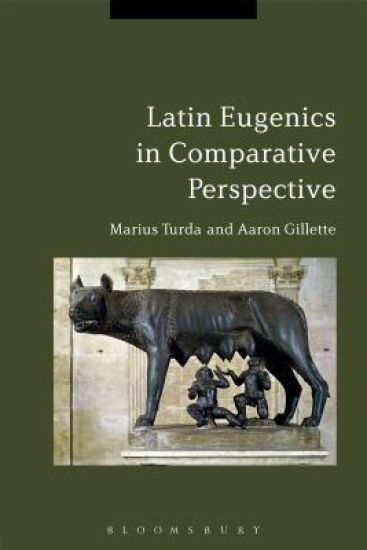
Latin Eugenics in Comparative Perspective

Latin Eugenics in Comparative Perspective

Marius Turda; Aaron Gillette

Bloomsbury Academic
2016
nidottu
Latin eugenics was a scientific, cultural and political programme designed to biologically empower modern European and American nations once commonly described as ‘Latin’, sharing genealogical, linguistic, religious, and cultural origins.Latin Eugenics in Comparative Perspective offers a comparative, nuanced approach to eugenics as a scientific programme as well as a cultural and political phenomenon. It examines the commonalities of eugenics in ‘Latin’ Europe and Latin America. As a program to achieve the social and political goals of modern welfare systems, Latin eugenics strongly influenced the complex relationship of the state to the individual. Drawing on a wide range of primary and secondary sources in many languages, this book offers the first history of Latin eugenics in Europe and the Americas.

Scientific Racism in Hungary, 1920-1945

Scientific Racism in Hungary, 1920-1945

Marius Turda

BLOOMSBURY PUBLISHING PLC
2023
sidottu
Scientific Racism in Hungary, 1920-1945 examines racially informed debates on society and nation in interwar Hungary, their ideological frameworks and methodological affinities to debates on race and eugenics elsewhere in Europe. The book focuses on how anthropological ideas of race influenced debates on national character as well as biopolitical ideologies and welfare models of eugenic engineering between 1920 and 1945. During this period, Hungary went through profound territorial, social and national transformations, and experienced a wide range of political systems: from imperial to democratic, communist, authoritarian and fascist. Marius Turda shows how, under these circumstances, the idea of race became part of a larger biopolitical agenda, serving as a vehicle for transmitting a social and cultural message that transcended political differences and opposing ideological camps. This important study helps to deepen and refine the comparative history of race and eugenics in Europe by providing an innovative cross-cultural interpretation of biopolitical arguments about Hungarian national identity. It is of immense value both to historians of 20th-century Hungary and to anyone looking at the history of anthropology, race, nationalism and eugenics in modern Europe.
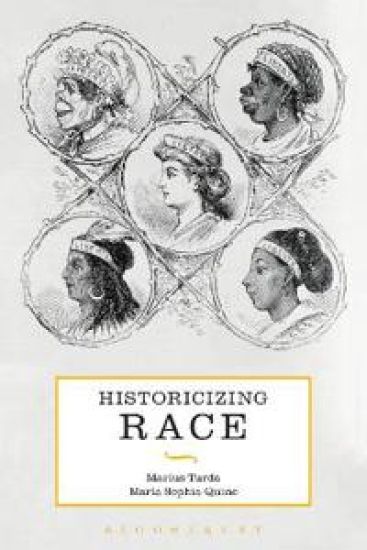
Historicizing Race

Historicizing Race

Marius Turda; Maria Sophia Quine

Bloomsbury Academic USA
2018
nidottu
The idea of race may be outdated, as many commentators and scholars, working in a broad range of different fields in the sciences and humanities, have argued over many years. Nevertheless, it remains one of the most persistent forms of human classification. Theories of race primitivism (the idea that there is a ‘natural’ racial hierarchy and ranking order of ‘inferior’ and ‘superior’ races), race biologism (the belief that people can be classified by genetic features which are shared by members of racial groups), and race essentialism (the notion that races can be defined by scientifically identifiable and verifiable cultural and physical characteristics) are deeply embedded in modern history, culture and politics. Historicizing Race offers a new understanding of this reality by exploring the interconnectedness of scientific, cultural and political strands of racial thought in Europe and elsewhere. It re-conceptualises the idea of race by unearthing various historical traditions that continue to inform not only current debates about individual and collective identities, but also national and international politics. In a concise format, accessible to students and scholars alike, the authors draw out some of the reasons why race-centred thinking has, in recent years, re-emerged in such shocking and explicit form in current populist, xenophobic, and anti-immigration movements.
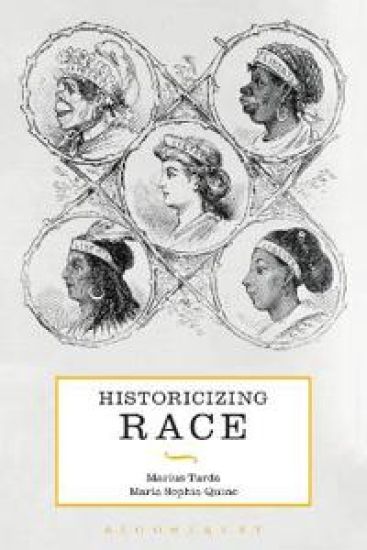
Historicizing Race

Historicizing Race

Marius Turda; Maria Sophia Quine

Bloomsbury Academic USA
2018
sidottu
What led so many intellectuals, politicians and scientists to believe in, and insist on, the existence of race? In exploring this question this book examines themes in the history of race, including nationalism, imperialism, colonialism, eugenics, biopolitics, fascism, Nazism and communism, from 1789 to the present day. Race and Modernity provides an easily accessible, but conceptually challenging, synthesis of the current research into the relationship between race and modernity, richly illustrated with reference to primary source material. Specifically, the book examines how societies the world over appropriated the concept of race as a vehicle for transmitting social and political messages that transgressed political differences and opposing ideological camps. The authors examine case studies from the UK, the United States, Japan, Romania, Greece and Sudan, among others, and use these to chart the emergence and evolution of the concept of race, and look at the legacy of these ideas for the present day.