Kirjojen hintavertailu. Mukana 11 717 486 kirjaa ja 12 kauppaa.

Kirjahaku

Etsi kirjoja tekijän nimen, kirjan nimen tai ISBN:n perusteella.

17 kirjaa tekijältä Mark A. Noll

The Old Religion in a New World

The Old Religion in a New World

Mark A. Noll

William B Eerdmans Publishing Co
2002
nidottu
One of our foremost historians of religion here chronicles the arrival of Christianity in the New World, tracing the turning points in the development of the immigrant church that have led to today's distinctly American faith. Taking a unique approach to this fascinating subject, Noll focuses on what was new about organized Christian religion on the American continent by comparison with European Christianity. In doing so, Noll provides a broad outline of the major events in the history of the Christian churches that have filled North America with such remarkable vitality and diversity. He also highlights some of the most important interpretive issues in the transfer of the hereditary religion of Europe to America.
In the Beginning Was the Word

In the Beginning Was the Word

Mark A. Noll

Oxford University Press Inc
2015
sidottu
In the beginning of American history, the Word was in Spanish, Latin, and native languages like Nahuatal. But while Spanish and Catholic Christianity reached the New World in 1492, it was only with the coming of the Mayflower that English-language Bibles and Protestant Christendom arrived. The Puritans brought with them intense devotion to Scripture, as well as their ideal of Christendom - a civilization characterized by a thorough intermingling of the Bible with everything else. That ideal began this country's journey from the Puritan's City on a Hill to the Bible-quoting country the U.S. remains to this day. In the Beginning shows how important the Bible remained, even as that Puritan ideal changed considerably through the early stages of American history. It is no exaggeration to claim that the Bible has been -- and by far -- the single most widely-read text, distributed object, and cited or referenced book in all of American history. Author Mark Noll shows how seventeenth-century Americans received conflicting models of scriptural authority from Europe: the Bible under Christendom (high Anglicanism), the Bible over Christendom (moderate Puritanism), and the Bible against Christendom (Anabaptists, enthusiasts, Quakers). In the eighteenth century, the colonists turned increasingly to the Bible against Christendom, a stance that fueled the Revolution against Anglican Britain and prepared the way for a new country founded on the separation of church and state. One of the foremost scholars of American Christianity, Mark Noll brings a wealth of research and wisdom to In the Beginning. This book is the first of a projected two-volume study of the Bible in American history, and provides a sweeping, engaging, and insightful survey of the relationship between the Bible and public issues from the beginning of European settlement. A seminal new work from a world-class scholar, In the Beginning offers a fresh account of the contested, sometimes ambiguous, but definite biblical roots of American history.
America's God

America's God

Mark A. Noll

Oxford University Press Inc
2002
sidottu
Religious life in early America is often equated with the fire-and-brimstone Puritanism best embodied by the theology of Cotton Mather. Yet, by the nineteenth century, American theology had shifted dramatically away from the severe European traditions directly descended from the Protestant Reformation, of which Puritanism was in the United States the most influential. In its place arose a singularly American set of beliefs. In America's God, Mark Noll has written a biography of this new American ethos. In the 125 years preceding the outbreak of the Civil War, theology played an extraordinarily important role in American public and private life. Its evolution had a profound impact on America's self-definition. The changes taking place in American theology during this period were marked by heightened spiritual inwardness, a new confidence in individual reason, and an attentiveness to the economic and market realities of Western life. Vividly set in the social and political events of the age, America's God is replete with the figures who made up the early American intellectual landscape, from theologians such as Jonathan Edwards, Nathaniel W. Taylor, William Ellery Channing, and Charle Hodge and religious inspired writers such as Harriet Beecher Stowe and Catherine Stowe to dominant political leaders of the day like Washington, Jefferson, and Lincoln. The contributions of these thinkers combined with the religious revival of the 1740s, colonial warfare with France, the consuming struggle for independence, and the rise of evangelical Protestantism to form a common intellectual coinage based on a rising republicanism and commonsense principles. As this Christian republicanism affirmed itself, it imbued in dedicated Christians a conviction that the Bible supported their beliefs over those of all others. Tragically, this sense of religious purpose set the stage for the Civil War, as the conviction of Christians both North and South that God was on their side served to deepen a schism that would soon rend the young nation asunder. Mark Noll has given us the definitive history of Christian theology in America from the time of Jonathan Edwards to the presidency of Abraham Lincoln. It is a story of a flexible and creative theological energy that over time forged a guiding national ideology the legacies of which remain with us to this day.
The Work We Have to Do

The Work We Have to Do

Mark A. Noll

Oxford University Press Inc
2005
nidottu
A readable, far-reaching history of a multi-denominational, multi-regional, and multi-ethnic religious group, Protestants in America explores the physical and ideological roots of the denomination up to the present day, and traces the origins of American Protestants all the way back to the first English colony at Jamestown. The book covers their involvement in critical issues from temperance to the civil rights movement, the establishment of Protestant organizations like the American Bible Society and the Salvation Army, and the significant expansion of their ethnic base since the first African-American Protestant churches were built in the 1770s. Mark Noll follows their direct impact on American history--from the American Revolution to World War I and beyond--and peppers his account with profiles of leading Protestants, from Jonathan Edwards and Phillis Wheatley to Billy Graham and Martin Luther King, Jr.
America's God

America's God

Mark A. Noll

Oxford University Press Inc
2005
nidottu
Religious life in early America is often equated with the fire-and-brimstone Puritanism best embodied by the theology of Cotton Mather. Yet, by the nineteenth century, American theology had shifted dramatically away from the severe European traditions directly descended from the Protestant Reformation, of which Puritanism was in the United States the most influential. In its place arose a singularly American set of beliefs. In America's God, Mark Noll has written a biography of this new American ethos. In the 125 years preceding the outbreak of the Civil War, theology played an extraordinarily important role in American public and private life. Its evolution had a profound impact on America's self-definition. The changes taking place in American theology during this period were marked by heightened spiritual inwardness, a new confidence in individual reason, and an attentiveness to the economic and market realities of Western life. Vividly set in the social and political events of the age, America's God is replete with the figures who made up the early American intellectual landscape, from theologians such as Jonathan Edwards, Nathaniel W. Taylor, William Ellery Channing, and Charles Hodge and religiously inspired writers such as Harriet Beecher Stowe and Catherine Stowe to dominant political leaders of the day like Washington, Jefferson, and Lincoln. The contributions of these thinkers combined with the religious revival of the 1740s, colonial warfare with France, the consuming struggle for independence, and the rise of evangelical Protestantism to form a common intellectual coinage based on a rising republicanism and commonsense principles. As this Christian republicanism affirmed itself, it imbued in dedicated Christians a conviction that the Bible supported their beliefs over those of all others. Tragically, this sense of religious purpose set the stage for the Civil War, as the conviction of Christians both North and South that God was on their side served to deepen a schism that would soon rend the young nation asunder. Mark Noll has given us the definitive history of Christian theology in America from the time of Jonathan Edwards to the presidency of Abraham Lincoln. It is a story of a flexible and creative theological energy that over time forged a guiding national ideology the legacies of which remain with us to this day.
America's Book

America's Book

Mark A. Noll

OXFORD UNIVERSITY PRESS INC
2022
sidottu
America's Book shows how the Bible decisively shaped American national history even as that history influenced the use of Scripture. It explores the rise of a strongly Protestant Bible civilization in the early United States that was then fractured by debates over slavery, contested by growing numbers of non-Protestant Americans (Catholics, Jews, agnostics), and torn apart by the Civil War. This first comprehensive history of the Bible in America explains why Tom Paine's anti-biblical tract The Age of Reason (1794) precipitated such dramatic effects, how innovations in printing by the American Bible Society created the nation's publishing industry, why Nat Turner's slave rebellion of 1831 and the bitter election of 1844 marked turning points in the nation's engagement with Scripture, and why Theodore Roosevelt and Woodrow Wilson were so eager to commemorate the 300th anniversary of the King James Version of the Bible. Noll's magisterial work highlights not only the centrality of the Bible for the nation's most influential religious figures (Methodist Francis Asbury, Richard Allen of the African Methodist Episcopal Church, Catholic Bishop Francis Kenrick, Jewish scholar Solomon Schechter, agnostic Robert Ingersoll), but also why it was important for presidents like Abraham Lincoln; notable American women like Harriet Beecher Stowe, Elizabeth Cady Stanton, and Frances Willard; dedicated campaigners for civil rights like Frederick Douglass and Francis Grimké; lesser-known figures like Black authors Maria Stewart and Harriet Jacobs; and a host of others of high estate and low. The book also illustrates how the more religiously plural period from Reconstruction to the early twentieth century saw Scripture become a much more fragmented, though still significant, force in American culture, particularly as a source of hope and moral authority for Americans on both sides of the battle over white supremacy-both for those hoping to fight it, and for others seeking to justify it.
Protestantism

Protestantism

Mark A. Noll

Oxford University Press
2011
nidottu
Mark A. Noll presents a fresh and accessible history of Protestantism from the era of Martin Luther to the present day. Beginning with the founding of Lutheran, Reformed, Anglican, and Anabaptist churches in the sixteenth-century Reformation, he also considers the rise of other important Christian movements like Methodism and Pentecostalism. Focussing on worldwide developments, rather than just the familiar European and American histories, he considers the recent expansion of Protestant movements in Africa, China, India, and Latin America, emphasising the on-going and rapidly expanding story of Protestants worldwide. Noll examines the contributions from well-known figures including Martin Luther and John Calvin, along with many others, and explores why Protestant energies have flagged recently in the Western world yet expanded so dramatically elsewhere. Highlighting the key points of Protestant commonality including the message of Christian salvation, reliance on the Bible, and organization through personal initiative, he also explores the reasons for Protestantism's extraordinary diversity. ABOUT THE SERIES: The Very Short Introductions series from Oxford University Press contains hundreds of titles in almost every subject area. These pocket-sized books are the perfect way to get ahead in a new subject quickly. Our expert authors combine facts, analysis, perspective, new ideas, and enthusiasm to make interesting and challenging topics highly readable.
American Evangelical Christianity

American Evangelical Christianity

Mark A. Noll

Blackwell Publishers
2000
nidottu
Mark Noll describes and interprets American Evangelical Christianity, utilising research by theologians, sociologists and political scientists, as well as the author's own historical interests, to explain the position Evangelicalism now occupies at the beginning of the new century.
God and Race in American Politics

God and Race in American Politics

Mark A. Noll

Princeton University Press
2010
pokkari
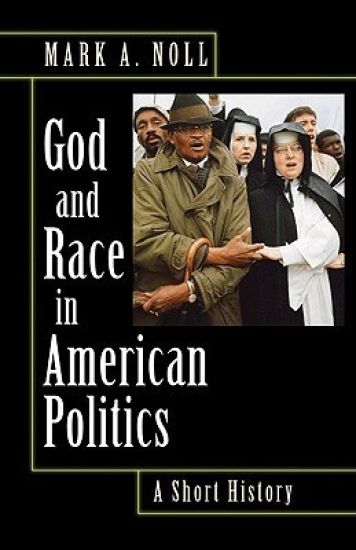
Religion has been a powerful political force throughout American history. When race enters the mix the results have been some of our greatest triumphs as a nation--and some of our most shameful failures. In this important book, Mark Noll, one of the most influential historians of American religion writing today, traces the explosive political effects of the religious intermingling with race. Noll demonstrates how supporters and opponents of slavery and segregation drew equally on the Bible to justify the morality of their positions. He shows how a common evangelical heritage supported Jim Crow discrimination and contributed powerfully to the black theology of liberation preached by Martin Luther King Jr. In probing such connections, Noll takes readers from the 1830 slave revolt of Nat Turner through Reconstruction and the long Jim Crow era, from the civil rights movement of the 1950s and 1960s to "values" voting in recent presidential elections. He argues that the greatest transformations in American political history, from the Civil War through the civil rights revolution and beyond, constitute an interconnected narrative in which opposing appeals to Biblical truth gave rise to often-contradictory religious and moral complexities. And he shows how this heritage remains alive today in controversies surrounding stem-cell research and abortion as well as civil rights reform. God and Race in American Politics is a panoramic history that reveals the profound role of religion in American political history and in American discourse on race and social justice.
Apocalypse and the Millennium in the American Civil War Era

Apocalypse and the Millennium in the American Civil War Era

Mark A. Noll

Louisiana State University Press
2013
sidottu
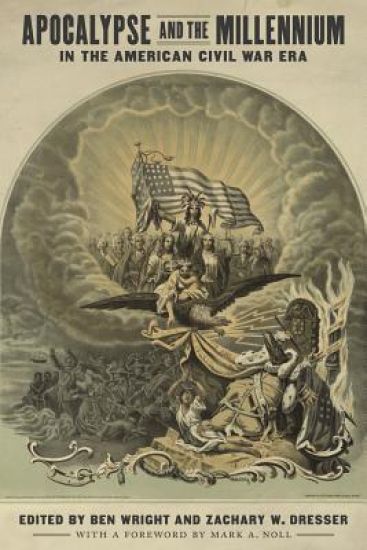
In the Civil War era, Americans nearly unanimously accepted that humans battled in a cosmic contest between good and evil and that God was directing history toward its end. The concept of God's Providence and of millennialism, Christian anticipations of the end of the world, dominated religious thought in the nineteenth century. During the tumultuous years immediately prior to, during, and after the war, these ideas took on a greater importance as Americans struggled with the unprecedented destruction and promise of the period. Scholars of religion, literary critics, and especially historians have acknowledged the presence of apocalyptic thought in the era, but until now, few studies have taken the topic as their central focus or examined it from the antebellum period through Reconstruction. By doing so, the essays in Apocalypse and the Millennium in the American Civil War Era highlight the diverse ways in which beliefs about the end times influenced nineteenth-century American lives, including reform culture, the search for meaning amid the trials of war, and the social transformation wrought by emancipation. Millennial zeal infused the labor of reformers and explained their successes and failures as progress toward an imminent Kingdom of God. Men and women in the North and South looked to Providence to explain the causes and consequences of both victory and defeat, and Americans, black and white, experienced the shock waves of emancipation as either a long-prophesied jubilee or a vengeful punishment. Religion fostered division as well as union, the essays suggest, but while the nation tore itself apart and tentatively stitched itself back together, Americans continued looking to divine intervention to make meaning of the national apocalypse.
The Emergence of Evangelical Spirituality

The Emergence of Evangelical Spirituality

Mark A. Noll

Paulist Press International,U.S.
2016
sidottu
Recent decades have witnessed a growing interest in evangelical spirituality. Although several books are available that focus on evangelical spirituality, none thus far has included the rich and varied resources of primary readings of this under-researched spiritual tradition. The Emergence of Evangelical Spirituality offers readers a balanced collection of primary sources for eighteenth-century evangelical spirituality in America and Britain. Beginning with a chapter that introduces readers to the foundational nature and themes of evangelical spirituality, the book goes on to present the writings of men and women authors—some very well known, others not well known—grouped into six thematic categories. From giants of the movement such as Jonathan Edwards and George Whitefield to social reformers William Wilberforce and Hannah More and such hymn writers as William Cowper, The Emergence of Evangelical Spirituality presents an invaluable and unequalled treasury of authors representing a rich heritage of American and British spirituality for students and general readers alike. †
The New Shape of World Christianity – How American Experience Reflects Global Faith
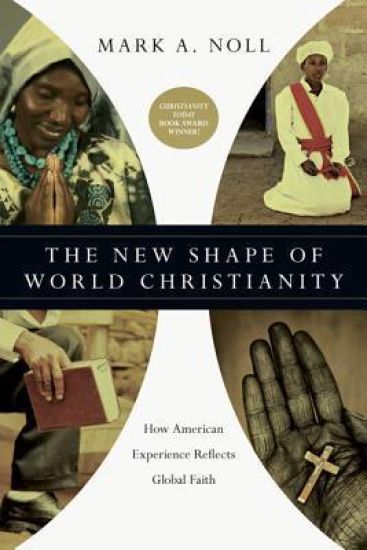
2010 Christianity Today Book Award winner With characteristic rigor and insight, in this book Mark Noll revisits the history of the American church in the context of world events. He makes the compelling case that how Americans have come to practice the Christian faith is just as globally important as what the American church has done in the world. Noll backs up this substantial claim with the scholarly attentiveness we've come to expect from him, lucidly explaining the relationship between the development of Christianity in North America and the development of Christianity in the rest of the world, with attention to recent transfigurations in world Christianity. Here is a book that will challenge your assumptions about the nature of the relationship between the American church and the global church in the past and predict what world Christianity may look like.
C. S. Lewis in America

C. S. Lewis in America

Mark A. Noll

IVP Academic
2023
nidottu
Perhaps no other literary figure has transformed the American religious landscape in recent history as much as C. S. Lewis. Even before the international publication and incredible success of his fictional works such as The Chronicles of Narnia or apologetic works like Mere Christianity, Lewis was already being read "across the pond" in America. But who exactly was reading his work? And how was he received? With fresh research and shrewd analysis, this volume by noted historian Mark A. Noll considers the surprising reception of Lewis among Roman Catholic, mainline Protestant, and evangelical readers to see how early readings of the Oxford don shaped his later influence. Based on the annual lecture series hosted at Wheaton College's Marion E. Wade Center, volumes in the Hansen Lectureship Series reflect on the imaginative work and lasting influence of seven British authors: Owen Barfield, G. K. Chesterton, C. S. Lewis, George MacDonald, Dorothy L. Sayers, J. R. R. Tolkien, and Charles Williams.
Jesus Christ and the Life of the Mind

Jesus Christ and the Life of the Mind

Mark A. Noll

William B Eerdmans Publishing Co
2013
nidottu
In The Scandal of the Evangelical Mind (1994) Mark Noll offered a forthrightly critical assessment of the state of evangelical thinking and scholarship. In this sequel more attuned to possibilities than problems, Noll updates his earlier assessment and charts a positive way forward for evangelical scholarship.Noll's Jesus Christ and the Life of the Mind shows how the orthodox Christology confessed in the ancient Christian creeds, far from hindering or discouraging serious scholarship, can supply the motives, guidance, and framework for learning. Christian faith, Noll argues, can richly enhance intellectual engagement in the various academic disciplines -- and he demonstrates how by applying his insights to the fields of history (his own area of expertise), science, and biblical studies in particular.In a substantial postscript Noll candidly addresses the question How fares the "evangelical mind" today? as he highlights "hopeful signs" of intellectual life in a host of evangelical institutions, individuals, and movements.