Kirjojen hintavertailu. Mukana 11 699 587 kirjaa ja 12 kauppaa.

Kirjahaku

Etsi kirjoja tekijän nimen, kirjan nimen tai ISBN:n perusteella.

4 kirjaa tekijältä Mark A. Russell

Steamship Nationalism

Steamship Nationalism

Mark A. Russell

Routledge
2020
sidottu
Steamship Nationalism is a cultural, social, and political history of the S.S. Imperator, Vaterland, and Bismarck. Transatlantic passenger steamships launched by the Hamburg-Amerikanische Packetfahrt-Aktien-Gesellschaft (HAPAG) between 1912 and 1914, they do not enjoy the international fame of their British counterparts, most notably the Titanic. Yet the Imperator-class liners were the largest, most luxurious passenger vessels built before the First World War. In keeping with the often-overlooked history of its merchant marine as a whole, they reveal much about Imperial Germany in its national and international dimensions. As products of business decisions shaped by global dynamics and the imperatives of international travel, immigration, and trade, HAPAG’s giant liners bear witness to Germany’s involvement in the processes of globalization prior to 1914. Yet this book focuses not on their physical, but on their cultural construction in a variety of contemporaneous media, including the press and advertising, on both sides of the Atlantic. At home, they were presented to the public as symbolic of the nation’s achievements and ambitions in ways that emphasize the complex nature of German national identity at the time. Abroad, they were often construed as floating national monuments and, as such, facilitated important encounters with Germany, both virtual and real, for the populations of Britain and America. Their overseas reception highlights the multi-faceted image of the European superpower that was constructed in the Anglo-American world in these years. More generally, it is a pointed indicator of the complex relationship between Britain, the United States, and Imperial Germany.
Steamship Nationalism

Steamship Nationalism

Mark A. Russell

TAYLOR FRANCIS LTD
2021
nidottu
Steamship Nationalism is a cultural, social, and political history of the S.S. Imperator, Vaterland, and Bismarck. Transatlantic passenger steamships launched by the Hamburg-Amerikanische Packetfahrt-Aktien-Gesellschaft (HAPAG) between 1912 and 1914, they do not enjoy the international fame of their British counterparts, most notably the Titanic. Yet the Imperator-class liners were the largest, most luxurious passenger vessels built before the First World War. In keeping with the often-overlooked history of its merchant marine as a whole, they reveal much about Imperial Germany in its national and international dimensions. As products of business decisions shaped by global dynamics and the imperatives of international travel, immigration, and trade, HAPAG’s giant liners bear witness to Germany’s involvement in the processes of globalization prior to 1914. Yet this book focuses not on their physical, but on their cultural construction in a variety of contemporaneous media, including the press and advertising, on both sides of the Atlantic. At home, they were presented to the public as symbolic of the nation’s achievements and ambitions in ways that emphasize the complex nature of German national identity at the time. Abroad, they were often construed as floating national monuments and, as such, facilitated important encounters with Germany, both virtual and real, for the populations of Britain and America. Their overseas reception highlights the multi-faceted image of the European superpower that was constructed in the Anglo-American world in these years. More generally, it is a pointed indicator of the complex relationship between Britain, the United States, and Imperial Germany.

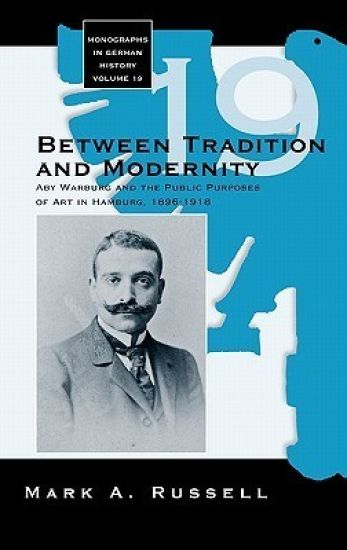
Between Tradition and Modernity

Between Tradition and Modernity

Mark A. Russell

Berghahn Books
2007
sidottu
Aby Warburg (1866-1929), founder of the Warburg Institute, was one of the most influential cultural historians of the twentieth century. Focusing on the period 1896-1918, this is the first in-depth, book-length study of his response to German political, social and cultural modernism. It analyses Warburg's response to the effects of these phenomena through a study of his involvement with the creation of some of the most important public artworks in Germany. Using a wide array of archival sources, including many of his unpublished working papers and much of his correspondence, the author demonstrates that Warburg's thinking on contemporary art was the product of two important influences: his engagement with Hamburg's civic affairs and his affinity with influential reform movements seeking a greater role for the middle classes in the political, social and cultural leadership of the nation. Thus a lively picture of Hamburg’s cultural life emerges as it responded to artistic modernism, animated by private initiative and public discourse, and charged with debate.