Kirjojen hintavertailu. Mukana 11 244 527 kirjaa ja 12 kauppaa.

Kirjahaku

Etsi kirjoja tekijän nimen, kirjan nimen tai ISBN:n perusteella.

8 kirjaa tekijältä Mark Alfano

Moral Psychology

Moral Psychology

Mark Alfano

Polity Press
2016
sidottu
Moral psychology is the systematic inquiry into how morality works, when it does work, and breaks down when it doesn't work. In this comprehensive new textbook, Mark Alfano outlines the five central concepts in the study of moral psychology: agency, patiency, sociality, temporality, and reflexivity. Subsequent chapters each assess a key area of research, which Alfano relates both to the five central concepts and to empirical findings. He then draws out the philosophical implications of those findings before suggesting future directions for research. One of Alfano's guiding themes is that moral philosophy without psychological content is empty, whereas psychological investigation without philosophical insight is blind. He advocates and demonstrates a holistic vision that pictures moral psychology as a project of collaborative inquiry into the descriptive and normative aspects of the human condition. Featuring a glossary of technical terms, further reading sections and chapter-by-chapter study questions, this rich, systematic, and accessible introduction to moral psychology will be suitable for both undergraduates and researchers in philosophy, psychology and related fields.

Moral Psychology

Moral Psychology

Mark Alfano

Polity Press
2016
nidottu
Moral psychology is the systematic inquiry into how morality works, when it does work, and breaks down when it doesn't work. In this comprehensive new textbook, Mark Alfano outlines the five central concepts in the study of moral psychology: agency, patiency, sociality, temporality, and reflexivity. Subsequent chapters each assess a key area of research, which Alfano relates both to the five central concepts and to empirical findings. He then draws out the philosophical implications of those findings before suggesting future directions for research. One of Alfano's guiding themes is that moral philosophy without psychological content is empty, whereas psychological investigation without philosophical insight is blind. He advocates and demonstrates a holistic vision that pictures moral psychology as a project of collaborative inquiry into the descriptive and normative aspects of the human condition. Featuring a glossary of technical terms, further reading sections and chapter-by-chapter study questions, this rich, systematic, and accessible introduction to moral psychology will be suitable for both undergraduates and researchers in philosophy, psychology and related fields.
Nietzsche on Virtue

Nietzsche on Virtue

Mark Alfano

Cambridge University Press
2025
pokkari
This Element argues for an interpretation of Nietzsche on virtue according to which he believes that because different people have different constellations of instincts and other drives, and because instincts and drives can only be shaped and redirected within boundaries, he recommends different virtues as fitting and conducive to flourishing for different types of people. In his own way, these include curiosity, intellectual courage, the pathos of distance, having a sense of humor, and solitude. This interpretation is supported by both a digital humanities methodology and close readings of passages from Nietzsche's middle, mature, and late works.
Nietzsche on Virtue

Nietzsche on Virtue

Mark Alfano

Cambridge University Press
2025
sidottu
This Element argues for an interpretation of Nietzsche on virtue according to which he believes that because different people have different constellations of instincts and other drives, and because instincts and drives can only be shaped and redirected within boundaries, he recommends different virtues as fitting and conducive to flourishing for different types of people. In his own way, these include curiosity, intellectual courage, the pathos of distance, having a sense of humor, and solitude. This interpretation is supported by both a digital humanities methodology and close readings of passages from Nietzsche's middle, mature, and late works.
Character as Moral Fiction

Character as Moral Fiction

Mark Alfano

Cambridge University Press
2013
sidottu
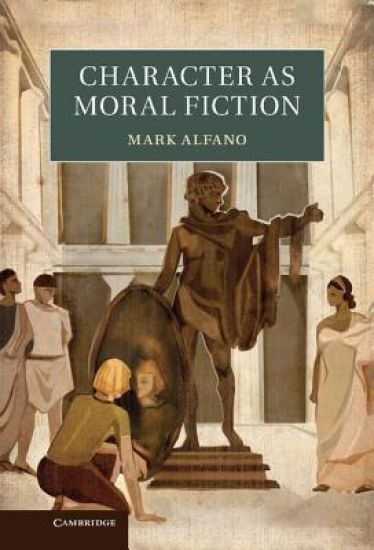
Everyone wants to be virtuous, but recent psychological investigations suggest that this may not be possible. Mark Alfano challenges this theory and asks, not whether character is empirically adequate, but what characters human beings could have and develop. Although psychology suggests that most people do not have robust character traits such as courage, honesty and open-mindedness, Alfano argues that we have reason to attribute these virtues to people because such attributions function as self-fulfilling prophecies - children become more studious if they are told that they are hard-working and adults become more generous if they are told that they are generous. He argues that we should think of virtue and character as social constructs: there is no such thing as virtue without social reinforcement. His original and provocative book will interest a wide range of readers in contemporary ethics, epistemology, moral psychology and empirically informed philosophy.
Nietzsche's Moral Psychology

Nietzsche's Moral Psychology

Mark Alfano

Cambridge University Press
2019
sidottu
Nietzsche, a trained philologist, frequently urges his readers to interpret him carefully. In this book, Mark Alfano combines detailed close reading with digital methods (corpus analysis and semantic network visualization) to reframe our understanding of this major figure. He argues that virtue is a neglected concept in Nietzsche's writings, and sets out a fresh interpretation of Nietzschean virtues as well-calibrated drives. As different people embody different constellations of drives, so virtues differ from person to person. For Nietzsche himself, Alfano argues, five virtues are essential: curiosity, courage, a sense of humor, and pathos of distance (that is, contemptuousness) toward one's self and toward one's society. This innovative and original book will be invaluable for historians of philosophy, contemporary researchers in moral psychology and virtue theory, and philosophers interested in the fast-growing methodologies of the digital humanities.
Nietzsche's Moral Psychology

Nietzsche's Moral Psychology

Mark Alfano

Cambridge University Press
2021
pokkari
Nietzsche, a trained philologist, frequently urges his readers to interpret him carefully. In this book, Mark Alfano combines detailed close reading with digital methods (corpus analysis and semantic network visualization) to reframe our understanding of this major figure. He argues that virtue is a neglected concept in Nietzsche's writings, and sets out a fresh interpretation of Nietzschean virtues as well-calibrated drives. As different people embody different constellations of drives, so virtues differ from person to person. For Nietzsche himself, Alfano argues, five virtues are essential: curiosity, courage, a sense of humor, and pathos of distance (that is, contemptuousness) toward one's self and toward one's society. This innovative and original book will be invaluable for historians of philosophy, contemporary researchers in moral psychology and virtue theory, and philosophers interested in the fast-growing methodologies of the digital humanities.
Character as Moral Fiction

Character as Moral Fiction

Mark Alfano

Cambridge University Press
2015
pokkari
Everyone wants to be virtuous, but recent psychological investigations suggest that this may not be possible. Mark Alfano challenges this theory and asks, not whether character is empirically adequate, but what characters human beings could have and develop. Although psychology suggests that most people do not have robust character traits such as courage, honesty and open-mindedness, Alfano argues that we have reason to attribute these virtues to people because such attributions function as self-fulfilling prophecies - children become more studious if they are told that they are hard-working and adults become more generous if they are told that they are generous. He argues that we should think of virtue and character as social constructs: there is no such thing as virtue without social reinforcement. His original and provocative book will interest a wide range of readers in contemporary ethics, epistemology, moral psychology and empirically informed philosophy.