Kirjojen hintavertailu. Mukana 12 016 292 kirjaa ja 12 kauppaa.

Kirjahaku

Etsi kirjoja tekijän nimen, kirjan nimen tai ISBN:n perusteella.

4 kirjaa tekijältä Mark Antliff

Sculptors Against the State

Sculptors Against the State

Mark Antliff

Pennsylvania State University Press
2021
sidottu
Sculptors Against the State considers the relation of anarchist ideology to avant-garde sculpture through an examination of three iconic artists whose work transformed European modernism: Umberto Boccioni, Jacob Epstein, and Henri Gaudier-Brzeska. Addressing such complex subjects as sexual liberation, homosexuality, the history of emotions, the ethics of violence, and tactics of nonviolent resistance, Mark Antliff demonstrates how sculptural processes were shaped by forms of anarchism calculated to foster a radical community.The anarchist view that the State is a state of mind and a set of social relationships is a central theme Antliff uses to explore not only the art of Boccioni, Epstein, and Gaudier-Brzeska but the associated aesthetics of radical luminaries such as Oscar Wilde, F. T. Marinetti, and Ezra Pound. Taking Boccioni’s Unique Forms of Continuity in Space, Epstein’s Tomb of Oscar Wilde, and Gaudier-Brzeska’s Hieratic Head of Ezra Pound as a starting point, Antliff argues that these sculptors saw the arts as a radical catalyst for an entirely new constellation of interpersonal relations and psychological dispositions—ones antithetical to those propagated by the State. Powerfully argued and informed by extensive archival research, Sculptors Against the State provides a new understanding of these artists, even as it sheds light on why contemporary anarchist theory is necessary for understanding the profound cultural impact modernism had during the twentieth century. Antliff’s work will be of interest to students and scholars of modernist art and literature, and particularly those who study the intersections between artistic practice and politics.
Sculptors Against the State

Sculptors Against the State

Mark Antliff

Pennsylvania State University Press
2022
pokkari
Sculptors Against the State considers the relation of anarchist ideology to avant-garde sculpture through an examination of three iconic artists whose work transformed European modernism: Umberto Boccioni, Jacob Epstein, and Henri Gaudier-Brzeska. Addressing such complex subjects as sexual liberation, homosexuality, the history of emotions, the ethics of violence, and tactics of nonviolent resistance, Mark Antliff demonstrates how sculptural processes were shaped by forms of anarchism calculated to foster a radical community.The anarchist view that the State is a state of mind and a set of social relationships is a central theme Antliff uses to explore not only the art of Boccioni, Epstein, and Gaudier-Brzeska but the associated aesthetics of radical luminaries such as Oscar Wilde, F. T. Marinetti, and Ezra Pound. Taking Boccioni’s Unique Forms of Continuity in Space, Epstein’s Tomb of Oscar Wilde, and Gaudier-Brzeska’s Hieratic Head of Ezra Pound as a starting point, Antliff argues that these sculptors saw the arts as a radical catalyst for an entirely new constellation of interpersonal relations and psychological dispositions—ones antithetical to those propagated by the State. Powerfully argued and informed by extensive archival research, Sculptors Against the State provides a new understanding of these artists, even as it sheds light on why contemporary anarchist theory is necessary for understanding the profound cultural impact modernism had during the twentieth century. Antliff’s work will be of interest to students and scholars of modernist art and literature, and particularly those who study the intersections between artistic practice and politics.
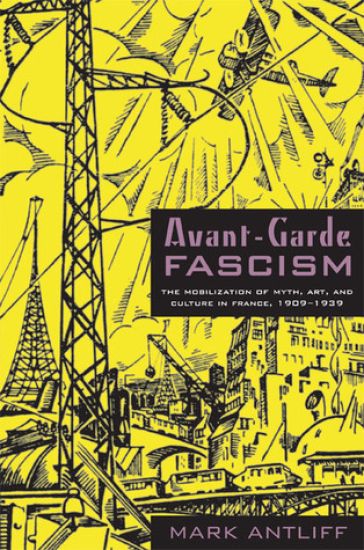
Avant-Garde Fascism

Avant-Garde Fascism

Mark Antliff

Duke University Press
2007
sidottu
Investigating the central role that theories of the visual arts and creativity played in the development of fascism in France, Mark Antliff examines the aesthetic dimension of fascist myth-making within the history of the avant-garde. Between 1909 and 1939, a surprising array of modernists were implicated in this project, including such well-known figures as the symbolist painter Maurice Denis, the architects Le Corbusier and Auguste Perret, the sculptors Charles Despiau and Aristide Maillol, the “New Vision” photographer Germaine Krull, and the fauve Maurice Vlaminck.Antliff considers three French fascists: Georges Valois, Philippe Lamour, and Thierry Maulnier, demonstrating how they appropriated the avant-garde aesthetics of cubism, futurism, surrealism, and the so-called Retour à l’Ordre (“Return to Order”), and, in one instance, even defined the “dynamism” of fascist ideology in terms of Soviet filmmaker Sergei Eisenstein’s theory of montage. For these fascists, modern art was the mythic harbinger of a regenerative revolution that would overthrow existing governmental institutions, inaugurate an anticapitalist new order, and awaken the creative and artistic potential of the fascist “new man.”In formulating the nexus of fascist ideology, aesthetics, and violence, Valois, Lamour, and Maulnier drew primarily on the writings of the French political theorist Georges Sorel, whose concept of revolutionary myth proved central to fascist theories of cultural and national regeneration in France. Antliff analyzes the impact of Sorel’s theory of myth on Valois, Lamour, and Maulnier. Valois created the first fascist movement in France; Lamour, a follower of Valois, established the short-lived Parti Fasciste Révolutionnaire in 1928 before founding two fascist-oriented journals; Maulnier forged a theory of fascism under the auspices of the journals Combat and Insurgé.
Avant-Garde Fascism

Avant-Garde Fascism

Mark Antliff

Duke University Press
2007
pokkari
Investigating the central role that theories of the visual arts and creativity played in the development of fascism in France, Mark Antliff examines the aesthetic dimension of fascist myth-making within the history of the avant-garde. Between 1909 and 1939, a surprising array of modernists were implicated in this project, including such well-known figures as the symbolist painter Maurice Denis, the architects Le Corbusier and Auguste Perret, the sculptors Charles Despiau and Aristide Maillol, the “New Vision” photographer Germaine Krull, and the fauve Maurice Vlaminck.Antliff considers three French fascists: Georges Valois, Philippe Lamour, and Thierry Maulnier, demonstrating how they appropriated the avant-garde aesthetics of cubism, futurism, surrealism, and the so-called Retour à l’Ordre (“Return to Order”), and, in one instance, even defined the “dynamism” of fascist ideology in terms of Soviet filmmaker Sergei Eisenstein’s theory of montage. For these fascists, modern art was the mythic harbinger of a regenerative revolution that would overthrow existing governmental institutions, inaugurate an anticapitalist new order, and awaken the creative and artistic potential of the fascist “new man.”In formulating the nexus of fascist ideology, aesthetics, and violence, Valois, Lamour, and Maulnier drew primarily on the writings of the French political theorist Georges Sorel, whose concept of revolutionary myth proved central to fascist theories of cultural and national regeneration in France. Antliff analyzes the impact of Sorel’s theory of myth on Valois, Lamour, and Maulnier. Valois created the first fascist movement in France; Lamour, a follower of Valois, established the short-lived Parti Fasciste Révolutionnaire in 1928 before founding two fascist-oriented journals; Maulnier forged a theory of fascism under the auspices of the journals Combat and Insurgé.