Kirjojen hintavertailu. Mukana 12 016 292 kirjaa ja 12 kauppaa.

Kirjahaku

Etsi kirjoja tekijän nimen, kirjan nimen tai ISBN:n perusteella.

19 kirjaa tekijältä Mark Bailey

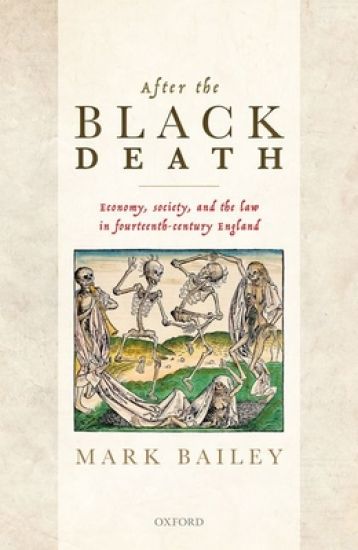
After the Black Death

After the Black Death

Mark Bailey

Oxford University Press
2021
sidottu
The Black Death of 1348-9 is the most catastrophic event and worst pandemic in recorded history. After the Black Death offers a major reinterpretation of its immediate impact and longer-term consequences in England. After the Black Death reassesses the established scholarship on the impact of plague on fourteenth-century England and draws upon original research into primary sources to offer a major re-interpretation of the subject. It studies how the government reacted to the crisis, and how communities adapted in its wake. It places the pandemic within the wider context of extreme weather and epidemiological events, the institutional framework of markets and serfdom, and the role of law in reducing risks and conditioning behaviour. The government's response to the Black Death is reconsidered in order to cast new light on the Peasants' Revolt of 1381. By 1400, the effects of plague had resulted in major changes to the structure of society and the economy, creating the pre-conditions for England's role in the Little Divergence (whereby economic performance in parts of north western Europe began to move decisively ahead of the rest of the continent). After the Black Death explores in detail how a major pandemic transformed society, and, in doing so, elevates the third quarter of the fourteenth century from a little-understood paradox to a critical period of profound and irreversible change in English and global history.
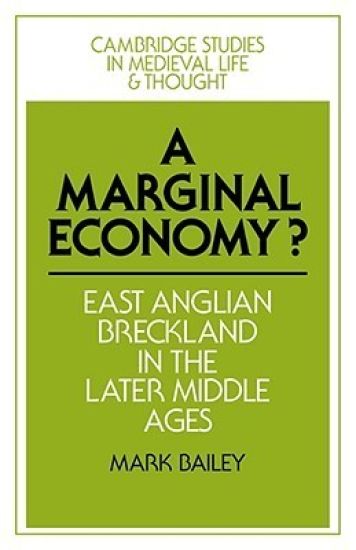
A Marginal Economy?

A Marginal Economy?

Mark Bailey

Cambridge University Press
2008
pokkari
A theory of the margin has long featured in the work of medieval historians. Marginal regions are taken to be those of poor soil or geographical remoteness, where farmers experienced particular difficulties in grain production. It is argued that such regions were cultivated only when demographic pressure intensified in the thirteenth century, but that a combination of soil exhaustion and demographic decline resulted in severe economic contraction by the end of the fourteenth century. Marginal regions are seen not just as sensitive barometers of economic change but as important catalysts in that change. Despite the importance placed by historians on the general theory of the margin, this book represents the first detailed study of a 'marginal region'. It focuses upon East Anglian Breckland, whose blowing sands are among the most barren soils in lowland England. Drawing upon a wide range of sources, this study reconstructs Breckland's late medieval economy, and shows it to be more diversified and resilient than the stereotype depicted in marginal theory.
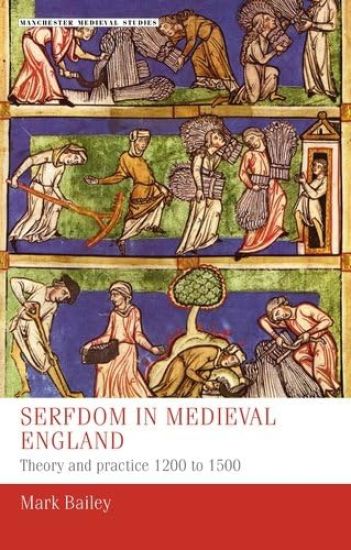
Serfdom in Medieval England

Serfdom in Medieval England

Mark Bailey

MANCHESTER UNIVERSITY PRESS
2025
sidottu
Serfdom was a coercive relationship between a landowner and peasant, which was widespread across medieval and early modern Europe. It features prominently in major historical debates, such as the origins of capitalism and the divergent pathways of western and eastern Europe to modernity. Scholars have paid particular attention to English serfdom, which is usually portrayed as highly oppressive and a major cause of the Peasants' Revolt in 1381.This comprehensive survey draws on a vast scholarship and new research to show how, in reality, English serfdom was weak, casting new light on the nature of its society and economy when the Black Death struck in 1348-9. The pandemic now assumes a central role in the rapid decline of serfdom, as illustrated in a case study of the estate of one of England's harshest landowners, St Albans abbey.
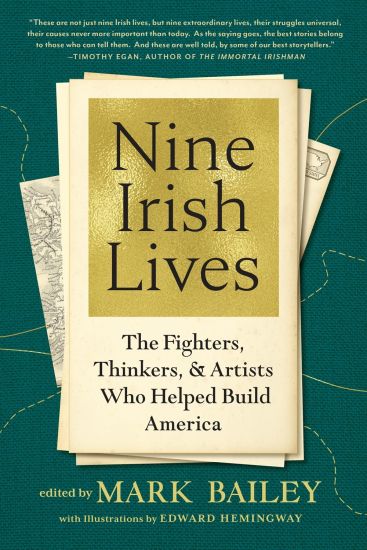
Nine Irish Lives

Nine Irish Lives

Mark Bailey

Algonquin Books (division of Workman)
2018
pokkari
“These are not just nine Irish lives but nine extraordinary lives, their struggles universal, their causes never more important than today. As the saying goes, the best stories belong to those who can tell them. And these are well told, by some of our best storytellers.” —Timothy Egan, New York Times bestselling author of The Immortal Irishman In this entertaining and timely anthology, nine contemporary Irish Americans present the stories of nine inspiring Irish immigrants whose compassion, creativity, and indefatigable spirit helped shape America. The authors here bring to bear their own life experiences as they reflect on their subjects, in each essay telling a unique and surprisingly intimate story. Rosie O’Donnell, an adoptive mother of five, writes about Margaret Haughery, the Mother of Orphans. Poet Jill McDonough recounts the story of a particularly brave Civil War soldier, and filmmaker and activist Michael Moore presents the original muckraking journalist, Samuel McClure. Novelist Kathleen Hill reflects on famed New Yorker writer Maeve Brennan, and historian Terry Golway examines the life of pivotal labor leader Mother Jones. In his final written work, activist and politician Tom Hayden explores his own namesake, Thomas Addis Emmet. Nonprofit executive Mark Shriver writes about the priest who founded Boys Town, and celebrated actor Pierce Brosnan—himself a painter in his spare time—writes about silent film director Rex Ingram, also a sculptor. And a pair of Pulitzer Prize–winning journalists, Mary Jordan and Kevin Sullivan, take on the story of Niall O’Dowd, the news publisher who brokered peace in Northern Ireland. Each of these remarkable stories serves as a reflection—and celebration—of our nation’s shared values, ever more meaningful as we debate the issue of immigration today. Through the battles they fought, the cases they argued, the words they wrote, and the lives they touched, the nine Irish men and women profiled in these pages left behind something greater than their individual accomplishments—our America.
Nine Irish Lives

Nine Irish Lives

Mark Bailey

WORKMAN PUBLISHING
2018
sidottu
“These are not just nine Irish lives but nine extraordinary lives, their struggles universal, their causes never more important than today. As the saying goes, the best stories belong to those who can tell them. And these are well told, by some of our best storytellers.” —Timothy Egan, New York Times bestselling author of The Immortal Irishman In this entertaining and timely anthology, nine contemporary Irish Americans present the stories of nine inspiring Irish immigrants whose compassion, creativity, and indefatigable spirit helped shape America. The authors here bring to bear their own life experiences as they reflect on their subjects, in each essay telling a unique and surprisingly intimate story. Rosie O’Donnell, an adoptive mother of five, writes about Margaret Haughery, the Mother of Orphans. Poet Jill McDonough recounts the story of a particularly brave Civil War soldier, and filmmaker and activist Michael Moore presents the original muckraking journalist, Samuel McClure. Novelist Kathleen Hill reflects on famed New Yorker writer Maeve Brennan, and historian Terry Golway examines the life of pivotal labor leader Mother Jones. In his final written work, activist and politician Tom Hayden explores his own namesake, Thomas Addis Emmet. Nonprofit executive Mark Shriver writes about the priest who founded Boys Town, and celebrated actor Pierce Brosnan—himself a painter in his spare time—writes about silent film director Rex Ingram, also a sculptor. And a pair of Pulitzer Prize–winning journalists, Mary Jordan and Kevin Sullivan, take on the story of Niall O’Dowd, the news publisher who brokered peace in Northern Ireland. Each of these remarkable stories serves as a reflection—and celebration—of our nation’s shared values, ever more meaningful as we debate the issue of immigration today. Through the battles they fought, the cases they argued, the words they wrote, and the lives they touched, the nine Irish men and women profiled in these pages left behind something greater than their individual accomplishments—our America.
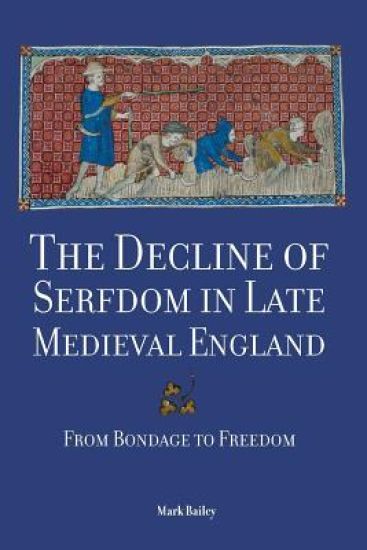
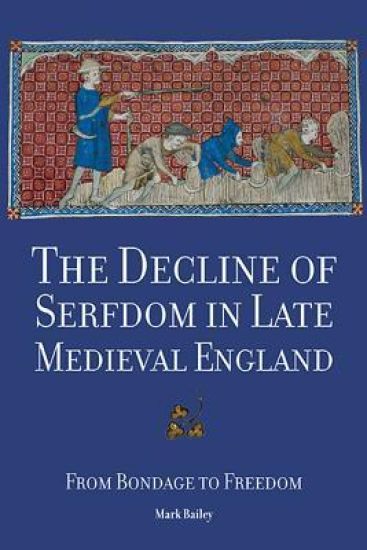
The Decline of Serfdom in Late Medieval England
An exciting, fresh look at one of the most important questions of medieval scholarship - the decline of serfdom and its implications. Scholars from various disciplines have long debated why western Europe in general, and England in particular, led the transition from feudalism to capitalism. The decline of serfdom between c.1300 and c.1500 in England is centralto this "Transition Debate", because it transformed the lives of ordinary people and opened up the markets in land and labour. Yet, despite its historical importance, there has been no major survey or reassessment of decline of serfdom for decades. Consequently, the debate over its causes, and its legacy to early modern England, remains unresolved. This dazzling study provides an accessible and up-to-date survey of the decline of serfdom in England, applying a new methodology for establishing both its chronology and causes to thousands of court rolls from 38 manors located across the south Midlands and East Anglia. It presents a ground-breaking reassessment, challenging many of the traditional interpretations of the economy and society of late-medieval England, and, indeed, of the very nature of serfdom itself. Mark Bailey is High Master of St Paul's School, and Professor of Later Medieval History at the University of East Anglia. He has published extensively on the economic and social history of England between c.1200 and c.1500, including Medieval Suffolk (2007).
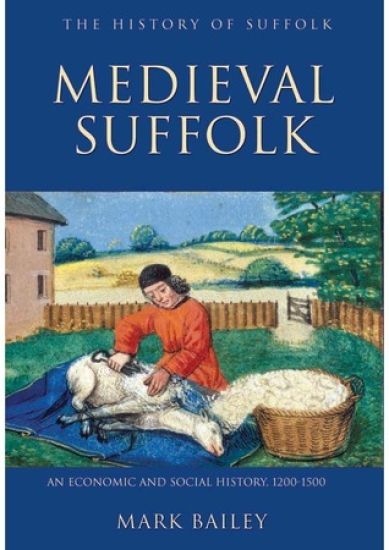
Medieval Suffolk: An Economic and Social History, 1200-1500
A comprehensive survey of the economy and society of late medieval Suffolk. Suffolk was one of the most important regions of England in the middle ages. Even by 1200 it was wealthy, densely populated, highly commercialised and urbanised; and it survived the impact of three of the most tumultuous events ofthe last millennium, the Great Famine (1315-22), the Black Death (1349) and the Peasants' Revolt (1381), to become by 1500 one of the richest and most industrialised regions of England, based on cloth manufacture, fishing and tanning. This volume describes, documents and analyses these events. It combines an accessible and readable summary of the current state of knowledge with fresh insights drawn from extensive investigations of primary sources. Overall, it offers a guide to and re-evaluation of the history of late medieval Suffolk.
Medieval Suffolk: An Economic and Social History, 1200-1500
The first volume in what will become the definitive history of Suffolk looks at how the county survived the three most tumultuous events of the period, the Great Famine, the Black Death and the Peasants' Revolt, to emerge as one of the richest English regions. The late middle ages were without doubt the most interesting period in Suffolk's history. By the end of the eleventh century Suffolk was wealthy, densely populated, highly commercialised and urbanised; in the fourteenth century its people faced three of the most tumultuous events of the last millennium, the Great Famine (1315-22), the Black Death (1349) and the Peasants' Revolt (1381). Their response was flexible and innovative, because by 1500 Suffolk was one of the richest and most industrialised regions of England, with a strong economy based on cloth manufacture, fishing, dairying and tanning.
The Decline of Serfdom in Late Medieval England
An exciting, fresh look at one of the most important questions of medieval scholarship - the decline of serfdom and its implications. Scholars from various disciplines have long debated why western Europe in general, and England in particular, led the transition from feudalism to capitalism. The decline of serfdom between c.1300 and c.1500 in England is centralto this "Transition Debate", because it transformed the lives of ordinary people and opened up the markets in land and labour. Yet, despite its historical importance, there has been no major survey or reassessment of decline of serfdom for decades. Consequently, the debate over its causes, and its legacy to early modern England, remains unresolved. This dazzling study provides an accessible and up-to-date survey of the decline of serfdom in England, applying a new methodology for establishing both its chronology and causes to thousands of court rolls from 38 manors located across the south Midlands and East Anglia. It presents a ground-breaking reassessment, challenging many of the traditional interpretations of the economy and society of late-medieval England, and, indeed, of the very nature of serfdom itself. Mark Bailey is High Master of St Paul's School, and Professor of Later Medieval History at the University of East Anglia. He has published extensively on the economic and social history of England between c.1200 and c.1500, including Medieval Suffolk (2007).