Kirjojen hintavertailu. Mukana 11 244 527 kirjaa ja 12 kauppaa.

Kirjahaku

Etsi kirjoja tekijän nimen, kirjan nimen tai ISBN:n perusteella.

10 kirjaa tekijältä Mark Braude

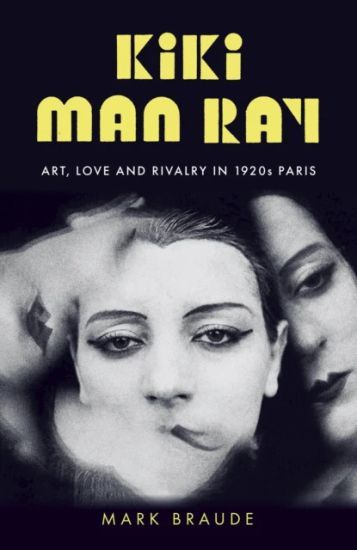
Kiki Man Ray: Art, Love, and Rivalry in 1920s Paris
In freewheeling 1920s Paris, Kiki de Montparnasse captivated as a nightclub performer, sold out gallery showings of her paintings, starred in Surrealist films, and shared drinks and ideas with the likes of Jean Cocteau and Marcel Duchamp. Her best-selling memoir--featuring an introduction by Ernest Hemingway--made front-page news in France and was immediately banned in America. All before she turned thirty.Kiki was once the symbol of bohemian Paris. But if she is remembered today, it is only for posing for several now-celebrated male artists, including Amedeo Modigliani and Alexander Calder, and especially photographer Man Ray. Why has Man Ray's legacy endured while Kiki has become a footnote?Kiki and Man Ray met in 1921 during a chance encounter at a caf . What followed was an explosive decade-long connection, both professional and romantic, during which the couple grew and experimented as artists, competed for fame, and created many of the shocking images that cemented Man Ray's reputation as one of the great artists of the modern era. The works they made together, including the Surrealist icons Le Violon d'Ingres and Noire et blanche, now set records at auction.Charting their volatile relationship, award-winning historian Mark Braude illuminates for the first time Kiki's seminal influence not only on Man Ray's art, but on the culture of 1920s Paris and beyond. As provocative and magnetically irresistible as Kiki herself, Kiki Man Ray is the story of an exceptional life that will challenge ideas about artists and muses--and the lines separating the two.
Kiki Man Ray: Art, Love, and Rivalry in 1920s Paris

Kiki Man Ray: Art, Love, and Rivalry in 1920s Paris

Mark Braude

W. W. Norton and Company
2023
nidottu
In freewheeling 1920s Paris, Kiki de Montparnasse captivated as a nightclub performer, sold out gallery showings of her paintings, starred in Surrealist films, and shared drinks and ideas with the likes of Jean Cocteau and Marcel Duchamp. Her best-selling memoir--featuring an introduction by Ernest Hemingway--made front-page news in France and was immediately banned in America. All before she turned thirty.Kiki was once the symbol of bohemian Paris. But if she is remembered today, it is only for posing for several now-celebrated male artists, including Amedeo Modigliani and Alexander Calder, and especially photographer Man Ray. Why has Man Ray's legacy endured while Kiki has become a footnote?Kiki and Man Ray met in 1921 during a chance encounter at a caf . What followed was an explosive decade-long connection, both professional and romantic, during which the couple grew and experimented as artists, competed for fame, and created many of the shocking images that cemented Man Ray's reputation as one of the great artists of the modern era. The works they made together, including the Surrealist icons Le Violon d'Ingres and Noire et blanche, now set records at auction.Charting their volatile relationship, award-winning historian Mark Braude illuminates for the first time Kiki's seminal influence not only on Man Ray's art, but on the culture of 1920s Paris and beyond. As provocative and magnetically irresistible as Kiki herself, Kiki Man Ray is the story of an exceptional life that will challenge ideas about artists and muses--and the lines separating the two.
Making Monte Carlo: A History of Speculation and Spectacle
"A brisk historical tour of the marketing and selling of the small principality of Monaco and its famous city...A well-researched, dramatic rags-to-riches urban tale" (Kirkus Reviews) of Monte Carlo's rise from small principality to prosperous resort town of the 1920s. Monte Carlo has long been known as a dazzling playground for the rich and famous. The "vivid, entertaining" (The Wall Street Journal) Making Monte Carlo traces a narrative history of the world's first modern casino-resort, from the legalization of gambling in Monaco in 1855--passed as a desperate bid to stave off bankruptcy--through the resort's improbable emergence as a glamorous gambling destination of to its decline in the wake of WWI and its subsequent reinvention in the 1920s until the inaugural Monaco Grand Prix in 1929, on the eve of the Wall Street crash that would largely spell the end of the freewheeling era. Along the way, we encounter a colorful cast of characters, including Francois Blanc (a professional gambler and cheat and eventual founder of Monte Carlo); Basil Zaharoff (notorious munitions dealer and probable secret owner of the casino for some years in the 1920s); Elsa Maxwell (hired as the casino's publicist in the late 1920s); R n L on (a visionary Jewish businessman with murky origins); Serge Diaghilev, Jean Cocteau, Coco Chanel, Pablo Picasso, and other satellite members of the Ballet Russes dance company; as well as Gerald and Sara Murphy and other American expats, such as Ernest Hemingway and F. Scott Fitzgerald. "An engrossing examination of how politics, personality, and publicity coalesced to transform a sleepy village into a luxurious playground populated with casinos and beautiful people" (Publishers Weekly), Making Monte Carlo is a classic rags-to-riches tale set in the most scenic of European settings.
Kiki Man Ray

Kiki Man Ray

Mark Braude

Hodder Stoughton
2022
sidottu
***One of The New Yorker's Best Books of 2022******One of The New York Time's 100 Notable Books of 2022***'Exuberantly entertaining' NYT Book Review'Mark Braude's writing and subject make this book irresistible, as was Kiki herself.' Jim Jarmusch'A delightful, marvelously readable, meticulously-researched romp of a book, Kiki Man Ray brings to life not just the kaleidoscopically talented Kiki herself, but the endlessly fascinating Montparnasse milieu over which she reigned.' Whitney Scharer, author of THE AGE OF LIGHTThough many have never heard her name, Alice Prin - Kiki de Montparnasse - was the icon of 1920s Paris. She captivated as a ground-breaking nightclub performer, wrote a bestselling memoir, sold out exhibitions of her paintings, and shared drinks and ideas with the likes of Pablo Picasso, Peggy Guggenheim, and Marcel Duchamp. She also shepherded along the career of a then-unknown American photographer: Man Ray.Following Kiki in the years between 1921 and 1929, when she lived and worked with Man Ray, Kiki Man Ray charts their complicated entanglement and reveals how Man Ray - always the unabashed careerist - went on to become one of the most famous photographers of the twentieth century, enjoying wealth and prestige, while Kiki's legacy was lost.But this isn't a story of an overbearing male genius and his defeated muse. During the 1920s it was Kiki, not Man Ray, who was the brighter of the two rising stars and a powerful figure among the close-knit community of models, painters, writers and café wastrels who made their homes in gritty Montparnasse. Following the couple as they created art, struggled for power and competed for fame, Kiki Man Ray illuminates for the first time Kiki's seminal influence on the culture of 1920s Paris, and challenges ideas about artists and muses, and the lines separating the two.'Kiki de Montparnasse was more than a muse - she was a vivacious, independent woman whose talent and magnetism helped make Paris the center of the art world in the 1920s. In Mark Braude's riveting cultural history, the Queen of Montparnasse rises again. This is a lively and compassionate tribute to the chanteuse, model, and portraitist who held center stage in her life, and who inspired some of the finest Surrealist art of the twentieth century.' Heather Clark, author of Pulitzer Prize-finalist Red Comet: The Short Life and Blazing Art of Sylvia Plath
Kiki Man Ray

Kiki Man Ray

Mark Braude

John Murray Press
2023
pokkari
'Exuberantly entertaining' NYT Book Review'Mark Braude's writing and subject make this book irresistible, as was Kiki herself.' Jim Jarmusch'A delightful, marvelously readable, meticulously-researched romp of a book, Kiki Man Ray brings to life not just the kaleidoscopically talented Kiki herself, but the endlessly fascinating Montparnasse milieu over which she reigned.' Whitney Scharer, author of THE AGE OF LIGHTThough many have never heard her name, Alice Prin - Kiki de Montparnasse - was the icon of 1920s Paris. She captivated as a ground-breaking nightclub performer, wrote a bestselling memoir, sold out exhibitions of her paintings, and shared drinks and ideas with the likes of Pablo Picasso, Peggy Guggenheim, and Marcel Duchamp. She also shepherded along the career of a then-unknown American photographer: Man Ray.Following Kiki in the years between 1921 and 1929, when she lived and worked with Man Ray, Kiki Man Ray charts their complicated entanglement and reveals how Man Ray - always the unabashed careerist - went on to become one of the most famous photographers of the twentieth century, enjoying wealth and prestige, while Kiki's legacy was lost.But this isn't a story of an overbearing male genius and his defeated muse. During the 1920s it was Kiki, not Man Ray, who was the brighter of the two rising stars and a powerful figure among the close-knit community of models, painters, writers and café wastrels who made their homes in gritty Montparnasse. Following the couple as they created art, struggled for power and competed for fame, Kiki Man Ray illuminates for the first time Kiki's seminal influence on the culture of 1920s Paris, and challenges ideas about artists and muses, and the lines separating the two.'Kiki de Montparnasse was more than a muse - she was a vivacious, independent woman whose talent and magnetism helped make Paris the center of the art world in the 1920s. In Mark Braude's riveting cultural history, the Queen of Montparnasse rises again. This is a lively and compassionate tribute to the chanteuse, model, and portraitist who held center stage in her life, and who inspired some of the finest Surrealist art of the twentieth century.' Heather Clark, author of Pulitzer Prize-finalist Red Comet: The Short Life and Blazing Art of Sylvia Plath
The Typewriter and the Guillotine: An American Journalist, a German Serial Killer, and Paris on the Eve of WWII
The thrilling untold story of the trailblazing writer Janet Flanner, Paris correspondent for The New Yorker, who sounded the alarm about the rise of fascism in Europe while becoming enmeshed in the sensational case of a German serial killer stalking the streets of the French capital on the eve of WWII. In 1925, the Indianapolis-born Janet Flanner took an assignment to write a regular 'Letter from Paris' for a lighthearted humor magazine called The New Yorker, started by some friends in New York. She'd come to Paris to with dreams of writing about "Beauty with a Capital B." Her employer, self-consciously apolitical, sought only breezy reports on French art and culture. But as she woke to the frightening signs of rising extremism, economic turmoil, and widespread discontent in Europe, Flanner ignored her editor's directives, reinventing herself, her assignment, and The New Yorker in the process. While working tirelessly to alert American readers to the dangers of the Third Reich, including producing one of the first detailed profiles of Hitler in an American publication, Flanner became gripped by the disturbing crimes of a man who embodied all of the darkness she was being forced to confront. Eugen Weidmann, a German con-man who killed six people in and around Paris in the late 1930s, and who was last man to be publicly executed in France--mere weeks before the outbreak of WWII. Flanner covered his crimes, capture, and highly politicized trial, seeing the case as a guiding metaphor through which to understand the tumultuous years through which she'd just passed and to prepare herself for the dangers to come. The Typewriter and The Guillotine offers the personal and professional coming-of-age story of an indomitable journalist set against a glamorous, high-stakes backdrop - a tightly-coiled drama full of romance and intrigue.
The Invisible Emperor: Napoleon on Elba from Exile to Escape
A gripping narrative history of Napoleon Bonaparte's ten-month exile on the Mediterranean island of Elba In the spring of 1814, Napoleon Bonaparte was defeated. Having overseen an empire spanning half the European continent and governed the lives of some eighty million people, he suddenly found himself exiled to Elba, less than a hundred square miles of territory. This would have been the end of him, if Europe's rulers had had their way. But soon enough Napoleon imposed his preternatural charisma and historic ambition on both his captors and the very island itself, plotting his return to France and to power. After ten months of exile, he escaped Elba with just of over a thousand supporters in tow, marched to Paris, and retook the Tuileries Palace--all without firing a shot. Not long after, tens of thousands of people would die fighting for and against him at Waterloo. Braude dramatizes this strange exile and improbable escape in granular detail and with novelistic relish, offering sharp new insights into a largely overlooked moment. He details a terrific cast of secondary characters, including Napoleon's tragically-noble official British minder on Elba, Neil Campbell, forever disgraced for having let "Boney" slip away; and his young second wife, Marie Louise who was twenty-two to Napoleon's forty-four, at the time of his abdication. What emerges is a surprising new perspective on one of history's most consequential figures, which both subverts and celebrates his legendary persona.