Kirjojen hintavertailu. Mukana 11 244 527 kirjaa ja 12 kauppaa.

Kirjahaku

Etsi kirjoja tekijän nimen, kirjan nimen tai ISBN:n perusteella.

18 kirjaa tekijältä Mark Connelly

Steady The Buffs!

Steady The Buffs!

Mark Connelly

Oxford University Press
2006
sidottu
This book fully revises standard regimental history by establishing the framework and background to the regiment's role in the Great War. It tests the current theories about the British army in the war and some of the conclusions of modern military historians. In recent years a fascinating reassessment of the combat performance of the British Army in the Great War has stressed the fact that the British Army ascended a 'learning curve' during the conflict resulting in a modern military machine of awesome power. Research carried out thus far has been on a grand scale with very few examinations of smaller units. This study of the battalion of the Buffs has tested these theoretical ideas. The central questions addressed in this study are: · The factors that dominated the officer-man relationship during the war. · How identity and combat efficiency was maintained in the light of heavy casualties. · The relative importance of individual characters to the efficiency of a battalion as opposed to the 'managerial structures' of the BEF. · The importance of brigade and division to the performance of a battalion. · The effective understanding and deployment of new weapons. · The reactions of individual men to the trials of war. · The personal and private reactions of the soldiers' communities in Kent. Using previously uncovered material, this book adds a significant new chapter to our understanding of the British army on the Western Front, and the way its home community in East Kent reacted to experience. It reveals the way in which the regiment adjusted to the shock of modern warfare, and the bloody learning curve the Buffs ascended as they shared the British Expeditionary Force's march towards final victory.
Postcards from the Western Front

Postcards from the Western Front

Mark Connelly

MCGILL-QUEEN'S UNIVERSITY PRESS
2022
sidottu
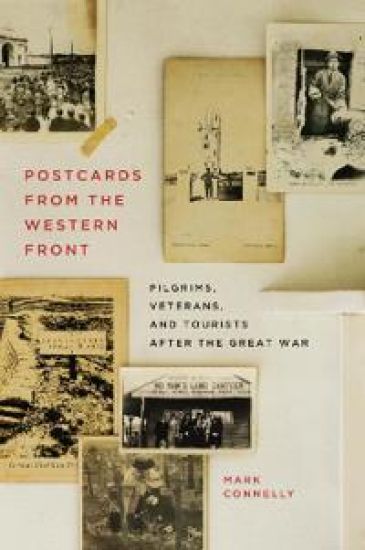
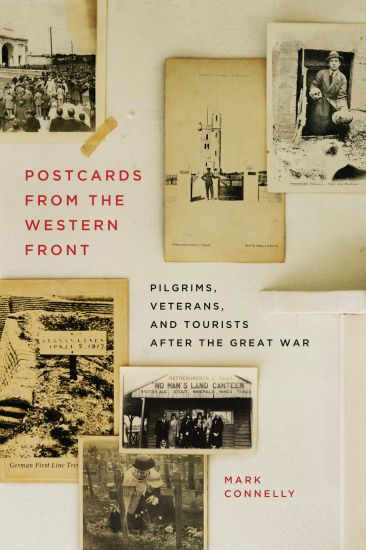
Visitors to the battlefields of France and Belgium expressed pain and anguish, pride and nostalgia, and wonder and surprise at what they saw. Postcards from the Western Front chronicles the many ways in which these sites were perceived and commemorated by British people, both during the First World War and in the twenty years following the Armistice.Mark Connelly’s definitive and engaging study of the former Western Front examines how different and distinctive sub-communities – regional, ethnic and religious, civilian and armed forces – influenced the depth and strength of the visiting public’s relationship with the battlefields, all the while comparing and contrasting this relationship with the viewpoint of the French and Belgian inhabitants of the devastated regions. Connelly draws from a vast archive a number of interlocking themes, including the lingering presence of the battlefields in the British domestic imagination, the often fraught experience of visiting the battlefields, memorials and cemeteries functioning as part of a historical testimony to wartime realities, and the interactions between visitors and the people living in these former fighting zones. Focusing on French and Belgian sites, Connelly nevertheless provides insight into other major battlefields fought over by troops from the British Empire. Extensively illustrated with black and white photographs, Postcards from the Western Front offers a groundbreaking perspective on landscapes that rarely left anyone – whether tourist, inhabitant, veteran, or pilgrim – unmoved.
Postcards from the Western Front

Postcards from the Western Front

Mark Connelly

MCGILL-QUEEN'S UNIVERSITY PRESS
2022
nidottu
Visitors to the battlefields of France and Belgium expressed pain and anguish, pride and nostalgia, and wonder and surprise at what they saw. Postcards from the Western Front chronicles the many ways in which these sites were perceived and commemorated by British people, both during the First World War and in the twenty years following the Armistice.Mark Connelly’s definitive and engaging study of the former Western Front examines how different and distinctive sub-communities – regional, ethnic and religious, civilian and armed forces – influenced the depth and strength of the visiting public’s relationship with the battlefields, all the while comparing and contrasting this relationship with the viewpoint of the French and Belgian inhabitants of the devastated regions. Connelly draws from a vast archive a number of interlocking themes, including the lingering presence of the battlefields in the British domestic imagination, the often fraught experience of visiting the battlefields, memorials and cemeteries functioning as part of a historical testimony to wartime realities, and the interactions between visitors and the people living in these former fighting zones. Focusing on French and Belgian sites, Connelly nevertheless provides insight into other major battlefields fought over by troops from the British Empire. Extensively illustrated with black and white photographs, Postcards from the Western Front offers a groundbreaking perspective on landscapes that rarely left anyone – whether tourist, inhabitant, veteran, or pilgrim – unmoved.
We Can Take It!

We Can Take It!

Mark Connelly

Longman
2004
nidottu
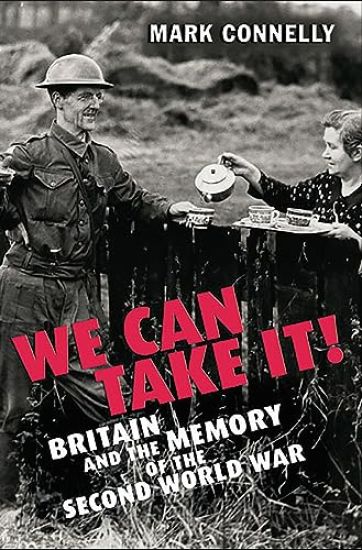
`We Can Take It!' shows that the British remember the war in a peculiar way, thanks to a mix of particular images and evidence. Our memory has been shaped by material which is completely removed from historical reality. These images (including complete inventions) have combined to make a new history. The vision is mostly cosy and suits the way in which the Britons conceive of themselves: dogged, good humoured, occasionally bumbling, unified and enjoying diversity. In fact Britons load their memory towards the early part of the war (Dunkirk, Blitz, Battle of Britain) rather than when we were successful in the air or against Italy and Germany with invasions. This suits our love of being the underdog, fighting against the odds, and being in a crisis. Conversely, the periods of the war during which Britain was in the ascendant are, perversely, far more hazy in the public memory.
Deadly Closets

Deadly Closets

Mark Connelly

University Press of America
2001
sidottu
Charles Jackson (1903-1968) is best known for his novel, The Lost Weekend. Published less than a decade after the founding of AA, the novel's intense psychological portrait of an alcoholic captivated both the public and critics. But Jackson's success was short-lived. His second novel probed a subject far more daring than chemical dependency. In 1946 he published The Fall of Valor, a novel about a married professor's homosexual attachment to a young Marine captain. The critics who applauded his frank approach to alcoholism were disturbed that he would write about a subject many deemed unsuitable for fiction. This book examines the life and fiction of Charles Jackson, a pioneer gay writer who addressed taboo issues with insight and sensitivity. The closets of addiction, repressed sexuality, and violence he explored were not merely "untidy" but deadly. His stories about "outing," gay-bashing, molestation, thrill killers, and media sensationalism are more relevant today than when they appeared fifty years ago.
The IRA on Film and Television

The IRA on Film and Television

Mark Connelly

McFarland Co Inc
2012
pokkari
The Irish Republican Army (IRA) has for decades pursued the goal of unifying its homeland into a single sovereign nation, ending British rule in Northern Ireland. Over the years, the IRA has been dramatized in motion pictures directed by John Ford (The Informer), Carol Reed (Odd Man Out), David Lean (Ryan's Daughter), Neil Jordan (Michael Collins), and many others. Such international film stars as Liam Neeson, James Cagney, Richard Gere, James Mason and Anthony Hopkins have portrayed IRA members alternately as heroic patriots, psychotic terrorists and tormented rebels. This work analyzes celluloid depictions of the IRA from the 1916 Easter Rising to the peace process of the 1990s. Topics include America's role in creating both the IRA and its cinematic image, the organization's brief association with the Nazis, and critical reception of IRA films in Ireland, Britain and the United States.
The Hardy Boys Mysteries, 1927-1979

The Hardy Boys Mysteries, 1927-1979

Mark Connelly

McFarland Co Inc
2012
pokkari
In its 80+ years, the Hardy Boys series has sold more than 50 million books in 25 or more languages, and has inspired five television series and many stage plays, websites, comic books, graphic novels and computer games. The series has shaped the way millions of American children see themselves and society, and has shaped the perceptions of America held by young people around the world. This book follows the creation and development of the series through 1979. Topics include the writing of Stratemeyer and McFarlane; the so-called "weird period"; the Cold War and the disco age; race, class and gender; family values; and law and order. Illustrations, bibliography, appendices and index.
Saul Bellow

Saul Bellow

Mark Connelly

McFarland Co Inc
2016
pokkari
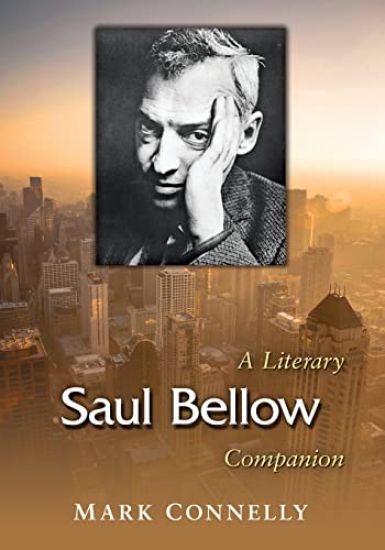
A three-time National Book Award for Fiction winner, Saul Bellow (1915-2005) is one of the most highly regarded American authors to emerge since World War II. His 60-year career produced 14 novels and novellas, two volumes of nonfiction, short story collections, plays and a book of collected letters. His 1953 breakthrough novel The Adventures of Augie March was followed by Seize the Day (1956), Herzog (1964) and Mr. Sammler's Planet (1970). His Humboldt's Gift won a Pulitzer Prize in 1976 and contributed to his receiving the Nobel Prize for Literature that year. This literary companion provides more than 200 entries about his works, literary characters, events and persons in his life. Also included are an introduction and overview of Bellow's life, statements made by him during interviews, suggestions for writing and further study and an extensive bibliography.
Orwell and Gissing

Orwell and Gissing

Mark Connelly

Peter Lang Publishing Inc
1997
sidottu
Three generations of critics have commented on the parallels between George Orwell and his favorite novelist, George Gissing. -I am a great fan of his, - Orwell wrote in 1948, proclaiming -that England has produced very few better novelists.- This in-depth study reveals that Orwell drew heavily on the Gissing novels he admired in shaping his own. Gissing's "New Grub Street" and "The Odd Women" directly influenced Orwell's Depression-era novels "Keep the Aspidstra Flying" and "A Clergyman's Daughter." Even Orwell's most imaginative work, "Animal Farm," mirrors Gissing's own novel of a failed Socialist Utopia, "Demos." Gissing was Orwell's role model and alter ego. Gissing provided him with a touchstone to his beliefs, his pessimism, his love of Dickens and cozy corners, his suspicion of -progress, - his restless sexuality. To understand Orwell fully, one must first read Gissing."
Celluloid War Memorials

Celluloid War Memorials

Mark Connelly

University of Exeter Press
2016
sidottu
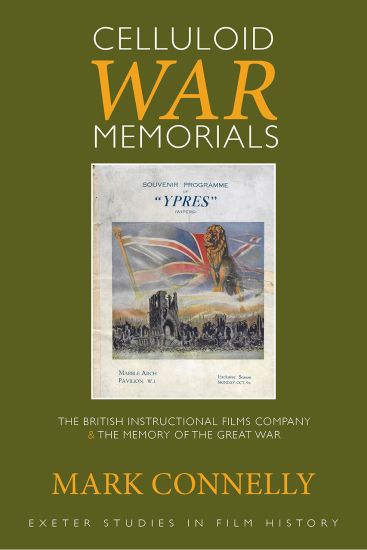
The films made by the British Instructional Films (BIF) company in the decade following the end of the First World War helped to shape the way in which that war was remembered. This is both a work of cinema history and a study of the public’s memory of WW1. By the early twenties, the British film industry was struggling to cope with the power of Hollywood and government help was needed to guarantee its survival. The 1927 Cinematograph Films Act was intended to support the domestic film industry by requiring British cinemas to show a quota of domestically produced films each year. The Act was not the sole saviour of British cinema, but the government intervention did allow the domestic industry to exploit the talents of an emerging group of younger filmmakers including Michael Balcon, Walter Summers and Alfred Hitchcock, who directed the most influential of these BIF war constructions. This book shows that the films are micro-histories revealing huge amounts about perceptions of the Great War, national and imperial identities, the role of cinema as a shaper of attitudes and identities, power relations between Britain and the USA and the nature of popular culture as an international contest in its own right.
The Great War, Memory and Ritual

The Great War, Memory and Ritual

Mark Connelly

Royal Historical Society
2015
pokkari
This detailed case study of a part of London shows how both the survivors and the bereaved sought to come to terms with the losses and implications of the Great War. The modern idea that the Great War was regarded as a futile waste of life by British society in the disillusioned 1920s and 1930s is here called into question by Mark Connelly. Through a detailed local study of a district containing a wide variety of religious, economic and social variations, he shows how both the survivors and the bereaved came to terms with the losses and implications of the Great War. His study illustrates the ways in which communitiesas diverse as the Irish Catholics of Wapping, the Jews of Stepney and the Presbyterian ex-patriate Scots of Ilford, thanks to the actions of the local agents of authority and influence - clergymen, rabbis, councillors, teachers and employers - shaped the memory of their dead and created a very definite history of the war. Close focus on the planning of, fund-raising for, and erection of war memorials expands to a wider examination of how those memorials became a focus for a continuing need to remember, particularly each year on Armistice Day. Mark Connelly is Professor of Modern British Military History, University of Kent.
We Can Take It!

We Can Take It!

Mark Connelly

TAYLOR FRANCIS LTD
2023
sidottu
`We Can Take It!' shows that the British remember the war in a peculiar way, thanks to a mix of particular images and evidence. Our memory has been shaped by material which is completely removed from historical reality. These images (including complete inventions) have combined to make a new history. The vision is mostly cosy and suits the way in which the Britons conceive of themselves: dogged, good humoured, occasionally bumbling, unified and enjoying diversity. In fact Britons load their memory towards the early part of the war (Dunkirk, Blitz, Battle of Britain) rather than when we were successful in the air or against Italy and Germany with invasions. This suits our love of being the underdog, fighting against the odds, and being in a crisis. Conversely, the periods of the war during which Britain was in the ascendant are, perversely, far more hazy in the public memory.
George Orwell

George Orwell

Mark Connelly

McFarland Co Inc
2018
pokkari
George Orwell (1903-1950) is one of the most influential authors in the English language. His landmark novels Animal Farm (1945) and Nineteen Eighty-Four (1949) have been translated into many foreign languages and inspired numerous stage and film adaptations. His well-known essays "A Hanging" and "Shooting an Elephant" are widely anthologized and often taught in college composition classes. The writer is credited with inventing the terms "Big Brother," "thought crime," "unperson" and "double think." His name itself has become an adjective--"Orwellian." Seventy years after its publication, Nineteen Eighty-Four remains very popular, its sales surging in an era of enhanced surveillance and media manipulation. This literary companion provides an extensive chronology and more than 175 entries about both his literary works and personal life. Also included are discussion questions and research topics, notable quotations by Orwell and an extensive bibliography of related sources.
The Group Theatre

The Group Theatre

Mark Connelly

MCFARLAND CO INC
2024
pokkari
This book examines the history and influence of the Group Theatre, the most significant acting company in America. Founded during the Great Depression, the Group presented the first plays of Clifford Odets, Sidney Kingsley, and William Saroyan, and launched the careers of Franchot Tone, John Garfield, Elia Kazan, Lee J. Cobb, Karl Malden, Martin Ritt, and Luther Adler. The intense realism of their performances inspired generations of writers, actors, and directors in both theater and film. After the Group closed, its former members directed or produced the Broadway plays Brigadoon, A Streetcar Named Desire, Death of a Salesman, Camino Real, Bus Stop, The Music Man, Equus, and Yentl. In Hollywood, Group alumni produced, directed, or starred in the award-winning films On the Waterfront, East of Eden, Twelve Angry Men, Hud, Fail-Safe, 1776, Serpico, Network, Norma Rae, and The Verdict. Four of the nation's best-known acting teachers--Lee Strasberg, Sanford Meisner, Robert Lewis, and Stella Adler--came from the Group. The studios they established remain the most highly regarded acting schools in the world, with venues on four continents.
Christmas

Christmas

Mark Connelly

I.B. Tauris
2012
nidottu
This book provides an original perspective on the West's most enduring social and cultural institution. The author covers all the vital themes contributing to the modern Christmas: its Anglo-German origins and the idea of the bourgeois Christmas expressing family virtues; the need for a touchstone with the past in an age of rapid expansion and thus the myth of Merrie England; and the revival of English music: in short, all the elements making up the modern Christmas.
Reaching for the Stars

Reaching for the Stars

Mark Connelly

I.B. Tauris
2001
sidottu
The role of Bomber Command in World War II is still shrouded in mystery. This book provides a new and revisionary narrative of the campaign, serving as both a military history and an investigation into how modern perceptions of Bomber Command have come about. It shows why Bomber Command - in one of the largest and bloodiest campaigns of the war with 55,000 aircrew lost - has received so much attention yet remains a "lost sheep" among British wartime glories, and is still dogged by controversy.
Reaching for the Stars

Reaching for the Stars

Mark Connelly

I.B. Tauris
2013
nidottu
The role of Bomber Command in the Second World War is still shrouded in mystery. This book provides a new story of the campaign and is both a military history and an investigation as to how the modern image has come about. There have been hundreds of books about the RAF and Bomber Command ranging from highly researched histories, technical studies of the aircraft, to popular works; as well as countless films, television shows and newspaper reportage. Mark Connelly draws together all the strands to look at the image created by this outpouring. Reaching for the Stars shows why Bomber Command, in one of the largest and bloodiest campaigns of the war - with 55,000 aircrew lost and more officer fatalities than in World War I - has received so much attention yet is still a 'lost and black sheep' among British wartime glories.