Kirjojen hintavertailu. Mukana 11 699 587 kirjaa ja 12 kauppaa.

Kirjahaku

Etsi kirjoja tekijän nimen, kirjan nimen tai ISBN:n perusteella.

11 kirjaa tekijältä Mark D. Steinberg

The Russian Revolution, 1905-1921

The Russian Revolution, 1905-1921

Mark D. Steinberg

Oxford University Press
2016
sidottu
The Russian Revolution, 1905-1921 is a new history of Russia's revolutionary era as a story of experience-of people making sense of history as it unfolded in their own lives and as they took part in making history themselves. The major events, trends, and explanations, reaching from Bloody Sunday in 1905 to the final shots of the civil war in 1921, are viewed through the doubled perspective of the professional historian looking backward and the contemporary journalist reporting and interpreting history as it happened. The volume then turns toward particular places and people: city streets, peasant villages, the margins of empire (Central Asia, Ukraine, the Jewish Pale), women and men, workers and intellectuals, artists and activists, utopian visionaries, and discontents of all kinds. We spend time with the famous (Vladimir Lenin, Lev Trotsky, Alexandra Kollontai, Vladimir Mayakovsky, Isaac Babel) and with those whose names we don't even know. Key themes include difference and inequality (social, economic, gendered, ethnic), power and resistance, violence, and ideas about justice and freedom. Written especially for students and general readers, this history relies extensively on contemporary texts and voices in order to bring the past and its meanings to life. This is a history about dramatic and uncertain times and especially about the interpretations, values, emotions, desires, and disappointments that made history matter to those who lived it.
The Russian Revolution, 1905-1921

The Russian Revolution, 1905-1921

Mark D. Steinberg

Oxford University Press
2016
nidottu
The Russian Revolution, 1905-1921 is a new history of Russia's revolutionary era as a story of experience-of people making sense of history as it unfolded in their own lives and as they took part in making history themselves. The major events, trends, and explanations, reaching from Bloody Sunday in 1905 to the final shots of the civil war in 1921, are viewed through the doubled perspective of the professional historian looking backward and the contemporary journalist reporting and interpreting history as it happened. The volume then turns toward particular places and people: city streets, peasant villages, the margins of empire (Central Asia, Ukraine, the Jewish Pale), women and men, workers and intellectuals, artists and activists, utopian visionaries, and discontents of all kinds. We spend time with the famous (Vladimir Lenin, Lev Trotsky, Alexandra Kollontai, Vladimir Mayakovsky, Isaac Babel) and with those whose names we don't even know. Key themes include difference and inequality (social, economic, gendered, ethnic), power and resistance, violence, and ideas about justice and freedom. Written especially for students and general readers, this history relies extensively on contemporary texts and voices in order to bring the past and its meanings to life. This is a history about dramatic and uncertain times and especially about the interpretations, values, emotions, desires, and disappointments that made history matter to those who lived it.
Voices of Revolution, 1917

Voices of Revolution, 1917

Mark D. Steinberg

Yale University Press
2003
pokkari
Although much has been written about the political history of the Russian revolution, the human story of what the revolution meant to ordinary people has rarely been told. This book gives voice to the experiences, thoughts, and feelings of the Russian people—workers, peasants, soldiers—as expressed in their own words during the vast political, social, and economic upheavals of 1917. The documents in the volume include letters from individuals to newspapers, institutions, or leaders; collective resolutions and appeals; and even poetry. Selected from the State Archive of the Russian Federation in Moscow, nearly all the texts are published here for the first time. In these writings we hear the voices of ordinary Russians seeking to understand the revolution and make sense of the values, ideals, and discontents of their turbulent times. Not only do they speak of their particular needs and desires—for solutions to the economic crisis or an end to the war, for example—they also reveal how relatively unprivileged Russians thought about such questions as political power, freedom, justice, democracy, social class, nationhood, and civic morality. Mark Steinberg provides introductions to the documents, explaining the language of popular revolution in Russia and setting the writings in the context of the history of the time.
Petersburg Fin de Siecle

Petersburg Fin de Siecle

Mark D. Steinberg

Yale University Press
2013
pokkari
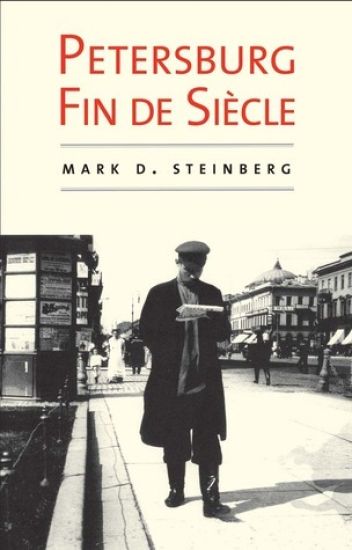
The final decade of the old order in imperial Russia was a time of both crisis and possibility, an uncertain time that inspired an often desperate search for meaning. This book explores how journalists and other writers in St. Petersburg described and interpreted the troubled years between the Russian revolutions of 1905 and 1917. Mark Steinberg, distinguished historian of Russia in the late nineteenth and early twentieth centuries, examines the work of writers of all kinds, from anonymous journalists to well-known public intellectuals, from secular liberals to religious conservatives. Though diverse in their perspectives, these urban writers were remarkably consistent in the worries they expressed. They grappled with the impact of technological and material progress on the one hand, and with an ever-deepening anxiety and pessimism on the other. Steinberg reveals a new, darker perspective on the history of St. Petersburg on the eve of revolution and presents a fresh view of Russia's experience of modernity.
Moral Communities

Moral Communities

Mark D. Steinberg

University of California Press
2018
pokkari
This valuable study offers a rare perspective on the social and political crisis in late Imperial Russia. Mark D. Steinberg focuses on employers, supervisors, and workers in the printing industry as it evolved from a state-dependent handicraft to a capitalist industry. He explores class relations and the values, norms, and perceptions with which they were made meaningful. Using archival and printed sources, Steinberg examines economic changes, workplace relations, professional organizations, unions, strikes, and political activism, as well as shop customs, trade festivals, and everyday life. In rich detail he describes efforts to build a community of masters and men united by shared interests and moral norms. The collapse of this ideal in the face of growing class conflict is also explored, giving a full view of an important moment in Russian history. This title is part of UC Press's Voices Revived program, which commemorates University of California Press’s mission to seek out and cultivate the brightest minds and give them voice, reach, and impact. Drawing on a backlist dating to 1893, Voices Revived makes high-quality, peer-reviewed scholarship accessible once again using print-on-demand technology. This title was originally published in 1992.
Moral Communities

Moral Communities

Mark D. Steinberg

University of California Press
2024
sidottu
This valuable study offers a rare perspective on the social and political crisis in late Imperial Russia. Mark D. Steinberg focuses on employers, supervisors, and workers in the printing industry as it evolved from a state-dependent handicraft to a capitalist industry. He explores class relations and the values, norms, and perceptions with which they were made meaningful. Using archival and printed sources, Steinberg examines economic changes, workplace relations, professional organizations, unions, strikes, and political activism, as well as shop customs, trade festivals, and everyday life. In rich detail he describes efforts to build a community of masters and men united by shared interests and moral norms. The collapse of this ideal in the face of growing class conflict is also explored, giving a full view of an important moment in Russian history. This title is part of UC Press's Voices Revived program, which commemorates University of California Press’s mission to seek out and cultivate the brightest minds and give them voice, reach, and impact. Drawing on a backlist dating to 1893, Voices Revived makes high-quality, peer-reviewed scholarship accessible once again using print-on-demand technology. This title was originally published in 1992.
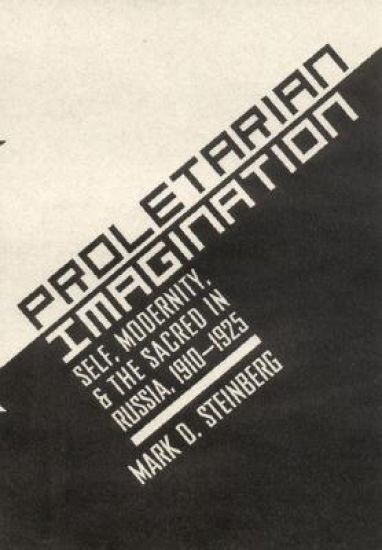
Proletarian Imagination

Proletarian Imagination

Mark D. Steinberg

Cornell University Press
2002
sidottu
In fin-de-siècle and early revolutionary Russia, a group of self-educated workers produced a large body of poetry and prose in which they attempted to comprehend their rapidly changing world. Witnesses to wars and revolution, these men and women grappled on paper with the nature of civilization and the imperatives of ethical truth. In a strikingly original approach to Russian culture, Mark D. Steinberg listens to their words, which are little known today. The results of their literary creativity, he finds, were frequently not what the new Soviet order was expecting from its workers, despite its celebration of the notion of a proletarian art. Through insightful readings of a vast fund of lower-class writings, Steinberg shows that the authors focused above all on the uncertain nature and place of the self, the promise and dangers of modernity, and the qualities of the sacred in both their lives and their imaginations. Like their counterparts in the intelligentsia, these worker writers were ambivalent about Marxist ideology's celebration of the city and the factory and even about modern progress itself. Drawing on vast research, Steinberg demonstrates the texts' significance for an understanding of Russian popular mentalities, indeed for the very meaning, philosophically and morally, of these years of crisis and possibility at the end of the old order and the early years of the Soviet regime.
Proletarian Imagination

Proletarian Imagination

Mark D. Steinberg

Cornell University Press
2002
pokkari
In fin-de-siècle and early revolutionary Russia, a group of self-educated workers produced a large body of poetry and prose in which they attempted to comprehend their rapidly changing world. Witnesses to wars and revolution, these men and women grappled on paper with the nature of civilization and the imperatives of ethical truth. In a strikingly original approach to Russian culture, Mark D. Steinberg listens to their words, which are little known today. The results of their literary creativity, he finds, were frequently not what the new Soviet order was expecting from its workers, despite its celebration of the notion of a proletarian art. Through insightful readings of a vast fund of lower-class writings, Steinberg shows that the authors focused above all on the uncertain nature and place of the self, the promise and dangers of modernity, and the qualities of the sacred in both their lives and their imaginations. Like their counterparts in the intelligentsia, these worker writers were ambivalent about Marxist ideology's celebration of the city and the factory and even about modern progress itself. Drawing on vast research, Steinberg demonstrates the texts' significance for an understanding of Russian popular mentalities, indeed for the very meaning, philosophically and morally, of these years of crisis and possibility at the end of the old order and the early years of the Soviet regime.
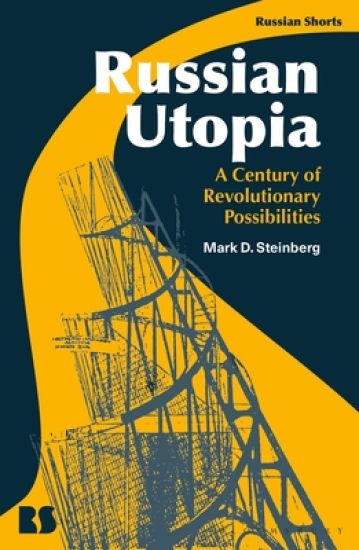
Russian Utopia

Russian Utopia

Mark D. Steinberg

Bloomsbury Academic
2021
sidottu
Winner of the 2022 Choice Outstanding Academic TitlesMark D. Steinberg explores the work of individuals he recognizes as utopians during the most dramatic period in Russian and Soviet history. It has long been a cliché to argue that Russian revolutionary movements have been inspired by varieties of ‘utopian dreaming’ – claims which, although not wrong, are too often used uncritically. For the first time, Russian Utopian digs deeper and asks what utopians meant at the level of ideas, emotions, and lived experience. Despite the fact that many would have resisted the ‘utopian’ label at the time because of its dismissive meanings, Steinberg’s comprehensive approach sees him take in political leaders, intellectuals, writers, and artists (visual, material, and musical), as well as workers, peasants, soldiers, students and others. Ideologically, the figures discussed range from reactionaries to anarchists, nationalists (including non-Russians) to feminists, both religious believers and ‘the militant godless’. This innovative text dissects the very notion of the Russian utopian and examines its significance in its various fascinating contexts.
Russian Utopia

Russian Utopia

Mark D. Steinberg

Bloomsbury Academic
2021
nidottu
Winner of the 2022 Choice Outstanding Academic TitlesMark D. Steinberg explores the work of individuals he recognizes as utopians during the most dramatic period in Russian and Soviet history. It has long been a cliché to argue that Russian revolutionary movements have been inspired by varieties of ‘utopian dreaming’ – claims which, although not wrong, are too often used uncritically. For the first time, Russian Utopian digs deeper and asks what utopians meant at the level of ideas, emotions, and lived experience. Despite the fact that many would have resisted the ‘utopian’ label at the time because of its dismissive meanings, Steinberg’s comprehensive approach sees him take in political leaders, intellectuals, writers, and artists (visual, material, and musical), as well as workers, peasants, soldiers, students and others. Ideologically, the figures discussed range from reactionaries to anarchists, nationalists (including non-Russians) to feminists, both religious believers and ‘the militant godless’. This innovative text dissects the very notion of the Russian utopian and examines its significance in its various fascinating contexts.
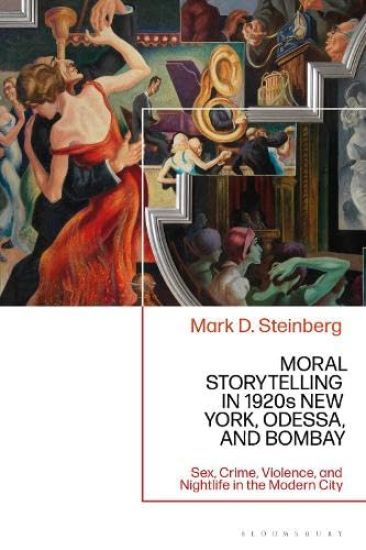
Moral Storytelling in 1920s New York, Odessa, and Bombay

Moral Storytelling in 1920s New York, Odessa, and Bombay

Mark D. Steinberg

BLOOMSBURY PUBLISHING PLC
2025
sidottu
Using public storytelling as driving force, this book explores everyday social moralities relating to stories of sex, crime, violence, and nightlife in the 1920s city space. Focusing on capitalist New York, communist Odessa, and colonial Bombay, Mark D. Steinberg taps in to the global dimension of complex everyday moral anxiety that was prevalent in a vital and troubled decade.Moral Storytelling in 1920s New York, Odessa, and Bombay compares and connects stories of the street in three compelling cosmopolitan port cities. It offers novel insights into significant and varied areas of study, including city life, sex, prostitution, jazz, dancing, gangsters, criminal undergrounds, cinema, ethnic and racial experiences and conflicts, prohibition and drinking, street violence, ‘hooliganism’ and other forms of ‘deviance’ in the contexts of capitalism, colonialism, communism, and nationalism.The book tells the stories of moralizers: empowered and insistent critics of deviance driven to investigate, interpret, and interfere with how people lived and played. Beside them, not always comfortably, were the policemen and journalists who enforced and documented these efforts. It also reveals the histories of women and men, mostly working class and young, who were observed and categorized: those judged to be wayward, disreputable, disorderly, debauched, and wild. Steinberg explores this global culture war and the everyday moral improvisations—shaped by experiences of class, generation, gender, ethnicity, and race—that came with it.