Kirjojen hintavertailu. Mukana 11 627 064 kirjaa ja 12 kauppaa.

Kirjahaku

Etsi kirjoja tekijän nimen, kirjan nimen tai ISBN:n perusteella.

5 kirjaa tekijältä Mark D. West

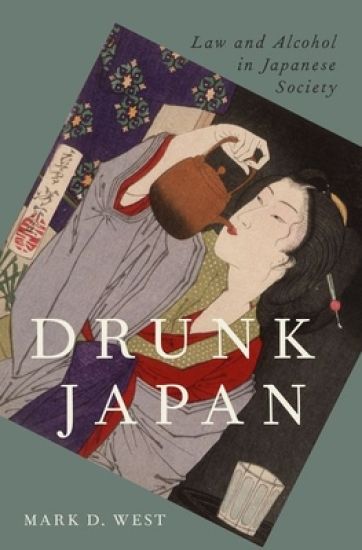
Drunk Japan

Drunk Japan

Mark D. West

Oxford University Press Inc
2020
sidottu
Each society that consumes alcohol has its own unique drinking culture, and each society deals with the drunken products of that culture in particular ways. As Mark D. West shows in Drunk Japan, the distinctive features of Japanese drinking culture and its intoxication-related laws are not simply interesting in and of themselves, but offer a unique window into Japanese society more broadly. Drawing upon close readings of over 5,000 published Japanese court opinions on drunkenness-related cases, he provides a rich description of Japanese alcohol consumption, drinking culture, and intoxication. West reveals that the opinions not only show patterns in what, where, and why people drink in Japan, but they also focus to a surprising extent on characteristics (including occupation, wealth, gender, and education) of individual litigants. By examining the consistencies and contradictions that emerge from the cases, West finds that, at its most extreme, the Japanese legal system is hyper-individualized. Focusing on individual people sometimes leads courts to ignore forensic evidence, to rely on post-arrest drinking tests, and to calculate prison sentences based on factors such as a mother's promise to help her adult child abstain. Cumulatively, the colorful and often tragic cases West uses not only illuminate the complexity of the culture, but they also reveal an entirely new vision of Japanese law and a comprehensive picture of alcohol use in Japanese society writ large.

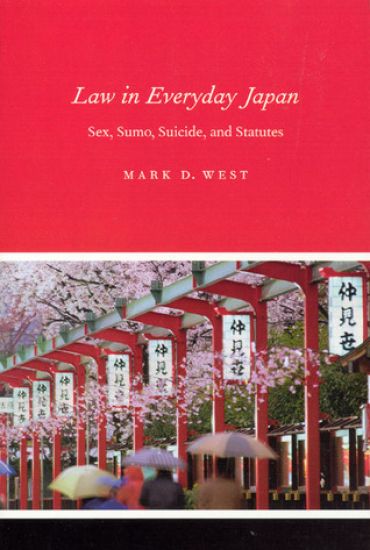
Law in Everyday Japan

Law in Everyday Japan

Mark D. West

University of Chicago Press
2005
sidottu
Lawsuits are rare events in most people's lives. And high-stakes cases are even less commonplace. Why is it, then, that scholarship concerning the Japanese legal system has focused almost exclusively on big topics like corporate law and large-scale social issues? Mark D. West's Law in Everyday Japan fills a void in our understanding of the relationship between law and social life in Japan by shifting the focus to cases most representative of everyday Japanese life. Compiling case studies based on seven fascinating themes - karaoke-based noise complaints, sumo wrestling, love hotels, post-Kobe earthquake condominium reconstruction, lost-and-found outcomes, working hours, and debt-induced suicide - Law in Everyday Japan offers a vibrant portrait of the way law intermingles with social norms, historically ingrained ideas, and cultural mores in Japan. Each example is informed by extensive fieldwork. West interviews the participants - from judges and lawyers to defendants, plaintiffs, and their families - to uncover an everyday Japan where law matters, albeit in very unexpected ways.
Law in Everyday Japan

Law in Everyday Japan

Mark D. West

University of Chicago Press
2005
nidottu
Lawsuits are rare events in most people's lives. And high-stakes cases are even less commonplace. Why is it, then, that scholarship concerning the Japanese legal system has focused almost exclusively on big topics like corporate law and large-scale social issues? Mark D. West's Law in Everyday Japan fills a void in our understanding of the relationship between law and social life in Japan by shifting the focus to cases most representative of everyday Japanese life. Compiling case studies based on seven fascinating themes - karaoke-based noise complaints, sumo wrestling, love hotels, post-Kobe earthquake condominium reconstruction, lost-and-found outcomes, working hours, and debt-induced suicide - Law in Everyday Japan offers a vibrant portrait of the way law intermingles with social norms, historically ingrained ideas, and cultural mores in Japan. Each example is informed by extensive fieldwork. West interviews the participants - from judges and lawyers to defendants, plaintiffs, and their families - to uncover an everyday Japan where law matters, albeit in very unexpected ways.
Secrets, Sex, and Spectacle

Secrets, Sex, and Spectacle

Mark D. West

University of Chicago Press
2006
sidottu
A leader of a global superpower is betrayed by his mistress, who makes public the sordid details of their secret affair. His wife stands by as he denies the charges. Debates over definitions of moral leadership ensue. Sound familiar? If you guessed Clinton and Lewinsky, try again. This incident involved former Japanese prime minister Sosuke Uno and a geisha. In Secrets, Sex, and Spectacle, Mark D. West organizes the seemingly random worlds of Japanese and American scandal—from corporate fraud to baseball cheaters, political corruption to celebrity sexcapades—to explore well-ingrained similarities and contrasts in law and society. In Japan and the United States, legal and organizational rules tell us what kind of behavior is considered scandalous. When Japanese and American scandal stories differ, those rules—rules that define what’s public and what’s private, rules that protect injuries to dignity and honor, and rules about sex, to name a few—often help explain the differences. In the cases of Clinton and Uno, the rules help explain why the media didn’t cover Uno’s affair, why Uno’s wife apologized on her husband’s behalf, and why Uno—and not Clinton—resigned. Secrets, Sex, and Spectacle offers a novel approach to viewing the phenomenon of scandal—one that will be applauded by anyone who has obsessed over (or ridiculed) these public episodes.
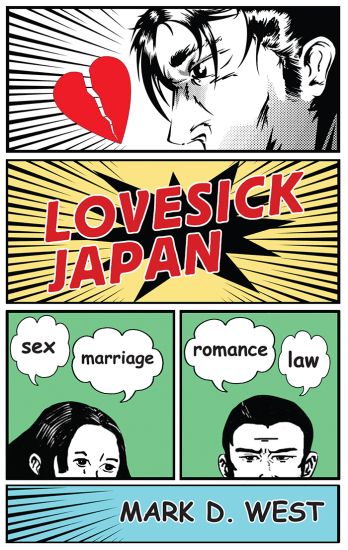
Lovesick Japan

Lovesick Japan

Mark D. West

Cornell University Press
2011
sidottu
In Lovesick Japan, Mark D. West explores an official vision of love, sex, and marriage in contemporary Japan. A comprehensive body of evidence—2,700 court opinions—describes a society characterized by a presupposed absence of physical and emotional intimacy, affection, and personal connections. In compelling, poignant, and sometimes horrifying court cases, West finds that Japanese judges frequently opine on whether a person is in love, what other emotions a person is feeling, and whether those emotions are appropriate for the situation. Sometimes judges' views about love, sex, and marriage emerge from their presentation of the facts of cases. Among the recurring elements are abortions forced by men, compensated dating, late-life divorces, termination fees to end affairs, sexless couples, Valentine's Day heartbreak, "soapland" bath-brothels, and home-wrecking hostesses. Sometimes the judges' analysis, decisions, and commentary are as revealing as the facts. Sex in the cases is a choice among private "normal" sex, which is male-dominated, conservative, dispassionate, or nonexistent; commercial sex, which caters to every fetish but is said to lead to rape, murder, and general social depravity; and a hybrid of the two, which commodifies private sexual relationships. Marriage is contractual; judges express the ideal of love in marriage and proclaim its importance, but virtually no one in the court cases achieves it. Love usually appears as a tragic, overwhelming emotion associated with jealousy, suffering, heartache, and death.