Kirjojen hintavertailu. Mukana 12 016 292 kirjaa ja 12 kauppaa.

Kirjahaku

Etsi kirjoja tekijän nimen, kirjan nimen tai ISBN:n perusteella.

5 kirjaa tekijältä Mark Dowie

Conservation Refugees

Conservation Refugees

Mark Dowie

MIT Press
2011
pokkari
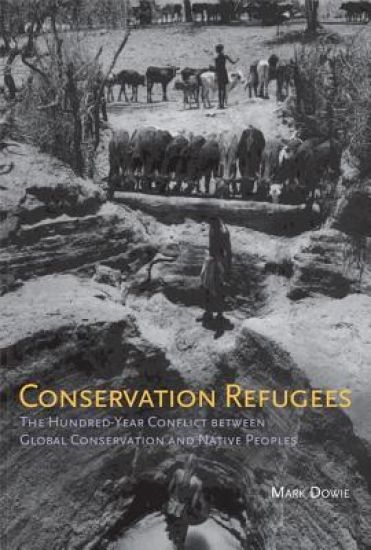
How native people-from the Miwoks of Yosemite to the Maasai of eastern Africa-have been displaced from their lands in the name of conservation.Since 1900, more than 108,000 officially protected conservation areas have been established worldwide, largely at the urging of five international conservation organizations. About half of these areas were occupied or regularly used by indigenous peoples. Millions who had been living sustainably on their land for generations were displaced in the interests of conservation. In Conservation Refugees, Mark Dowie tells this story. This is a "good guy vs. good guy" story, Dowie writes; the indigenous peoples' movement and conservation organizations have a vital common goal-to protect biological diversity-and could work effectively and powerfully together to protect the planet and preserve biological diversity. Yet for more than a hundred years, these two forces have been at odds. The result: thousands of unmanageable protected areas and native peoples reduced to poaching and trespassing on their ancestral lands or "assimilated" but permanently indentured on the lowest rungs of the money economy. Dowie begins with the story of Yosemite National Park, which by the turn of the twentieth century established a template for bitter encounters between native peoples and conservation. He then describes the experiences of other groups, ranging from the Ogiek and Maasai of eastern Africa and the Pygmies of Central Africa to the Karen of Thailand and the Adevasis of India. He also discusses such issues as differing definitions of "nature" and "wilderness," the influence of the "BINGOs" (Big International NGOs, including the Worldwide Fund for Nature, Conservation International, and The Nature Conservancy), the need for Western scientists to respect and honor traditional lifeways, and the need for native peoples to blend their traditional knowledge with the knowledge of modern ecology. When conservationists and native peoples acknowledge the interdependence of biodiversity conservation and cultural survival, Dowie writes, they can together create a new and much more effective paradigm for conservation.
Losing Ground

Losing Ground

Mark Dowie

MIT Press
1996
pokkari
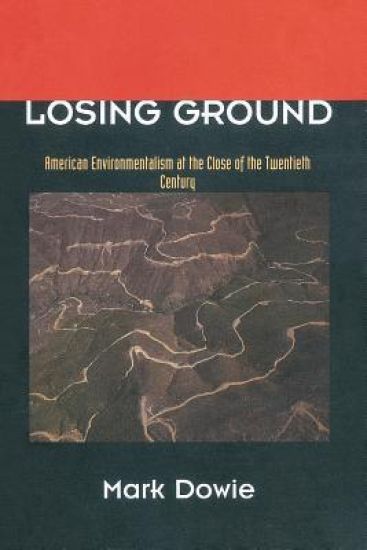
A recent history replete with compromise and capitulation has pushed a once promising and effective political movement to the brink of irrelevance. So states Mark Dowie in this provocative critique of the mainstream American environmental movement. Dowie, the prolific award-winning journalist who broke the stories on the Dalkon Shield and on the Ford Pinto, delivers an insightful, informative, and often damning account of the movement many historians and social commentators at one time expected to be this century's most significant. He unveils the inside stories behind American environmentalism's undeniable triumphs and its quite unnecessary failures. Dowie weaves a spellbinding tale, from the movement's conservationist origins as a handful of rich white men's hunting and fishing clubs, through its evolution in the 1960s and 1970s into a powerful political force that forged landmark environmental legislation, enforced with aggressive litigation, to the strategy of "third wave" political accommodation during the Reagan and Bush years that led to the evisceration of many earlier triumphs, up to today, where the first stirrings of a rejuvenated, angry, multicultural, and decidedly impolite movement for environmental justice provides new hope for the future. Dowie takes a fresh look at the formation of the American environmental imagination and examines its historical imperatives: the inspirations of Thoreau, the initiatives of John Muir and Bob Marshall, the enormous impact of Rachel Carson, the new ground broken by Earth Day in 1970, and the societal antagonists created in response that climaxed with the election of Ronald Reagan. He details the subsequent move toward polite, ineffectual activism by the mainstream environmental groups, characterized by successful fundraising efforts and wide public acceptance, and also by new alliances with corporate philanthropists and government bureaucrats, increased degradation of environmental quality, and alienation of grassroots support. Dowie concludes with an inspirational description of a noncompromising "fourth wave" of American environmentalism, which he predicts will crest early in the next century.
Judith Letting Go

Judith Letting Go

Mark Dowie

New Village Press
2024
pokkari
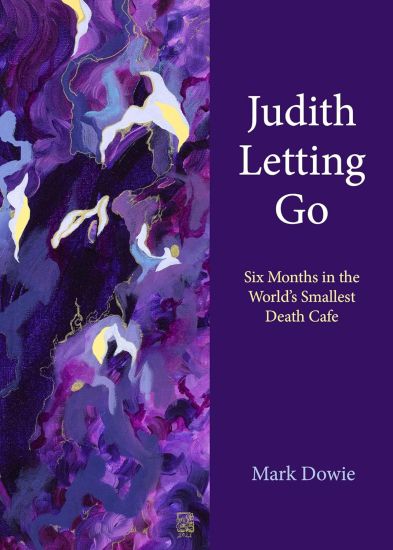
An old man learns how to die from a poet facing death For the entire six months that Mark Dowie became friends with Judith Tannenbaum, they both knew she was going to die. In fact, for most of that time they knew the exact hour she would go: sometime between 11:00 AM and noon, December 5, 2019, which she did. Judith was a poet, writer, activist, and artist who worked for decades teaching and collaborating with imprisoned lifers. Beloved by her community, Judith told almost no one when she was diagnosed with an incurable disease that would cause her immeasurable pain. Instead she chose to end life on her own terms. When they met, Mark Dowie had already been working for years to advocate for physician assistance in dying for terminally ill people in his home state of California. He helped many friends along this path, but it wasn't until he was introduced to Judith through a mutual friend that he came to a profound new understanding of death. Mark and Judith created a two-person "death café," a group devoted to discussions of death. They talked about many things during Judith's final months, but the rapidly approaching moment of her death came to inform and shape their entire conversation. Death was, as she said, "the undercurrent and the overstory of our relationship." Judith Letting Go supports the right to plan one's death, but it is ultimately about the lost human art of releasing everything that matters to the living in preparation for the inevitable.
Judith Letting Go

Judith Letting Go

Mark Dowie

New Village Press
2024
sidottu
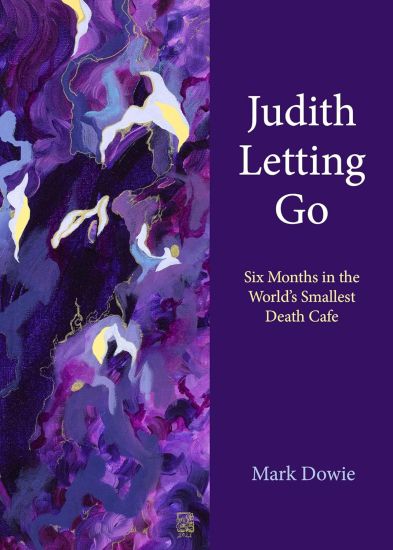
An old man learns how to die from a poet facing death For the entire six months that Mark Dowie became friends with Judith Tannenbaum, they both knew she was going to die. In fact, for most of that time they knew the exact hour she would go: sometime between 11:00 AM and noon, December 5, 2019, which she did. Judith was a poet, writer, activist, and artist who worked for decades teaching and collaborating with imprisoned lifers. Beloved by her community, Judith told almost no one when she was diagnosed with an incurable disease that would cause her immeasurable pain. Instead she chose to end life on her own terms. When they met, Mark Dowie had already been working for years to advocate for physician assistance in dying for terminally ill people in his home state of California. He helped many friends along this path, but it wasn't until he was introduced to Judith through a mutual friend that he came to a profound new understanding of death. Mark and Judith created a two-person "death café," a group devoted to discussions of death. They talked about many things during Judith's final months, but the rapidly approaching moment of her death came to inform and shape their entire conversation. Death was, as she said, "the undercurrent and the overstory of our relationship." Judith Letting Go supports the right to plan one's death, but it is ultimately about the lost human art of releasing everything that matters to the living in preparation for the inevitable.