Kirjojen hintavertailu. Mukana 11 627 220 kirjaa ja 12 kauppaa.

Kirjahaku

Etsi kirjoja tekijän nimen, kirjan nimen tai ISBN:n perusteella.

80 kirjaa tekijältä Mark Edwards

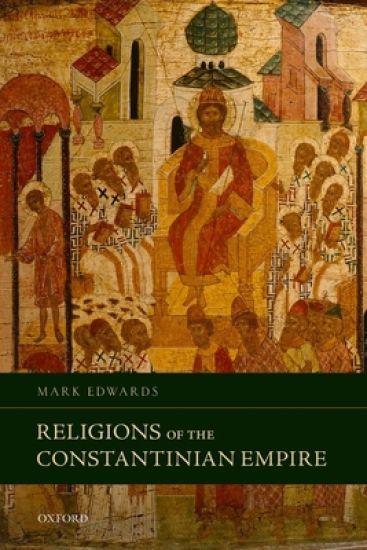
Religions of the Constantinian Empire

Religions of the Constantinian Empire

Mark Edwards

Oxford University Press
2018
nidottu
Religions of the Constantinian Empire provides a synoptic review of Constantine's relation to all the cultic and theological traditions of the Empire during the period from his seizure of power in the west in 306 CE to the end of his reign as autocrat of both east and west in 337 CE. Divided into three parts, the first considers the efforts of Christians to construct their own philosophy, and their own patterns of the philosophic life, in opposition to Platonism. The second assembles evidence of survival, variation or decay in religious practices which were never compulsory under Roman law. The 'religious plurality' of the second section includes those cults which are represented as demonic burlesques of the sacraments by Firmicus Maternus. The third reviews the changes, both within the church and in the public sphere, which were undeniably prompted by the accession of a Christian monarch. In this section on 'Christian polyphony', Mark Edwards expertly moves on from this deliberate petrifaction of Judaism to the profound shift in relations between the church and the civic cult that followed the Emperor's choice of a new divine protector. The material in the first section will be most familiar to the historian of philosophy, that of the second to the historian of religion, and that of the third to the theologian. All three sections make reference to such factors as the persecution under Diocletian, the so-called 'edict of Milan', the subsequent legislation of Constantine, and the summoning of the council of Nicaea. Edwards does not maintain, however, that the religious and philosophical innovations of this period were mere by-products of political revolution; indeed, he often highlights that Christianity was more revolutionary in its expectations than any sovereign could afford to be in his acts.This authoritative study provides a comprehensive reference work for those studying the ecclesiastical and theological developments and controversies of the fourth century.
Religions of the Constantinian Empire

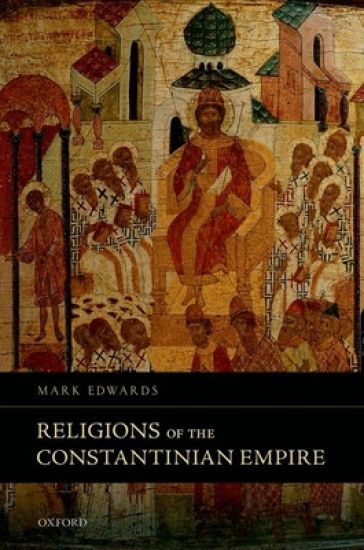
Religions of the Constantinian Empire

Mark Edwards

Oxford University Press
2015
sidottu
Religions of the Constantinian Empire provides a synoptic review of Constantine's relation to all the cultic and theological traditions of the Empire during the period from his seizure of power in the west in 306 c? to the end of his reign as autocrat of both east and west in 337 c?. Divided into three parts, the first considers the efforts of Christians to construct their own philosophy, and their own patterns of the philosophic life, in opposition to Platonism. The second assembles evidence of survival, variation or decay in religious practices which were never compulsory under Roman law. The 'religious plurality' of the second section includes those cults which are represented as demonic burlesques of the sacraments by Firmicus Maternus. The third reviews the changes, both within the church and in the public sphere, which were undeniably prompted by the accession of a Christian monarch. In this section on 'Christian polyphony', Mark Edwards expertly moves on from this deliberate petrifaction of Judaism to the profound shift in relations between the church and the civic cult that followed the Emperor's choice of a new divine protector. The material in the first section will be most familiar to the historian of philosophy, that of the second to the historian of religion, and that of the third to the theologian. All three sections make reference to such factors as the persecution under Diocletian, the so-called 'edict of Milan', the subsequent legislation of Constantine, and the summoning of the council of Nicaea. Edwards does not maintain, however, that the religious and philosophical innovations of this period were mere by-products of political revolution; indeed, he often highlights that Christianity was more revolutionary in its expectations than any sovereign could afford to be in his acts.This authoritative study provides a comprehensive reference work for those studying the ecclesiastical and theological developments and controversies of the fourth century.

One of the Family

One of the Family

Mark Edwards

PENGUIN BOOKS LTD
2026
sidottu
One of the family is dead. One of the family is missing. And one of the family might just be the killer... The outstanding new psychological thriller from the 5 million copy-bestselling author of Here to Stay and The Magpies ***** Patrick couldn’t believe his luck when Holly fell for him. She’s wickedly funny, beautiful, and with an intimidatingly successful father, Charles. So when she invites him to Charles’ mansion for a New Year’s break in Scotland, all he’s hoping is that they’ll accept him as one of the family. But everything feels a little off. Whispers in hallways. Rumours of a body that got found nearby the previous year. And something very strange about Charles’ new girlfriend. Every family has secrets, and Patrick tells himself all he needs to do is survive the next few days. But then the first body is found, and Patrick realises that all he needs to do is survive the next few days… ***** Praise for Mark Edwards 'The plot swerves in an entirely unpredictable direction , providing an intriguing mystery that turns on their mentor's work on the behaviour of psychopaths' Sunday Times ‘I loved this... So clever and fresh with a wild and incredibly satisfying twist’ Lisa Jewell 'I devoured it in two compulsive sittings. 'Gripped' doesn't even come close!!' Marian Keyes 'A fast-paced thriller, full of twists upon twists. Hugely enjoyable' Alex Michaelides 'Twisty, clever, often funny, always inventive' Elly Griffiths
The Wasp Trap

The Wasp Trap

Mark Edwards

PENGUIN BOOKS LTD
2025
sidottu
The outstanding new psychological thriller from the 5 million copy-bestselling author of Here to Stay and The Magpies“I loved this brilliant, edgy, character driven thriller with a passion. So clever and fresh with a wild and incredibly satisfying twist at the end.” Lisa Jewell'I devoured it in two compulsive sittings. 'Gripped' doesn't even come close!!' Marian Keyes'A fast-paced thriller, full of twists upon twists and tension you could cut with a knife. Hugely enjoyable.' Alex Michaelides'Tense, artful and satisfying' Louise Candlish'Highly entertaining...kept me guessing to the very last page' Liz Nugent, author of Strange Sally Diamond'Twisty, clever, often funny, always inventive.' Elly Griffiths******Summer 1999. Will joins five other idealistic graduates working for an eccentric psychology professor. They’re going to launch a website to change online dating forever.No-one expects it to end in tragedy.Twenty-five years later, Will gets an invitation: a dinner party. A chance to see the old gang again.But as soon as he arrives, something doesn’t seem right.There’s an unexpected guest. The hosts are clearly keeping a secret. And on the way in, Will is sure he heard crying.Everyone has something to hide about what really happened that summer.But only one of them is willing to kill to find the truth…PRAISE FOR MARK EDWARDS'I kept wanting to tear my eyes away but had to keep reading' IAN RANKIN'Edwards is at the top of his game' ERIN KELLY'Twisting and terrifying, the kind of haunting, pacy, spine-chiller that Mark Edwards is the absolute master of.' CHRIS WHITAKER 'I was hooked by this clever, fast paced and addictive thriller... I loved it' CLAIRE DOUGLAS'Fast-paced and twisted: it’s another Mark Edwards sensation' CLARE MACKINTOSHReaders LOVE The Wasp Trap'The best thriller I've read all year' 5 ***** Netgalley review'Full of surprises, twists, turns, lies - I couldn't put this down' 5 ***** Netgalley review'I forgot my plans for the day because of this book and honestly... no regrets' 5 ***** Netgalley review'This book deserves the hype' 5 ***** Netgalley review' Take a bow, Mark Edwards. Once again you've given us a tension filled, edge-of-the-seat thriller' 5 ***** Netgalley review
The Christmas Magpie

The Christmas Magpie

Mark Edwards

PENGUIN BOOKS LTD
2025
sidottu
Pre-order the terrifying festive thriller from the five million copy bestselling author of The Magpies and Here To Stay--It’s Noel and Dani’s first Christmas in their new home and they want everything to be perfect - lavish presents, a beautiful tree and outdoor decorations to join in with the festivities in this welcoming community.But they quickly wonder if this street is as perfect as it appears. First, there are the unwelcome presents left anonymously on their doorstep. Then they are sure someone is watching them... And why are the neighbours all obsessed with a notorious killer who is housed at the nearby women’s prison?After tragedy strikes at a Christmas party, Noel and Dani try to find out who is targeting them – but, in this case, it might be safer not to know . . .--PRAISE FOR MARK EDWARDS'I loved this brilliant, edgy, character driven thriller with a passion.' LISA JEWELL'A fast-paced thriller, full of twists upon twists and tension you could cut with a knife. Hugely enjoyable.' ALEX MICHAELIDES''Gripped doesn't even come close!' MARIAN KEYES 'I kept wanting to tear my eyes away but had to keep reading' IAN RANKIN'Twisting and terrifying, the kind of haunting, pacy, spine-chiller that Mark Edwards is the absolute master of.' CHRIS WHITAKER 'I was hooked by this clever, fast paced and addictive thriller... I loved it' CLAIRE DOUGLAS'Fast-paced and twisted: it’s another Mark Edwards sensation' CLARE MACKINTOSH
Bitcoin

Bitcoin

Mark Edwards

Lulu.com
2018
pokkari
Bitcoin is the first successful cryptocurrency in history, and it became successful because of the many positive merits not found in traditional or fiat currency (this is your country's national currency). In this book, you'll find out about five advantages Bitcoin has over fiat currency and the best tips and techniques on how to become rich with the cryptocurrency niche.
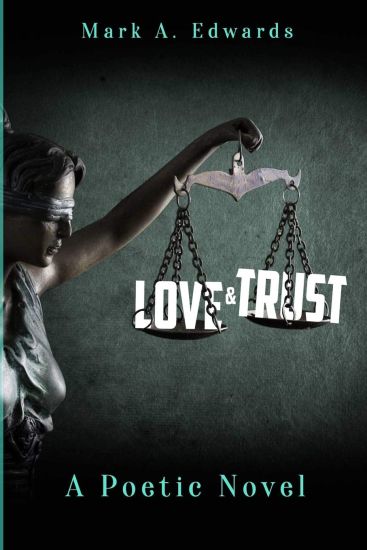
Love & Trust

Love & Trust

Mark Edwards

Lulu.com
2018
pokkari
A short novel of Love and Trust intertwined with poetry for the grown and sexy, to the real-life street hustlers. A story that tells of a man and a woman who finally finds love until one of them finds out that the other has more secrets than the Government. The question then becomes... Do you pray and ask God for clarity? Do you go to the streets that raised you to get the answers? Do you look through weary eyes filled with distrust, or do you follow your heart because love conquers all?
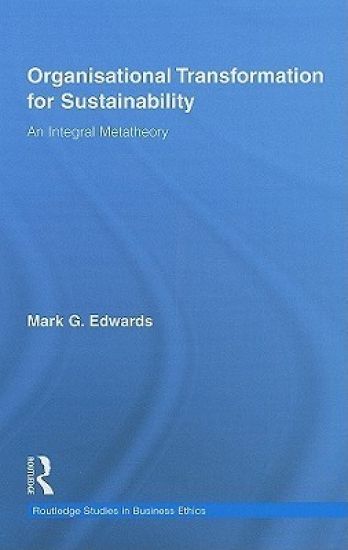
Organizational Transformation for Sustainability
During the 21st century organizations will undergo a level of radical and global change that has rarely been seen before. This transformation will come as a result of the environmental, social and economic challenges that now confront organisations in all their activities. But are our understandings and theories of change up to the task of meeting these challenges? Will we be able to develop sustaining visions of how organizations might contribute to the long-term viability of our interdependent global communities? Organizational Transformation for Sustainability: An Integral Metatheory offers some innovative answers to the big questions involved in organizational sustainability and the radical changes that organizations will need to undergo as we move into the third millennium. This new approach comes from the emerging field of integral metatheory. Edwards shows how a "Big Picture" view of organisational transformation can contribute to our understanding of, and search for, organisational sustainability. There are four key themes to the book: i) the need for integrative metatheories for organisational change; ii) the development of a general research method for building metatheory; iii) the description of an integral metatheory for organisational sustainability; and iv) the discussion of the implications of this metatheory for organisational change and social policy regarding sustainability. This book brings a unique and important orienting perspective to these issues.
Organizational Transformation for Sustainability
During the 21st century organizations will undergo a level of radical and global change that has rarely been seen before. This transformation will come as a result of the environmental, social and economic challenges that now confront organisations in all their activities. But are our understandings and theories of change up to the task of meeting these challenges? Will we be able to develop sustaining visions of how organizations might contribute to the long-term viability of our interdependent global communities? Organizational Transformation for Sustainability: An Integral Metatheory offers some innovative answers to the big questions involved in organizational sustainability and the radical changes that organizations will need to undergo as we move into the third millennium. This new approach comes from the emerging field of integral metatheory. Edwards shows how a "Big Picture" view of organisational transformation can contribute to our understanding of, and search for, organisational sustainability. There are four key themes to the book: i) the need for integrative metatheories for organisational change; ii) the development of a general research method for building metatheory; iii) the description of an integral metatheory for organisational sustainability; and iv) the discussion of the implications of this metatheory for organisational change and social policy regarding sustainability. This book brings a unique and important orienting perspective to these issues.
John Through the Centuries

John Through the Centuries

Mark Edwards

Blackwell Publishing Ltd
2003
sidottu
This pioneering commentary embraces the full scope and themes raised in John's Gospel, offering an engaging and perceptive reading. Mark Edwards explores a diverse range of excerpts and creative responses, with particular emphasis on the treatment of the Gospel in English poetry. Explores the diverse themes and issues raised in John’s Gospel, and considers its influence on figures from Saint Augustine, to Dorothy Sayers and Bob Dylan. Treats well-known interpreters such as Thomas Aquinas along with lesser-known figures such as the Gnostic Heracleon, and the sixth-century hymn-writer, Romanos. Brings ancient and modern commentators into dialogue with each other, and takes a critical stance towards some parallels drawn by modern scholars between the Gospel and the surrounding pagan culture. Features excerpts from a wide variety of poets who give a creative interpretation of John’s Gospel, and considers many artistic representations. Suggests that imaginative response can illuminate a reading of the Bible where purely critical and historical analysis has proved unsatisfactory. An accessible introduction and extensive section notes address interpretations of the Gospel from antiquity to the present. Published as part of the ground-breaking Blackwell Bible Commentaries series. More information about this series is available from the Blackwell Bible Commentaries website at http://www.bbibcomm.net/
John Through the Centuries

John Through the Centuries

Mark Edwards

Blackwell Publishing Ltd
2003
nidottu
This pioneering commentary embraces the full scope and themes raised in John's Gospel, offering an engaging and perceptive reading. Mark Edwards explores a diverse range of excerpts and creative responses, with particular emphasis on the treatment of the Gospel in English poetry. Explores the diverse themes and issues raised in John’s Gospel, and considers its influence on figures from Saint Augustine, to Dorothy Sayers and Bob Dylan. Treats well-known interpreters such as Thomas Aquinas along with lesser-known figures such as the Gnostic Heracleon, and the sixth-century hymn-writer, Romanos. Brings ancient and modern commentators into dialogue with each other, and takes a critical stance towards some parallels drawn by modern scholars between the Gospel and the surrounding pagan culture. Features excerpts from a wide variety of poets who give a creative interpretation of John’s Gospel, and considers many artistic representations. Suggests that imaginative response can illuminate a reading of the Bible where purely critical and historical analysis has proved unsatisfactory. An accessible introduction and extensive section notes address interpretations of the Gospel from antiquity to the present. Published as part of the ground-breaking Blackwell Bible Commentaries series. More information about this series is available from the Blackwell Bible Commentaries website at http://www.bbibcomm.net/
Culture and Philosophy in the Age of Plotinus

Culture and Philosophy in the Age of Plotinus

Mark Edwards

Bristol Classical Press
2006
nidottu
This book offers a survey of the teachings of, and relations between, four leading figures in third-century Platonism: Longinus, Plotinus, Porphyry and Iamblichus. It documents and explains the coalescence of Aristotelian and Platonic elements in the Platonic tradition before the 3rd century, considers the effect of the new political environment on these thinkers, and argues that the antagonistic interests of the two older men (Longinus and Plotinus) were combined in the work of the two younger figures (Porphyry and Iamblichus) without sacrifice of coherence, rationality or fidelity to Plato. The authorship of the treatise on the sublime, the question of mysticism in Plotinus and the relation of Neoplatonism to ancient Christianity are among the topics discussed.
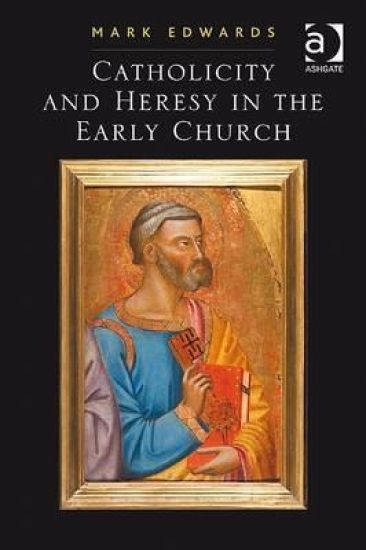
Catholicity and Heresy in the Early Church

Catholicity and Heresy in the Early Church

Mark Edwards

Ashgate Publishing Limited
2009
nidottu
While it has often been recognised that the development of Christian orthodoxy was stimulated by the speculations of those who are now called heretics, it is still widely assumed that their contribution was merely catalytic, that they called forth the exposition of what the main church already believed but had not yet been required to formulate. This book maintains that scholars have underrated the constructive role of these "heretical" speculations in the evolution of dogma, showing that salient elements in the doctrines of the fall, the Trinity and the union of God and man in Christ derive from teachings that were initially rejected by the main church. Mark Edwards also reveals how authors who epitomised orthodoxy in their own day sometimes favoured teachings which were later considered heterodox, and that their doctrines underwent radical revision before they became a fixed element of orthodoxy. The first half of the volume discusses the role of Gnostic theologians in the formation of catholic thought; the second half will offer an unfashionable view of the controversies which gave rise to the councils of Nicaea, Ephesus and Chalcedon . Many of the theories advanced here have not been broached elsewhere, and no synthesis on this scale had been attempted by other scholars. While this book proposes a revision in the scholarly perception of early Christendom, it also demonstrates the essential unity of the tradition.
Aristotle and Early Christian Thought

Aristotle and Early Christian Thought

Mark Edwards

Taylor Francis Ltd
2021
nidottu
In studies of early Christian thought, ‘philosophy’ is often a synonym for ‘Platonism’, or at most for ‘Platonism and Stoicism’. Nevertheless, it was Aristotle who, from the sixth century AD to the Italian Renaissance, was the dominant Greek voice in Christian, Muslim and Jewish philosophy.Aristotle and Early Christian Thought is the first book in English to give a synoptic account of the slow appropriation of Aristotelian thought in the Christian world from the second to the sixth century. Concentrating on the great theological topics – creation, the soul, the Trinity, and Christology – it makes full use of modern scholarship on the Peripatetic tradition after Aristotle, explaining the significance of Neoplatonism as a mediator of Aristotelian logic. While stressing the fidelity of Christian thinkers to biblical presuppositions which were not shared by the Greek schools, it also describes their attempts to overcome the pagan objections to biblical teachings by a consistent use of Aristotelian principles, and it follows their application of these principles to matters which lay outside the purview of Aristotle himself.This volume offers a valuable study not only for students of Christian theology in its formative years, but also for anyone seeking an introduction to the thought of Aristotle and its developments in Late Antiquity.
The Wasp Trap

The Wasp Trap

Mark Edwards

Random House Canada
2025
nidottu
"So clever and fresh with a wild and incredibly satisfying twist at the end." --Lisa Jewell, #1 New York Times bestselling author A dinner party in a beautiful Notting Hill townhouse turns into a sinister game, as six old friends are forced to spill their darkest secrets . . . or else. Six friends reunite in London to celebrate the life of their recently deceased ex-employer, a professor that brought them together in 1999 to help build a dating website based on psychological testing. But what is meant to be a night of bittersweet nostalgia soon becomes a twisted and deadly game when the old friends are given an ultimatum: reveal their darkest secrets to the group or pick each other off one-by-one. It soon becomes clear that their current predicament is related to their shared past. The love questionnaire they helped develop in 1999 for the dating site was also turned into a tool for weeding out psychopaths: The Wasp Trap. This and the other tragic events of that summer long ago may help reveal the truth behind a killer hiding in plain sight. Alternating between the past and present, The Wasp Trap is a stingingly sharp thriller perfect for fans of Lucy Foley and Riley Sager.
The Limits of Political Belonging

The Limits of Political Belonging

Mark Edwards

Palgrave Macmillan
2015
sidottu
Citizenship is increasingly the core concept by which human belonging is defined but do we really understand what it is? This book develops an evolutionist argument to challenge accepted ideas about citizenship and question how well it fits between political prescriptions for sociality and human nature.
Christians, Gnostics and Philosophers in Late Antiquity
Gnosticism, Christianity and late antique philosophy are often studied separately; when studied together they are too often conflated. These articles set out to show that we misunderstand all three phenomena if we take either approach. We cannot interpret, or even identify, Christian Gnosticism without Platonic evidence; we may even discover that Gnosticism throws unexpected light on the Platonic imagination. At the same time, if we read writers like Origen simply as Christian Platonists, or bring Christians and philosophers together under the porous umbrella of "monotheism", we ignore fundamental features of both traditions. To grasp what made Christianity distinctive, we must look at the questions asked in the studies here, not merely what Christians appropriated but how it was appropriated. What did the pagan gods mean to a Christian poet of the fifth century? What did Paul quote when he thought he was quoting Greek poetry? What did Socrates mean to the Christians, and can we trust their memories when they appeal to lost fragments of the Presocratics? When pagans accuse the Christians of moral turpitude, do they know more or less about them than we do? What divides Augustine, the disenchanted Platonist, from his Neoplatonic contemporaries? And what God or gods await the Neoplatonist when he dies?