Kirjojen hintavertailu. Mukana 11 342 296 kirjaa ja 12 kauppaa.

Kirjahaku

Etsi kirjoja tekijän nimen, kirjan nimen tai ISBN:n perusteella.

7 kirjaa tekijältä Mark Evan Bonds

Ludwig van Beethoven

Ludwig van Beethoven

Mark Evan Bonds

OXFORD UNIVERSITY PRESS INC
2022
nidottu
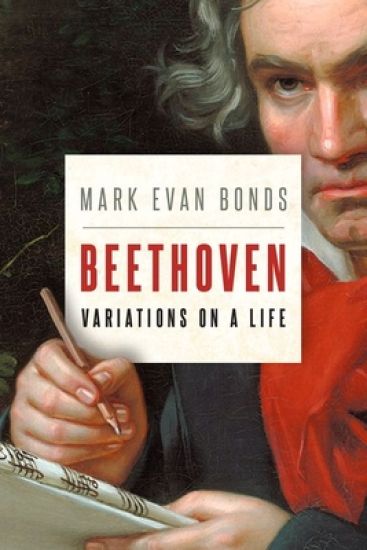
Proposes a new way of listening to Beethoven by understanding his music as an expression of his entire self, not just the iconic scowl Despite the ups and downs of his personal life and professional career - even in the face of deafness - Beethoven remained remarkably consistent in his most basic convictions about his art. This inner consistency, writes the music historian Mark Evan Bonds, provides the key to understanding the composer's life and works. Beethoven approached music as he approached life, weighing whatever occupied him from a variety of perspectives: a melodic idea, a musical genre, a word or phrase, a friend, a lover, a patron, money, politics, religion. His ability to unlock so many possibilities from each helps explain the emotional breadth and richness of his output as a whole, from the heaven-storming Ninth Symphony to the eccentric Eighth, and from the arcane Great Fugue to the crowd-pleasing Wellington's Victory. Beethoven's works, Bonds argues, are a series of variations on his life. The iconic scowl so familiar from later images of the composer is but one of many attitudes he could assume and project through his music. The supposedly characteristic furrowed brow and frown, moreover, came only after his time. Discarding tired myths about the composer, Bonds proposes a new way of listening to Beethoven by hearing his music as an expression of his entire self, not just his scowling self.
Beethoven: Variations on a Life

Beethoven: Variations on a Life

Mark Evan Bonds

Oxford University Press Inc
2020
sidottu
Despite the ups and downs of his personal life and professional career-even in the face of deafness-Beethoven remained remarkably consistent in his most basic convictions about his art. This inner consistency, the music historian Mark Evan Bonds argues, provides the key to understanding the composer's life and works. Beethoven approached music as he approached life, weighing whatever occupied him from a variety of perspectives: a melodic idea, a musical genre, a word or phrase, a friend, a lover, a patron, money, politics, religion. His ability to unlock so many possibilities from each helps explain the emotional breadth and richness of his output as a whole, from the heaven-storming Ninth Symphony to the eccentric Eighth, and from the arcane Great Fugue to the crowd-pleasing Wellington's Victory. Beethoven's works, Bonds argues, are a series of variations on his life. The iconic scowl so familiar from later images of the composer is but one of many attitudes he could assume and project through his music. The supposedly characteristic furrowed brow and frown, moreover, came only after his time. Discarding tired myths about the composer, Bonds proposes a new way of listening to Beethoven by hearing his music as an expression of his entire self, not just his scowling self.
The Beethoven Syndrome

The Beethoven Syndrome

Mark Evan Bonds

Oxford University Press Inc
2020
sidottu
The "Beethoven Syndrome" is the inclination of listeners to hear music as the projection of a composer's inner self. This was a radically new way of listening that emerged only after Beethoven's death. Beethoven's music was a catalyst for this change, but only in retrospect, for it was not until after his death that listeners began to hear composers in general-and not just Beethoven-in their works, particularly in their instrumental music.The Beethoven Syndrome: Hearing Music as Autobiography traces the rise, fall, and persistence of this mode of listening from the middle of the eighteenth century to the present. Prior to 1830, composers and audiences alike operated within a framework of rhetoric in which the burden of intelligibility lay squarely on the composer, whose task it was to move listeners in a calculated way. But through a confluence of musical, philosophical, social, and economic changes, the paradigm ofexpressive objectivity gave way to one of subjectivity in the years around 1830. The framework of rhetoric thus yielded to a framework of hermeneutics: concert-goers no longer perceived composers as orators but as oracles to be deciphered. In the wake of World War I, however, the aesthetics of "New Objectivity" marked a return not only to certain stylistic features of eighteenth-century music but to the earlier concept of expression itself. Objectivity would go on to become the cornerstone of the high modernist aesthetic that dominated the century's middle decades. Masterfully citing a broad array of source material from composers, critics, theorists, and philosophers, Mark Evan Bonds's engaging study reveals how perceptions ofsubjective expression have endured, leading to the present era of mixed and often conflicting paradigms of listening.
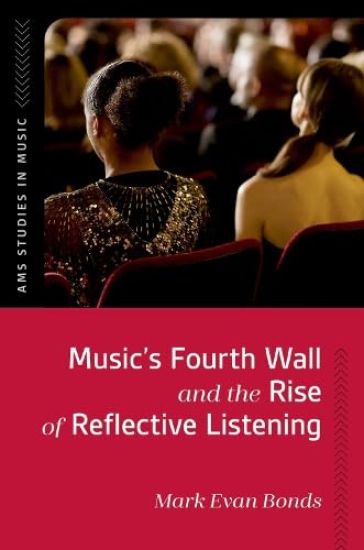
Music's Fourth Wall and the Rise of Reflective Listening

Music's Fourth Wall and the Rise of Reflective Listening

Mark Evan Bonds

OXFORD UNIVERSITY PRESS INC
2025
sidottu
We've all heard some version of the line: "I enjoy classical music but don't know anything about it." Why but? Why and when did listeners begin to accept the idea that knowledge was needed to enjoy this particular repertory? Music's Fourth Wall and the Rise of Reflective Listening traces fundamental changes in the way listeners perceived instrumental music in European concert halls over the course of the late eighteenth and early nineteenth centuries. Like the theater, the concert hall has its own fourth wall, an imagined barrier that allows audiences to forget that what they are experiencing is a carefully crafted artifice, which in turn allows them to lose themselves in the music and resonate with it in a way that is immediate and direct. But when composers like Joseph Haydn began to violate music's fourth wall--most spectacularly in the finale of the "Joke" String Quartet (1782), with its repeated false endings--lay listeners were compelled to listen reflectively. They could not lose themselves in what they were hearing when it kept reminding them that they were listening to a work of music. Author Mark Evan Bonds uses the concepts of resonant and reflective listening as coordinates for tracing this important change in the history of concert-hall listening. By 1850, reflective listening--once limited largely to professional musicians and connoisseurs--had become the aspirational norm for lay listeners. Contemporary developments in the philosophy of art accelerated the growing status of instrumental music by promoting a mode of perception that went beyond the merely sensory to incorporate the intellectual as well: Beethoven famously thought of himself as a "tone poet," someone who not only moved listeners but also challenged them to think and reflect. Lay audiences thus gradually accepted the idea of listening as a skill that could be learned and cultivated. Bonds shows how music appreciation texts, composer biographies, program notes, and pre-concert lectures, all new during this period, helped reinforce a growing distinction between classical and popular repertories. For better or worse, the ideal of reflective listening has prevailed ever since.
After Beethoven

After Beethoven

Mark Evan Bonds

Harvard University Press
2013
sidottu
Beethoven cast a looming shadow over the nineteenth century. For composers he was a model both to emulate and to overcome. "You have no idea how it feels," Brahms confided, "when one always hears such a giant marching behind one." Exploring the response of five composers--Berlioz, Mendelssohn, Schumann, Brahms, and Mahler--to what each clearly saw as the challenge of Beethoven's symphonies, Evan Bonds richly enhances our understanding of the evolution of the symphony and Beethoven's legacy. Overt borrowings from Beethoven--for example, the lyrical theme in the Finale of Brahms' First Symphony, so like the "Ode to Joy" theme in Beethoven's Ninth--have often been the subject of criticism. Bonds now shows us how composers imitate or allude to a Beethoven theme or compositional strategy precisely in order to turn away from it, creating a new musical solution. Berlioz's "Harold en Italie," Mendelssohn's "Lobgesang," Schumann's Fourth Symphony, Brahms' First, and Mahler's Fourth serve as illuminating examples. Discussion focuses on such core issues as Beethoven's innovations in formal design, the role of text and voice, fusion of diverse genres, cyclical coherence of movements, and the function of the symphonic finale. Bonds lucidly argues that the great symphonists of the nineteenth century cleared creative space for themselves by both confronting and deviating from the practices of their potentially overpowering precursor. His analysis places familiar masterpieces in a new light.
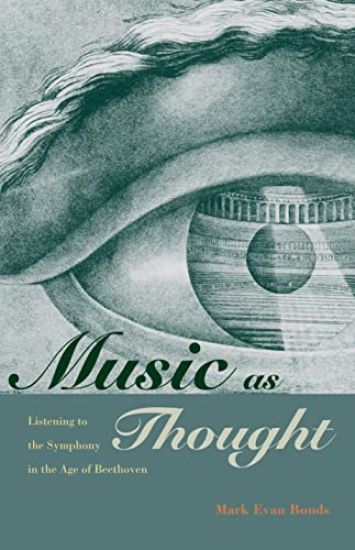
Music as Thought

Music as Thought

Mark Evan Bonds

Princeton University Press
2015
pokkari
Before the nineteenth century, instrumental music was considered inferior to vocal music. Kant described wordless music as "more pleasure than culture," and Rousseau dismissed it for its inability to convey concepts. But by the early 1800s, a dramatic shift was under way. Purely instrumental music was now being hailed as a means to knowledge and embraced precisely because of its independence from the limits of language. What had once been perceived as entertainment was heard increasingly as a vehicle of thought. Listening had become a way of knowing. Music as Thought traces the roots of this fundamental shift in attitudes toward listening in the late eighteenth and early nineteenth centuries. Focusing on responses to the symphony in the age of Beethoven, Mark Evan Bonds draws on contemporary accounts and a range of sources--philosophical, literary, political, and musical--to reveal how this music was experienced by those who heard it first. Music as Thought is a fascinating reinterpretation of the causes and effects of a revolution in listening.