Kirjojen hintavertailu. Mukana 11 699 587 kirjaa ja 12 kauppaa.

Kirjahaku

Etsi kirjoja tekijän nimen, kirjan nimen tai ISBN:n perusteella.

28 kirjaa tekijältä Mark Everard

The Complex Lives of British Freshwater Fishes
CHOICE 'Highly Recommended for all readers' June 2021 Vol. 58 No. 10This stunningly illustrated book goes far beyond a run-of-the-mill nature guide. It explores the fascinating life histories of Britain’s freshwater fishes, a group of animals which, despite their importance and ubiquity in our diverse still and flowing fresh waters, has before now been rarely regarded and respected as 'wildlife'. Our native fishes tend generally to be considered as simply something for anglers to catch or for people to eat, yet they work enormously hard for us. Author Mark Everard, avid nature-watcher, angler and scientist, shows how freshwater fish provide food, ornamentation, sport and cultural identity, and highlights their huge importance for conservation as part of the living ecosystems upon which we all depend. He dives into the mysteries moving below the surface of our rivers and lakes, bringing the wonderful and fascinating world of the diversity of British freshwater fish species into plain sight and into mind. This unique book features over 100 full-colour photographs by pioneering photographer and filmmaker Jack Perks, whose work has featured on BBC Springwatch, The One Show and Countryfile. The book is filled with technical detail useful to conservationists and biology students. Most importantly, it is also presented in an accessible, visually attractive and engaging manner that will appeal to anybody with an interest in the natural world: the conservation-minded public, the angling community, and our nation of wildlife enthusiasts.Whatever your background, this book will open your eyes to our freshwater fishy wealth, and the many ways in which it enriches our lives.
The Ecology of Everyday Things

The Ecology of Everyday Things

Mark Everard

CRC Press
2020
nidottu
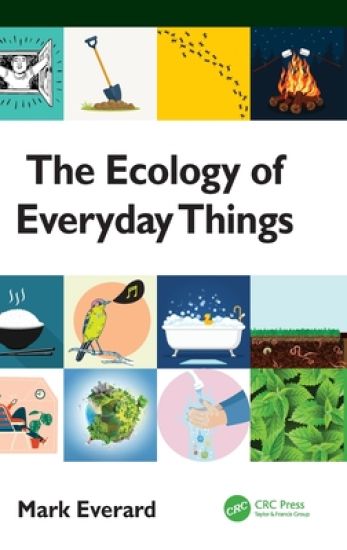
Nature is all around us, in the beautiful but also in the unappealing and functional, and from the awe-inspiring to the mundane. It is vital that we learn to see the agency of the natural world in all things that make our lives possible, comfortable and profitable. The Ecology of Everyday Things pulls back the veil of our familiarity on a range of ‘everyday things’ that surround us, and which we perhaps take too much for granted. This key into the magic world of the everyday can enable us to take better account of our common natural inheritance.Professor James Longhurst, Assistant Vice Chancellor, University of the West of England (UWE Bristol)For many people, ecosystems may be a remote concept, yet we eat, drink, breathe and interface with them in every moment of our lives. In this engaging textbook, ecosystems scientist Dr. Mark Everard considers a diversity of ‘everyday things’, including fascinating facts about their ecological origins: from the tea we drink, to the things we wear, read and enjoy, to the ecology of communities and space flight, and the important roles played by germs and ‘unappealing creatures’ such as slugs and wasps.In today’s society, we are so umbilically connected to ecosystems that we fail to notice them, and this oversight blinds us to the unsustainability of everyday life and the industries and policy environment that supports it. The Ecology of Everyday Things takes the reader on an enlightening, fascinating voyage of discovery, all the while soundly rooted in robust science. It will stimulate awareness about how connected we all are to the natural world and its processes, and how important it is to learn to better treat our environment. Ideal for use in undergraduate- and school-level teaching, it will also interest, educate, engage and enthuse a wide range of less technical audiences.
The Ecology of Everyday Things

The Ecology of Everyday Things

Mark Everard

CRC Press
2020
sidottu
Nature is all around us, in the beautiful but also in the unappealing and functional, and from the awe-inspiring to the mundane. It is vital that we learn to see the agency of the natural world in all things that make our lives possible, comfortable and profitable. The Ecology of Everyday Things pulls back the veil of our familiarity on a range of ‘everyday things’ that surround us, and which we perhaps take too much for granted. This key into the magic world of the everyday can enable us to take better account of our common natural inheritance.Professor James Longhurst, Assistant Vice Chancellor, University of the West of England (UWE Bristol)For many people, ecosystems may be a remote concept, yet we eat, drink, breathe and interface with them in every moment of our lives. In this engaging textbook, ecosystems scientist Dr. Mark Everard considers a diversity of ‘everyday things’, including fascinating facts about their ecological origins: from the tea we drink, to the things we wear, read and enjoy, to the ecology of communities and space flight, and the important roles played by germs and ‘unappealing creatures’ such as slugs and wasps.In today’s society, we are so umbilically connected to ecosystems that we fail to notice them, and this oversight blinds us to the unsustainability of everyday life and the industries and policy environment that supports it. The Ecology of Everyday Things takes the reader on an enlightening, fascinating voyage of discovery, all the while soundly rooted in robust science. It will stimulate awareness about how connected we all are to the natural world and its processes, and how important it is to learn to better treat our environment. Ideal for use in undergraduate- and school-level teaching, it will also interest, educate, engage and enthuse a wide range of less technical audiences.
Ecosystem Services

Ecosystem Services

Mark Everard

TAYLOR FRANCIS LTD
2021
nidottu
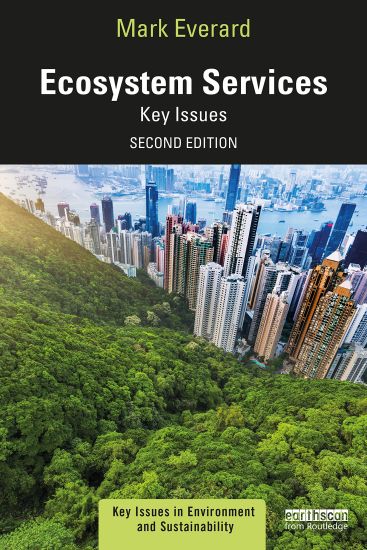
Revised and fully updated, this textbook provides a detailed yet accessible introduction to the key aspects of ecosystem services. Ecosystem services is one of the most powerful guiding principles for ecology, biodiversity conservation and the management of natural resources. It provides the basis of assessing the multiple values and services that ecosystems can provide to humankind, including diverse issues such as carbon sequestration, flood control, crop pollination and aesthetic and cultural services. The second edition of Ecosystem Services: Key Issues has been fully revised and updated to address policy and scientific developments, as well as new and emerging issues, such as nature-based solutions, zoonotic diseases and environmental justice. It includes new and updated case studies from across the world and each chapter contains further reading, learning objectives and discussion questions to aid student learning. The book details the historical roots of ecosystem services in the second half of the twentieth century, through initiatives such as the Millennium Ecosystem Assessment, The Common International Classification of Ecosystem Services (CICES) and the United Nations Sustainable Development Goals. It shows how ecosystem goods and services can be categorised and valued in economic as well as non-monetary terms, while also highlighting some of the difficulties and limitations of valuation techniques. The author describes how themes such as systems thinking, social-ecological resilience and natural capital relate to ecosystem services, and how these can contribute to more sustainable and equitable development. This book will be essential reading for students and scholars of ecosystem services, ecology, environmental science, biodiversity conservation, environmental economics, natural resource management and sustainable development. It will also be of use to professionals and policymakers who are looking to integrate ecosystems and their services into their decision making processes.
Ecosystem Services

Ecosystem Services

Mark Everard

TAYLOR FRANCIS LTD
2021
sidottu
Revised and fully updated, this textbook provides a detailed yet accessible introduction to the key aspects of ecosystem services. Ecosystem services is one of the most powerful guiding principles for ecology, biodiversity conservation and the management of natural resources. It provides the basis of assessing the multiple values and services that ecosystems can provide to humankind, including diverse issues such as carbon sequestration, flood control, crop pollination and aesthetic and cultural services. The second edition of Ecosystem Services: Key Issues has been fully revised and updated to address policy and scientific developments, as well as new and emerging issues, such as nature-based solutions, zoonotic diseases and environmental justice. It includes new and updated case studies from across the world and each chapter contains further reading, learning objectives and discussion questions to aid student learning. The book details the historical roots of ecosystem services in the second half of the twentieth century, through initiatives such as the Millennium Ecosystem Assessment, The Common International Classification of Ecosystem Services (CICES) and the United Nations Sustainable Development Goals. It shows how ecosystem goods and services can be categorised and valued in economic as well as non-monetary terms, while also highlighting some of the difficulties and limitations of valuation techniques. The author describes how themes such as systems thinking, social-ecological resilience and natural capital relate to ecosystem services, and how these can contribute to more sustainable and equitable development. This book will be essential reading for students and scholars of ecosystem services, ecology, environmental science, biodiversity conservation, environmental economics, natural resource management and sustainable development. It will also be of use to professionals and policymakers who are looking to integrate ecosystems and their services into their decision making processes.
Gudgeon

Gudgeon

Mark Everard

TAYLOR FRANCIS LTD
2022
nidottu
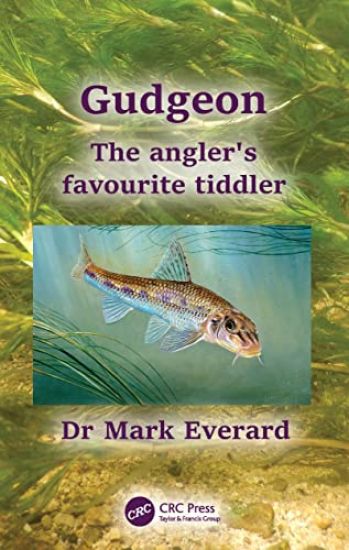
This book is a celebration of the humble gudgeon, the angler's favourite 'tiddler'. This much-loved little fish is long overdue a little book all of its own. Scientist, author and broadcaster Dr Mark Everard tells tales about the biology of the gudgeon, gudgeon fishing, and the diverse social quirks and values of this most popular of little fishes.
Gudgeon

Gudgeon

Mark Everard

TAYLOR FRANCIS LTD
2022
sidottu
This book is a celebration of the humble gudgeon, the angler's favourite 'tiddler'. This much-loved little fish is long overdue a little book all of its own. Scientist, author and broadcaster Dr Mark Everard tells tales about the biology of the gudgeon, gudgeon fishing, and the diverse social quirks and values of this most popular of little fishes.
Ruffe

Ruffe

Mark Everard

TAYLOR FRANCIS LTD
2022
nidottu
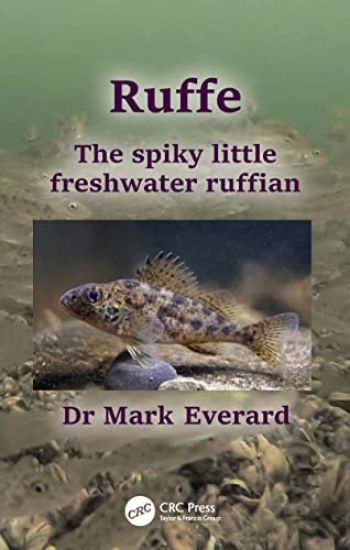
This book is dedicated to the spiky little freshwater ruffian known better as the ruffe, pope, 'tommy ruffe' and other local names. A fascinating little fish, the ruffe is long overdue a book all of its own. Much loved by many anglers, ruffe can also be problematic when introduced beyond their native range. Scientist, author and broadcaster Dr Mark Everard details fascinating aspects of the biology, angling and wider contributions to society of the ruffe.
Ruffe

Ruffe

Mark Everard

TAYLOR FRANCIS LTD
2022
sidottu
This book is dedicated to the spiky little freshwater ruffian known better as the ruffe, pope, 'tommy ruffe' and other local names. A fascinating little fish, the ruffe is long overdue a book all of its own. Much loved by many anglers, ruffe can also be problematic when introduced beyond their native range. Scientist, author and broadcaster Dr Mark Everard details fascinating aspects of the biology, angling and wider contributions to society of the ruffe.
Silver Bream

Silver Bream

Mark Everard

TAYLOR FRANCIS LTD
2022
nidottu
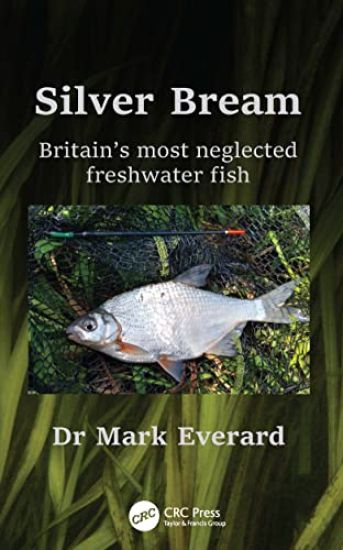
This book is dedicated to the Silver Bream, a fish too long neglected by anglers, wildlife enthusiasts and science.In fact, this is the first book ever devoted to this freshwater fish. Scientist, author and broadcaster Dr Mark Everard introduces the biology of the silver bream, angling for this fish, and its diverse social quirks and values.
Silver Bream

Silver Bream

Mark Everard

TAYLOR FRANCIS LTD
2022
sidottu
This book is dedicated to the Silver Bream, a fish too long neglected by anglers, wildlife enthusiasts and science.In fact, this is the first book ever devoted to this freshwater fish. Scientist, author and broadcaster Dr Mark Everard introduces the biology of the silver bream, angling for this fish, and its diverse social quirks and values.
Seeking Sustainable Development on a Level Playing Field
Back Cover CopyHumans have exploited a huge diversity of materials throughout history. Today’s conflict between rising demands and dwindling resources raises searching questions about how optimally to meet humanity’s needs efficiently and safely, challenging common assumptions. Plastics support many facets of modern life yet raise associated problems, whilst ‘natural’ materials may be far from benign when inputs extending their longevity are considered.PVC (polyvinyl chloride) is a plastic with adaptable, durable and other properties used in diverse construction, medical, information technology, domestic and many applications besides. However, PVC has faced significant NGO pressure relating to its chlorine content and the range of additives conferring desirable properties. Yet, unlike organochlorine pesticides, PVC plastic is inert and recyclable after providing long service life. This book is not ‘pro-PVC’, but draws on lessons learned from how the PVC value chain, particularly across Europe, has engaged with problems and made further progress under voluntary commitments to sustainable development.The book advocates a ‘level playing field’ of common sustainability principles for assessment of the benefits and risks of the use of all materials in the context of their incorporation within whole product life cycles, from raw material extraction to beyond end-of-life. The use of every material raises specific challenges, but also shares common problems arising from society’s legacy of wasteful, linear resource use.Activities surrounding the PVC value chain have generated novel ideas, assessment techniques and reconsideration of regulatory approaches relevant to sustainability assessment of the use of all materials in the context of whole product life cycles on a common ‘level playing field’, which best supports the meeting of the diversity of human needs in the safest and most efficient manner.This book is aimed at industry, regulatory and NGO audiences and influence on wider media.
Seeking Sustainable Development on a Level Playing Field
Back Cover CopyHumans have exploited a huge diversity of materials throughout history. Today’s conflict between rising demands and dwindling resources raises searching questions about how optimally to meet humanity’s needs efficiently and safely, challenging common assumptions. Plastics support many facets of modern life yet raise associated problems, whilst ‘natural’ materials may be far from benign when inputs extending their longevity are considered.PVC (polyvinyl chloride) is a plastic with adaptable, durable and other properties used in diverse construction, medical, information technology, domestic and many applications besides. However, PVC has faced significant NGO pressure relating to its chlorine content and the range of additives conferring desirable properties. Yet, unlike organochlorine pesticides, PVC plastic is inert and recyclable after providing long service life. This book is not ‘pro-PVC’, but draws on lessons learned from how the PVC value chain, particularly across Europe, has engaged with problems and made further progress under voluntary commitments to sustainable development.The book advocates a ‘level playing field’ of common sustainability principles for assessment of the benefits and risks of the use of all materials in the context of their incorporation within whole product life cycles, from raw material extraction to beyond end-of-life. The use of every material raises specific challenges, but also shares common problems arising from society’s legacy of wasteful, linear resource use.Activities surrounding the PVC value chain have generated novel ideas, assessment techniques and reconsideration of regulatory approaches relevant to sustainability assessment of the use of all materials in the context of whole product life cycles on a common ‘level playing field’, which best supports the meeting of the diversity of human needs in the safest and most efficient manner.This book is aimed at industry, regulatory and NGO audiences and influence on wider media.
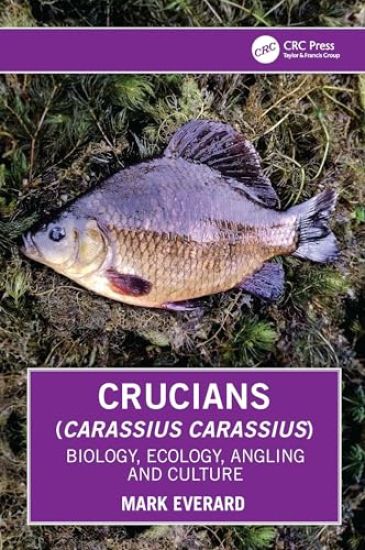
Crucians (Carassius carassius)

Crucians (Carassius carassius)

Mark Everard

TAYLOR FRANCIS LTD
2025
nidottu
The crucian is a freshwater fish species that has seen a renaissance of interest in angling and conservation communities in Britain. Despite its wide northern European and western Asian distribution, the species is under threat due to multiple causes including the decimation of the small pond habitats upon which it depends. As a small pond specialist, the crucian serves a particularly important role as a charismatic focus encouraging support for the protection and restoration of this highly threatened and much-reduced habitat type and the diversity of other species that it supports.Crucians (Carassius carassius): Biology, Ecology, Angling and Culture takes a comprehensive approach, covering:Biology and ecology, including taxonomyAngling, including location, baits, methods, and former and current record fishCultural connections, including etymology, artwork and culinary aspects of the fishThese sections are supported by a bibliography and beautiful colour imagery. The book offers a fascinating read for conservationists, anglers, freshwater biologists and those with interest in the natural world.
Crucians (Carassius carassius)

Crucians (Carassius carassius)

Mark Everard

TAYLOR FRANCIS LTD
2025
sidottu
The crucian is a freshwater fish species that has seen a renaissance of interest in angling and conservation communities in Britain. Despite its wide northern European and western Asian distribution, the species is under threat due to multiple causes including the decimation of the small pond habitats upon which it depends. As a small pond specialist, the crucian serves a particularly important role as a charismatic focus encouraging support for the protection and restoration of this highly threatened and much-reduced habitat type and the diversity of other species that it supports.Crucians (Carassius carassius): Biology, Ecology, Angling and Culture takes a comprehensive approach, covering:Biology and ecology, including taxonomyAngling, including location, baits, methods, and former and current record fishCultural connections, including etymology, artwork and culinary aspects of the fishThese sections are supported by a bibliography and beautiful colour imagery. The book offers a fascinating read for conservationists, anglers, freshwater biologists and those with interest in the natural world.
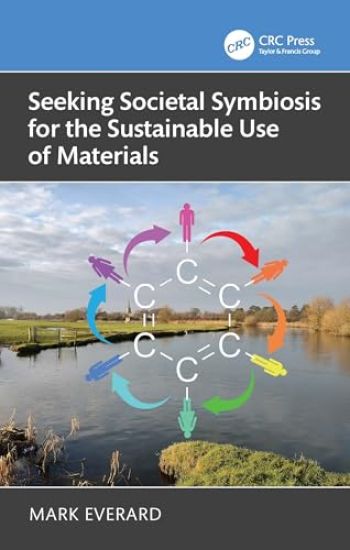
Seeking Societal Symbiosis for the Sustainable Use of Materials
We live in a material world; one with a rising population dependent upon a base of natural resources that is already seriously depleted and declining rapidly. This book considers the societal use of materials: historically, in the less-than-optimal present and aspirationally as a central thread in addressing wider sustainable development challenges. It accounts for linked chemical, physical and socio-economic consequences right through value chains, from raw material extraction through manufacture and use and onwards to post-use.The author, Mark Everard, proposes that the four principal societal sectors – business, government, civil society organisations and knowledge-providers – though often currently dissipating effort by working antagonistically, can optimally work symbiotically around co-created and consensual long-term sustainability goals to accelerate necessary progress. Practical examples of ‘baby steps’ towards constructive collaboration within and between societal sectors are recognised, and lessons are drawn for how they can shape more committed and intentional collaboration for sustainable development.Seeking Societal Symbiosis touches upon many aspects of science from chemistry, chemical engineering and material science, through to construction/built environment, sustainability, regulatory science, resources economics and social science. It will be valuable reading for industry managers and executives, the European Commission and MEPs, national regulators and legislators, university students and lecturers, and NGOs.
Seeking Societal Symbiosis for the Sustainable Use of Materials
We live in a material world; one with a rising population dependent upon a base of natural resources that is already seriously depleted and declining rapidly. This book considers the societal use of materials: historically, in the less-than-optimal present and aspirationally as a central thread in addressing wider sustainable development challenges. It accounts for linked chemical, physical and socio-economic consequences right through value chains, from raw material extraction through manufacture and use and onwards to post-use.The author, Mark Everard, proposes that the four principal societal sectors – business, government, civil society organisations and knowledge-providers – though often currently dissipating effort by working antagonistically, can optimally work symbiotically around co-created and consensual long-term sustainability goals to accelerate necessary progress. Practical examples of ‘baby steps’ towards constructive collaboration within and between societal sectors are recognised, and lessons are drawn for how they can shape more committed and intentional collaboration for sustainable development.Seeking Societal Symbiosis touches upon many aspects of science from chemistry, chemical engineering and material science, through to construction/built environment, sustainability, regulatory science, resources economics and social science. It will be valuable reading for industry managers and executives, the European Commission and MEPs, national regulators and legislators, university students and lecturers, and NGOs.
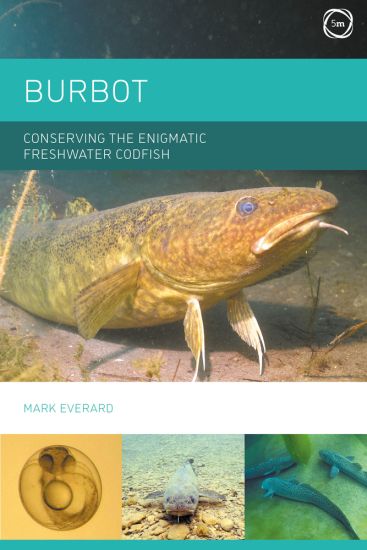
Burbot

Burbot

Mark Everard

CABI PUBLISHING
2021
sidottu
The burbot has a unique ecology as the only member of the order of cod-like fishes found in freshwater. It is the second most widely distributed freshwater fish in the Northern Hemisphere, variously threatened, extinct or thriving across different parts of this wide Palaearctic range. Burbot were driven to extinction from Britain most probably in the 1970s, the last recorded specimen caught in 1969 in Cambridgeshire. Particularly over the past decade, a large body of work has addressed potential reintroduction of the burbot to Britain. The burbot's diverse habitat and other needs throughout its life stages also mean that the species is a flagship for a diversity of other wildlife of restored river systems, and of the human benefits that these ecosystems can provide. Burbot is an excellent source for all those involved in freshwater fish and fisheries management, conservation and exploitation, including fish biologists (ichthyologists), environmental scientists, freshwater biologists, fisheries managers and scientists, conservation biologists, engineers and hydrologists. The libraries of all universities and research establishments where these subjects are studied and taught should have a copy. Anglers and all those interested in fishes and natural history will also benefit from this book.
Small Fry

Small Fry

Mark Everard

CABI PUBLISHING
2025
sidottu
Despite being among the most widespread and common fish in the UK there is still a lack of knowledge about the small freshwater fish species that inhabit our rivers and waterways. Often neglected but endlessly charming, these small fish are, for many, their first childhood encounter with the underwater world and inspire a lifelong interest and enduring fascination. As threats to biodiversity grow and conservation efforts intensify, it is important to remember that fishes are wildlife and that common yet overlooked species require respect and wider consideration. Providing details of their biology, the wider angling interest and many other social dimensions, this book celebrates Britain's small freshwater fishes and recognises their importance to both the academic and general fish enthusiast. The value of this book includes: * Providing detailed systematic descriptions of some well-known but less well understood UK small fish species. * Written by a popular and knowledgeable broadcaster (BBC Springwatch) and author adept at crafting works that are valued by joint audiences (academics, general fishermen and beginner anglers). * Illustrated with photographs from acclaimed underwater photographer, Jack Perks. * Recognising that small freshwater fish species are important wildlife and that there are great stories to be told about our littlest fishes. This book shines a light on the range of familiar but less studied UK small freshwater fish species for academic use but it is also written for the accessibility of a general readership. It is an engaging, factual and beautifully illustrated account of these wonderful, tiny creatures and brings their stories to life.