Kirjojen hintavertailu. Mukana 12 657 676 kirjaa ja 12 kauppaa.

Kirjahaku

Etsi kirjoja tekijän nimen, kirjan nimen tai ISBN:n perusteella.

44 kirjaa tekijältä Mark Freeman

You Are Not a Rock: A Step-By-Step Guide to Better Mental Health (for Humans)
Mental health is . . . being yourself. A prescriptive and positive guide, illustrated with line drawings, making the case that mental well-being, like physical health, can be strengthened over time and with specific techniques We all want to feel less anxiety, guilt, anger and sadness. We want to obsess less and be less lonely, free ourselves from our demons, compulsive habits, and stress. But as humans (unlike rocks) we experience all of these. And paradoxically, trying to avoid and control them only makes things worse. Having struggled with serious mental illness for many years himself, Mark Freeman has become a dedicated mental-health advocate and coach. He makes the case that instead of trying to feel less and avoid pain and stress, we need to build emotional fitness, especially our capacity for strength, balance and focus. With wit, compassion, and depth of experience and anecdotes, he shows that we can recover from many mental disorders, from mild to very serious, at all ages and stages of life, and even if other methods have failed. Freeman's innovative approach makes use of a range of therapeutic techniques, mindfulness training, peer support, humor, and common sense.
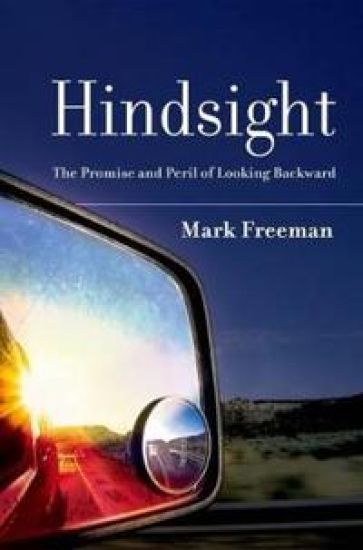
Hindsight

Hindsight

Mark Freeman

Oxford University Press Inc
2010
sidottu
Although the idea of hindsight is frequently associated with the biases, distortions, and outright lies of memory--as in the infamous "20-20" scenario or the conviction that one "knew it all along"--Mark Freeman maintains that this process of looking backward over the terrain of the past can also serve as a profound source of insight, understanding, and self-knowledge. Consider Tolstoy's harrowing tale of Ivan Ilych, revisiting his past on the eve of his death, only to realize that the life he had been living was a lie. Consider as well the many times in our own lives when, upon reviewing the past, we are able to see what we could not, or would not, see earlier on. Hindsight is also intimately connected to what Freeman calls narrative reflection: Through the distance conferred by time, we can look back on past experiences and see them anew, as episodes in an evolving story. As important as "being in the now" and "living in the moment" are, it is no less important to pause at times and, by looking backward, seek to discern those aspects of experience that might otherwise escape our notice. Far from necessarily leading to deception and lies, therefore, hindsight can lead to wisdom and indeed truth--of a sort, Freeman contends, is only available in retrospect. In addition to serving as a central site of self-knowledge, hindsight plays an integral role in the process of moral growth. For, through hindsight, there emerges the opportunity not only to see the possible errors of our ways but to transcend them and thereby to move on to better ways of being in the world. Drawing on psychology, philosophy, literature, and personal experience, this wide-ranging volume offers an insightful and engaging exploration of the role of hindsight both in discerning the personal past and in deepening moral life.
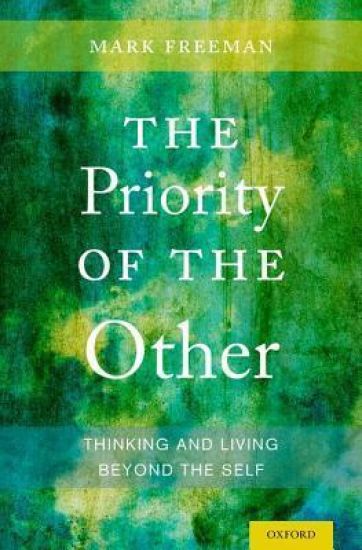
The Priority of the Other

The Priority of the Other

Mark Freeman

Oxford University Press Inc
2014
sidottu
Psychology, having come of age under the influence of Descartes and other champions of the thinking "I," has come to focus largely on what happens inside the self. This perspective expanded with the emergence of social psychology and, more recently, cultural psychology, but by and large, the field has taken an essentially ego-centric approach. Working from this basic premise, Mark Freeman proposes that we adopt a more "ex-centric" perspective, one that affirms the priority of the Other in shaping human experience. In speaking of the "Other," Freeman refers not only to other people, but also to those non-human "others," nature, art, God, that take us beyond the ego and bring us closer to the world. In speaking of the Other's priority, he insists that there is much in life that "comes before us." By thinking and living the priority of the Other, we can therefore become better attuned to both the world beyond us and the world within. At the heart of Freeman's perspective are two fundamental ideas. The first is that the Other is the primary source of meaning, inspiration, and existential nourishment. The second is that it is the primary source of our ethical energies, and that being responsive and responsible to the world beyond us is a defining feature of our humanity. There is a tragic side to Freeman's story, however. Enraptured though we may be by the Other, we frequently encounter it in a state of distraction and fail to receive the nourishment and inspiration it can provide. And responsive and responsible though we may sometimes be, it is perilously easy to retreat inward, to the needy ego. The challenge, therefore, is to break the spell of the "ordinary oblivion" that characterizes much of everyday life. The Priority of the Other can help us rise to the occasion.
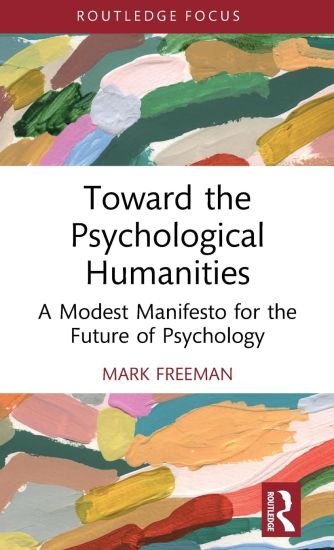
Toward the Psychological Humanities

Toward the Psychological Humanities

Mark Freeman

TAYLOR FRANCIS LTD
2023
sidottu
Mark Freeman’s inspiring account of the burgeoning field of the psychological humanities presents a clear and compelling vision of what the discipline of psychology might become.Valuable though the scientific perspective has been for advancing the discipline, Freeman maintains that significant dimensions of the human experience elude this perspective and call for an entirely different kind of psychology, one more closely tied to the arts and humanities. Issuing his call for the psychological humanities in the form of a ten chapter "manifesto," Freeman’s groundbreaking book offers a comprehensive rationale for a more inclusive, pluralistic, and artful approach to exploring the psychological world in all of its potential complexity, obscurity, and beauty.Engaging and accessible, this bold, provocative book is destined to spark significant discussion and debate in audiences including advanced undergraduates, postgraduates, and professionals in the field of psychology with interests in theoretical and philosophical psychology, history of psychology, clinical psychology, humanistic psychology, and qualitative psychology. It will also be welcomed by those in philosophy, literature, and the arts, as well as anyone intrigued by psychological life who may be interested in encountering a vital new approach to examining the human condition.
Finding the Muse

Finding the Muse

Mark Freeman

Cambridge University Press
2007
pokkari
Finding the Muse explores the lives of a group of aspiring fine artists from the mid-1960s, when they completed art school, to the mid-1980s. It focuses on problems of artistic creativity as they relate to such issues as the mystique of the artist, the challenge of establishing community among artists, the place of the art market in the construction of artistic identity, and the limits and possibilities of modern and postmodern art itself. By identifying the salient problems of artistic creativity, the author provides a realistic portrayal of the contemporary artist and some useful suggestions for addressing the problems that curb creativity. Focusing on problems of creativity that have arisen in recent years, the book articulates the more optimal conditions within which the process of artistic creation might occur. Part psychology of creativity, part sociology of art, and part cultural criticism, the book will be of interest to psychologists, sociologists, philosophers, art historians, art educators and especially aspiring artists.
Finding the Muse

Finding the Muse

Mark Freeman

Cambridge University Press
1994
sidottu
Finding the Muse explores the lives of a group of aspiring fine artists from the mid-1960s, when they completed art school, to the mid-1980s. It focuses on problems of artistic creativity as they relate to such issues as the mystique of the artist, the challenge of establishing community among artists, the place of the art market in the construction of artistic identity, and the limits and possibilities of modern and postmodern art itself. By identifying the salient problems of artistic creativity, the author provides a realistic portrayal of the contemporary artist and some useful suggestions for addressing the problems that curb creativity. Focusing on problems of creativity that have arisen in recent years, the book articulates the more optimal conditions within which the process of artistic creation might occur. Part psychology of creativity, part sociology of art, and part cultural criticism, the book will be of interest to psychologists, sociologists, philosophers, art historians, art educators and especially aspiring artists.
Truth Commissions and Procedural Fairness

Truth Commissions and Procedural Fairness

Mark Freeman

Cambridge University Press
2006
pokkari
This is the first law book devoted entirely to the subject of truth commissions. The book sets forth standards of procedural fairness aimed at protecting the rights of those who come into contact with truth commissions - primarily victims and their families, witnesses, and perpetrators. The aim of the book is to provide recommended criteria of procedural fairness for five possible components of a truth commission's mandate: the taking of statements, the use of subpoenas, the exercise of powers of search and seizure, the holding of victim-centered public hearings, and the publication of findings of individual responsibility in a final report (sometimes called the issue of 'naming names'). The book draws on the experience of past and present truth commissions, analogous national and multilateral investigative bodies, and international and comparative standards of procedural fairness.
Truth Commissions and Procedural Fairness

Truth Commissions and Procedural Fairness

Mark Freeman

Cambridge University Press
2006
sidottu
This is the first law book devoted entirely to the subject of truth commissions. The book sets forth standards of procedural fairness aimed at protecting the rights of those who come into contact with truth commissions - primarily victims and their families, witnesses, and perpetrators. The aim of the book is to provide recommended criteria of procedural fairness for five possible components of a truth commission's mandate: the taking of statements, the use of subpoenas, the exercise of powers of search and seizure, the holding of victim-centered public hearings, and the publication of findings of individual responsibility in a final report (sometimes called the issue of 'naming names'). The book draws on the experience of past and present truth commissions, analogous national and multilateral investigative bodies, and international and comparative standards of procedural fairness.
Necessary Evils

Necessary Evils

Mark Freeman

Cambridge University Press
2009
sidottu
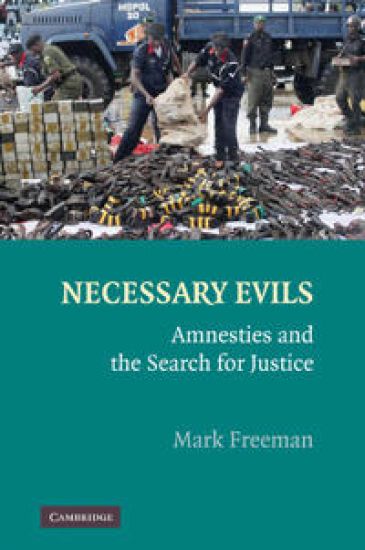
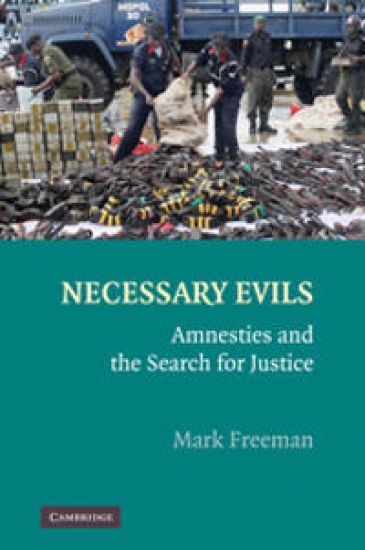
This book is about amnesties for grave international crimes that states adopt in moments of transition or social unrest. The subject is naturally controversial, especially in the age of the International Criminal Court. The goal of this book is to reframe and revitalise the global debate on the subject and to offer an original framework for resolving amnesty dilemmas when they arise. Most literature and jurisprudence on amnesties deal with only a small subset of state practice and sidestep the ambiguity of amnesty's position under international law. This book addresses the ambiguity head on and argues that amnesties of the broadest scope are sometimes defensible when adopted as a last recourse in contexts of mass violence. Drawing on an extensive amnesty database, the book offers detailed guidance on how to ensure that amnesties extend the minimum leniency possible, while imposing the maximum accountability on the beneficiaries.
Toward the Psychological Humanities

Toward the Psychological Humanities

Mark Freeman

TAYLOR FRANCIS LTD
2025
nidottu
Mark Freeman’s inspiring account of the burgeoning field of the psychological humanities presents a clear and compelling vision of what the discipline of psychology might become.Valuable though the scientific perspective has been for advancing the discipline, Freeman maintains that significant dimensions of the human experience elude this perspective and call for an entirely different kind of psychology, one more closely tied to the arts and humanities. Issuing his call for the psychological humanities in the form of a ten chapter "manifesto," Freeman’s groundbreaking book offers a comprehensive rationale for a more inclusive, pluralistic, and artful approach to exploring the psychological world in all of its potential complexity, obscurity, and beauty.Engaging and accessible, this bold, provocative book is destined to spark significant discussion and debate in audiences including advanced undergraduates, postgraduates, and professionals in the field of psychology with interests in theoretical and philosophical psychology, history of psychology, clinical psychology, humanistic psychology, and qualitative psychology. It will also be welcomed by those in philosophy, literature, and the arts, as well as anyone intrigued by psychological life who may be interested in encountering a vital new approach to examining the human condition.
Necessary Evils

Necessary Evils

Mark Freeman

Cambridge University Press
2011
pokkari
This book is about amnesties for grave international crimes that states adopt in moments of transition or social unrest. The subject is naturally controversial, especially in the age of the International Criminal Court. The goal of this book is to reframe and revitalise the global debate on the subject and to offer an original framework for resolving amnesty dilemmas when they arise. Most literature and jurisprudence on amnesties deal with only a small subset of state practice and sidestep the ambiguity of amnesty's position under international law. This book addresses the ambiguity head on and argues that amnesties of the broadest scope are sometimes defensible when adopted as a last recourse in contexts of mass violence. Drawing on an extensive amnesty database, the book offers detailed guidance on how to ensure that amnesties extend the minimum leniency possible, while imposing the maximum accountability on the beneficiaries.
The English Rural Poor, 1850-1914 Vol 1
Drawing on the difficult-to-access pamphlets, reports, periodical literature and political tracts, this five-volume set reproduces in facsimile a large number of neglected sources relating to rural life in the latter half of the nineteenth century. It is of interest to scholars in nineteenth-century studies and to all social historians.
The English Rural Poor, 1850-1914 Vol 2
Drawing on the difficult-to-access pamphlets, reports, periodical literature and political tracts, this five-volume set reproduces in facsimile a large number of neglected sources relating to rural life in the latter half of the nineteenth century. It is of interest to scholars in nineteenth-century studies and to all social historians.
The English Rural Poor, 1850-1914 Vol 3
Drawing on the difficult-to-access pamphlets, reports, periodical literature and political tracts, this five-volume set reproduces in facsimile a large number of neglected sources relating to rural life in the latter half of the nineteenth century. It is of interest to scholars in nineteenth-century studies and to all social historians.
The English Rural Poor, 1850-1914 Vol 4
Drawing on the difficult-to-access pamphlets, reports, periodical literature and political tracts, this five-volume set reproduces in facsimile a large number of neglected sources relating to rural life in the latter half of the nineteenth century. It is of interest to scholars in nineteenth-century studies and to all social historians.
The English Rural Poor, 1850-1914 Vol 5
Drawing on the difficult-to-access pamphlets, reports, periodical literature and political tracts, this five-volume set reproduces in facsimile a large number of neglected sources relating to rural life in the latter half of the nineteenth century. It is of interest to scholars in nineteenth-century studies and to all social historians.
Rewriting the Self

Rewriting the Self

Mark Freeman

Routledge
2015
sidottu
Originally published in 1993. This book explores the process by which individuals reconstruct the meaning and significance of past experience. Drawing on the lives of such notable figures as St Augustine, Helen Keller and Philip Roth as well as on the combined insights of psychology, philosophy and literary theory, the book sheds light on the intricacies and dilemmas of self-interpretation in particular and interpretive psychological enquiry more generally.The author draws upon selected, mainly autobiographical, literary texts in order to examine concretely the process of rewriting the self. Among the issues addressed are the relationship of rewriting the self to the concept of development, the place of language in the construction of selfhood, the difference between living and telling about it, the problem of facts in life history narrative, the significance of the unconscious in interpreting the personal past, and the freedom of the narrative imagination. Alpha Sigma Nu National Book Award winner in 1994
Rewriting the Self

Rewriting the Self

Mark Freeman

Routledge
2017
nidottu
Originally published in 1993. This book explores the process by which individuals reconstruct the meaning and significance of past experience. Drawing on the lives of such notable figures as St Augustine, Helen Keller and Philip Roth as well as on the combined insights of psychology, philosophy and literary theory, the book sheds light on the intricacies and dilemmas of self-interpretation in particular and interpretive psychological enquiry more generally.The author draws upon selected, mainly autobiographical, literary texts in order to examine concretely the process of rewriting the self. Among the issues addressed are the relationship of rewriting the self to the concept of development, the place of language in the construction of selfhood, the difference between living and telling about it, the problem of facts in life history narrative, the significance of the unconscious in interpreting the personal past, and the freedom of the narrative imagination. Alpha Sigma Nu National Book Award winner in 1994