Kirjojen hintavertailu. Mukana 11 244 527 kirjaa ja 12 kauppaa.

Kirjahaku

Etsi kirjoja tekijän nimen, kirjan nimen tai ISBN:n perusteella.

3 kirjaa tekijältä Mark Hagger

William

William

Mark Hagger

Bloomsbury Academic
2021
nidottu
1066 is the most famous date in English history. On 14 October, on Senlac Hill near Hastings, a battle was fought that would change the face of England forever. Over the next twenty years, Norman culture was imposed on England, and English politics and society were radically reshaped. But how much is really known about William 'the Conqueror', the Norman duke who led his men to victory on that autumn Saturday in what was to be the last successful invasion of England? Mark Hagger here takes a fresh look at William - his life and leadership. As king, he spent much of his reign threatened by rebellion and invasion. In response, he ordered castles and strongholds to be built across the land - a symbol of the force with which he defended his realm and which, along with Domesday Book, England's first public record, attest to a powerful legacy. This book provides a rounded portrait of one of England's greatest rulers.
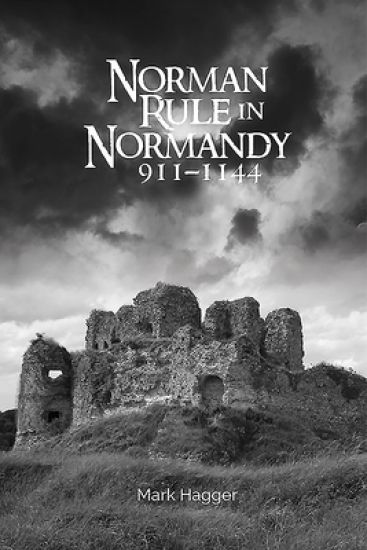
Norman Rule in Normandy, 911-1144

Norman Rule in Normandy, 911-1144

Mark Hagger

The Boydell Press
2017
sidottu
A magisterial survey of Normandy from its origins in the tenth century to its conquest some two hundred years later. In around 911, the Viking adventurer Rollo was granted the city of Rouen and its surrounding district by the Frankish King Charles the Simple. Two further grants of territory followed in 924 and 933. But while Frankish kings mightgrant this land to Rollo and his son, William Longsword, these two Norman dukes and their successors had to fight and negotiate with rival lords, hostile neighbours, kings, and popes in order to establish and maintain their authority over it. This book explores the geographical and political development of what would become the duchy of Normandy, and the relations between the dukes and these rivals for their lands and their subjects' fidelity. It looks, too, at the administrative machinery the dukes built to support their regime, from their toll-collectors and vicomtes (an official similar to the English sheriff) to the political theatre of their courts and the buildings in which they were staged. At the heart of this exercise are the narratives that purport to tell us about what the dukes did, and the surviving body of the dukes' diplomas. Neither can be taken at face value, and both tell usas much about the concerns and criticisms of the dukes' subjects as they do about the strength of the dukes' authority. The diplomas, in particular, because most of them were not written by scribes attached to the dukes' households but rather by their beneficiaries, can be used to recover something of how the dukes' subjects saw their rulers, as well as something of what they wanted or needed from them. Ducal power was the result of a dialogue, and this volume enables both sides to speak. Mark Hagger is a senior lecturer in medieval history at Bangor University.
Norman Rule in Normandy, 911-1144

Norman Rule in Normandy, 911-1144

Mark Hagger

The Boydell Press
2020
pokkari
A magisterial survey of Normandy from its origins in the tenth century to its conquest some two hundred years later. This book provides a comprehensive revision and analysis of Normandy, its rulers, and governance between the traditional date for the foundation of the duchy, 911, and the completion of the conquest led by Count Geoffrey V of theAngevins, 1144. It examines how the Norman dukes were able to establish and then to maintain themselves in their duchy, providing a new historical narrative in the process. It also explores the various tools that they used to promote and enforce their authority, from the recruitment of armies to the use of symbolism and emotions at court. In particular, it also seeks to come to terms with the practicalities of ducal power, and reveals that it was framed and promoted from the bottom up as much as from the top down. In around 911, the Viking adventurer Rollo was granted the city of Rouen and its surrounding district by the Frankish King Charles the Simple. Two further grants of territory followed in 924 and 933. But while Frankish kings might grant this land to Rollo and his son, William Longsword, these two Norman dukes and their successors had to fight and negotiate with rival lords, hostile neighbours,kings, and popes in order to establish and maintain their authority over it. This book explores the geographical and political development of what would become the duchy of Normandy, and the relations between the dukes and these rivals for their lands and their subjects' fidelity. It looks, too, at the administrative machinery the dukes built to support their regime, from their toll-collectors and vicomtes (an official similar to the English sheriff) to the political theatre of their courts and the buildings in which they were staged. At the heart of this exercise are the narratives that purport to tell us about what the dukes did, and the surviving body of the dukes'diplomas. Neither can be taken at face value, and both tell us as much about the concerns and criticisms of the dukes' subjects as they do about the strength of the dukes' authority. The diplomas, in particular, because most of them were not written by scribes attached to the dukes' households but rather by their beneficiaries, can be used to recover something of how the dukes' subjects saw their rulers, as well as something of what they wanted or neededfrom them. Ducal power was the result of a dialogue, and this volume enables both sides to speak.