Kirjojen hintavertailu. Mukana 11 244 527 kirjaa ja 12 kauppaa.

Kirjahaku

Etsi kirjoja tekijän nimen, kirjan nimen tai ISBN:n perusteella.

48 kirjaa tekijältä Mark Harris

Mark Harris

Mark Harris

Mark Harris

Losget Press
2022
pokkari
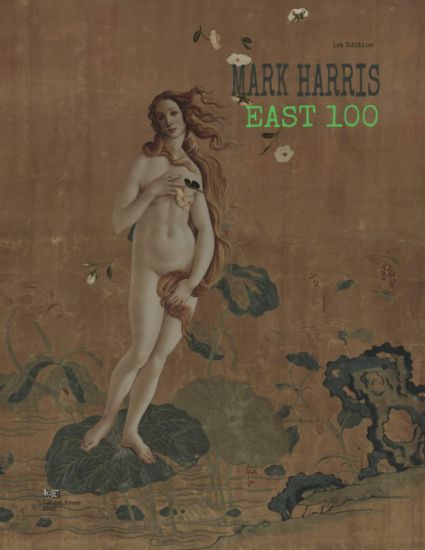
MARK HARRIS: EAST 100 is a collection of one hundred mixing works completed by artist Mark Harris in Los Angeles at the end of 2021. He mixed world-famous paintings and ancient Chinese paintings through digital technology to present new scenes and artistic conceptions.
Mark's Little Joke Book

Mark's Little Joke Book

Mark Harris

Lulu.com
2007
pokkari
This book is a collection of Popular American Humor. Mark Harris likes to tell jokes and stories. He is part of the large Harris Family that thrives on story-telling. This collection of about four hundred jokes and stories are the best that Mark has heard. Many of the stories are very old and have been told and retold through the years. They have been changed or modified to fit current times or the needs of a particular story-teller. Some of the jokes are of fairly recent origin, but in most cases, a story or joke--whether old or new--cannot be attributed to its' creator. None of the stories originated with Mr. Harris: he is first a story collector and then a story-teller. At any reunion or gathering of the Harris Family, stories are told by those of the current generation. This art is now a family tradition, started generations ago. Perhaps the story that can best be told is that story-telling in the Harris Family will continue long into the future.
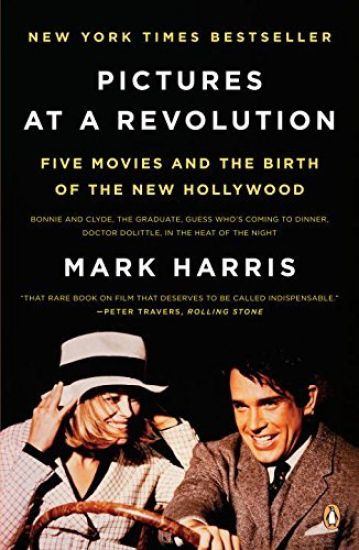
Pictures at a Revolution: Five Movies and the Birth of the New Hollywood
One of The Hollywood Reporter's 100 Greatest Film Books of All Time "Pictures at a Revolution is probably one of the best books I've ever read in my life." --Quentin Tarantino The New York Times bestseller that follows the making of five films at a pivotal time in Hollywood history In the mid-1960s, westerns, war movies, and blockbuster musicals like Mary Poppins swept the box office. The Hollywood studio system was astonishingly lucrative for the few who dominated the business. That is, until the tastes of American moviegoers radically- and unexpectedly-changed. By the Oscar ceremonies of 1968, a cultural revolution had hit Hollywood with the force of a tsunami, and films like Bonnie and Clyde, The Graduate, Guess Who's Coming to Dinner, In the Heat of the Night, and box-office bomb Doctor Doolittle signaled a change in Hollywood-and America. And as an entire industry changed and struggled, careers were suddenly made and ruined, studios grew and crumbled, and the landscape of filmmaking was altered beyond all recognition.
Five Came Back: A Story of Hollywood and the Second World War
One of The Hollywood Reporter's 100 Greatest Film Books of All Time "One of the great works of film history of the decade." --Slate Now a Netflix original documentary series, also written by Mark Harris: the extraordinary wartime experience of five of Hollywood's most important directors, all of whom put their stamp on World War II and were changed by it forever Here is the remarkable, untold story of how five major Hollywood directors--John Ford, George Stevens, John Huston, William Wyler, and Frank Capra--changed World War II, and how, in turn, the war changed them. In a move unheard of at the time, the U.S. government farmed out its war propaganda effort to Hollywood, allowing these directors the freedom to film in combat zones as never before. They were on the scene at almost every major moment of America's war, shaping the public's collective consciousness of what we've now come to call the good fight. The product of five years of scrupulous archival research, Five Came Back provides a revelatory new understanding of Hollywood's role in the war through the life and work of these five men who chose to go, and who came back.
City of Discontent

City of Discontent

Mark Harris

University of Illinois Press
1993
nidottu
When City of Discontent was first published, it bore the subtitle "An interpretive biography of Vachel Lindsay, being also the story of Springfield, Illinois, USA, and of the love of the poet for that city, that state, and that nation." But the book is, like Carl Sandburg's Lincoln, not so much a biography as a poetic interpretation of the life of one of the state's leading poets of the first half of the twentieth century.
Confronting Global Climate Change
This book offers a solutions-based approach to climate change problems which potentially impinge on human beings within the tropics. It largely comprises research articles with supplementary applications and illustrations. The effects of atmospheric phenomena, energy acquisition, wind power, CO2 sequestration, are linked with soils, aquatic life, reducing deforestation, rainwater harvesting and clay pot farming, climate, plant disease and food security to show that no area of life is untouched by the phenomenon of climate change. It discusses specific problem areas and provides an overview of geotechnical and sustainable solutions to lessen the impact of climate.
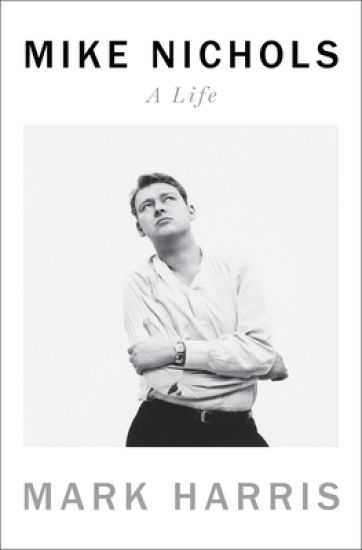
Mike Nichols: A Life

Mike Nichols: A Life

Mark Harris

The Penguin Press
2021
sidottu
An instant New York Times Bestseller A magnificent biography of one of the most protean creative forces in American entertainment history, a life of dazzling highs and vertiginous plunges--some of the worst largely unknown until now--by the acclaimed author of Pictures at a Revolution and Five Came Back Mike Nichols burst onto the scene as a wunderkind: while still in his twenties, he was half of a hit improv duo with Elaine May that was the talk of the country. Next he directed four consecutive hit plays, won back-to-back Tonys, ushered in a new era of Hollywood moviemaking with Who's Afraid of Virginia Woolf?, and followed it with The Graduate, which won him an Oscar and became the third-highest-grossing movie ever. At thirty-five, he lived in a three-story Central Park West penthouse, drove a Rolls-Royce, collected Arabian horses, and counted Jacqueline Kennedy, Elizabeth Taylor, Leonard Bernstein, and Richard Avedon as friends. Where he arrived is even more astonishing given where he had begun: born Igor Peschkowsky to a Jewish couple in Berlin in 1931, he was sent along with his younger brother to America on a ship in 1939. The young immigrant boy caught very few breaks. He was bullied and ostracized--an allergic reaction had rendered him permanently hairless--and his father died when he was just twelve, leaving his mother alone and overwhelmed. The gulf between these two sets of facts explains a great deal about Nichols's transformation from lonely outsider to the center of more than one cultural universe--the acute powers of observation that first made him famous; the nourishment he drew from his creative partnerships, most enduringly with May; his unquenchable drive; his hunger for security and status; and the depressions and self-medications that brought him to terrible lows. It would take decades for him to come to grips with his demons. In an incomparable portrait that follows Nichols from Berlin to New York to Chicago to Hollywood, Mark Harris explores, with brilliantly vivid detail and insight, the life, work, struggle, and passion of an artist and man in constant motion. Among the 250 people Harris interviewed: Elaine May, Meryl Streep, Stephen Sondheim, Robert Redford, Glenn Close, Tom Hanks, Candice Bergen, Emma Thompson, Annette Bening, Natalie Portman, Julia Roberts, Lorne Michaels, and Gloria Steinem. Mark Harris gives an intimate and evenhanded accounting of success and failure alike; the portrait is not always flattering, but its ultimate impact is to present the full story of one of the most richly interesting, complicated, and consequential figures the worlds of theater and motion pictures have ever seen. It is a triumph of the biographer's art.
Mike Nichols: A Life

Mike Nichols: A Life

Mark Harris

Penguin Putnam Inc
2022
nidottu
An instant New York Times Bestseller A magnificent biography of one of the most protean creative forces in American entertainment history, a life of dazzling highs and vertiginous plunges--some of the worst largely unknown until now--by the acclaimed author of Pictures at a Revolution and Five Came Back Mike Nichols burst onto the scene as a wunderkind: while still in his twenties, he was half of a hit improv duo with Elaine May that was the talk of the country. Next he directed four consecutive hit plays, won back-to-back Tonys, ushered in a new era of Hollywood moviemaking with Who's Afraid of Virginia Woolf?, and followed it with The Graduate, which won him an Oscar and became the third-highest-grossing movie ever. At thirty-five, he lived in a three-story Central Park West penthouse, drove a Rolls-Royce, collected Arabian horses, and counted Jacqueline Kennedy, Elizabeth Taylor, Leonard Bernstein, and Richard Avedon as friends. Where he arrived is even more astonishing given where he had begun: born Igor Peschkowsky to a Jewish couple in Berlin in 1931, he was sent along with his younger brother to America on a ship in 1939. The young immigrant boy caught very few breaks. He was bullied and ostracized--an allergic reaction had rendered him permanently hairless--and his father died when he was just twelve, leaving his mother alone and overwhelmed. The gulf between these two sets of facts explains a great deal about Nichols's transformation from lonely outsider to the center of more than one cultural universe--the acute powers of observation that first made him famous; the nourishment he drew from his creative partnerships, most enduringly with May; his unquenchable drive; his hunger for security and status; and the depressions and self-medications that brought him to terrible lows. It would take decades for him to come to grips with his demons. In an incomparable portrait that follows Nichols from Berlin to New York to Chicago to Hollywood, Mark Harris explores, with brilliantly vivid detail and insight, the life, work, struggle, and passion of an artist and man in constant motion. Among the 250 people Harris interviewed: Elaine May, Meryl Streep, Stephen Sondheim, Robert Redford, Glenn Close, Tom Hanks, Candice Bergen, Emma Thompson, Annette Bening, Natalie Portman, Julia Roberts, Lorne Michaels, and Gloria Steinem. Mark Harris gives an intimate and evenhanded accounting of success and failure alike; the portrait is not always flattering, but its ultimate impact is to present the full story of one of the most richly interesting, complicated, and consequential figures the worlds of theater and motion pictures have ever seen. It is a triumph of the biographer's art.
Human Rights, the Rule of Law and Exploitation in the Postcolony
Human Rights, the Rule of Law and Exploitation in the Postcolony: Blood Minerals examines how the legal frameworks of the global economy position the inhabitants of the postcolonial south in a legal and moral position that facilitates economic exploitation, juridical regulation, and dominion over land and resources. The colonial moment witnessed the expropriation of lands through their declaration as terra nullius and the designation of the people inhabiting them as persona nullius. Drawing on several exemplary situations – from Africa (the DRC and Nigeria), Asia (India), the Pacific region (Papua New Guinea and Australia) and South America (Ecuador) – Blood Minerals describes how colonial rule operates in a violent and destructive cycle of mineral extraction. It shows how the populations of the postcolonial global south are stripped of juridical personality and become persona nullius, as the legal-economic frameworks of globalization enact colonial rule by declaring the lands that are to be exploited as void of law. It is the revival of this colonial trope in the so-called postcolony, the book argues, that legitimates the violent dispossession, displacement, and even the obliteration, of its inhabitants.
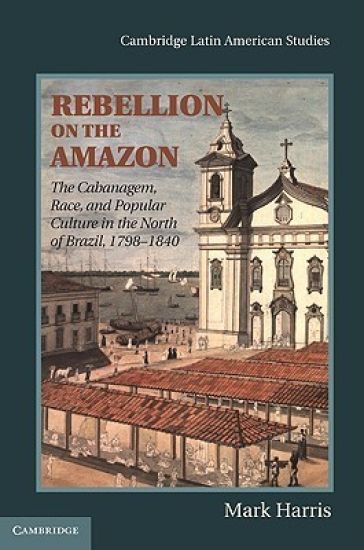
Rebellion on the Amazon

Rebellion on the Amazon

Mark Harris

Cambridge University Press
2010
sidottu
The Brazilian Amazon experienced, in the late 1830s, one of Brazil's largest peasant and urban-poor insurrections, known as the Cabanagem. Uniquely, rebels succeeded in controlling provincial government and town councils for more than a year. In this first book-length study in English, the rebellion is placed in the context of late colonial and early national society and economy. It compares the Cabanagem with contemporaneous Latin American peasant rebellions and challenges to centralized authority in Brazil. Using unpublished documentation, it reveals - contrary to other studies - that insurgents were not seeking revolutionary change or separation from the rest of Brazil. Rather, rebels wanted to promote their vision of a newly independent nation and an end to exploitation by a distant power. The Cabanagem is critical to understanding why the Amazon came to be perceived as a land without history.
Trumpet to the World

Trumpet to the World

Mark Harris

University of Nebraska Press
1989
sidottu
First published in 1946, Trumpet to the World can be seen as a landmark novel, rare for its profound rendering of a black man's experience in Jim Crow America and prophetic of the social changes to come in the next decade. Its protagonist, Willie Jim, could have been brutalized by his family's hard existence in Georgia, but he heads out early; could have been thoroughly demoralized by bigotry and discrimination in a hundred forms, but he learns to read and write and thinks for himself; could have been emotionally unfulfilled, but he learns to love in the midst of hate. After his marriage to a white woman, Willie Jim, caught up in the maelstrom of World War II, is sent to an army camp in the South, where his duty includes teaching English to other soldiers. A tragic event there compromises his future at the very moment a book he has written trumpets to the world his dream of social justice and universal brotherhood.
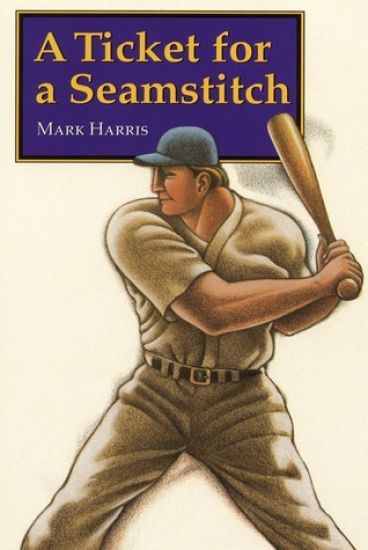
A Ticket for a Seamstitch

A Ticket for a Seamstitch

Mark Harris

Bison Books
1985
pokkari
This is the third novel narrated by Henry Wiggen, a six-foot three-inch, 195-pound, left-handed pitcher for the New York Mammoths. Henry, who began as a rookie in The Southpaw and developed into a pro in Bang the Drum Slowly, is a mature veteran in A Ticket for a Seamstitch. A seamstress from "somewhere out West" writes to Henry, her hero, that she will be in New York to watch the Mammoths play on the Fourth of July. When she arrives in New York, both the married Henry and his pal, the very unmarried Thurston "Piney" Woods, are at a loss as to what to do with their visitor. The two men finally do the decent thing: they take the seamstress to the automat for dinner. In so doing, they both learn some things worth knowing, although the distraction undoubtedly affects their performance in the big game. In the essay "Easy Does It Not" Mark Harris describes the origins of this wonderfully comic novel.
It Looked Like for Ever

It Looked Like for Ever

Mark Harris

Bison Books
1989
pokkari
Henry Wiggen, the bedraggled six-foot-three, 195-pound, left-handed pitcher for the New York Mammoths, returns to narrate another novel in his inimitable manner. Fans who loved him in Bang the Drum Slowly, The Southpaw, and A Ticket for a Seamstitch (all Bison Books) will cheer his comeback. Wiggen is now thirty-nine, a fading veteran with a floating fastball, a finicky prostate, and other intimations of mortality. Released from the Mammoths after nineteen years, the twenty-seventh winningest pitcher in baseball history (tied at 247 victories with Joseph J. "Iron Man" McGinnity and John Powell), Wiggen is not ready to hang up his glove. What impels Henry to pitch against Pate, to trek to California and as far as Japan? He still has a few seasons, a few innings left anyway. Is he principled or possessed? You'll have to decide for yourself as author Mark Harris plays out Wiggen's midlife crisis on familiar American turf: the baseball diamond.
The Tale Maker

The Tale Maker

Mark Harris

University of Nebraska Press
1995
nidottu
Mark Harris took you out to the ballgame in his Henry Wiggen novels, The Southpaw, Bang the Drum Slowly, A Ticket for a Seamstitch, and It Looked Like For Ever. In The Tale Maker, he takes you to college. Rimrose was well-read, smart, and strong. As the editor of the campus Sentinel, he was perfectly placed to observe how a university worked, and ideally inclined to expose its ethical weaknesses. Supported by his parents, he could concentrate on things that mattered: his writing, his wife-to-be, and his friends and enemies—including the warped Kakapick, who serves Rimrose lastingly as model and prototype of the literary scoundrel. Rimrose—Tale Maker of the title—turns from journalism to fiction-writing, kept alive by his wife’s practical and ingenious devotion to selling his stories, even those he has tossed in the trash. As he grows older and begets children, he worries about income and faces stultifying choices: managing his father’s small-town newspaper or playing politics in university service.
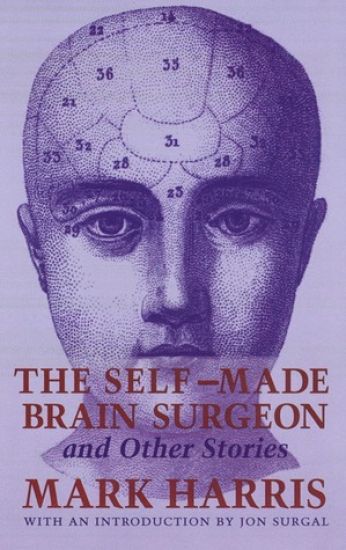
The Self-Made Brain Surgeon and Other Stories
These thirteen short stories represent Mark Harris's distinguished work in this genre from 1946 to 1993. They were undertaken at a time when the author was becoming famous as a novelist for such triumphs as Bang the Drum Slowly and The Southpaw. Although Harris loves and writes tellingly about the pleasures of baseball, his primary subject has always been the human condition and the shifts of mortal men and women as they try to understand and survive what life has dealt them. While baseball is virtually absent from the stories in this collection, Harris's gift for the wry appreciation of human variety is never lacking. The pleasure we take in these stories reminds us why Harris ranks as one of this age's most perceptive and satisfying writers.