
Kirjojen hintavertailu. Mukana 11 608 139 kirjaa ja 12 kauppaa.

Kirjahaku

Etsi kirjoja tekijän nimen, kirjan nimen tai ISBN:n perusteella.

3 kirjaa tekijältä Mark J.P. Wolf

Building Imaginary Worlds

Building Imaginary Worlds

Mark J.P. Wolf

Routledge
2012
sidottu
Mark J.P. Wolf’s study of imaginary worlds theorizes world-building within and across media, including literature, comics, film, radio, television, board games, video games, the Internet, and more. Building Imaginary Worlds departs from prior approaches to imaginary worlds that focused mainly on narrative, medium, or genre, and instead considers imaginary worlds as dynamic entities in and of themselves. Wolf argues that imaginary worlds—which are often transnarrative, transmedial, and transauthorial in nature—are compelling objects of inquiry for Media Studies. Chapters touch on: a theoretical analysis of how world-building extends beyond storytelling, the engagement of the audience, and the way worlds are conceptualized and experienced a history of imaginary worlds that follows their development over three millennia from the fictional islands of Homer’s Odyssey to the present internarrative theory examining how narratives set in the same world can interact and relate to one another an examination of transmedial growth and adaptation, and what happens when worlds make the jump between media an analysis of the transauthorial nature of imaginary worlds, the resulting concentric circles of authorship, and related topics of canonicity, participatory worlds, and subcreation’s relationship with divine Creation Building Imaginary Worlds also provides the scholar of imaginary worlds with a glossary of terms and a detailed timeline that spans three millennia and more than 1,400 imaginary worlds, listing their names, creators, and the works in which they first appeared.

Building Imaginary Worlds

Building Imaginary Worlds

Mark J.P. Wolf

Routledge
2012
nidottu
Mark J.P. Wolf’s study of imaginary worlds theorizes world-building within and across media, including literature, comics, film, radio, television, board games, video games, the Internet, and more. Building Imaginary Worlds departs from prior approaches to imaginary worlds that focused mainly on narrative, medium, or genre, and instead considers imaginary worlds as dynamic entities in and of themselves. Wolf argues that imaginary worlds—which are often transnarrative, transmedial, and transauthorial in nature—are compelling objects of inquiry for Media Studies. Chapters touch on: a theoretical analysis of how world-building extends beyond storytelling, the engagement of the audience, and the way worlds are conceptualized and experienced a history of imaginary worlds that follows their development over three millennia from the fictional islands of Homer’s Odyssey to the present internarrative theory examining how narratives set in the same world can interact and relate to one another an examination of transmedial growth and adaptation, and what happens when worlds make the jump between media an analysis of the transauthorial nature of imaginary worlds, the resulting concentric circles of authorship, and related topics of canonicity, participatory worlds, and subcreation’s relationship with divine Creation Building Imaginary Worlds also provides the scholar of imaginary worlds with a glossary of terms and a detailed timeline that spans three millennia and more than 1,400 imaginary worlds, listing their names, creators, and the works in which they first appeared.
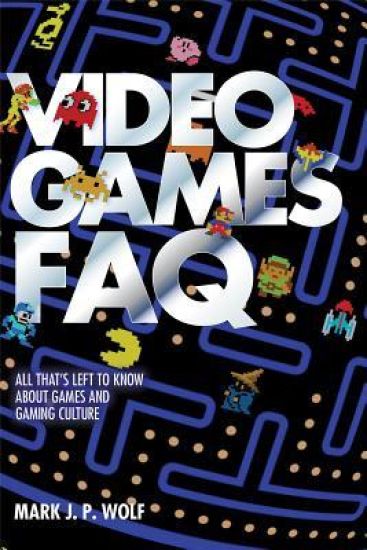
Video Games FAQ

Video Games FAQ

Mark J.P. Wolf

Backbeat Books
2017
pokkari
As their prominence in the news cycle – from Gamergate to the burgeoning smartphone market to the VR realm and beyond – would indicate, video games and gaming have rocketed from a fairly fringe existence to a central position in the everyday lives of millions. Whether you're a casual reader with an interest in the subject or an experienced gamer scrounging for obscure facts and stories, Mark Wolf's Video Games FAQ: All That's Left to Know About Games and Gaming Culture is an indispensable resource touching on all aspects of this techno-cultural phenomenon. Wolf's info-dense account traces video games from their earliest renditions as blocky abstractions to the photorealistic worlds of the present day, exploring the games, systems, technologies, companies, and inventors who transformed a novelty into a worldwide industry and major imaginative force along the way. In lively prose intended for a general audience, the book examines the many ways video games have entered our lives, impacted popular culture, and evolved through innovations and technological advances. More than just a history, this book, which can be read from cover-to-cover or a stand-alone chapter at a time, is also packed with fun, thought-provoking video game trivia touching on the origins of handheld games, the first first-person shooting games, famous characters named after a landlord and an attorney, the birth of third-party development, and the best and worst selling systems of all time. Whether discussing the pedigrees of games and systems, sequels, franchises, and series, the console wars, the home computer revolution, or leading companies and their strategies, Video Games FAQ serves as a fascinating, concise, and comprehensive window into the past, present, and future of video games and everything connected with them.