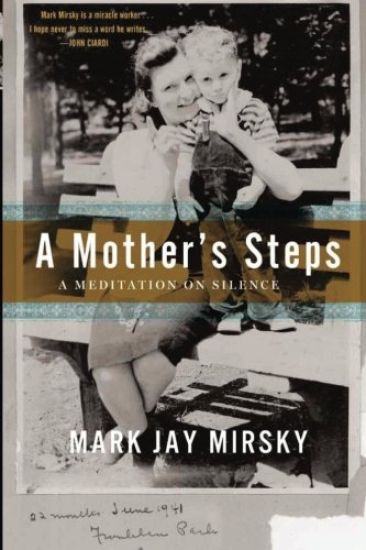
Kirjojen hintavertailu. Mukana 11 342 296 kirjaa ja 12 kauppaa.

Kirjahaku

Etsi kirjoja tekijän nimen, kirjan nimen tai ISBN:n perusteella.

4 kirjaa tekijältä Mark Jay Mirsky

Dante, Eros, and Kabbalah

Dante, Eros, and Kabbalah

Mark Jay Mirsky

Syracuse University Press
2003
nidottu
Did Dante Alighieri, author of ""The Divine Comedy"" as a young man in Florence sleep with Beatrice Portinari before and after her marriage? Did the poet travel after her death through Hell to find her again? The clues to this academic detective story, writes Mark Jay Mirsky, lie not only in Dante's earlier poetry, ""The New Life"", or in ""The Divine Comedy"", but in the ""Zohar of Moses de Leon"", a Jewish text written some years before and based on Neoplatonic ideas similar to those that inspired Dante. ""Purgatorio"" and ""Paradiso"", the second and third volumes of the ""Commedia"", are inaccessible to most reader unfamiliar with the boldness of Dante's use of the philosophical debate in the Middle Ages. Does Dante's ""Commedia"" hint at his hope of intimacy with Beatrice in the Highest Heaven? Mirsky distinctively traces the influence on Dante of Provencal poets, mediaeval theologians, Dante's personal life, and the sources of his classical education to propose a radical reading of Dante. The text compounds the riddles of dream, poetry, philosophy and Dante's concealed autobiography in his work. It treats the ""Commedia"" in the spirit of its title, as a hopeful and comic version of the other world.
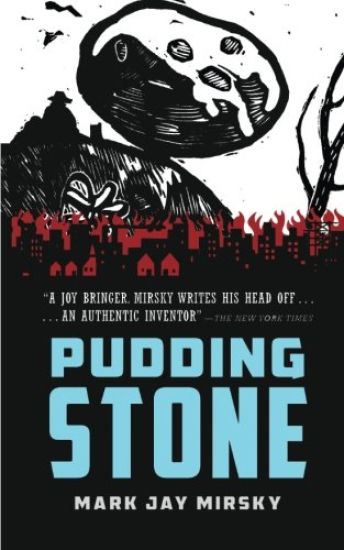
The Drama in Shakespeare's Sonnets

The Drama in Shakespeare's Sonnets

Mark Jay Mirsky

Fairleigh Dickinson University Press
2011
sidottu
The Drama in Shakespeare's Sonnets: "A Satire to Decay" is a work of detective scholarship. Unable to believe that England's great dramatist would publish a sequence of sonnets without a plot, Mark Jay Mirsky, novelist, playwright, and professor of English, proposes a solution to a riddle that has frustrated scholars and poets alike. Arguing that the Sonnets are not just a "higgledy piggledy" collection of poems but were put in order by Shakespeare himself, and drawing on the insights of several of the Sonnets' foremost contemporary scholars, Mirsky examines the Sonnets poem by poem to ask what is the story of the whole. Mirsky takes Shakespeare at his own word in Sonnet 100, where the poet, tongue in cheek, advises his lover to regard "time's spoils"–in this case, "any wrinkle graven" in his cheek–as but "a satire to decay." The comfort is obviously double-edged, but it can also be read as a mirror of Shakespeare's "satire" on himself, as if to praise his own wrinkles, and reflects the poet's intention in assembling the Sonnets to satirize the playwright's own "decay" as a man and a lover. In a parody of sonnet sequences written by his fellow poets Spenser and Daniel, Shakespeare's mordant wit conceals a bitter laugh at his own romantic life. The Drama in Shakespeare's Sonnets demonstrates the playwright's wish to capture the drama of the sexual betrayal as he experienced it in a triangle of friendship and eroticism with a man and a woman. It is a plot, however, that the playwright does not want to advertise too widely and conceals in the 1609 Quarto from all but a very few. Despite Shakespeare's moments of despair at his male friend's betrayal and the poet's cursing at the sexual promiscuity of the so-called Dark Lady, The Drama in Shakespeare's Sonnets sees the whole as a "satire" by Shakespeare and, particularly when read with the poem that accompanied it in the 1609 printing, "A Lover's Complaint," as a laughing meditation on the irrepressible joy of sexual life