Kirjojen hintavertailu. Mukana 11 244 527 kirjaa ja 12 kauppaa.

Kirjahaku

Etsi kirjoja tekijän nimen, kirjan nimen tai ISBN:n perusteella.

56 kirjaa tekijältä Mark Johnson

Photodetection and Measurement

Photodetection and Measurement

Mark Johnson

McGraw-Hill Professional
2003
sidottu
Photodetection techniques are becoming increasingly necessary for electronics design workThis reference provides a practical "rules of thumb" approach to making accurate optical measurements with equipment commonly found in labs and companies. Considers the full chain of equipment: photodetectors, amplifiers, LED sources, electronic drives, basic optics, interference screens, and data acquisition systemsHow to make use of the simplest detector in every situationNoise reduction techniquesBuilding in stability
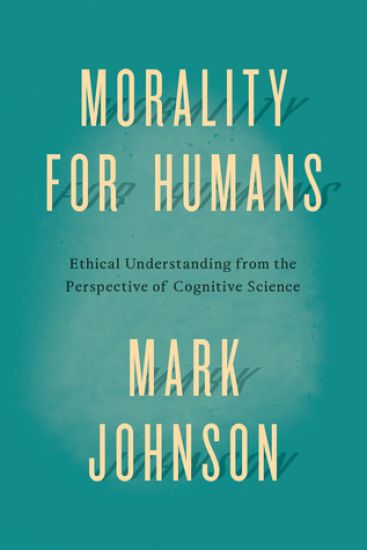
Morality for Humans

Morality for Humans

Mark Johnson

University of Chicago Press
2014
sidottu
What is the difference between right and wrong? This is no easy question to answer, yet we constantly try to make it so, frequently appealing to some hidden cache of cut-and-dried absolutes, whether drawn from God, universal reason, or societal authority. Combining cognitive science with a pragmatist philosophical framework in Morality for Humans: Ethical Understanding from the Perspective of Cognitive Science, Mark Johnson argues that appealing solely to absolute principles and values is not only scientifically unsound but even morally suspect. He shows that the standards for the kinds of person we should be and how we should treat one another-which we often think of as universal-are in fact frequently subject to change. And we should be okay with that. Taking context into consideration, he offers a remarkably nuanced, naturalistic view of ethics that sees us creatively adapt our standards according to given needs, emerging problems, and social interactions. Ethical naturalism is not just a revamped form of relativism. Indeed, Johnson attempts to overcome the absolutist-versus-relativist impasse that has been one of the most intractable problems in the history of philosophy. He does so through a careful and inclusive look at the many ways we reason about right and wrong. Much of our moral thought, he shows, is automatic and intuitive, gut feelings that we follow up and attempt to justify with rational analysis and argument. However, good moral deliberation is not limited merely to intuitive judgments supported after the fact by reasoning. Johnson points out a crucial third element: we imagine how our decisions will play out, how we or the world would change with each action we might take. Plumbing this imaginative dimension of moral reasoning, he provides a psychologically sophisticated view of moral problem solving, one perfectly suited for the embodied, culturally embedded, and ever-developing human creatures that we are.
Morality for Humans

Morality for Humans

Mark Johnson

University of Chicago Press
2015
nidottu
What is the difference between right and wrong? This is no easy question to answer, yet we constantly try to make it so, frequently appealing to some hidden cache of cut-and-dried absolutes, whether drawn from God, universal reason, or societal authority. Combining cognitive science with a pragmatist philosophical framework in Morality for Humans: Ethical Understanding from the Perspective of Cognitive Science, Mark Johnson argues that appealing solely to absolute principles and values is not only scientifically unsound but even morally suspect. He shows that the standards for the kinds of people we should be and how we should treat one another-which we often think of as universal-are in fact frequently subject to change. And we should be okay with that. Taking context into consideration, he offers a remarkably nuanced, naturalistic view of ethics that sees us creatively adapt our standards according to given needs, emerging problems, and social interactions. Ethical naturalism is not just a revamped form of relativism. Indeed, Johnson attempts to overcome the absolutist-versus-relativist impasse that has been one of the most intractable problems in the history of philosophy. He does so through a careful and inclusive look at the many ways we reason about right and wrong. Much of our moral thought, he shows, is automatic and intuitive, gut feelings that we follow up and attempt to justify with rational analysis and argument. However, good moral deliberation is not limited merely to intuitive judgments supported after the fact by reasoning. Johnson points out a crucial third element: we imagine how our decisions will play out, how we or the world would change with each action we might take. Plumbing this imaginative dimension of moral reasoning, he provides a psychologically sophisticated view of moral problem solving, one perfectly suited for the embodied, culturally embedded, and ever-developing human creatures that we are.
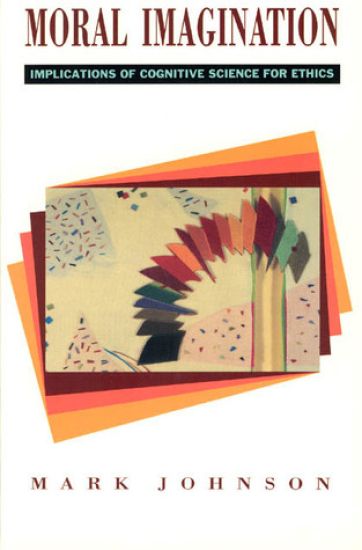
Moral Imagination

Moral Imagination

Mark Johnson

University of Chicago Press
1994
nidottu
Using path-breaking discoveries of cognitive science, Mark Johnson argues that humans are fundamentally imaginative moral animals, challenging the view that morality is simply a system of universal laws dictated by reason. According to the Western moral tradition, we make ethical decisions by applying universal laws to concrete situations. But Johnson shows how research in cognitive science undermines this view and reveals that imagination has an essential role in ethical deliberation. Expanding his innovative studies of human reason in Metaphors We Live By and The Body in the Mind, Johnson provides the tools for more practical, realistic, and constructive moral reflection.
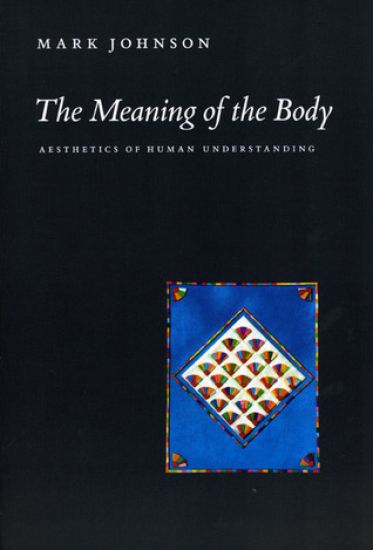
The Meaning of the Body

The Meaning of the Body

Mark Johnson

University of Chicago Press
2008
nidottu
In "The Meaning of the Body", Mark Johnson continues his pioneering work on the exciting connections between cognitive science, language, and meaning first begun in the classic "Metaphors We Live By". Johnson uses recent research into infant psychology to show how the body generates meaning even before self-consciousness has fully developed. From there he turns to cognitive neuroscience to further explore the bodily origins of meaning, thought, and language and examines the many dimensions of meaning - including images, qualities, emotions, and metaphors - that are all rooted in the body's physical encounters with the world. Drawing on the psychology of art and pragmatist philosophy, Johnson argues that all of these aspects of meaning-making are fundamentally aesthetic. He concludes that the arts are the culmination of human attempts to find meaning and that studying the aesthetic dimensions of our experience is crucial to unlocking meaning's bodily sources.Throughout, Johnson puts forth a bold new conception of the mind rooted in the understanding that philosophy will matter to nonphilosophers only if it is built on a visceral connection to the world.
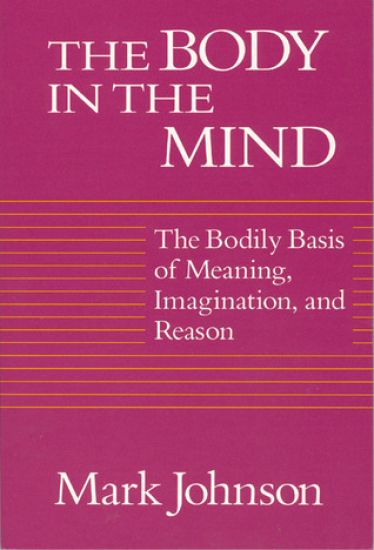
The Body in the Mind

The Body in the Mind

Mark Johnson

University of Chicago Press
1990
nidottu
"There are books—few and far between—which carefully, delightfully, and genuinely turn your head inside out. This is one of them. It ranges over some central issues in Western philosophy and begins the long overdue job of giving us a radically new account of meaning, rationality, and objectivity."—Yaakov Garb, San Francisco Chronicle
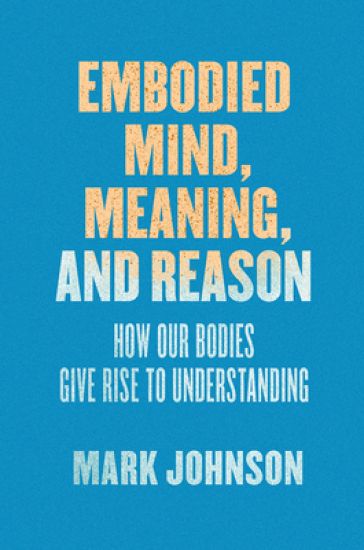
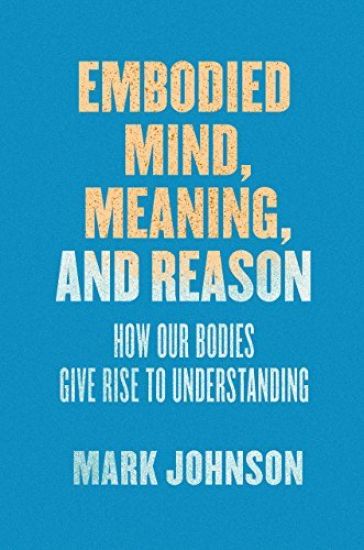
Embodied Mind, Meaning, and Reason

Embodied Mind, Meaning, and Reason

Mark Johnson

University of Chicago Press
2017
sidottu
Mark Johnson is one of the great thinkers of our time on how the body shapes the mind. This book brings together a selection of essays from the past two decades that build a powerful argument that any scientifically and philosophically satisfactory view of mind and thought must ultimately explain how bodily perception and action give rise to cognition, meaning, language, action, and values. A brief account of Johnson's own intellectual journey, through which we track some of the most important discoveries in the field over the past forty years, sets the stage. Subsequent chapters set out Johnson's important role in embodied cognition theory, including his co-founding (with George Lakoff) of conceptual metaphor theory and, later, their theory of bodily structures and processes that underlie all meaning, conceptualization, and reasoning. A detailed account of how meaning arises from our physical engagement with our environments provides the basis for a non-dualistic, non-reductive view of mind that he sees as most congruous with the latest cognitive science. A concluding section explores the implications of our embodiment for our understanding of knowledge, reason, and truth. The resulting book will be essential for all philosophers dealing with mind, thought, and language.
Embodied Mind, Meaning, and Reason

Embodied Mind, Meaning, and Reason

Mark Johnson

University of Chicago Press
2017
nidottu
Mark Johnson is one of the great thinkers of our time on how the body shapes the mind. This book brings together a selection of essays from the past two decades that build a powerful argument that any scientifically and philosophically satisfactory view of mind and thought must ultimately explain how bodily perception and action give rise to cognition, meaning, language, action, and values. A brief account of Johnson's own intellectual journey, through which we track some of the most important discoveries in the field over the past forty years, sets the stage. Subsequent chapters set out Johnson's important role in embodied cognition theory, including his co-founding (with George Lakoff) of conceptual metaphor theory and, later, their theory of bodily structures and processes that underlie all meaning, conceptualization, and reasoning. A detailed account of how meaning arises from our physical engagement with our environments provides the basis for a non-dualistic, non-reductive view of mind that he sees as most congruous with the latest cognitive science. A concluding section explores the implications of our embodiment for our understanding of knowledge, reason, and truth. The resulting book will be essential for all philosophers dealing with mind, thought, and language.
The Aesthetics of Meaning and Thought

The Aesthetics of Meaning and Thought

Mark Johnson

University of Chicago Press
2018
sidottu
All too often, we think of our minds and bodies separately. The reality couldn’t be more different: the fundamental fact about our mind is that it is embodied. We have a deep visceral, emotional, and qualitative relationship to the world—and any scientifically and philosophically satisfactory view of the mind must take into account the ways that cognition, meaning, language, action, and values are grounded in and shaped by that embodiment. This book gathers the best of philosopher Mark Johnson’s essays addressing questions of our embodiment as they deal with aesthetics—which, he argues, we need to rethink so that it takes into account the central role of body-based meaning. Viewed that way, the arts can give us profound insights into the processes of meaning making that underlie our conceptual systems and cultural practices. Johnson shows how our embodiment shapes our philosophy, science, morality, and art; what emerges is a view of humans as aesthetic, meaning-making creatures who draw on their deepest physical processes to make sense of the world around them.
The Aesthetics of Meaning and Thought

The Aesthetics of Meaning and Thought

Mark Johnson

University of Chicago Press
2018
nidottu
All too often, we think of our minds and bodies separately. The reality couldn’t be more different: the fundamental fact about our mind is that it is embodied. We have a deep visceral, emotional, and qualitative relationship to the world—and any scientifically and philosophically satisfactory view of the mind must take into account the ways that cognition, meaning, language, action, and values are grounded in and shaped by that embodiment. This book gathers the best of philosopher Mark Johnson’s essays addressing questions of our embodiment as they deal with aesthetics—which, he argues, we need to rethink so that it takes into account the central role of body-based meaning. Viewed that way, the arts can give us profound insights into the processes of meaning making that underlie our conceptual systems and cultural practices. Johnson shows how our embodiment shapes our philosophy, science, morality, and art; what emerges is a view of humans as aesthetic, meaning-making creatures who draw on their deepest physical processes to make sense of the world around them.
Cyber Crime, Security and Digital Intelligence
Today's digital economy is uniquely dependent on the Internet, yet few users or decision makers have more than a rudimentary understanding of the myriad of online risks that threaten us. Cyber crime is one of the main threats to the integrity and availability of data and systems. From insiders to complex external attacks and industrial worms, modern business faces unprecedented challenges; and while cyber security and digital intelligence are the necessary responses to this challenge, they are understood by only a tiny minority. In his second book on high-tech risks, Mark Johnson goes far beyond enumerating past cases and summarising legal or regulatory requirements. He describes in plain, non-technical language how cyber crime has evolved and the nature of the very latest threats. He confronts issues that are not addressed by codified rules and practice guidelines, supporting this with over 30 valuable illustrations and tables. Written for the non-technical layman and the high tech risk manager alike, the book also explores countermeasures, penetration testing, best practice principles, cyber conflict and future challenges. A discussion of Web 2.0 risks delves into the very real questions facing policy makers, along with the pros and cons of open source data. In a chapter on Digital Intelligence readers are provided with an exhaustive guide to practical, effective and ethical online investigations. Cyber Crime, Security and Digital Intelligence is an important work of great relevance in today's interconnected world and one that nobody with an interest in either risk or technology should be without.
Wasted

Wasted

Mark Johnson

Little, Brown Book Group
2008
pokkari
* A Childhood Stolen. An Innocence Betrayed. A Life Redeemed* A shocking and inspiring true account of addiction and recovery - in the tradition of The Kid and Ugly
Attribute-Value Logic and the Theory of Grammar

Attribute-Value Logic and the Theory of Grammar

Mark Johnson

Center for the Study of Language and Informat
1989
nidottu
Because of the ease of their implementation, attribute-value based theories of grammar are becoming increasingly popular in theoretical linguistics as an alternative to transformational accounts and in computational linguistics. This book provides a formal analysis of attribute-value structures, their use in a theory of grammar and the representation of grammatical relations in such theories of grammar. It provides a classical treatment of disjunction and negation, and explores the linguistic implications of different representations of grammatical relations. Mark Johnson is assistant professor in cognitive and linguistic sciences at Brown University. He was a Fairchild postdoctoral fellow at the Massachusetts Institute of Technology during the 1987-88 academic year.
Attribute-Value Logic and the Theory of Grammar

Attribute-Value Logic and the Theory of Grammar

Mark Johnson

Center for the Study of Language and Informat
1989
sidottu
Because of the ease of their implementation, attribute-value based theories of grammar are becoming increasingly popular in theoretical linguistics as an alternative to transformational accounts and in computational linguistics. This book provides a formal analysis of attribute-value structures, their use in a theory of grammar and the representation of grammatical relations in such theories of grammar. It provides a classical treatment of disjunction and negation, and explores the linguistic implications of different representations of grammatical relations. Mark Johnson is assistant professor in cognitive and linguistic sciences at Brown University. He was a Fairchild postdoctoral fellow at the Massachusetts Institute of Technology during the 1987-88 academic year.
Business Management for the IB Diploma Digital Teacher's Resource Access Card
Designed following consultation with teachers, this digital teacher's resource helps teachers use the series in the most effective way, bridging the gap between teaching theory and practice. The resource helps teachers support their learners, plan great lessons and teach the syllabus. It provides teaching notes aligned to the IB Diploma ATL (conceptual understanding, differentiation, formative and summative assessment). The resource includes lesson plans, advice on using case studies, presentations, differentiation support and subject specific vocabulary support. It offers time saving assistance with editable exam practice sheets and worksheets, and answers to the activities and the exam-style questions in the coursebook.
A Minister's Son

A Minister's Son

Mark Johnson

Bookbaby
2021
pokkari
A Minister's Son is a personal account of one young man's coming to terms with his strict religious upbringing. Deciding in childhood to conceal misgivings about his inherited faith, the author relates how his adolescent doubts lead to a life of dishonesty and hypocrisy. There is inevitable tension in his relationship with his evangelical father, a minister, and deep internal conflict as the young man takes to the podium himself as a speaker in both religious and secular settings. Fear and rebellion are played out in his forbidden sexual relations with young women in his father's conservative church. The young man finds relief from his divided self in the dissolvent power of alcohol, leading to alcoholism and his eventual discovery of spiritual peace in recovery. Set in Canada and spanning the 1960s to the present day, this uplifting memoir is unique in its exploration of the connections between fundamentalist religious cultures and addiction. It will be of interest to anyone who has had a troubled relationship with God, organized religion and/or alcohol
Personal Development For Everyone
A Personal Development book using poetry to explain how we can change our everyday lives and achieve our dreams.The topics discussed include, Visualisation, Poetry, Confidence, Apathy, Jealousy, Competition, Opportunities, Encourage Others, Read Endlessly, Be Yourself, Question Authority, Our Open Trust, Emotions, Manipulation, Creativity, Mind Control, A Life Without Money, Time Travel, What Is Music, People's Routines, Health and Fitness, Is Lying Wrong, Happiness, The Workplace Party, What Is Our Purpose, The Unwanted Present, Technology Addictions, Human Robots, Do Aliens Exist, Writing, Etiquette, Starting a Business, What Is Reality, Boost Your Ego, Global Warming, Attention Wannabees, Lazy Achievers, Freedom Of Speech and Politics.
Seditious Theology

Seditious Theology

Mark Johnson

Routledge
2016
nidottu
Seditious Theology explores the much analysed British punk movement of the 1970s from a theological perspective. Imaginatively engaging with subjects such as subversion, deconstruction, confrontation and sedition, this book highlights the stark contrasts between the punk genre and the ministry of Jesus while revealing surprising similarities and, in so doing, demonstrates how we may look at both subjects in fresh and unusual ways. Johnson looks at both punk and Jesus and their challenges to symbols, gestures of revolt, constructive use of conflict and the shattering of relational norms. He then points to the seditious pattern in Jesus' life and the way it can be discerned in some recent trends in theology. The imaginative images that he creates provide a challenging image of Jesus and of those who have relooked radically in recent years at what being a ’seditious’ follower of Christ means for the church. Introducing both a new partner for theological conversation and a fresh way of how to go about the task, this book presents a powerful approach to exploring the life of Christ and a new way of engaging with both recent theological trends and the more challenging expressions of popular culture.
Demystifying Communications Risk

Demystifying Communications Risk

Mark Johnson

Routledge
2016
nidottu
The rapid pace and increasing convergence of internet, phone and other communications technologies has created extraordinary opportunities for business but the complexity of these new service mixes creates parallel opportunities for fraud and revenue leakage. Companies seeking to use communications technology as a delivery or payment platform for digital services are particularly at risk. They need to understand both their strategic and operational risks as well as those affecting their stakeholders - partners and customers. Effective risk management is as much about awareness, culture, training and organization as it is about technology. Mark Johnson's practical guide, Demystifying Communications Risk, highlights cases from a wide range of geographies and cultures and is designed to raise awareness of the multi-faceted and often complex forms that operational revenue risks take in the communications sector. It provides managers with an understanding of the nature and implications of the risks they face and the human, organizational and technological approaches that can help avoid or mitigate them.