Kirjojen hintavertailu. Mukana 12 016 292 kirjaa ja 12 kauppaa.

Kirjahaku

Etsi kirjoja tekijän nimen, kirjan nimen tai ISBN:n perusteella.

17 kirjaa tekijältä Mark Johnston

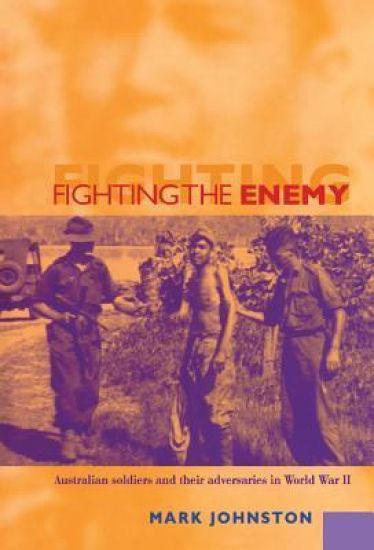
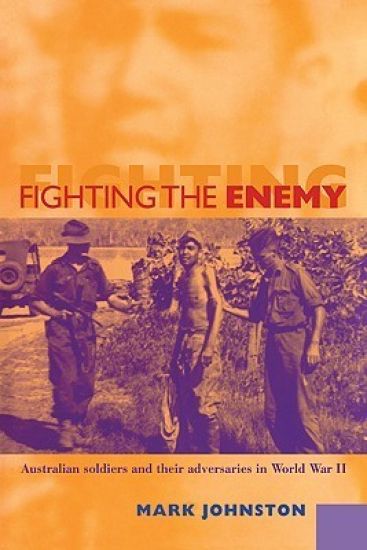
Fighting the Enemy

Fighting the Enemy

Mark Johnston

Cambridge University Press
2009
pokkari
Fighting The Enemy, first published in 2000, is about men with the job of killing each other. Based on the wartime writings of hundreds of Australian front-line soldiers during World War II, this powerful and resonant book contains many moving descriptions of high emotion and drama. Soldiers' interactions with their enemies are central to war and their attitudes to their adversaries are crucial to the way wars are fought. Yet few books look in detail at how enemies interpret each other. This book is an unprecedented and thorough examination of the way Australian combat soldiers interacted with troops from the four powers engaged in World War II: Germany, Italy, Vichy France and Japan. Each opponent has themes peculiar to it: the Italians were much ridiculed; the Germans were the most respected of enemies; the Vichy French were regarded with ambivalence; while the Japanese were the subject of much hostility, intensified by the real threat of occupation.
The Proud 6th

The Proud 6th

Mark Johnston

Cambridge University Press
2008
sidottu
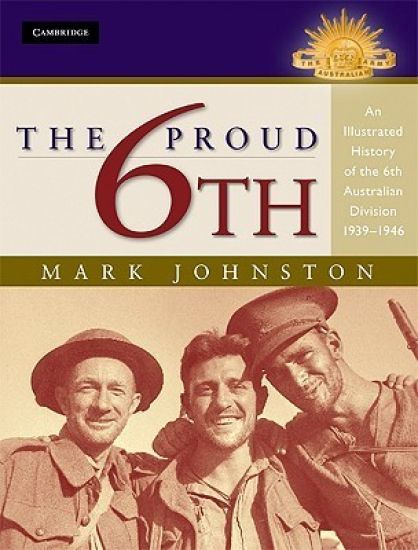
Following Mark Johnston's acclaimed illustrated histories of the 7th and 9th Australian Divisions, this is his long-awaited history of the 6th Australian Division: the first such history ever published. The 6th was a household name during World War II. It was the first division raised in the Second Australian Imperial Force, the first division to go overseas and the first to fight. Its success in that fight, in Libya in 1941, indicated that the standard established in the Great War would be continued. General Blamey and nearly every other officer who became wartime army, corps and divisional commanders were once members of the 6th Division. Through photographs and an authoritative text, this book tells their story and the story of the proud, independent and tough troops they commanded.
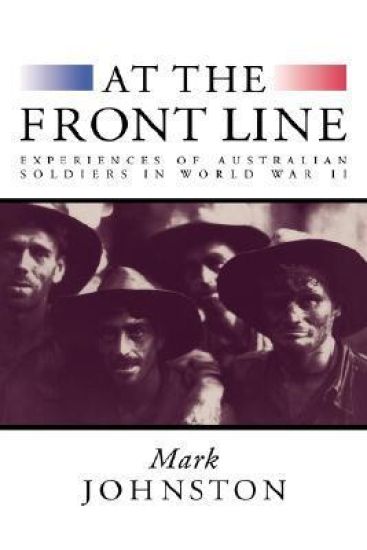
At the Front Line

At the Front Line

Mark Johnston

Cambridge University Press
2002
pokkari
At the Front Line draws on a plethora of letters, diaries and documents written by over 300 Australian soldiers in the field to present a picture of the hardships and triumphs of their wartime experience. Mark Johnston analyses the suffering of front-line soldiers caused not only by the opposing force, but also by the conditions imposed by their own army. The book details the physical and psychological pressures of life at the front and shows how soldiers survived or surrendered to unbearable environments, fear, boredom and the constant threat of impending death. The myths of mateship and equanimity are brought under scrutiny. Much hostility can be explained by competition between ranks and the perceived hostility of superiors. The author investigates the immense strain that led to many breakdowns and the characteristic forebearance that saw so many others through.
At the Front Line

At the Front Line

Mark Johnston

Cambridge University Press
1996
sidottu
At the Front Line draws on a plethora of letters, diaries and documents written by over 300 Australian soldiers in the field to present a picture of the hardships and triumphs of their wartime experience. Mark Johnston analyses the suffering of front-line soldiers caused not only by the opposing force, but also by the conditions imposed by their own army. The book details the physical and psychological pressures of life at the front and shows how soldiers survived or surrendered to unbearable environments, fear, boredom and the constant threat of impending death. The myths of mateship and equanimity are brought under scrutiny. Much hostility can be explained by competition between ranks and the perceived hostility of superiors. The author investigates the immense strain that led to many breakdowns and the characteristic forebearance that saw so many others through.
Fighting the Enemy

Fighting the Enemy

Mark Johnston

Cambridge University Press
2000
sidottu
Fighting the Enemy is about men with the job of killing each other. Based on the wartime writings of hundreds of Australian front-line soldiers during World War II, this powerful and resonant book contains many moving descriptions of high emotion and drama. Soldiers’ interactions with their enemies are central to war, and their attitudes to their adversaries are crucial to the way wars are fought. Yet few books look in detail at how enemies interpret each other. This book is an unprecedented and thorough examination of the way Australian combat soldiers interacted with troops from the four powers engaged in World War II: Germany, Italy, Vichy France and Japan. Each opponent has themes peculiar to it: the Italians were much ridiculed; the Germans were the most respected of enemies; the Vichy French were regarded with ambivalence; while the Japanese were the subject of much hostility, intensified by the real threat of occupation.
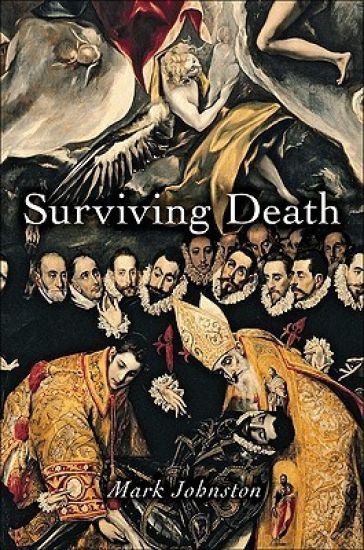
Surviving Death

Surviving Death

Mark Johnston

Princeton University Press
2011
pokkari
In this extraordinary book, Mark Johnston sets out a new understanding of personal identity and the self, thereby providing a purely naturalistic account of surviving death. Death threatens our sense of the importance of goodness. The threat can be met if there is, as Socrates said, "something in death that is better for the good than for the bad." Yet, as Johnston shows, all existing theological conceptions of the afterlife are either incoherent or at odds with the workings of nature. These supernaturalist pictures of the rewards for goodness also obscure a striking consilience between the philosophical study of the self and an account of goodness common to Judaism, Christianity, Hinduism, and Buddhism: the good person is one who has undergone a kind of death of the self and who lives a life transformed by entering imaginatively into the lives of others, anticipating their needs and true interests. As a caretaker of humanity who finds his or her own death comparatively unimportant, the good person can see through death. But this is not all. Johnston's closely argued claims that there is no persisting self and that our identities are in a particular way "Protean" imply that the good survive death. Given the future-directed concern that defines true goodness, the good quite literally live on in the onward rush of humankind. Every time a baby is born a good person acquires a new face.
Saving God

Saving God

Mark Johnston

Princeton University Press
2011
pokkari
In this book, Mark Johnston argues that God needs to be saved not only from the distortions of the "undergraduate atheists" (Richard Dawkins, Christopher Hitchens, and Sam Harris) but, more importantly, from the idolatrous tendencies of religion itself. Each monotheistic religion has its characteristic ways of domesticating True Divinity, of taming God's demands so that they do not radically threaten our self-love and false righteousness. Turning the monotheistic critique of idolatry on the monotheisms themselves, Johnston shows that much in these traditions must be condemned as false and spiritually debilitating. A central claim of the book is that supernaturalism is idolatry. If this is right, everything changes; we cannot place our salvation in jeopardy by tying it essentially to the supernatural cosmologies of the ancient Near East. Remarkably, Johnston rehabilitates the ideas of the Fall and of salvation within a naturalistic framework; he then presents a conception of God that both resists idolatry and is wholly consistent with the deliverances of the natural sciences. Princeton University Press is publishing Saving God in conjunction with Johnston's forthcoming book Surviving Death, which takes up the crux of supernaturalist belief, namely, the belief in life after death.
Anzacs in the Middle East

Anzacs in the Middle East

Mark Johnston

Cambridge University Press
2012
sidottu
Anzacs in the Middle East is a compelling exploration of the experiences of soldiers who fought in the Middle East during World War II. Spurred by a sense of adventure and duty, they set sail to countries of which they knew very little. The book examines the relationships between Australians and their allies and also how they related to the local people: Greeks, Egyptians, Syrians, Lebanese and Palestinians. Mark Johnston draws on extensive research to provide a new perspective on the famous campaigns at Tobruk and Alamein, as well as significant but less familiar battles at Bardia, Retimo and Damascus. Featuring first-hand accounts and stories from the front line, the book discovers the true nature of the 'larrikin Australian' and is a must-read for anyone interested in Australia's military history. This book is a companion volume to Mark Johnston's previous books, At the Front Line and Fighting the Enemy.
Stretcher-bearers

Stretcher-bearers

Mark Johnston

Cambridge University Press
2014
sidottu
Stretcher-bearers is a compelling account of the experience of Australian stretcher-bearers during the First and Second World Wars. Respected military historian, Mark Johnston traces the development of formal stretcher-bearing from its origin in the early nineteenth century under Napoleon to the Second World War. Johnston draws on accounts by stretcher-bearers who worked on the front line, as well as tributes from rescued soldiers, to deepen our understanding of the crucial role these soldiers played in Gallipoli, Palestine, the Western Front in World War I, and in the Middle East and the Pacific in World War II. The narrative is further driven by rich imagery, featuring over 130 full-page photographs. This book provides a generously illustrated, engaging and moving account of the history of the stretcher-bearer, a figure praised by countless Diggers but never previously the subject of a book.
An Australian Band of Brothers

An Australian Band of Brothers

Mark Johnston

NewSouth Publishing
2018
nidottu
This riveting book follows a small group of Australian front-line soldiers from their enlistment in the dark days of 1940 to the end of World War II. No ordinary soldiers, they were members of Don Company of the Second 43rd Battalion, part of the famous 9th Australian Division, which during campaigns in Tobruk, El Alamein, New Guinea and Borneo sustained more casualties and won more medals than any other Australian division. It is an evocative and detailed account of the dayto-day war of three infantry soldiers whose experiences included night patrols at Tobruk, advancing steadily through German barrages at Alamein, charging enemy machine guns in New Guinea, and repelling Japanese charges on Borneo. Inspired by American historian Stephen Ambrose’s landmark book, Band of Brothers, about the US Army’s Easy Company of the 506th Regiment, Mark Johnston, one of our best military historians, here gives an Australian company the same treatment. Using the frank and detailed personal letters, diaries and memoirs of three Australian soldiers, he brings to life their campaigns, battles and interactions with their comrades and enemies. His book is a unique and powerful account of the everyday experiences of a small unit of soldiers on the front line.
Derrick VC in His Own Words

Derrick VC in His Own Words

Mark Johnston

NewSouth Publishing
2021
nidottu
Tom ‘Diver’ Derrick VC DCM was Australia’s most famous fighting soldier of World War II. Derrick fought in five campaigns, won the highest medals for bravery, and died of wounds sustained while leading his men in the war’s last stages. His career reached its climax on the jungle-clad heights of Sattelberg in New Guinea, where he won the Victoria Cross by spearheading the capture of seemingly impregnable Japanese defences. The diaries Derrick kept throughout his campaigns, from Tobruk to Tarakan, are among the most important writings by any Australian soldier. Those diaries and all his other known wartime correspondence and interviews are published here for the first time in their entirety. ‘Diver’ had only a rudimentary education, but his intelligence, humour, ambition and fighting outlook shine through his words. Edited and annotated by Mark Johnston, one of Australia’s leading authorities on World War II, this book provides unprecedented insights into the mind and the remarkable career of one of Australia’s most decorated and renowned servicemen.
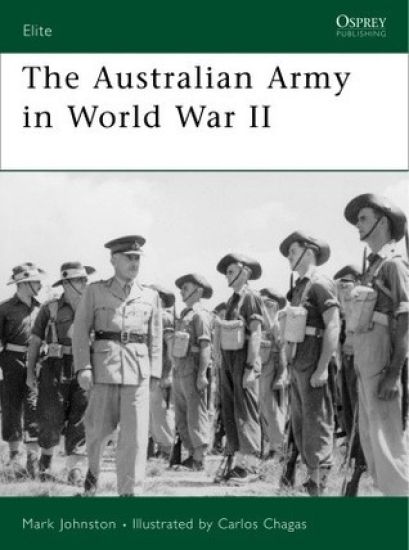
The Australian Army in World War II

The Australian Army in World War II

Mark Johnston

Osprey Publishing
2007
nidottu
This book recounts the organization and deployment of one of the most important fighting armies of World War II. Australian divisions made a large and distinctive contribution to victory both in the deserts of the Middle East and the jungles of the South-West Pacific, earning for the second time a unique reputation for aggressiveness, endurance and independence of spirit. The text is illustrated with original wartime photos from all fronts; and with full colour plates showing a wide range of uniforms and gear, together with the complex and colourful Australian system of unit insignia.
Street Trees in Britain

Street Trees in Britain

Mark Johnston

Windgather Press
2017
nidottu
The trees which line many of the streets in our towns and cities can often be regarded as part of a heritage landscape. Despite the difficult conditions of an urban environment, these trees may live for 100 years or more and represent ‘living history’ in the midst of our modern streetscapes. This is the first book on the history of Britain’s street trees and it gives a highly readable, authoritative and often amusing account of their story, from the tree-lined promenades of the seventeenth century to the majestic boulevards that grace some of our modern city centres. The impact of the Victorian street tree movement is examined, not only in the major cities but also in the rapidly developing suburbs that continued to expand through the twentieth century. There are fascinating descriptions of how street trees have helped to improve urban conditions in spa towns and seaside resorts and also in visionary initiatives such as the model villages, garden cities, garden suburbs and new towns. While much of the book focuses on the social and cultural history of our street trees, the last three chapters look at the practicalities of how these trees have been engineered into concrete landscapes. This includes the many threats to street trees over the years, such as pollution, conflict with urban infrastructure, pests and diseases and what is probably the greatest threat in recent times – the dramatic growth in car ownership. Street Trees in Britain will have particular appeal to those interested in heritage landscapes, urban history and the natural and built environment. Some of its themes were introduced in the author’s previous work, the widely acclaimed Trees in Towns and Cities: A History of British Urban Arboriculture.
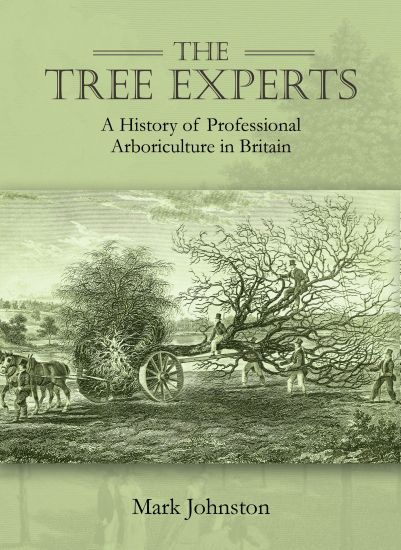
The Tree Experts

The Tree Experts

Mark Johnston

Windgather Press
2021
sidottu
Trees are now in the public eye as never before. The threat of tree diseases, the felling of street trees and the challenge of climate change are just some of the issues that have put trees in the media spotlight. At the same time, the trees in our parks, gardens and streets are a vital resource that can deliver environmental, social and economic benefits that make our towns and cities attractive, green and healthy places.Ever since Roman times when amenity trees were first planted in Britain, caring for those trees has required specialist skills. This is mainly because of the challenges of successfully integrating large trees into the urban environment and the risks involved in working with them, often at height and in close proximity to people, buildings and roads. But who are the people with the specialist expertise to care for our amenity trees? While professionals such as horticulturists, landscape architects, conservationists and foresters have a role to play, it is the arboriculturists who are the ‘tree experts’. For centuries arboriculture was often synonymous with forestry or considered an aspect of horticulture, until it emerged in the nineteenth century as a separate discipline. There are now some 22,000 people employed in Britain’s arboricultural industry, including practical tree surgeons and arborists, local authority tree officers and arboricultural consultants.This is the first book to trace the history of Britain’s professional tree experts, from the Roman arborator to the modern chartered arboriculturist. It also discusses the influences from continental Europe and North America that have helped to shape British arboriculture over the centuries. The Tree Experts will have particular appeal to those interested in the natural and built environment, heritage landscapes, social history and the history of gardening.
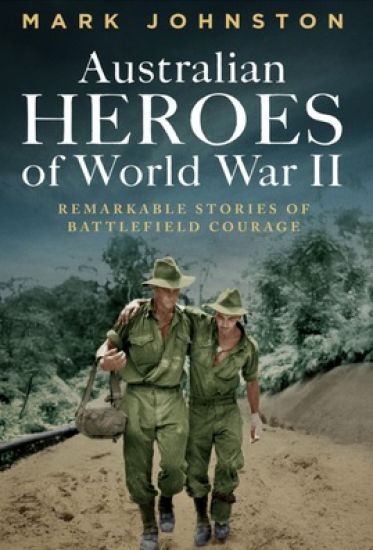
Australian Heroes of World War II

Australian Heroes of World War II

Mark Johnston

NewSouth Publishing
2025
nidottu
When Australians defended against Rommel’s tanks at Tobruk and Alamein, tackled paratroopers landing among them on Crete, attacked French Foreign Legionnaires in Syrian forts, held off Japanese tanks in Malaya, fought hand-to-hand on the Kokoda Track, and took on well-hidden and tenacious Japanese soldiers in countless grim jungle locations, brave individuals risked everything to bring victory. Australian soldiers performed acts of remarkable bravery in the roles of stretcher-bearers and snipers, in victories and defeats, and in desert and jungle. Men like the truck driver who took on 22 Japanese fighters with his fists and Owen gun and won. Such astonishing deeds were often rewarded with medals, but many brave deeds went unrecognised, and whether acknowledged or not, the heroes often paid a heavy price for their courageous acts, in the form of physical injury, psychological trauma or death. In Australian Heroes of World War II, leading Australian military historian Mark Johnston shines a new light on the the courage of individual soldiers across every battle in which Australians fought in World War II.