Kirjojen hintavertailu. Mukana 12 390 323 kirjaa ja 12 kauppaa.

Kirjahaku

Etsi kirjoja tekijän nimen, kirjan nimen tai ISBN:n perusteella.

4 kirjaa tekijältä Mark Kriegel

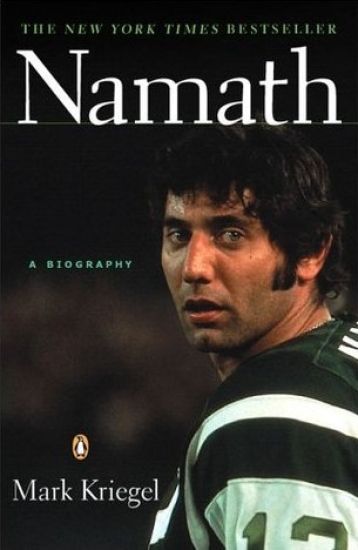
Namath: A Biography

Namath: A Biography

Mark Kriegel

Penguin USA
2005
pokkari
In between Babe Ruth and Michael Jordan there was Joe Namath, one of the few sports heroes to transcend the game he played. Novelist and former sports-columnist Mark Kriegel’s bestselling biography of the iconic quarterback details his journey from steel-town pool halls to the upper reaches of American celebrity—and beyond. The first of his kind, Namath enabled a nation to see sports as show biz. For an entire generation he became a spectacle of booze and broads, a guy who made bachelorhood seem an almost sacred calling, but it was his audacious “guarantee” of victory in Super Bowl III that ensured his legend. This unforgettable portrait brings readers from the gridiron to the go-go nightclubs as Kriegel uncovers the truth behind Broadway Joe and why his legend has meant so much to so many.
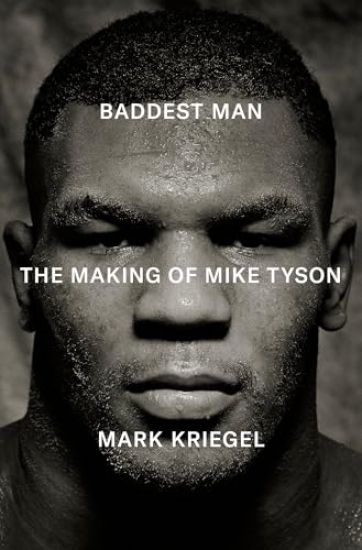
Baddest Man: The Making of Mike Tyson

Baddest Man: The Making of Mike Tyson

Mark Kriegel

PENGUIN PRESS
2025
sidottu
From the acclaimed New York Times bestselling author whose coverage of Mike Tyson and his inner circle dates back to the 1980s, a magnificent noir epic about fame, race, greed, criminality, trauma, and the creation of the most feared and mesmerizing fighter in boxing history. On an evening that defined the "greed is good" 1980s, Donald Trump hosted a raft of celebrities and high rollers in a carnival town on the Jersey Shore to bask in the glow created by a twenty-one-year-old heavyweight champion. Mike Tyson knocked out Michael Spinks that night and in ninety-one frenzied seconds earned more than the annual payrolls of the Los Angeles Lakers' and Boston Celtics' players combined. It had been just eight years since Tyson, a feral child from a dystopian Brooklyn neighborhood, was delivered to boxing's forgotten wizard, Cus D'Amato, who was living a self-imposed exile in upstate New York. Together, Cus and the Kid were an irresistible story of mutual redemption--darlings to the novelists, screenwriters, and newspapermen long charmed by D'Amato, and perfect for the nascent industry of cable television. Way before anyone heard of Tony Soprano, Mike Tyson was HBO's leading man. It was the greatest sales job in the sport's history, and the most lucrative. But the business of Tyson concealed truths that were darker and more nuanced than the script would allow. The intervening decades have seen Tyson villainized, lionized, and fetishized--but never, until now, fully humanized. Mark Kriegel, an acclaimed biographer regarded as "the finest boxing writer in America," was a young cityside reporter at the New York Daily News when he was first swept up in the Tyson media hurricane, but here he measures his subject not by whom he knocked out but by what he survived. Though Tyson was billed as a modern-day Jack Dempsey, in truth he was closer to Sonny Liston: Tyson was Black, feared, and born to die young. What made Liston a pariah, though, would make Tyson--in a way his own handlers could never understand--a touchstone for a generation raised on a soundtrack of hip hop and gunfire. What Peter Guralnick did for Elvis in Last Train to Memphis and James Kaplan for Sinatra in Frank, Kriegel does for Tyson. It's not just the dizzying ascent that he captures but also Tyson's place in the American psyche.
Pistol: The Life of Pete Maravich

Pistol: The Life of Pete Maravich

Mark Kriegel

FREE PRESS
2008
nidottu
The New York Times bestselling Pistol is more than the biography of a ballplayer. It's the stuff of classic novels: the story of a boy transformed by his father's dream--and the cost of that dream. Even as Pete Maravich became Pistol Pete--a basketball icon for baby boomers--all the Maraviches paid a price. Now acclaimed author Mark Kriegel has brilliantly captured the saga of an American family: its rise, its apparent ruin, and, finally, its redemption. Almost four decades have passed since Maravich entered the national consciousness as basketball's boy wizard. No one had ever played the game like the kid with the floppy socks and shaggy hair. And all these years later, no one else ever has. The idea of Pistol Pete continues to resonate with young people today just as powerfully as it did with their fathers. In averaging 44.2 points a game at Louisiana State University, he established records that will never be broken. But even more enduring than the numbers was the sense of ecstasy and artistry with which he played. With the ball in his hands, Maravich had a singular power to inspire awe, inflict embarrassment, or even tell a joke. But he wasn't merely a mesmerizing showman. He was basketball's answer to Elvis, a white Southerner who sold Middle America on a black man's game. Like Elvis, he paid a terrible price, becoming a prisoner of his own fame. Set largely in the South, Kriegel's Pistol, a tale of obsession and basketball, fathers and sons, merges several archetypal characters. Maravich was a child prodigy, a prodigal son, his father's ransom in a Faustian bargain, and a Great White Hope. But he was also a creature of contradictions: always the outsider but a virtuoso in a team sport, an exuberant showman who wouldn't look you in the eye, a vegetarian boozer, an athlete who lived like a rock star, a suicidal genius saved by Jesus Christ. A renowned biographer--People magazine called him "a master"--Kriegel renders his subject with a style that is, by turns, heartbreaking, lyrical, and electric. The narrative begins in 1929, the year a missionary gave Pete's father a basketball. Press Maravich had been a neglected child trapped in a hellish industrial town, but the game enabled him to blossom. It also caused him to confuse basketball with salvation. The intensity of Press's obsession initiates a journey across three generations of Maraviches. Pistol Pete, a ballplayer unlike any other, was a product of his father's vanity and vision. But that dream continues to exact a price on Pete's own sons. Now in their twenties--and fatherless for most of their lives--they have waged their own struggles with the game and its ghosts. Pistol is an unforgettable biography. By telling one family's history, Kriegel has traced the history of the game and a large slice of the American narrative.
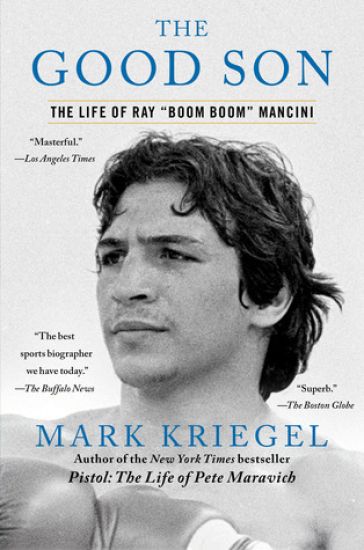
The Good Son: The Life of Ray Boom Boom Mancini
From the bestselling author of Pistol and Namath, a vivid, revealing, and fast-paced biography of the great boxer Ray "Boom Boom" Mancini.Frank Sinatra fawned over him. Warren Zevon wrote a tribute song. Sylvester Stallone produced his life story as a movie of the week. In the 1980s, Ray "Boom Boom" Mancini wasn't merely the lightweight champ. An adoring public considered him a national hero, the real Rocky. But it all came apart on November 13, 1982, in a brutal battle at Caesars Palace in Las Vegas. Mancini's obscure Korean challenger, Duk Koo Kim, went down in the fourteenth round and never regained consciousness. Three months later, Kim's despondent mother took her own life. The deaths would haunt Ray and ruin his carefully crafted image, suddenly transforming boxing's All-American Boy into a pariah. With the vivid style and deep reporting that have earned him renown as a biographer, Mark Kriegel has written a fast-paced epic. The Good Son is an intimate history, a saga of fathers and fighters, loss and redemption.