Kirjojen hintavertailu. Mukana 11 627 670 kirjaa ja 12 kauppaa.

Kirjahaku

Etsi kirjoja tekijän nimen, kirjan nimen tai ISBN:n perusteella.

6 kirjaa tekijältä Mark Lacy

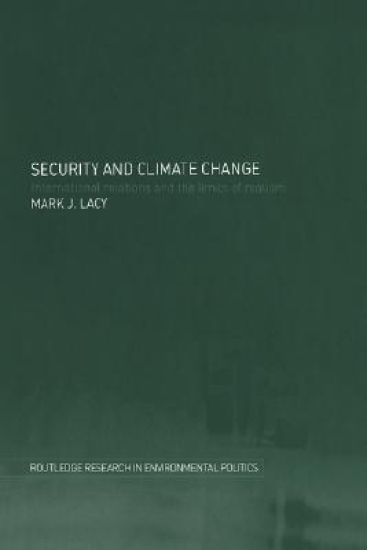
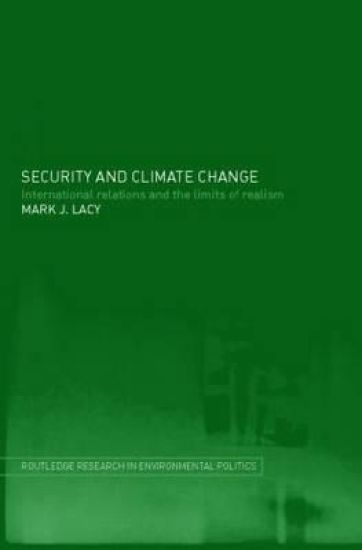
Security and Climate Change

Security and Climate Change

Mark Lacy

Routledge
2005
sidottu
This new book explains why the international community has responded with a sense of fatalistic passivity to climate change. It presents a distinct critique of realism through the study of this topic, commonly overlooked in international relations. The author argues that the realist view rests on a dangerous contradiction; far from delivering security it serves to limit the way we think about the new generation of risks we face. The book also provides a detailed case study evaluating US climate politics under the Clinton and Bush administrations.
Security and Climate Change

Security and Climate Change

Mark Lacy

Routledge
2007
nidottu
This new book explains why the international community has responded with a sense of fatalistic passivity to climate change. It presents a distinct critique of realism through the study of this topic, commonly overlooked in international relations. The author argues that the realist view rests on a dangerous contradiction; far from delivering security it serves to limit the way we think about the new generation of risks we face. The book also provides a detailed case study evaluating US climate politics under the Clinton and Bush administrations.
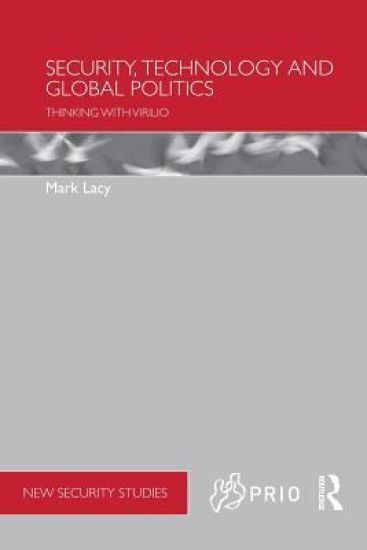
Security, Technology and Global Politics
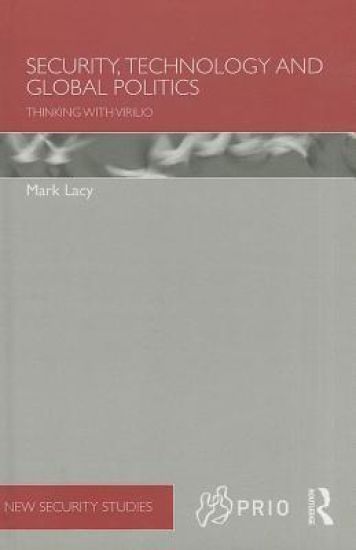
This book analyses some of the key problems explored in Paul Virilio’s theorising on war and security.Paul Virilio has developed a provocative series of writings on how modern societies have shaped the acceleration of military/security technologies – and how technologies of security and acceleration have transformed society, economy and politics. His examination of the connections between geopolitics, war, speed, technology and control are viewed as some of the most challenging and disturbing interventions on the politics of security in the twenty-first century, interventions that help us understand a world that confronts problems that increasingly emerge from the desire to make life safer, faster, networked and more efficient.Security, Technology and Global Politics examines some of the key concepts and concerns in Virilio’s writings on security, society and technology: endo-colonization, fear and the war on terror; cities and panic; cinema and war; ecological security and integral accidents; universities and ideas of progress. Critics often point to an apocalyptic or fatalistic element to Virilio’s writings on global politics, but this book challenges this apocalyptic reading of Virilio’s work, suggesting that – while he doesn’t provide us with easy solutions to the problems we face – the political force in Virilio’s work comes from the questions he leaves us with about speed, security and global politics in times of crisis, terror and fear.This book will be of interest to students of critical security studies, political theory, sociology, political geography, cultural studies and IR in general.
Theorising Future Conflict

Theorising Future Conflict

Mark Lacy

TAYLOR FRANCIS LTD
2023
nidottu
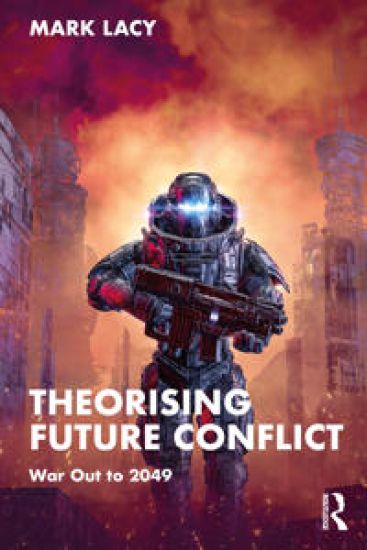
This book explores the changing tactics, technologies and terrains of twenty-first century war.It argues that the world in 2049 is unlikely to look like the climate change/artificial intelligence (AI) dystopia depicted in Blade Runner 2049, but nor will it be a world where conflict and war has been transformed by a ‘civilising process’ that eradicates violence and conflict from the human condition. 2049 is also the year that the US Department of Defense has suggested China will become a world-shaping military power. All states will be engaged in ‘arms races’ across a variety of new tools and technologies—from drones, robotics, AI and quantum computing—that will transform politics, economy, society and war.Drawing on thinkers such as Zygmunt Bauman and Paul Virilio, the book suggests that future war will be shaped by three broad tendencies that include a broad range of tactics, technologies and trends; the impure, the granular and the machinic. Through discussions of cybersecurity, urban war, robotics, AI, climate change, science fiction and new strategic concepts, it examines how these tendencies might evolve in the different geopolitical futures and types of war ahead of us. The book provides a thought-provoking and distinctive framework through which to think about the changing character of war. It concludes that for all the novel and dangerous challenges ahead, the futuristic possibilities of warfare will likely continue to be shaped by problems familiar to students of international relations and the history of war—albeit problems that will play out in geopolitical and technological contexts that we have never encountered before.This book will be of much interest to students of critical war studies, security studies, science and technology studies, and International Relations in general.
Theorising Future Conflict

Theorising Future Conflict

Mark Lacy

TAYLOR FRANCIS LTD
2023
sidottu
This book explores the changing tactics, technologies and terrains of twenty-first century war.It argues that the world in 2049 is unlikely to look like the climate change/artificial intelligence (AI) dystopia depicted in Blade Runner 2049, but nor will it be a world where conflict and war has been transformed by a ‘civilising process’ that eradicates violence and conflict from the human condition. 2049 is also the year that the US Department of Defense has suggested China will become a world-shaping military power. All states will be engaged in ‘arms races’ across a variety of new tools and technologies—from drones, robotics, AI and quantum computing—that will transform politics, economy, society and war.Drawing on thinkers such as Zygmunt Bauman and Paul Virilio, the book suggests that future war will be shaped by three broad tendencies that include a broad range of tactics, technologies and trends; the impure, the granular and the machinic. Through discussions of cybersecurity, urban war, robotics, AI, climate change, science fiction and new strategic concepts, it examines how these tendencies might evolve in the different geopolitical futures and types of war ahead of us. The book provides a thought-provoking and distinctive framework through which to think about the changing character of war. It concludes that for all the novel and dangerous challenges ahead, the futuristic possibilities of warfare will likely continue to be shaped by problems familiar to students of international relations and the history of war—albeit problems that will play out in geopolitical and technological contexts that we have never encountered before.This book will be of much interest to students of critical war studies, security studies, science and technology studies, and International Relations in general.
Security, Technology and Global Politics
This book analyses some of the key problems explored in Paul Virilio’s theorising on war and security.Paul Virilio has developed a provocative series of writings on how modern societies have shaped the acceleration of military/security technologies – and how technologies of security and acceleration have transformed society, economy and politics. His examination of the connections between geopolitics, war, speed, technology and control are viewed as some of the most challenging and disturbing interventions on the politics of security in the twenty-first century, interventions that help us understand a world that confronts problems that increasingly emerge from the desire to make life safer, faster, networked and more efficient.Security, Technology and Global Politics examines some of the key concepts and concerns in Virilio’s writings on security, society and technology: endo-colonization, fear and the war on terror; cities and panic; cinema and war; ecological security and integral accidents; universities and ideas of progress. Critics often point to an apocalyptic or fatalistic element to Virilio’s writings on global politics, but this book challenges this apocalyptic reading of Virilio’s work, suggesting that – while he doesn’t provide us with easy solutions to the problems we face – the political force in Virilio’s work comes from the questions he leaves us with about speed, security and global politics in times of crisis, terror and fear.This book will be of interest to students of critical security studies, political theory, sociology, political geography, cultural studies and IR in general.