Kirjojen hintavertailu. Mukana 11 627 373 kirjaa ja 12 kauppaa.

Kirjahaku

Etsi kirjoja tekijän nimen, kirjan nimen tai ISBN:n perusteella.

2 kirjaa tekijältä Mark Laurence Jackson; Mark Hanlen

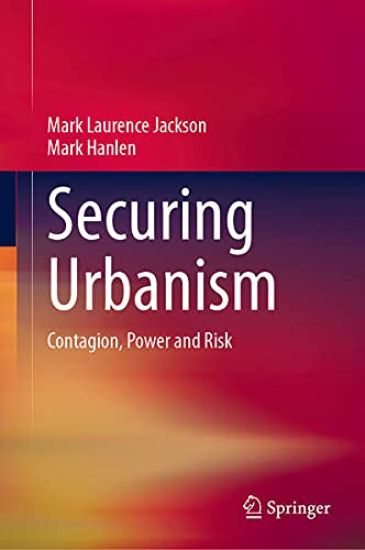
Securing Urbanism

Securing Urbanism

Mark Laurence Jackson; Mark Hanlen

Springer Verlag, Singapore
2020
sidottu
This book is concerned with developing an in-depth understanding of contemporary political and spatial analyses of cities. In the three-part development of the book’s overall argument or premise, the reader is taken in Part I through a range of contemporary critical and political understandings of urban securitizing. This is followed by an historical urban landscape of emerging liberalism and neo-liberalism, in nineteenth-century Britain and twentieth-century United States, respectively. These case-study historical chapters enable the introduction of key political issues that are more critically assayed in Parts II and III. With Part II, the reader is introduced in depth to a series of spatial analyses undertaken by Michel Foucault that have been crucial for especially late-twentieth and twenty-first century urban theory and political geography. With Part III the full ramifications of a paradigmatic shift are explored at the level of rethinking territory, population and design. This book is timely and useful for readers who want to develop a stronger understanding of what the book’s researchers term a new political paradigm in urban planning, one ultimately governed by global economic forces that define the end of probability.
Securing Urbanism

Securing Urbanism

Mark Laurence Jackson; Mark Hanlen

SPRINGER VERLAG, SINGAPORE
2021
nidottu
This book is concerned with developing an in-depth understanding of contemporary political and spatial analyses of cities. In the three-part development of the book’s overall argument or premise, the reader is taken in Part I through a range of contemporary critical and political understandings of urban securitizing. This is followed by an historical urban landscape of emerging liberalism and neo-liberalism, in nineteenth-century Britain and twentieth-century United States, respectively. These case-study historical chapters enable the introduction of key political issues that are more critically assayed in Parts II and III. With Part II, the reader is introduced in depth to a series of spatial analyses undertaken by Michel Foucault that have been crucial for especially late-twentieth and twenty-first century urban theory and political geography. With Part III the full ramifications of a paradigmatic shift are explored at the level of rethinking territory, population and design. This book is timely and useful for readers who want to develop a stronger understanding of what the book’s researchers term a new political paradigm in urban planning, one ultimately governed by global economic forces that define the end of probability.