Kirjojen hintavertailu. Mukana 11 244 527 kirjaa ja 12 kauppaa.

Kirjahaku

Etsi kirjoja tekijän nimen, kirjan nimen tai ISBN:n perusteella.

4 kirjaa tekijältä Mark Novak

Issues in Aging

Issues in Aging

Mark Novak

Routledge
2018
sidottu
Issues in Aging combines social, psychological, biological, and philosophical perspectives to present a multifaceted picture of aging. Novak illustrates both the problems and the opportunities that accompany older age. This text helps students understand the tremendous variability in aging and introduces them to careers working with older adults. This new edition reflects the continued changes in the way we age. The fourth edition has been updated to include emerging issues in aging. These include the prevalence of HIV/AIDs in later life, current research on mental potential in old age, the creation of age-friendly cities, and new options for end-of-life care.Each chapter begins with a set of learning objectives to guide students in their reading, and concludes with a list of main points, questions for discussion or study, suggested readings, and relevant web sites to consult. Each chapter also includes up-to-date charts and graphs as well as key terms to help students understand the issues presented. Break out boxes reveal the human side of aging through the stories of individuals in real life and in the media.
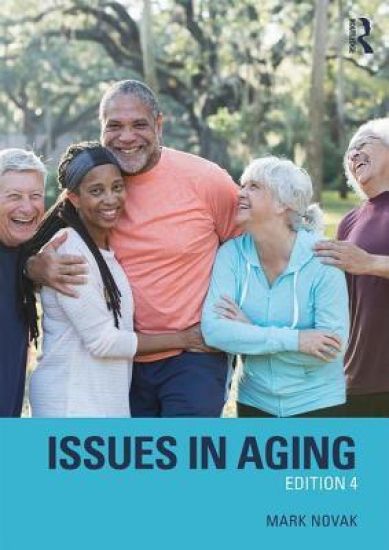
Issues in Aging

Issues in Aging

Mark Novak

Routledge
2018
nidottu
Issues in Aging combines social, psychological, biological, and philosophical perspectives to present a multifaceted picture of aging. Novak illustrates both the problems and the opportunities that accompany older age. This text helps students understand the tremendous variability in aging and introduces them to careers working with older adults. This new edition reflects the continued changes in the way we age. The fourth edition has been updated to include emerging issues in aging. These include the prevalence of HIV/AIDs in later life, current research on mental potential in old age, the creation of age-friendly cities, and new options for end-of-life care.Each chapter begins with a set of learning objectives to guide students in their reading, and concludes with a list of main points, questions for discussion or study, suggested readings, and relevant web sites to consult. Each chapter also includes up-to-date charts and graphs as well as key terms to help students understand the issues presented. Break out boxes reveal the human side of aging through the stories of individuals in real life and in the media.
Phenomenologies of Incarnation in Michel Henry and Emmanuel Falque
Bringing Michel Henry and Emmanuel Falque into dialogue, Mark Novak explores how they both articulate a phenomenology of the body and flesh in relation to incarnation and resurrection. As key proponents of the ‘theological turn’ in phenomenology, this volume illustrates how philosophical foundations inform Henry and Falque's theological views and uncovers the differences, and in some cases, surprising similarities between the two thinkers’ positions on these central Christian tenets. Beginning with a succinct overview of the origins of phenomenology and the shift towards embodiment, Novak surveys a number of different theories from Husserl’s foundational distinction between flesh (Leib) and body (Körper) to Merleau-Ponty, Maine de Biran and Dominique Janicaud. With this, focus turns to Henry and Falque. Methodically examining each thinker’s key texts on flesh and the body, Novak proposes that their views on resurrection and the incarnation are not as different as philosophers might think. Even despite Falque’s claim that Henry’s views on the incarnation neglect materiality by understanding the human being as flesh, Novak demonstrates how Falque’s critical response to Henry’s idea ironically mirrors it. By turning to material forces to better describe the body in his recent work, Falque recapitulates Henry’s understanding of flesh.Phenomenologies of Incarnation in Michel Henry and Emmanuel Falque provides a much-needed introduction to the phenomenology of embodiment and its important implications for philosophical theology.