Kirjojen hintavertailu. Mukana 11 342 296 kirjaa ja 12 kauppaa.

Kirjahaku

Etsi kirjoja tekijän nimen, kirjan nimen tai ISBN:n perusteella.

10 kirjaa tekijältä Mark Olssen

A Normative Foucauldian: Selected Papers of Mark Olssen
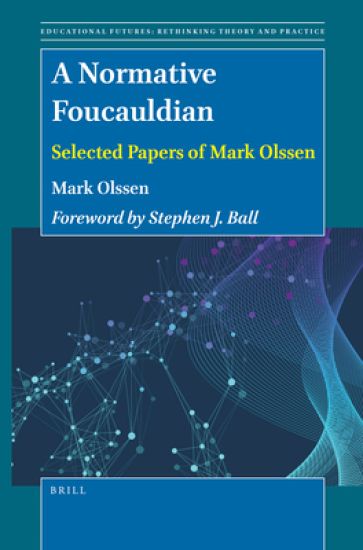
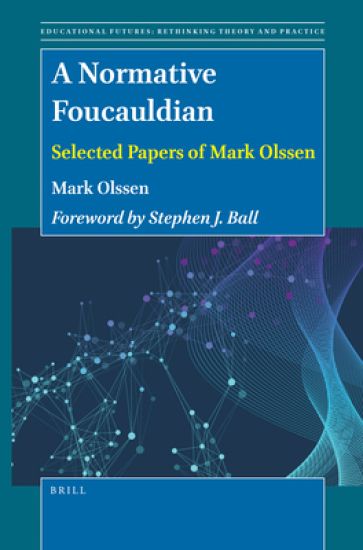
Inspired by the writings of Michel Foucault, Olssen's writings traverse philosophy, politics, education, and epistemology. This book comprises a selection of his papers published in academic journals and books over twenty-five years. Taken as a whole, the papers represent a redirection of the core axioms and directions of western ontology and philosophy in relation to how history, the subject, and education are theorised within the western philosophical tradition. Olssen's writings not only contain a powerful critique and revision of western liberalism from a poststructuralist perspective, they both explicate and extend Michel Foucault's challenge to the core axioms and assumptions underpinning western thought. As Stephen Ball suggests in his Foreword to this volume, "Olssen uses Foucault to explore issues... Olssen's Foucault is not a lonely nihilist but a troubled provocateur who encourages in us toward the political project of self-formation - our relation to ourselves and always, to others."
A Normative Foucauldian: Selected Papers of Mark Olssen
Inspired by the writings of Michel Foucault, Olssen's writings traverse philosophy, politics, education, and epistemology. This book comprises a selection of his papers published in academic journals and books over twenty-five years. Taken as a whole, the papers represent a redirection of the core axioms and directions of western ontology and philosophy in relation to how history, the subject, and education are theorised within the western philosophical tradition. Olssen's writings not only contain a powerful critique and revision of western liberalism from a poststructuralist perspective, they both explicate and extend Michel Foucault's challenge to the core axioms and assumptions underpinning western thought. As Stephen Ball suggests in his Foreword to this volume, "Olssen uses Foucault to explore issues... Olssen's Foucault is not a lonely nihilist but a troubled provocateur who encourages in us toward the political project of self-formation - our relation to ourselves and always, to others."
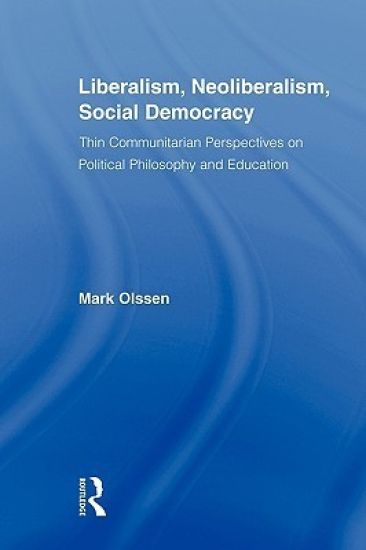
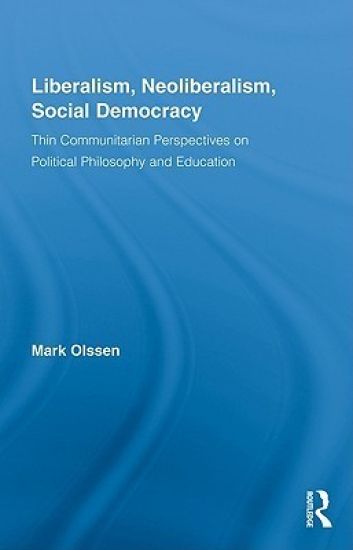
Liberalism, Neoliberalism, Social Democracy
The Credit Crunch of 2008 has exposed the fallacies of neoliberalism and its thesis of the self-regulating market, which has been ascendant in both economic theory and policy over the last 30 years. In moving beyond neoliberalism, social democratic arguments are once again coming to the fore; however, in the context of the 21st century, they will need to be theorized in relation to new global concerns. This book critically revisits the core theses of liberalism and neoliberalism that have provided philosophical support to free market economics - as enunciated in the writings of liberal political philosophers such as Friedrich von Hayek, Karl Popper and Isaiah Berlin - and seeks to expose the deficiencies of their beliefs that became hegemonic from the 1970s until the first decades of the present century. In moving beyond the formulas and mantras of liberalism, the book seeks to re-theorize social democracy and articulate a new vision of the political arrangements needed for the 21st century by reconsidering issues such as liberty, autonomy, social dependence and multiculturalism.
Liberalism, Neoliberalism, Social Democracy
The Credit Crunch of 2008 has exposed the fallacies of neoliberalism and its thesis of the self-regulating market, which has been ascendant in both economic theory and policy over the last 30 years. In moving beyond neoliberalism, social democratic arguments are once again coming to the fore; however, in the context of the 21st century, they will need to be theorized in relation to new global concerns. This book critically revisits the core theses of liberalism and neoliberalism that have provided philosophical support to free market economics - as enunciated in the writings of liberal political philosophers such as Friedrich von Hayek, Karl Popper and Isaiah Berlin - and seeks to expose the deficiencies of their beliefs that became hegemonic from the 1970s until the first decades of the present century. In moving beyond the formulas and mantras of liberalism, the book seeks to re-theorize social democracy and articulate a new vision of the political arrangements needed for the 21st century by reconsidering issues such as liberty, autonomy, social dependence and multiculturalism.
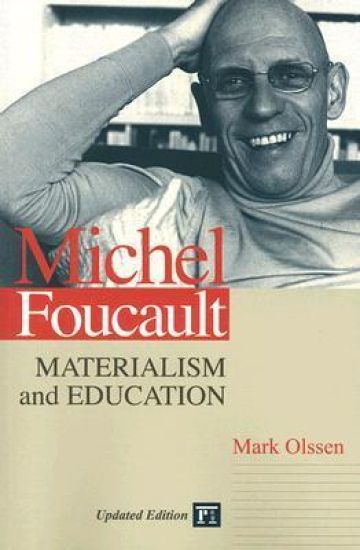
Michel Foucault

Michel Foucault

Mark Olssen

Praeger Publishers Inc
1999
sidottu
Although Foucault departs from Marxism, his own approach constitutes a form of consistent materialism which has theoretical implications for the analysis of social and educational discursive systems. In seeking to demonstrate a correct reading of Foucault, linguistic readings of his work, such as those of Christopher Norris (1993), which represent him as part of the linguistic turn in French philosophy, where language (or representation) henceforth defines the limits of thought, will be dispelled in the process of being corrected. Rather, Foucault will be represented, as Habermas (1987) has suggested, not merely as a historicist but at the same time as a nominalist, materialist, and empiricist.Because the distinctiveness of Foucault's approach can best be seen in contrast to other major philosophical systems and thinkers, considerable attention is given to examining Foucault's relationship to Marxism, as well as his relations to Kant, Gramsci, Habermas, and the Greeks. In relation to education, there is in Foucault's approach a double emphasis which constitutes an ordering principle for this work. On the one hand, attention is directed to discursive practices which perform an educative role in the constitution of subjects and of human forms of existence. On the other hand, forms of education are constituted and utilized for the purposes of collective ethical self-creation, a theme Foucault emphasized in his later works. The book assesses some of the more interesting recent utilizations of Foucault in educational research.
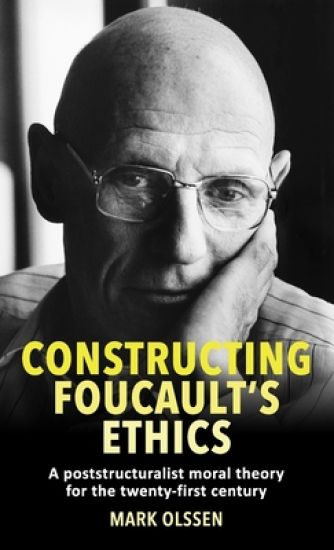
Constructing Foucault's Ethics

Constructing Foucault's Ethics

Mark Olssen

Manchester University Press
2021
sidottu
In popularising the term ‘speaking truth to power’, Michel Foucault established the basis upon which a new ethics can be constructed. This is the thesis that Mark Olssen advances in Constructing Foucault’s ethics. Olssen not only ‘speaks truth’ to existing moral and ethical theories that have dominated western philosophy since Plato, but also shows how an alternative ethical and moral theory can be established that avoids the pitfalls of postmodern relativism while grounding ethical, moral and political discourse for the present age. Taking the late ‘ethical turn’ in the philosopher’s thought as its starting point, this ambitious study seeks to construct an ethics beyond anything Foucault ever attempted while remaining consistent with his core postulates. It advances the concept of ‘life continuance’, which expresses a normative orientation to the future in terms of the quest for survival and well-being, giving rise to irreducible normative values as part of the discursive order of events. This approach is explored in contrast with a range of other, established systems, from the Kantian to the Marxist, contract ethics and utilitarianism.
Constructing Foucault's Ethics

Constructing Foucault's Ethics

Mark Olssen

MANCHESTER UNIVERSITY PRESS
2024
nidottu
In popularising the term ‘speaking truth to power’, Michel Foucault established the basis upon which a new ethics can be constructed. This is the thesis that Mark Olssen advances in Constructing Foucault’s ethics. Olssen not only ‘speaks truth’ to existing moral and ethical theories that have dominated western philosophy since Plato, but also shows how an alternative ethical and moral theory can be established that avoids the pitfalls of postmodern relativism while grounding ethical, moral and political discourse for the present age. Taking the late ‘ethical turn’ in the philosopher’s thought as its starting point, this ambitious study seeks to construct an ethics beyond anything Foucault ever attempted while remaining consistent with his core postulates. It advances the concept of ‘life continuance’, which expresses a normative orientation to the future in terms of the quest for survival and well-being, giving rise to irreducible normative values as part of the discursive order of events. This approach is explored in contrast with a range of other, established systems, from the Kantian to the Marxist, contract ethics and utilitarianism.
Michel Foucault

Michel Foucault

Mark Olssen

Paradigm
2006
nidottu
"Olssen ! brings Foucault to life and sheds new light on understanding his work...Educationalists and scholars across the disciplines will welcome this interpretation of Foucault." Michael A. Peters, University of Glasgow "Olssen distills in brilliant and succinct language the core of Foucault's most important insights. This is a book that every student should read in order to understand how to link theory to practice, and educational thought to legacy and work of one of Europe's great thinkers." Henry Giroux, McMaster University Michel Foucault is arguably one of the most important thinkers of the twentieth century, and his works are some of the most difficult to grasp. Mark Olssen offers an accessible overview of Foucault's thought, putting into context the relevance of Foucault's ideas. Olssen adds important new insights to Foucault scholarship by bringing to light the influences of other thinkers such as Marx, Nietzsche, Gramsci, Habermas, and others on Foucault's development as a thinker, and their influence on the deep historical materialist strand that grounds and uniquely characterizes so much of Foucault's thought.
Toward a Global Thin Community
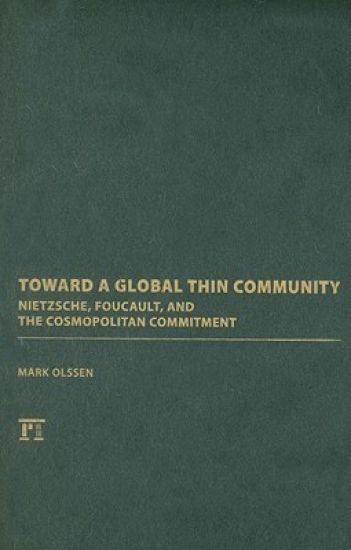
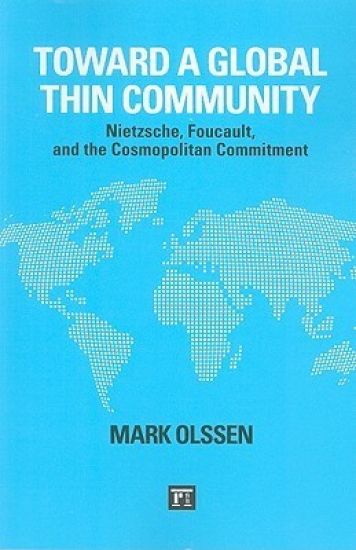
"Toward a Global 'Thin' Community re-examines aspects of the liberal-communitarian debate. While critical of both traditions, this book argues that a coherent form of communitarianism is the only plausible option for citizens today. Using the theories of Friedrich Nietzsche and Michel Foucault, Olssen shows how we can overcome traditional problems with communitarianism by using an ethic of survival that he identifies in the writings of Nietzsche and others to provide a normative framework for twenty-first century politics at both national and global levels. "Thin" communitarianism seeks to surmount traditional objections associated with Hegel and Marx, and to safeguard liberty and difference by applying a robust idea of democracy."
Toward a Global Thin Community
"Toward a Global 'Thin' Community re-examines aspects of the liberal-communitarian debate. While critical of both traditions, this book argues that a coherent form of communitarianism is the only plausible option for citizens today. Using the theories of Friedrich Nietzsche and Michel Foucault, Olssen shows how we can overcome traditional problems with communitarianism by using an ethic of survival that he identifies in the writings of Nietzsche and others to provide a normative framework for twenty-first century politics at both national and global levels. "Thin" communitarianism seeks to surmount traditional objections associated with Hegel and Marx, and to safeguard liberty and difference by applying a robust idea of democracy."