Kirjojen hintavertailu. Mukana 11 342 296 kirjaa ja 12 kauppaa.

Kirjahaku

Etsi kirjoja tekijän nimen, kirjan nimen tai ISBN:n perusteella.

4 kirjaa tekijältä Mark P. Orbe

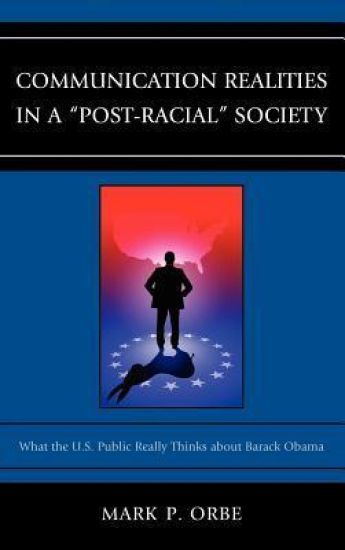
Communication Realities in a "Post-Racial" Society
This book seeks to go beyond existing public polls regarding Barack Obama, and instead offers a comprehensive treatment of public perceptions that resist mass generalizations based on race, gender, age, political affiliation, or geographical location. Drawing from a large national qualitative data set generated by 333 diverse participants from twelve different states across six U.S. regions, Mark P. Orbe offers a comprehensive look into public perceptions of Barack Obama's communication style, race matters, and the role of the media in 21st century politics. Communication Realities in a "Post-Racial" Society: What the U.S. Public Really Thinks about Barack Obama is the first of its kind in that it uses the voices of everyday U.S. Americans to advance our understanding of how identity politics influence public perceptions. The strength of a book such as this one lies within the power of the diverse perspectives of hundreds of participants. Each chapter features extended comments from rural volunteer fire fighters in southern Ohio, African American men in Oakland, CA, religious communities in Alabama; New England senior citizens; military families from southern Virginia; Tea Party members from Nebraska; business and community leaders from North Carolina; individuals currently unemployed and/or underemployed in Connecticut; college students from predominately White, Black, and Hispanic-serving institutions of higher learning; and others. As such, it is the first book that is based on comments from multiple perspectives - something that allows a deeper understanding that hasn't been possible with public polls, media sound bites, and political commentary. It is a must read for scholars interested in contemporary communication in a time when "post-racial" declarations are met with resistance and political junkies who seek an advanced understanding of the peculiarities of rapidly changing political realities.

Communication Realities in a "Post-Racial" Society
This book seeks to go beyond existing public polls regarding Barack Obama, and instead offers a comprehensive treatment of public perceptions that resist mass generalizations based on race, gender, age, political affiliation, or geographical location. Drawing from a large national qualitative data set generated by 333 diverse participants from twelve different states across six U.S. regions, Mark P. Orbe offers a comprehensive look into public perceptions of Barack Obama's communication style, race matters, and the role of the media in 21st century politics. Communication Realities in a "Post-Racial" Society: What the U.S. Public Really Thinks about Barack Obama is the first of its kind in that it uses the voices of everyday U.S. Americans to advance our understanding of how identity politics influence public perceptions. The strength of a book such as this one lies within the power of the diverse perspectives of hundreds of participants. Each chapter features extended comments from rural volunteer fire fighters in southern Ohio, African American men in Oakland, CA, religious communities in Alabama; New England senior citizens; military families from southern Virginia; Tea Party members from Nebraska; business and community leaders from North Carolina; individuals currently unemployed and/or underemployed in Connecticut; college students from predominately White, Black, and Hispanic-serving institutions of higher learning; and others. As such, it is the first book that is based on comments from multiple perspectives - something that allows a deeper understanding that hasn't been possible with public polls, media sound bites, and political commentary. It is a must read for scholars interested in contemporary communication in a time when "post-racial" declarations are met with resistance and political junkies who seek an advanced understanding of the peculiarities of rapidly changing political realities.
Constructing Co-Cultural Theory

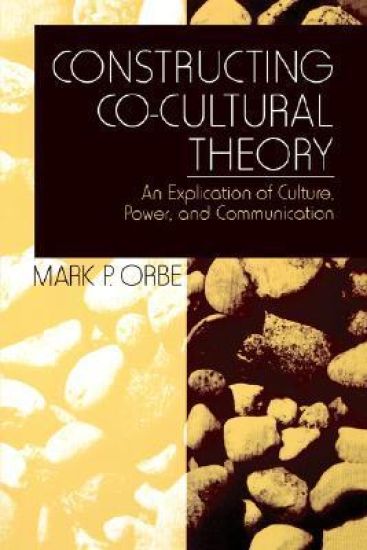
Constructing Co-Cultural Theory

Mark P. Orbe

SAGE Publications Inc
1997
sidottu
How do people traditionally situated on the margins of societyùpeople of color, women, gays/lesbians/bisexuals, and those from a lower socio-economic statusùcommunicate within the dominant societal structures? Constructing Co-Cultural Theory presents a phenomenological framework for understanding the intricate relationship between culture, power, and communication. Grounded in muted group and standpoint theory, this volume presents a theoretical framework that fosters a critically insightful vantage point into the complexities of culture, power, and communication. The volume comprises six chapters; key coverage includes: a review of critique of the literature on co-cultural communication; description of how the perspective of co-cultural group members were involved in each stage of theory development; an explication of 25 co-cultural communication strategies, and a model of six factors that influence strategy selection. The final chapter examines how co-cultural theory correlates with other work in communication generally and in intercultural communication specifically. Author Mark P. Orbe considers inherent limitations of his framework and the implication for future research in this area. Scholars and upper-level undergraduate and graduate students will find that this volume covers an important topic which will be of interest to those in the fields of communication, cultural studies, and race and ethnic studies.
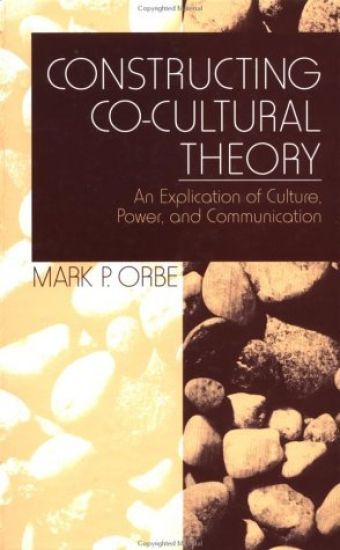
Constructing Co-Cultural Theory

Constructing Co-Cultural Theory

Mark P. Orbe

SAGE Publications Inc
1997
nidottu
How do people traditionally situated on the margins of societyùpeople of color, women, gays/lesbians/bisexuals, and those from a lower socio-economic statusùcommunicate within the dominant societal structures? Constructing Co-Cultural Theory presents a phenomenological framework for understanding the intricate relationship between culture, power, and communication. Grounded in muted group and standpoint theory, this volume presents a theoretical framework that fosters a critically insightful vantage point into the complexities of culture, power, and communication. The volume comprises six chapters; key coverage includes: a review of critique of the literature on co-cultural communication; description of how the perspective of co-cultural group members were involved in each stage of theory development; an explication of 25 co-cultural communication strategies, and a model of six factors that influence strategy selection. The final chapter examines how co-cultural theory correlates with other work in communication generally and in intercultural communication specifically. Author Mark P. Orbe considers inherent limitations of his framework and the implication for future research in this area. Scholars and upper-level undergraduate and graduate students will find that this volume covers an important topic which will be of interest to those in the fields of communication, cultural studies, and race and ethnic studies.