Kirjojen hintavertailu. Mukana 11 244 527 kirjaa ja 12 kauppaa.

Kirjahaku

Etsi kirjoja tekijän nimen, kirjan nimen tai ISBN:n perusteella.

6 kirjaa tekijältä Mark P. Worrell

Why Nations Go to War

Why Nations Go to War

Mark P. Worrell

Routledge
2010
nidottu
The United States has been involved in many wars, sometimes for noble causes like defeating Nazism, and, at other times, it has compromised its own ideals, leading to a lot of soul searching and regrets. Some wars are celebrated as glorious achievements (World War II), some are ‘forgotten’ (Korea), and some are ‘ignored’ (Afghanistan). The current wars in the Middle East represent a complex interplay of motivations, challenges, and threats to America’s role as the world’s democratic leadership. In the case of Afghanistan, we find that during the Cold War the US defense and intelligence apparatus directly and indirectly created an incalculable number of radical extremists that have now turned their sights on their former benefactor. The invasion of Iraq represents a different calculus: under the multitude of rationalizations rests a simple political-economic case of a master nation punishing a disobedient subject. In this brief book, America’s relationship with war is explored with an eye toward changes in capitalism from industrialism to post-industrialism, America’s involvement in the Cold War, nuclear proliferation, terrorism, torture, culture, and ideology. The goal of this new, unique Series is to offer readable, teachable "thinking frames" on today’s social problems and social issues by leading scholars, all in short 60 page or shorter formats, and available for view on http://routledge.customgateway.com/routledge-social-issues.html For instructors teaching a wide range of courses in the social sciences, the Routledge Social Issues Collection now offers the best of both worlds: originally written short texts that provide "overviews" to important social issues as well as teachable excerpts from larger works previously published by Routledge and other presses.

Why Nations Go to War

Why Nations Go to War

Mark P. Worrell

Routledge
2016
sidottu
The United States has been involved in many wars, sometimes for noble causes like defeating Nazism, and, at other times, it has compromised its own ideals, leading to a lot of soul searching and regrets. Some wars are celebrated as glorious achievements (World War II), some are ‘forgotten’ (Korea), and some are ‘ignored’ (Afghanistan). The current wars in the Middle East represent a complex interplay of motivations, challenges, and threats to America’s role as the world’s democratic leadership. In the case of Afghanistan, we find that during the Cold War the US defense and intelligence apparatus directly and indirectly created an incalculable number of radical extremists that have now turned their sights on their former benefactor. The invasion of Iraq represents a different calculus: under the multitude of rationalizations rests a simple political-economic case of a master nation punishing a disobedient subject. In this brief book, America’s relationship with war is explored with an eye toward changes in capitalism from industrialism to post-industrialism, America’s involvement in the Cold War, nuclear proliferation, terrorism, torture, culture, and ideology. The goal of this new, unique Series is to offer readable, teachable "thinking frames" on today’s social problems and social issues by leading scholars, all in short 60 page or shorter formats, and available for view on http://routledge.customgateway.com/routledge-social-issues.html For instructors teaching a wide range of courses in the social sciences, the Routledge Social Issues Collection now offers the best of both worlds: originally written short texts that provide "overviews" to important social issues as well as teachable excerpts from larger works previously published by Routledge and other presses.

The Sociogony

The Sociogony

Mark P. Worrell

Haymarket Books
2020
pokkari
The Sociogony re-examines the social ontology of what Durkheim calls 'social facts' in the light of critical and progressive hostilities to the facticity of facts and the necessity of moral absolutes in the shift from bourgeois liberalism to a neoliberal global order. The introduction offers a wide-ranging rumination on the concept of the absolute after its apparent downfall; the chapter on facts turns the problem of external authority on its head and the chapter dealing with the sociogony situates facts in a process of generation, rule, and decay. Drawing heavily on the works of Hegel, Marx, Weber, and Durkheim, the resulting synthesis is what the author refers to as a Marxheimian Social Theory that offers a new map and a stable ontology for the homeless mind.
Disintegration: Bad Love, Collective Suicide, and the Idols of Imperial Twilight
Together again for the first time, Marx and Durkheim join forces in the pages of Disintegration: Bad Love, Collective Suicide, and the Idols of Imperial Twilight for a dialectical exploration of the moral economy of neoliberalism, animated, as it is not only by the capitalist chase for surplus value, but also by an immortal vortex of sacred powers. Classical sociology and psychoanalysis are reconstituted within Hegelian social ontology and dialectical method that differentiates between the ephemeral and free and the eternal and fixed aspects of modern life.
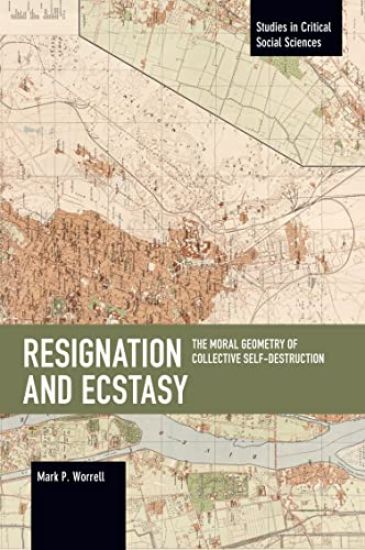
Resignation and Ecstasy: The Moral Geometry of Collective Self-Destruction
Once again, for the first time, Marx and Durkheim join forces while exploring the moral economy of neoliberalism. Resignation and Ecstasy provides a fresh perspective on the immortal vortex of sacred energies pulsating beneath the peculiar logic of modern accumulation. Relying on dialectical methods, classical sociology and psychoanalysis are reconstituted within an Hegelian social ontology to differentiate the ephemeral from the eternal aspects of social life.
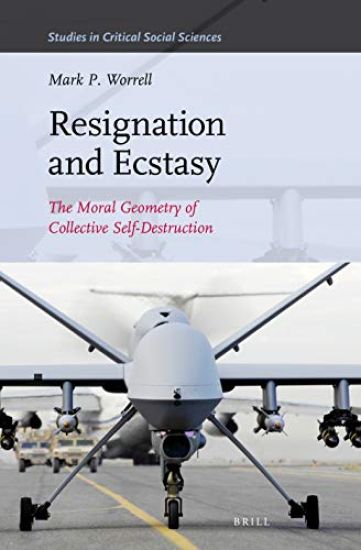
Resignation and Ecstasy: The Moral Geometry of Collective Self-Destruction: Volume Three of Sacrifice and Self-Defeat
Once again, for the first time, Marx and Durkheim join forces while exploring the moral economy of neoliberalism. Resignation and Ecstasy provides a fresh perspective on the immortal vortex of sacred energies pulsating beneath the peculiar logic of modern accumulation. Relying on dialectical methods, classical sociology and psychoanalysis are reconstituted within an Hegelian social ontology to differentiate the ephemeral from the eternal aspects of social life.