Kirjahaku
Etsi kirjoja tekijän nimen, kirjan nimen tai ISBN:n perusteella.
28 kirjaa tekijältä Mark Pattison

Essays by the Late Mark Pattison, Sometime Rector of Lincoln College
Mark Pattison
Hansebooks
2017
pokkari
Essays by the Late Mark Pattison, Sometime Rector of Lincoln College - Collected and arranged by Henry Nettleship. Vol. 2 is an unchanged, high-quality reprint of the original edition of 1889. Hansebooks is editor of the literature on different topic areas such as research and science, travel and expeditions, cooking and nutrition, medicine, and other genres. As a publisher we focus on the preservation of historical literature. Many works of historical writers and scientists are available today as antiques only. Hansebooks newly publishes these books and contributes to the preservation of literature which has become rare and historical knowledge for the future.

Essays by the Late Mark Pattison, Sometime Rector of Lincoln College
Mark Pattison
Hansebooks
2017
pokkari
Essays by the Late Mark Pattison, Sometime Rector of Lincoln College - Collected and arranged by Henry Nettleship. Vol. 1 is an unchanged, high-quality reprint of the original edition of 1889. Hansebooks is editor of the literature on different topic areas such as research and science, travel and expeditions, cooking and nutrition, medicine, and other genres. As a publisher we focus on the preservation of historical literature. Many works of historical writers and scientists are available today as antiques only. Hansebooks newly publishes these books and contributes to the preservation of literature which has become rare and historical knowledge for the future.

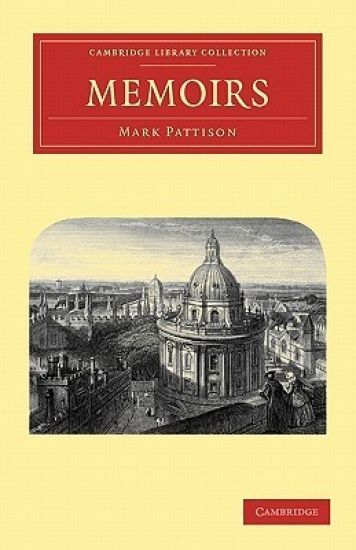
Mark Pattison's Memoirs, compiled during his last illness and published posthumously in 1885, recount the academic's fascinating, if difficult, life. Highly regarded for his learning, Pattison (1813–84) spent most of his adult life in Oxford, first as a student, then a tutor, and eventually, from 1861, as Rector of Lincoln College. He was a close associate of Newman and the Tractarians during the 1840s, though he later tended towards agnosticism. During the 1850s he made several visits to German universities, and developed an interest in early modern Protestant thought. He later edited works by Pope and Milton. Pattison's Memoirs paint a vivid though often bitter portrait of life in Victorian Oxford. They describe his incompetent tutors, his disillusionment with the Oxford Movement, and vicious academic rivalries. Pattison would not permit changes to 'soften' the impact, but his editor omitted certain passages that might 'wound the feelings of the living'.

The Victorian intellectual Mark Pattison (1813–84) published Isaac Casaubon in 1875, while rector of Lincoln College, Oxford. Casaubon (1559–1614), a French Protestant and distinguished Renaissance scholar, was the author of critical texts and commentaries on a vast corpus of classical authors, including Diogenes Laertius, Theocritus, Aristotle and Strabo. His magnum opus was his text and commentary on Athenaeus' Deipnosophistae. Pattison's account is based on letters, diaries, unpublished lecture notes and students' notes, published works, city archives, and university documents. The work covers Casaubon's youth, education, scholarly career, and final years spent in England (1610–14), where he influenced the rising 'Anglican school'. In his image of Casaubon, Pattison paints the picture of the ideal scholar, and through his portrayal reveals his deeply Victorian convictions and sensibilities. The work is an invaluable source for the life of the Renaissance scholar and the ideas and perspectives of the Victorian man.
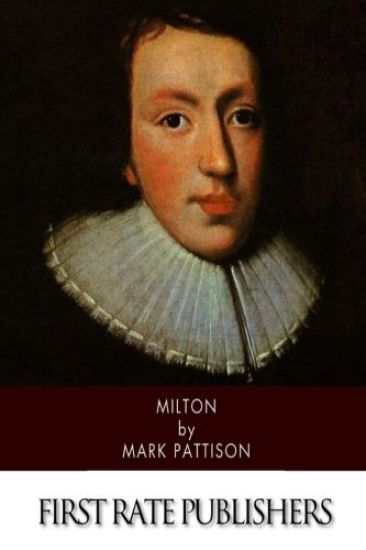

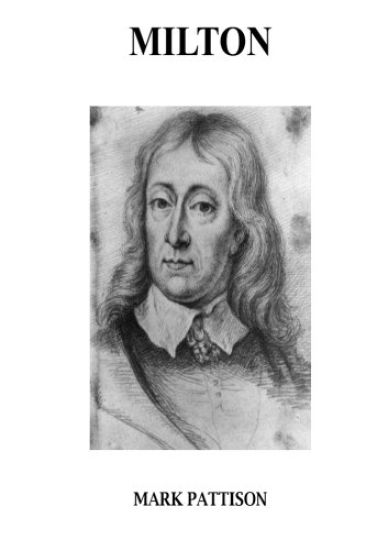
Milton: Classic Poetry - John Milton
Mark Pattison
Createspace Independent Publishing Platform
2017
nidottu
Milton - By Mark Pattison. If Milton's genius did not announce itself in his paraphrases of Psalms, it did in his impetuosity in learning, "which I seized with such eagerness that from the twelfth year of my age, I scarce ever went to bed before midnight." Such is his own account. And it is worthnotice that we have here an incidental test of the trustworthiness of Aubrey's reminiscences. Aubrey's words are, "When he was very young he studied very hard, and sate up very late, commonly till twelve or one o'clock at night; and his father ordered the maid to sit up for him." John Milton (9 December 1608