Kirjojen hintavertailu. Mukana 11 342 296 kirjaa ja 12 kauppaa.

Kirjahaku

Etsi kirjoja tekijän nimen, kirjan nimen tai ISBN:n perusteella.

8 kirjaa tekijältä Mark R. Cheathem

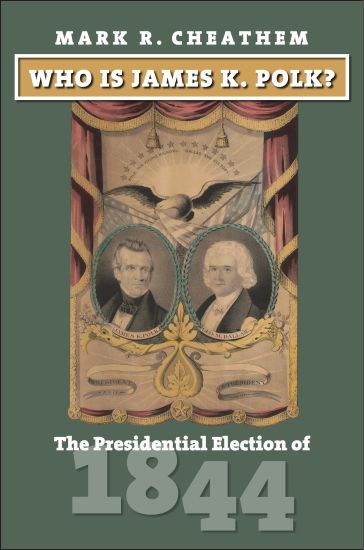
Who Is James K. Polk?

Who Is James K. Polk?

Mark R. Cheathem

UNIVERSITY PRESS OF KANSAS
2023
sidottu
The question Americans asked in 1844 was, “Who the hell is James K. Polk?”Polk, of course, was not unknown, but was a highly unlikely presidential candidate given the availability of better-known options. Among the Democrats, this included Martin Van Buren, John C. Calhoun, and James Buchanan. Among the Whigs, Henry Clay was the clear frontrunner. Complicating the election were three other candidates: President John Tyler, a man without a party; Joseph Smith, the self-described prophet of the Church of Jesus Christ of Latter-day Saints and the first presidential candidate to be assassinated; and James G. Birney, head of the antislavery Liberty ticket. On top of this remarkable cast of characters, the stakes of the election were high as the United States was undergoing a tumultuous political transition.James K. Polk’s ascension to the White House over more notable politicians was a pivotal moment in propelling the United States towards civil war, and the 1844 election expanded the vigorous campaigning that had been growing since 1824. In Who is James K. Polk?, Mark R. Cheathem examines the transition from traditional political issues, such as banking and tariffs, to newer ones, like immigration and slavery. The book also captures the Whig and Democratic parties at a mature stage of competition and provides detailed descriptions of campaign tactics used by the candidates, including rallies, music, and political cartoons.Cheathem has written the definitive account of this important election in this volume for the esteemed American Presidential Elections series.
Old Hickory's Nephew

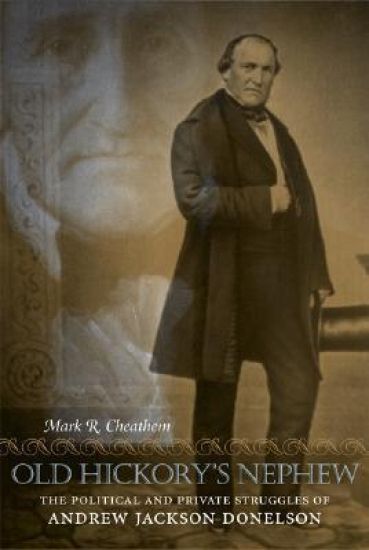
Old Hickory's Nephew

Mark R. Cheathem

Louisiana State University Press
2007
sidottu
Though remembered largely by history as Andrew Jackson's nephew, Andrew Jackson Donelson was himself a significant figure in nineteenth-century America: a politician, planter, diplomat, newspaper editor, and vice-presidential candidate. His relationship with his uncle and mentor defined his life, as he struggled to find the political and personal success that he wanted and his uncle thought he deserved. In Old Hickory's Nephew, the first definitive biography of this enigmatic man, Mark R. Cheathem explores both Donelson's political contributions and his complex, tumultuous, and often-overlooked relationship with Andrew Jackson. Born in Sumner County, Tennessee, in 1799, Donelson lost his father only five years later. Andrew Jackson soon became a force in his nephew's life, seeing in his namesake his political protégé. Jackson went so far as to predict that Donelson would one day become president. After attending West Point, Donelson helped establish the Jacksonian wing of the Democratic party and edited a national Democratic newspaper. As a diplomat, he helped bring about the annexation of Texas and, following in his uncle's footsteps, he became the owner of several plantations. On the surface, Donelson was a political and personal success.But few lives are so straightforward. The strong relationship between the uncle and nephew - defined by the concept of honor that suffused the southern society in which they lived - quickly frayed when Donelson and his wife defied his uncle during the infamous Peggy Eaton sex scandal of Jackson's first presidential administration. This resulted, Cheathem shows, in a tense relationship, full of distrust and suspicion, between Donelson and Jackson that lasted until the ""Hero of New Orleans"" died in 1845. Donelson later left the Democratic party in a tiff and joined the American, or Know Nothing, party, which selected him as Millard Fillmore's running mate in 1856. Though Donelson tried to establish himself as his uncle's political successor and legator, his friends and foes alike accused him of trading on his uncle's name to gain political and financial success.The life of Andrew Jackson Donelson illuminates the expectations placed upon young southern men of prominent families as well as the complexities and contradictions in their lives. In this biography, Cheathem awakens interest in a nearly forgotten but nonetheless intriguing figure in American history.
Andrew Jackson, Southerner

Andrew Jackson, Southerner

Mark R. Cheathem

Louisiana State University Press
2013
sidottu
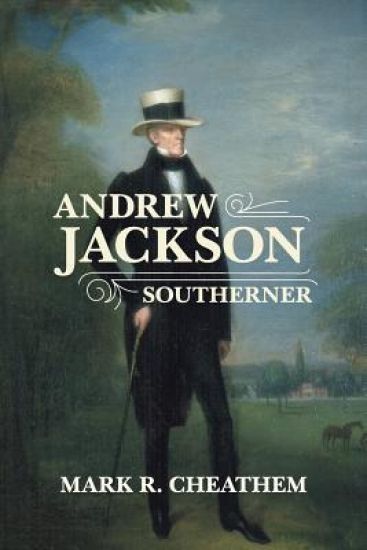
Many Americans view Andrew Jackson as a frontiersman who fought duels, killed Indians, and stole another man's wife. Historians have traditionally presented Jackson as a man who struggled to overcome the obstacles of his backwoods upbringing and helped create a more democratic United States. In his compelling new biography of Jackson, Mark R. Cheathem argues for a reassessment of these long-held views, suggesting that in fact ""Old Hickory"" lived as an elite southern gentleman. Jackson grew up along the border between North Carolina and South Carolina, a district tied to Charleston, where the city's gentry engaged in the transatlantic marketplace. Jackson then moved to North Carolina, where he joined various political and kinship networks that provided him with entrée into society. In fact, Cheathem contends, Jackson had already started to assume the characteristics of a southern gentleman by the time he arrived in Middle Tennessee in 1788.After moving to Nashville, Jackson further ensconced himself in an exclusive social order by marrying the daughter of one of the city's cofounders, engaging in land speculation, and leading the state militia. Cheathem notes that through these ventures Jackson grew to own multiple plantations and cultivated them with the labor of almost two hundred slaves. His status also enabled him to build a military career focused on eradicating the nation's enemies, including Indians residing on land desired by white southerners. Jackson's military success eventually propelled him onto the national political stage in the 1820s, where he won two terms as president. Jackson's years as chief executive demonstrated the complexity of the expectations of elite white southern men, as he earned the approval of many white southerners by continuing to pursue Manifest Destiny and opposing the spread of abolitionism, yet earned their ire because of his efforts to fight nullification and the Second Bank of the United States.By emphasising Jackson's southern identity - characterized by violence, honor, kinship, slavery, and Manifest Destiny - Cheathem's narrative offers a bold new perspective on one of the nineteenth century's most renowned and controversial presidents.
Andrew Jackson, Southerner

Andrew Jackson, Southerner

Mark R. Cheathem

Louisiana State University Press
2015
nidottu
Winner of the 2013 Tennessee History AwardMany Americans view Andrew Jackson as a frontiersman who fought duels, killed Indians, and stole another man's wife. Historians have traditionally presented Jackson as a man who struggled to overcome the obstacles of his backwoods upbringing and helped create a more democratic United States. In his compelling new biography of Jackson, Mark R. Cheathem argues for a reassessment of these long-held views, suggesting that in fact ""Old Hickory"" lived as an elite southern gentleman. Jackson grew up along the border between North Carolina and South Carolina, a district tied to Charleston, where the city's gentry engaged in the transatlantic marketplace. Jackson then moved to North Carolina, where he joined various political and kinship networks that provided him with entrance into society. In fact, Cheathem contends, Jackson had already started to assume the characteristics of a southern gentleman by the time he arrived in Middle Tennessee in 1788.After moving to Nashville, Jackson further ensconced himself in an exclusive social order by marrying the daughter of one of the city's cofounders, engaging in land speculation, and leading the state militia. Cheathem notes that through these ventures Jackson grew to own multiple plantations and cultivated them with the labor of almost two hundred slaves. His status also enabled him to build a military career focused on eradicating the nation's enemies, including Indians residing on land desired by white southerners. Jackson's military success eventually propelled him onto the national political stage in the 1820s, where he won two terms as president. Jackson's years as chief executive demonstrated the complexity of the expectations of elite white southern men, as he earned the approval of many white southerners by continuing to pursue Manifest Destiny and opposing the spread of abolitionism, yet earned their ire because of his efforts to fight nullification and the Second Bank of the United States.By emphasising Jackson's southern identity - characterized by violence, honor, kinship, slavery, and Manifest Destiny - Cheathem's narrative offers a bold new perspective on one of the nineteenth century's most renowned and controversial presidents.
The Coming of Democracy

The Coming of Democracy

Mark R. Cheathem

Johns Hopkins University Press
2018
sidottu
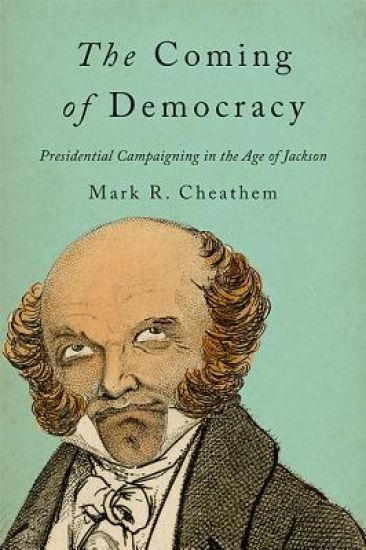
A look at the evolution of presidential campaigning from 1824 to 1840. If you think politics are uncivil now . . .Winner of the Phi Alpha Theta History Honor Society Best Subsequent Book Award by the Phi Alpha Theta History Honor SocietyAfter the “corrupt bargain” that awarded John Quincy Adams the presidency in 1825, American politics underwent a fundamental shift from deference to participation. This changing tide eventually propelled Andrew Jackson into the White House—twice. But the presidential race that best demonstrated the extent of the changes was that of Martin Van Buren and war hero William Henry Harrison in 1840. Harrison’s campaign was famously marked by sloganeering and spirited rallies. In The Coming of Democracy, Mark R. Cheathem examines the evolution of presidential campaigning from 1824 to 1840. Addressing the roots of early republic cultural politics—from campaign biographies to songs, political cartoons, and public correspondence between candidates and voters—Cheathem asks the reader to consider why such informal political expressions increased so dramatically during the Jacksonian period. What sounded and looked like mere entertainment, he argues, held important political meaning. The extraordinary voter participation rate—over 80 percent—in the 1840 presidential election indicated that both substantive issues and cultural politics drew Americans into the presidential selection process.Drawing on period newspapers, diaries, memoirs, and public and private correspondence, The Coming of Democracy is the first book-length treatment to reveal how presidents and presidential candidates used both old and new forms of cultural politics to woo voters and win elections in the Jacksonian era. This book will appeal to anyone interested in US politics, the Jacksonian/antebellum era, or the presidency.
The Coming of Democracy

The Coming of Democracy

Mark R. Cheathem

Johns Hopkins University Press
2018
pokkari
A look at the evolution of presidential campaigning from 1824 to 1840. If you think politics are uncivil now . . .Winner of the Phi Alpha Theta History Honor Society Best Subsequent Book Award by the Phi Alpha Theta History Honor SocietyAfter the “corrupt bargain” that awarded John Quincy Adams the presidency in 1825, American politics underwent a fundamental shift from deference to participation. This changing tide eventually propelled Andrew Jackson into the White House—twice. But the presidential race that best demonstrated the extent of the changes was that of Martin Van Buren and war hero William Henry Harrison in 1840. Harrison’s campaign was famously marked by sloganeering and spirited rallies. In The Coming of Democracy, Mark R. Cheathem examines the evolution of presidential campaigning from 1824 to 1840. Addressing the roots of early republic cultural politics—from campaign biographies to songs, political cartoons, and public correspondence between candidates and voters—Cheathem asks the reader to consider why such informal political expressions increased so dramatically during the Jacksonian period. What sounded and looked like mere entertainment, he argues, held important political meaning. The extraordinary voter participation rate—over 80 percent—in the 1840 presidential election indicated that both substantive issues and cultural politics drew Americans into the presidential selection process.Drawing on period newspapers, diaries, memoirs, and public and private correspondence, The Coming of Democracy is the first book-length treatment to reveal how presidents and presidential candidates used both old and new forms of cultural politics to woo voters and win elections in the Jacksonian era. This book will appeal to anyone interested in US politics, the Jacksonian/antebellum era, or the presidency.
Andrew Jackson and the Rise of the Democrats
This illuminating overview explains political parties in the early 19th century, comparing and contrasting that era with the modern-day political climate.In this chronological examination of the Democratic Party's origins, award-winning author Mark R. Cheathem traces the development of both the Democratic Party and the second American party system from its roots in the Jeffersonian Republicans in the 1790s to its maturation during Andrew Jackson's presidency in the 1830s. The book explores the concept of politics and its effects on the national government of the early American republic.This historical reference is filled with fascinating facts and anecdotes about 19th-century politics in the United States, most notably how Martin Van Buren acted as the architect of the Democratic Party; what factors contributed to the Democrats' rise to power; and how the Bank War created the second American party system, pitting the Democrats against Whigs. Content features key political writings from the period, portraits and political cartoons of the time, and a helpful chronology detailing influential events.
Andrew Jackson and the Rise of the Democratic Party

Andrew Jackson and the Rise of the Democratic Party

Mark R. Cheathem

University of Tennessee Press
2018
nidottu
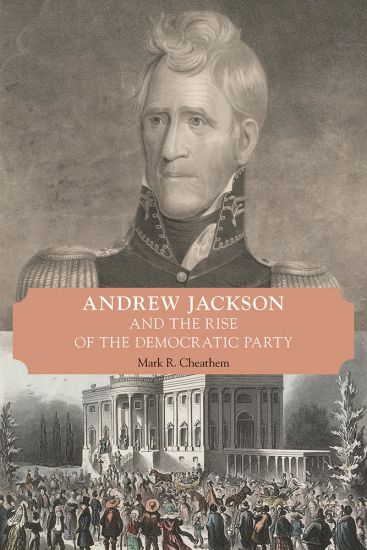
In Andrew Jackson and the Rise of the Democratic Party, author Mark R. Cheathem provides a unique historical analysis and bold critique of American partisanship from the early republic to the end of Andrew Jackson’s administration.Cheathem begins by discussing the American political system after the American Revolutionary War while the debates over the ratification of the Constitution stormed on. In doing so, he delivers a contextual and chronological analysis of how the political system evolved from the vision of the Founding Fathers to Jackson’s populist Democratic party. Though other political changes throughout the decades affected the development of Jacksonian Democracy, Cheathem argues it was an identity crisis in the Republican party during Jackson’s rise to power that allowed Jackson’s populism to thrive. The faltering of the Republican party and Jackson’s executive agenda continued to shape the state of the Democratic party for years.Additionally, Cheathem considers both Jacksonian Democracy’s impact on the political system of the time and his lingering populist influence in the altered Republican party and contemporary Republican presidencies. Cheathem deftly portrays the political nuances of Jackson’s rise, detailing events that shaped the early form and long-term durability of the Democratic party. Finally, Cheathem notes that the Democratic party of the Jacksonian era and Jackson’s ideology are hardly embraced by today’s Democratic party nor seen as the epitome of democracy. Setting all such historicism aside, Cheathem points American readers to the democratic climate of the present, welcoming renewed scrutiny of the one system which is ours to improve.