Kirjojen hintavertailu. Mukana 11 420 073 kirjaa ja 12 kauppaa.

Kirjahaku

Etsi kirjoja tekijän nimen, kirjan nimen tai ISBN:n perusteella.

7 kirjaa tekijältä Mark R. Cohen

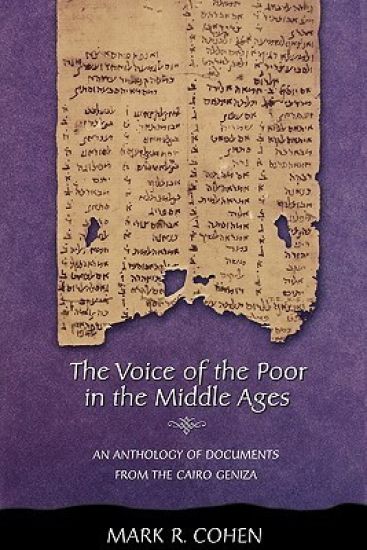
The Voice of the Poor in the Middle Ages

The Voice of the Poor in the Middle Ages

Mark R. Cohen

Princeton University Press
2005
pokkari
They are voices that have been silent for centuries: those of captives and refugees, widows and orphans, the blind and infirm, and the underclass of the "working poor." Now, for the first time, the voices of the poor in the Middle Ages come to life in this moving book by historian Mark Cohen. A companion to Cohen's other volume, Poverty and Charity in the Jewish Community of Medieval Egypt, the book presents more than ninety letters, alms lists, donor lists, and other related documents from the Geniza, a hidden chamber for discarded papers, situated inside a wall in a Cairo synagogue. Cohen has translated these documents, providing the historical context for each. In the past, most of what we knew of the poor in the Middle Ages came from records and observations compiled by their literate social superiors, from tax collectors to the inquisitor's clerk, from criminal judges to the benefactors of the helpless, from makers of Islamic waqf deeds to authors of Arabic chronicles, and in Judaism, from Rabbis who wrote responsa to compilers of Jewish-law codes. What distinguishes this book is that it contains the voices of the poor themselves, found in documents heretofore largely ignored. Because an ancient custom in Judaism prohibited the destruction of pages of sacred writing, the documents were preserved, largely unharmed, for as many as nine centuries. The Voice of the Poor in the Middle Ages provides access to the attitudes and philanthropic activities of the charitable, alongside the dramatic writings of the poor themselves, whether penned in their own hands or dictated to a scribe or family member. The book also allows a rare glimpse into the women of the Middle Ages, as well as into the world of private charity--an area long elusive to the medieval historian. For researchers and students alike, this book will be an invaluable social history source for years to come.
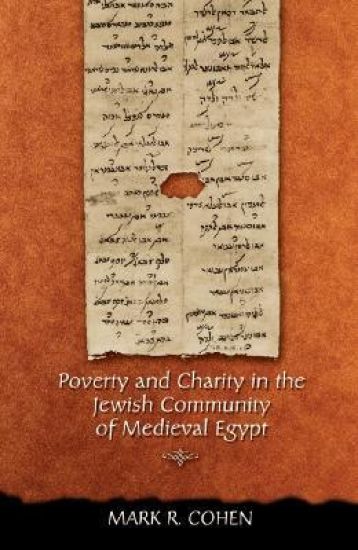
Poverty and Charity in the Jewish Community of Medieval Egypt
What was it like to be poor in the Middle Ages? In the past, the answer to this question came only from institutions and individuals who gave relief to the less fortunate. This book, by one of the top scholars in the field, is the first comprehensive book to study poverty in a premodern Jewish community--from the viewpoint of both the poor and those who provided for them. Mark Cohen mines the richest body of documents available on the matter: the papers of the Cairo Geniza. These documents, located in the Geniza, a hidden chamber for discarded papers situated in a medieval synagogue in Old Cairo, were preserved largely unharmed for more than nine centuries due to an ancient custom in Judaism that prohibited the destruction of pages of sacred writing. Based on these papers, the book provides abundant testimony about how one large and important medieval Jewish community dealt with the constant presence of poverty in its midst. Building on S. D. Goitein's Mediterranean Society and inspired also by research on poverty and charity in medieval and early modern Europe, it provides a clear window onto the daily lives of the poor. It also illuminates private charity, a subject that has long been elusive to the medieval historian. In addition, Cohen's work functions as a detailed case study of an important phenomenon in human history. Cohen concludes that the relatively narrow gap between the poor and rich, and the precariousness of wealth in general, combined to make charity "one of the major agglutinates of Jewish associational life" during the medieval period.
Under Crescent and Cross

Under Crescent and Cross

Mark R. Cohen

Princeton University Press
2008
pokkari
Did Muslims and Jews in the Middle Ages cohabit in a peaceful "interfaith utopia"? Or were Jews under Muslim rule persecuted, much as they were in Christian lands? Rejecting both polemically charged ideas as myths, Mark Cohen offers a systematic comparison of Jewish life in medieval Islam and Christendom--and the first in-depth explanation of why medieval Islamic-Jewish relations, though not utopic, were less confrontational and violent than those between Christians and Jews in the West. Under Crescent and Cross has been translated into Turkish, Hebrew, German, Arabic, French, and Spanish, and its historic message continues to be relevant across continents and time. This updated edition, which contains an important new introduction and afterword by the author, serves as a great companion to the original.
Jewish Self-Government in Medieval Egypt

Jewish Self-Government in Medieval Egypt

Mark R. Cohen

Princeton University Press
2014
pokkari
Under three successive Islamic dynasties--the Fatimids, the Ayyubids, and the Mamluks--the Egyptian Office of the Head of the Jews (also known as the Nagid) became the most powerful representative of medieval Jewish autonomy in the Islamic world. To determine the origins of this institution, Mark Cohen concentrates on the complex web of internal and external circumstances during the latter part of the eleventh century. Originally published in 1981. The Princeton Legacy Library uses the latest print-on-demand technology to again make available previously out-of-print books from the distinguished backlist of Princeton University Press. These editions preserve the original texts of these important books while presenting them in durable paperback and hardcover editions. The goal of the Princeton Legacy Library is to vastly increase access to the rich scholarly heritage found in the thousands of books published by Princeton University Press since its founding in 1905.
Jewish Self-Government in Medieval Egypt

Jewish Self-Government in Medieval Egypt

Mark R. Cohen

Princeton University Press
2016
sidottu
Under three successive Islamic dynasties--the Fatimids, the Ayyubids, and the Mamluks--the Egyptian Office of the Head of the Jews (also known as the Nagid) became the most powerful representative of medieval Jewish autonomy in the Islamic world. To determine the origins of this institution, Mark Cohen concentrates on the complex web of internal and external circumstances during the latter part of the eleventh century. Originally published in 1981. The Princeton Legacy Library uses the latest print-on-demand technology to again make available previously out-of-print books from the distinguished backlist of Princeton University Press. These editions preserve the original texts of these important books while presenting them in durable paperback and hardcover editions. The goal of the Princeton Legacy Library is to vastly increase access to the rich scholarly heritage found in the thousands of books published by Princeton University Press since its founding in 1905.
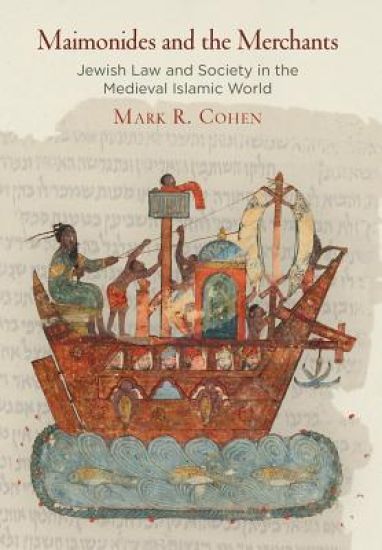
Maimonides and the Merchants

Maimonides and the Merchants

Mark R. Cohen

University of Pennsylvania Press
2017
sidottu
The advent of Islam in the seventh century brought profound economic changes to the Jews living in the Middle East, and Talmudic law, compiled in and for an agrarian society, was ill equipped to address an increasingly mercantile world. In response, and over the course of the seventh through eleventh centuries, the heads of the Jewish yeshivot of Iraq sought precedence in custom to adapt Jewish law to the new economic and social reality. In Maimonides and the Merchants, Mark R. Cohen reveals the extent of even further pragmatic revisions to the halakha, or body of Jewish law, introduced by Moses Maimonides in his Mishneh Torah, the comprehensive legal code he compiled in the late twelfth century. While Maimonides insisted that he was merely restating already established legal practice, Cohen uncovers the extensive reformulations that further inscribed commerce into Jewish law. Maimonides revised Talmudic partnership regulations, created a judicial method to enable Jewish courts to enforce forms of commercial agency unknown in the Talmud, and even modified the halakha to accommodate the new use of paper for writing business contracts. Over and again, Cohen demonstrates, the language of Talmudic rulings was altered to provide Jewish merchants arranging commercial collaborations or litigating disputes with alternatives to Islamic law and the Islamic judicial system. Thanks to the business letters, legal documents, and accounts found in the manuscript stockpile known as the Cairo Geniza, we are able to reconstruct in fine detail Jewish involvement in the marketplace practices that contemporaries called "the custom of the merchants." In Maimonides and the Merchants, Cohen has written a stunning reappraisal of how these same customs inflected Jewish law as it had been passed down through the centuries.