Kirjojen hintavertailu. Mukana 11 342 296 kirjaa ja 12 kauppaa.

Kirjahaku

Etsi kirjoja tekijän nimen, kirjan nimen tai ISBN:n perusteella.

7 kirjaa tekijältä Mark R. Wilson

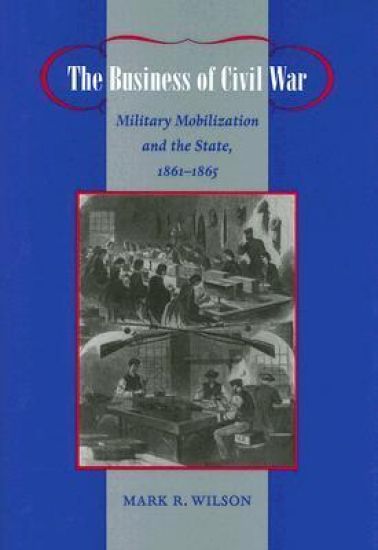
The Business of Civil War

The Business of Civil War

Mark R. Wilson

Johns Hopkins University Press
2006
sidottu
This wide-ranging, original account of the politics and economics of the giant military supply project in the North reconstructs an important but little-known part of Civil War history. Drawing on new and extensive research in army and business archives, Mark R. Wilson offers a fresh view of the wartime North and the ways in which its economy worked when the Lincoln administration, with unprecedented military effort, moved to suppress the rebellion. This task of equipping and sustaining Union forces fell to career army procurement officers. Largely free from political partisanship or any formal free-market ideology, they created a mixed military economy with a complex contracting system that they pieced together to meet the experience of civil war. Wilson argues that the North owed its victory to these professional military men and their finely tuned relationships with contractors, public officials, and war workers. Wilson also examines the obstacles military bureaucrats faced, many of which illuminated basic problems of modern political economy: the balance between efficiency and equity, the promotion of competition, and the protection of workers' welfare. The struggle over these problems determined the flow of hundreds of millions of dollars; it also redirected American political and economic development by forcing citizens to grapple with difficult questions about the proper relationships among government, business, and labor. Students of the American Civil War will welcome this fresh study of military-industrial production and procurement on the home front-long an obscure topic.
The Business of Civil War

The Business of Civil War

Mark R. Wilson

Johns Hopkins University Press
2010
pokkari
This wide-ranging, original account of the politics and economics of the giant military supply project in the North reconstructs an important but little-known part of Civil War history. Drawing on new and extensive research in army and business archives, Mark R. Wilson offers a fresh view of the wartime North and the ways in which its economy worked when the Lincoln administration, with unprecedented military effort, moved to suppress the rebellion. This task of equipping and sustaining Union forces fell to career army procurement officers. Largely free from political partisanship or any formal free-market ideology, they created a mixed military economy with a complex contracting system that they pieced together to meet the experience of civil war. Wilson argues that the North owed its victory to these professional military men and their finely tuned relationships with contractors, public officials, and war workers. Wilson also examines the obstacles military bureaucrats faced, many of which illuminated basic problems of modern political economy: the balance between efficiency and equity, the promotion of competition, and the protection of workers' welfare. The struggle over these problems determined the flow of hundreds of millions of dollars; it also redirected American political and economic development by forcing citizens to grapple with difficult questions about the proper relationships among government, business, and labor. Students of the American Civil War will welcome this fresh study of military-industrial production and procurement on the home front-long an obscure topic.
Destructive Creation

Destructive Creation

Mark R. Wilson

University of Pennsylvania Press
2018
pokkari
During World War II, the United States helped vanquish the Axis powers by converting its enormous economic capacities into military might. Producing nearly two-thirds of all the munitions used by Allied forces, American industry became what President Franklin D. Roosevelt called "the arsenal of democracy." Crucial in this effort were business leaders. Some of these captains of industry went to Washington to coordinate the mobilization, while others led their companies to churn out weapons. In this way, the private sector won the war-or so the story goes. Based on new research in business and military archives, Destructive Creation shows that the enormous mobilization effort relied not only on the capacities of private companies but also on massive public investment and robust government regulation. This public-private partnership involved plenty of government-business cooperation, but it also generated antagonism in the American business community that had lasting repercussions for American politics. Many business leaders, still engaged in political battles against the New Deal, regarded the wartime government as an overreaching regulator and a threatening rival. In response, they mounted an aggressive campaign that touted the achievements of for-profit firms while dismissing the value of public-sector contributions. This probusiness story about mobilization was a political success, not just during the war, but afterward, as it shaped reconversion policy and the transformation of the American military-industrial complex. Offering a groundbreaking account of the inner workings of the "arsenal of democracy," Destructive Creation also suggests how the struggle to define its heroes and villains has continued to shape economic and political development to the present day.
Destructive Creation

Destructive Creation

Mark R. Wilson

University of Pennsylvania Press
2016
sidottu
During World War II, the United States helped vanquish the Axis powers by converting its enormous economic capacities into military might. Producing nearly two-thirds of all the munitions used by Allied forces, American industry became what President Franklin D. Roosevelt called "the arsenal of democracy." Crucial in this effort were business leaders. Some of these captains of industry went to Washington to coordinate the mobilization, while others led their companies to churn out weapons. In this way, the private sector won the war-or so the story goes. Based on new research in business and military archives, Destructive Creation shows that the enormous mobilization effort relied not only on the capacities of private companies but also on massive public investment and robust government regulation. This public-private partnership involved plenty of government-business cooperation, but it also generated antagonism in the American business community that had lasting repercussions for American politics. Many business leaders, still engaged in political battles against the New Deal, regarded the wartime government as an overreaching regulator and a threatening rival. In response, they mounted an aggressive campaign that touted the achievements of for-profit firms while dismissing the value of public-sector contributions. This probusiness story about mobilization was a political success, not just during the war, but afterward, as it shaped reconversion policy and the transformation of the American military-industrial complex. Offering a groundbreaking account of the inner workings of the "arsenal of democracy," Destructive Creation also suggests how the struggle to define its heroes and villains has continued to shape economic and political development to the present day.
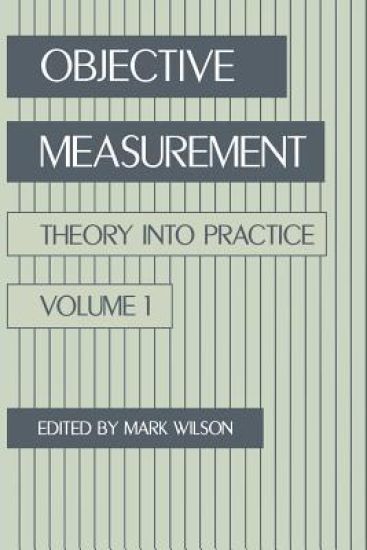
Objective Measurement

Objective Measurement

Mark R. Wilson

Praeger Publishers Inc
1992
nidottu
The measurement practice section illustrates the application of objective measurement methods to personality psychology, a sociological study of school environment, personnel management, pain research, motor performance, and curriculum development. It emphasizes practice over theory, showing how measurement practice contributes valuable perspectives on substantive theory. The measurement theory section describes the development of new measurement models that extend objective measurement into learning contexts, rank-ordered data, and multidimensional profiles composed of subtests. These are complemented by a study of the use of objective measurement to examine the construct validity of items, and an exploration of the impact of text anxiety and item order on measurements. The final section examines recent developments in mathematical programming techniques applied to test assembly, parameter estimation and generalizability theory.
Objective Measurement

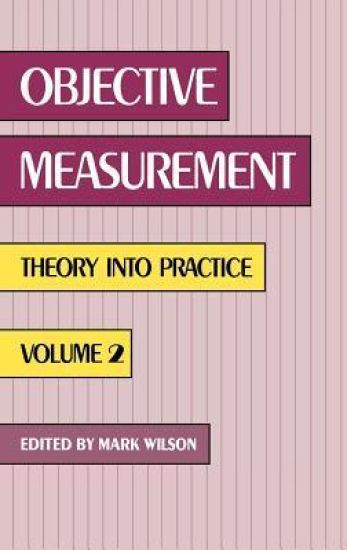
Objective Measurement

Mark R. Wilson

Praeger Publishers Inc
1994
sidottu
This is the second volume in the series that focuses on the International Objective Measurement Workshops and the work of Georg Rasch. In the area of practice, two major clusters of new work are reported in this volume: a national pilot study of computer-adaptive testing in professional licensure and applications of a type of Rasch model called the Facet Model.
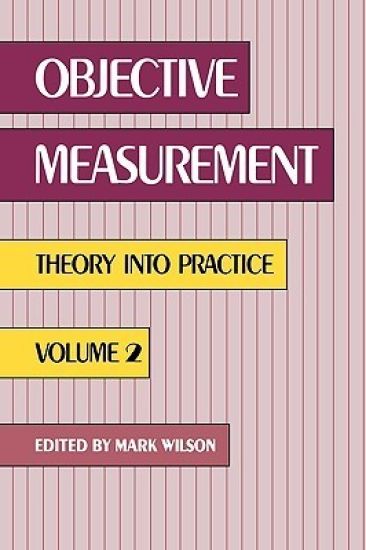
Objective Measurement

Objective Measurement

Mark R. Wilson

Praeger Publishers Inc
1994
nidottu
This is the second volume in the series that focuses on the International Objective Measurement Workshops and the work of Georg Rasch. In the area of practice, two major clusters of new work are reported in this volume: a national pilot study of computer-adaptive testing in professional licensure and applications of a type of Rasch model called the Facet Model.