Kirjojen hintavertailu. Mukana 11 244 527 kirjaa ja 12 kauppaa.

Kirjahaku

Etsi kirjoja tekijän nimen, kirjan nimen tai ISBN:n perusteella.

3 kirjaa tekijältä Mark R. Wynn

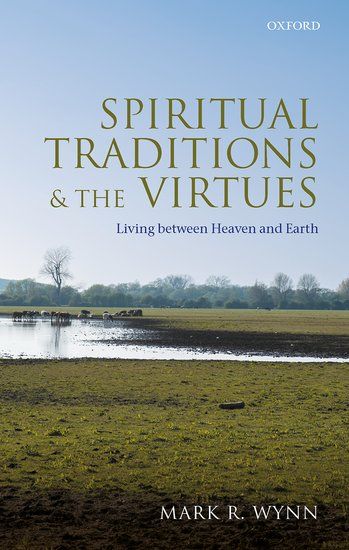
Spiritual Traditions and the Virtues

Spiritual Traditions and the Virtues

Mark R. Wynn

Oxford University Press
2020
sidottu
Spiritual Traditions and the Virtues develops a philosophical appreciation of the spiritual life. The book shows how a certain conception of spiritual good, one that is rooted in Thomas Aquinas's account of infused moral virtue, can generate a distinctive vision of human life and the possibilities for spiritual fulfilment. Wynn examines the character of the goods to which spiritual traditions are directed; the structure of such traditions, including the connection between their practical and creedal commitments; the relationship between the various vocabularies that are used to describe, from the insider's perspective, progress in the spiritual life; the significance of tradition as an epistemic category; and the question of what it takes for a spiritual tradition to be handed on from one person to another. In his account of the virtues, Aquinas shows how our relations to the everyday world can be folded into our relationship to the divine or sacred reality otherwise conceived. In this sense, he offers a vision of how it is possible to live between heaven and earth. Spiritual Traditions and the Virtues considers how that vision can be extended across the central domains of human thought and experience, and how it can deepen and diversify our understanding of what it is for a human life to be lived well.
Faith and Place

Faith and Place

Mark R. Wynn

Oxford University Press
2009
sidottu
Faith and Place takes knowledge of place as a basis for thinking about the relationship between religious belief and our embodied life. Recent epistemology of religion has appealed to various secular analogues for religious belief - especially analogues drawn from sense perception and scientific theory construction. These approaches tend to overlook the close connection between religious belief and our moral, aesthetic and otherwise engaged relationship to the material world. By taking knowledge of place as a starting point for religious epistemology, Mark Wynn aims to throw into clearer focus the embodied, action-orienting, perception-structuring, and affect-infused character of religious understanding. This innovative study understands the religious significance of a site in terms of i. its capacity to stand for some encompassing truth about human life; ii. its conservation of historical meanings, where these meanings make a practical claim upon those located at the place at later times; and iii. its directing of the believer's attention to a sacred meaning, through enacted appropriation of the site. Wynn proposes that the notion of 'God' functions like the notion of a 'genius loci', where the relevant locus is the sum of material reality. He argues that knowledge of God consists in part in a storied and sensuous appreciation of the significance of particular places.
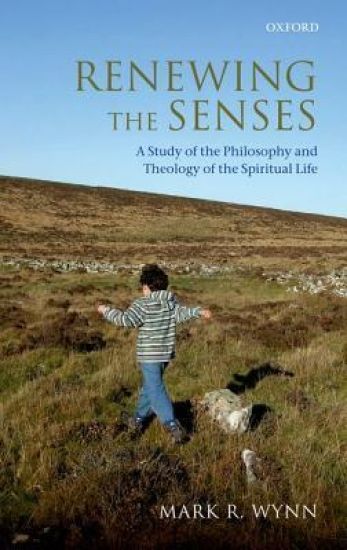
Renewing the Senses

Renewing the Senses

Mark R. Wynn

Oxford University Press
2013
sidottu
In The Republic, Plato suggests that the enlightened person will find himself disoriented on his return to the realm of the shadows. So at the very beginning of the Western philosophical tradition, there is a clear affirmation of the idea that following enlightenment, the sensory world can be differently experienced. In this book, Mark Wynn takes up this idea, but argues that 'enlightenment' or spiritual maturity may result in, and may partly consist in, not so much a state of confusion or bewilderment in our experience of sensory things, but in a renewal of the realm of the senses. On this view, the 'shadows', as they feature in the seer's experience, can bear the imprint of religious thoughts and attitudes, and it is therefore possible to be occupied with religious thoughts even as we engage with the realm of sensory things. And if that is so, then one standard objection to Christian, and in general broadly Platonic, conceptions of the spiritual life will have been removed: attending to the realm of religious truth need not after all imply any neglect of the world of sensory forms; and it may even be that it is in our encounter with the realm of sensory forms that certain religious insights are presented to us most vividly.