Kirjojen hintavertailu. Mukana 11 627 220 kirjaa ja 12 kauppaa.

Kirjahaku

Etsi kirjoja tekijän nimen, kirjan nimen tai ISBN:n perusteella.

15 kirjaa tekijältä Mark Richard

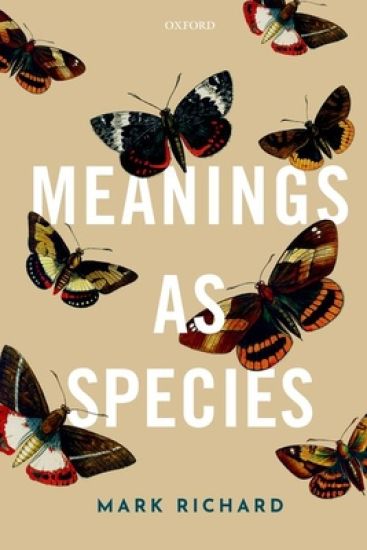
Meanings as Species

Meanings as Species

Mark Richard

Oxford University Press
2021
nidottu
Mark Richard presents an original picture of meaning according to which a word's meaning is analogous to the biological lineages we call species. His primary thesis is that a word's meaning - in the sense of what one needs to track in order to be a competent speaker - is the collection of assumptions its users make in using it and expect their hearers to recognize as being made. Meaning is something that is spread across a population, inherited by each new generation of speakers from the last, and typically evolving in so far as what constitutes a meaning changes in virtue of the interactions of speakers with their (linguistic and social) environment. Meanings as Species develops and defends the analogy between the biological and the linguistic, and includes a discussion of the senses in which the processes of meaning change are and are not like evolution via natural selection. Richard argues that thinking of meanings as species supports Quine's insights about analyticity without rendering talk about meaning theoretically useless. He also discusses the relations between meaning as what the competent speaker knows about her language, meaning as the determinant of reference and truth conditions, and meaning qua what determines what sentence uses say. This book contains insightful discussions of a wide range of topics in the philosophy of language, including: relations between meaning and philosophical analysis, the project of 'conceptual engineering', the senses in which meaning is and is not compositional, the degree to which to which referential meaning is indeterminate, and what such indeterminacy might tells us about propositional attitudes like belief and assertion.
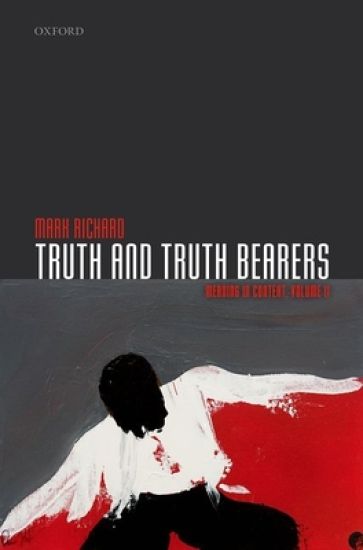
Truth and Truth Bearers

Truth and Truth Bearers

Mark Richard

Oxford University Press
2015
sidottu
This book collects nine seminal essays by Mark Richard published between 1980 and 2014, alongside four new essays and an introduction that puts the essays in context. Each essay is an attempt, in one way or another, to understand the idea of a proposition. Part I discusses whether the objects of thought and assertion can change truth value over time. Part II develops and defends a relativist view of the objects of assertion and thought; it includes discussions of the nature of disagreement, moral relativism, and responds to important objections to relativism. It also explores the idea that thoughts and assertions may be neither true nor false. Part III discusses issues having to do with relations between sentential and propositional structure. Among the topics discussed in Part III are the semantics of quotation, 'mixed quotation', opacity, philosophical analysis and propositional structure, and the semantics of demonstratives and clausal complements.
Meanings as Species

Meanings as Species

Mark Richard

Oxford University Press
2019
sidottu
Mark Richard presents an original picture of meaning according to which a word's meaning is analogous to the biological lineages we call species. His primary thesis is that a word's meaning - in the sense of what one needs to track in order to be a competent speaker - is the collection of assumptions its users make in using it and expect their hearers to recognize as being made. Meaning is something that is spread across a population, inherited by each new generation of speakers from the last, and typically evolving in so far as what constitutes a meaning changes in virtue of the interactions of speakers with their (linguistic and social) environment. Meanings as Species develops and defends the analogy between the biological and the linguistic, and includes a discussion of the senses in which the processes of meaning change are and are not like evolution via natural selection. Richard argues that thinking of meanings as species supports Quine's insights about analyticity without rendering talk about meaning theoretically useless. He also discusses the relations between meaning as what the competent speaker knows about her language, meaning as the determinant of reference and truth conditions, and meaning qua what determines what sentence uses say. This book contains insightful discussions of a wide range of topics in the philosophy of language, including: relations between meaning and philosophical analysis, the project of 'conceptual engineering', the senses in which meaning is and is not compositional, the degree to which to which referential meaning is indeterminate, and what such indeterminacy might tells us about propositional attitudes like belief and assertion.
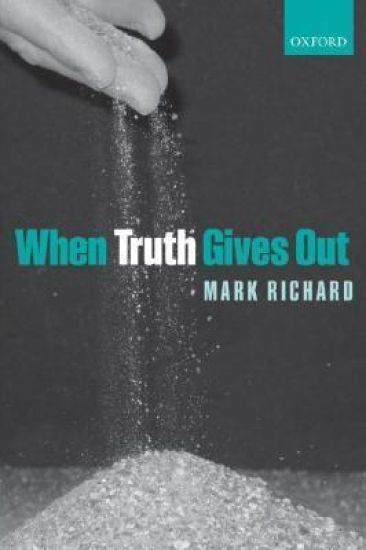
When Truth Gives Out

When Truth Gives Out

Mark Richard

Oxford University Press
2008
sidottu
Is the point of belief and assertion invariably to think or say something true? Is the truth of a belief or assertion absolute, or is it only relative to human interests? Most philosophers think it incoherent to profess to believe something but not think it true, or to say that some of the things we believe are only relatively true. Common sense disagrees. It sees many opinions, such as those about matters of taste, as neither true nor false; it takes it as obvious that some of the truth is relative. Mark Richard's accessible book argues that when it comes to truth, common sense is right, philosophical orthodoxy wrong. The first half of the book examines connections between the performative aspects of talk (what we do when we speak), our emotions and evaluations, and the conditions under which talk and thought qualifies as true or false. It argues that the performative and expressive sometimes trump the semantic, making truth and falsity the wrong dimension of evaluation for belief or assertion. Among the topics taken up are: racial slurs and other epithets; relations between logic and truth; the status of moral and ethical talk; vagueness and the liar paradox. The book's second half defends the idea that much of everyday thought and talk is only relatively true or false. Truth is inevitably relative, given that we cannot work out in advance how our concepts will apply to the world. Richard explains what it is for truth to be relative, rebuts standard objections to relativism, and argues that relativism is consistent with the idea that one view can be objectively better than another. The book concludes with an account of matters of taste and of how it is possible for divergent views of such matters to be equally valid, even if not true or false. When Truth Gives Out will be of interest not only to philosophers who work on language, ethics, knowledge, or logic, but to any thoughtful person who has wondered what it is, or isn't, for something to be true.
Context and the Attitudes

Context and the Attitudes

Mark Richard

Oxford University Press
2015
nidottu
Context and the Attitudes collects thirteen seminal essays by Mark Richard on semantics and propositional attitudes. These essays develop a nuanced account of the semantics and pragmatics of our talk about such attitudes, an account on which in saying what someone thinks, we offer our words as a 'translation' or representation of the way the target of our talk represents the world. A broad range of topics in philosophical semantics and the philosophy of mind are discussed in detail, including: contextual sensitivity; pretense and semantics; negative existentials; fictional discourse; the nature of quantification; the role of Fregean sense in semantics; 'direct reference' semantics; de re belief and the contingent a priori; belief de se; intensional transitives; the cognitive role of tense; and the prospects for giving a semantics for the attitudes without recourse to properties or possible worlds. Richard's extensive, newly written introduction gives an overview of the essays. The introduction also discusses attitudes realized by dispositions and other non-linguistic cognitive structures, as well as the debate between those who think that mental and linguistic content is structured like the sentences that express it, and those who see content as essentially unstructured.
Context and the Attitudes

Context and the Attitudes

Mark Richard

Oxford University Press
2013
sidottu
Context and the Attitudes collects thirteen seminal essays by Mark Richard on semantics and propositional attitudes. These essays develop a nuanced account of the semantics and pragmatics of our talk about such attitudes, an account on which in saying what someone thinks, we offer our words as a 'translation' or representation of the way the target of our talk represents the world. A broad range of topics in philosophical semantics and the philosophy of mind are discussed in detail, including: contextual sensitivity; pretense and semantics; negative existentials; fictional discourse; the nature of quantification; the role of Fregean sense in semantics; 'direct reference' semantics; de re belief and the contingent a priori; belief de se; intensional transitives; the cognitive role of tense; and the prospects for giving a semantics for the attitudes without recourse to properties or possible worlds. Richard's extensive, newly written introduction gives an overview of the essays. The introduction also discusses attitudes realized by dispositions and other non-linguistic cognitive structures, as well as the debate between those who think that mental and linguistic content is structured like the sentences that express it, and those who see content as essentially unstructured.
When Truth Gives Out

When Truth Gives Out

Mark Richard

Oxford University Press
2010
nidottu
Is the point of belief and assertion invariably to think or say something true? Is the truth of a belief or assertion absolute, or is it only relative to human interests? Most philosophers think it incoherent to profess to believe something but not think it true, or to say that some of the things we believe are only relatively true. Common sense disagrees. It sees many opinions, such as those about matters of taste, as neither true nor false; it takes it as obvious that some of the truth is relative. Mark Richard's accessible book argues that when it comes to truth, common sense is right, philosophical orthodoxy wrong. The first half of the book examines connections between the performative aspects of talk (what we do when we speak), our emotions and evaluations, and the conditions under which talk and thought qualifies as true or false. It argues that the performative and expressive sometimes trump the semantic, making truth and falsity the wrong dimension of evaluation for belief or assertion. Among the topics taken up are: racial slurs and other epithets; relations between logic and truth; the status of moral and ethical talk; vagueness and the liar paradox. The book's second half defends the idea that much of everyday thought and talk is only relatively true or false. Truth is inevitably relative, given that we cannot work out in advance how our concepts will apply to the world. Richard explains what it is for truth to be relative, rebuts standard objections to relativism, and argues that relativism is consistent with the idea that one view can be objectively better than another. The book concludes with an account of matters of taste and of how it is possible for divergent views of such matters to be equally valid, even if not true or false. When Truth Gives Out will be of interest not only to philosophers who work on language, ethics, knowledge, or logic, but to any thoughtful person who has wondered what it is, or isn't, for something to be true.
Fishboy

Fishboy

Mark Richard

Bantam Doubleday Dell Publishing Group
1994
pokkari
In the brilliant idiom of a modern Melville or Conrad, an odyssey of discovery by a bold and outrageous talent--the PEN/Hemingway Award--winning author of The Ice At The Bottom Of The World.
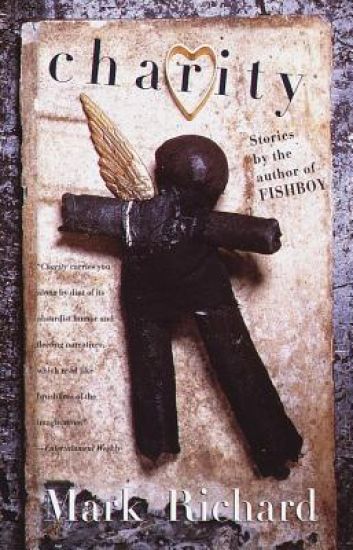
Charity

Charity

Mark Richard

Anchor Books
1999
nidottu
With Charity, Mark Richard again secures the distinction of poet laureate of the orphaned poor, the broken, the deceived, and the unrelieved. In stylistic brilliance, he renders their conditions with grace and compassion, and redeems and transports their tragedy with wicked humor.In the much-anthologized "The Birds for Christmas," two hospitalized boys beg a night nurse to let them watch Hitchcock's classic thriller film on television, believing it will relieve their Yuletide loneliness. "Gentleman's Agreement" is a classic father-son story of fear and the violence of love. In "Memorial Day," a bayou boy learns the lessons of living from Death himself, a fortune cookie-eating phantom who claims to be "a people person." From charity ward to outrageous beach bungalow, Richard visits the overlooked corners of America, making them unforgettably visible.Richard has been rightly compared to Faulkner for his language and to Flannery O'Connor for his stark moral vision, but his force and sensibility remain his own. Charity is a powerful reading experience, a true accomplishment in an already stunning literary career. "Richard's original voices invite you into a world that's both sad and surreal, and always worth the stay."--Kirkus, starred review"Indisputably a master of words...."--Publishers Weekly"There are few writers today whose use of language is as sure, whose dialogue is as quirky, funny and true as Mark Richard's."--The Wall Street Journal"A book of memorable language and moral power. Mark Richard sees far into the hearts of the lost and voiceless people who seem to be everywhere among us, awaiting recognition."--Tom McGuane"You feel a wonderful physical mind in the work of Mark Richard...I love his work."--Barry Hannah
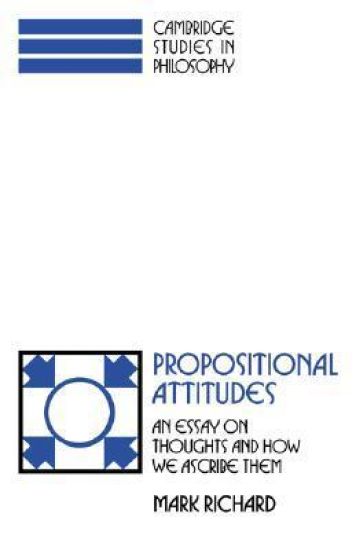
Propositional Attitudes

Propositional Attitudes

Mark Richard

Cambridge University Press
1990
pokkari
This book makes a stimulating contribution to the philosophy of language and philosophy of mind. It begins with a spirited defence of the view that propositions are structured and that propositional structure is ‘psychologically real’. The author then develops a subtle view of propositions and attitude ascription. The view is worked out in detail with attention to such topics as the semantics of conversations, iterated attitude ascriptions, and the role of propositions as bearers of truth. Along the way important issues in the philosophy of mind are addressed. Though intended primarily for professional philosophers and graduate students the book will also interest cognitive scientists and linguists.
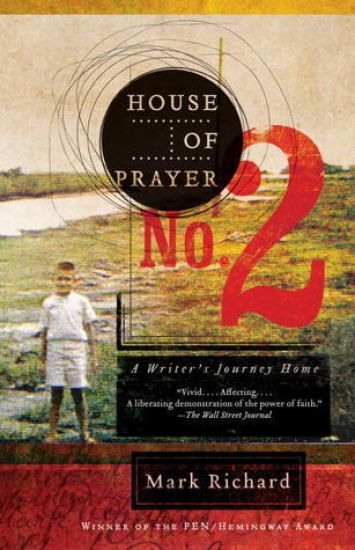
House of Prayer No. 2: A Writer's Journey Home
Crippled by deformed hips as a child, Mark Richard was told he would spend his adult life in a wheelchair. The son of an unpredictable, violent father and a mother who sought inner peace through scripture, Richard spent his bedridden childhood in the company of books. As a young man, he set out to experience as much of the world as possible before his hips failed him. He spent years doing odd jobs and getting into trouble, grappling throughout with his faith and his calling, before winning a national fiction contest and launching an extraordinary writing career. In this irresistible blend of history, travelogue, and personal reflection, Richard draws a remarkable portrait of a writer's struggle with his faith, the evolution of his art, and the recognition of one's singularity in the face of painful disability.
Conciliar el Sueño Profundo: El arte de dormir y levantarse
En 1965, un alumno de secundaria, Randy Gardner, de 17 a os permaneci despierto durante 264 horas. Pas 11 d as para saber c mo iba a reaccionar al mantenerse despierto. En el segundo d a, su concentraci n visual disminuy . Posteriormente perdi la capacidad de identificar objetos a trav s del tacto. En el tercer d a, Gardner se volvi agresivo y desorientado. Al final del experimento, tuvo dificultades para concentrarse, problemas con la memoria a corto plazo, era paranoico y ten a alucinaciones. Aunque Gardner se ha recuperado sin alg n da o psicol gico o f sico permanente, para otros, el insomnio puede generar un desequilibrio hormonal, enfermedades, y en casos extremos, incluso la muerte. Estamos empezando a entender por qu necesitamos dormir, pero ya sabemos que es vital. Los adultos necesitan de siete a ocho horas de sue o por la noche, los adolescentes, cerca de 10 horas. Nos hace falta dormir cuando el cuerpo env a la informaci n de que estamos cansados al cerebro, mientras que el entorno se ala que ya es de noche. El aumento de productos qu micos que inducen el sue o, como la adenosina y la melatonina, nos ayuda tener un sue o ligero que se hace m s profundo mientras que la respiraci n y el ritmo card aco se ralentizan y los m sculos se relajan. El ADN se repara durante la etapa no-REM de este sue o y el cuerpo recupera su energ a para el d a siguiente. En EE.UU. se estima que el 30 % de los adultos y el 66 % de los adolescentes sufren regularmente de insomnio y esto no es un hecho de poca importancia. Permanecer despierto puede causar graves da os corporales. Cuando dormimos poco, el aprendizaje, la memoria, el estado de nimo y el tiempo de reacci n se ven afectados. La falta de sue o tambi n puede causar inflamaci n, alucinaciones, el aumento de la presi n arterial e incluso est vinculada a la diabetes y la obesidad. En 2014, un aficionado al f tbol muri tras permanecer despierto durante 48 horas para asistir a la Copa del Mundo. Aunque la causa de su muerte prematura fue un ataque al coraz n los estudios indican que dormir menos de seis horas cada noche aumenta cuatro veces y medio el riesgo de un accidente cerebrovascular en comparaci n con los que duermen generalmente de siete a ocho horas. Para algunas personas que han heredado una rara mutaci n gen tica la falta de sue o es una realidad cotidiana. Esta condici n, llamada el insomnio familiar fatal, mantiene el cuerpo en un estado angustiante de vigilia que le impide experimentar el sue o tranquilo. En el transcurso de meses o a os, el estado de la enfermedad puede agravarse y llevar a la demencia o la muerte. C mo puede el insomnio causar tanto sufrimiento? Los cient ficos creen que la respuesta es la acumulaci n de desechos qu micos en el cerebro. Cuando estamos despiertos, la c lulas consumen las fuentes de energ a disponibles que se descomponen en varios productos, incluyendo la adenosina. Con la acumulaci n de la adenosina, aumenta la necesidad de dormir conocida como la presi n para dormir. De hecho, la cafe na act a bloqueando las v as de los receptores de adenosina. En el cerebro se generan otros residuos qu micos tambi n que, al no eliminarse, sobrecargan el cerebro y son aparentemente la causa de los s ntomas negativos del insomnio. Entonces, qu sucede en el cerebro cuando dormimos para evitar que esto suceda? Los cient ficos han descubierto el llamado sistema glinf tico, es decir, un mecanismo de limpieza que elimina la acumulaci n de productos de desecho y que eso es mucho m s activo cuando dormimos. A trav s del l quido cefalorraqu deo, el sistema drena las sustancias t xicas que han acumulado entre las c lulas. Vasos linf ticos que sirven de ruta de acceso a las c lulas inmunes han sido descubiertos recientemente en el cerebro y ellos tambi n ayudan a limpiar el cerebro de estos desechos diarios.