Kirjojen hintavertailu. Mukana 11 238 995 kirjaa ja 12 kauppaa.

Kirjahaku

Etsi kirjoja tekijän nimen, kirjan nimen tai ISBN:n perusteella.

9 kirjaa tekijältä Mark Rowe

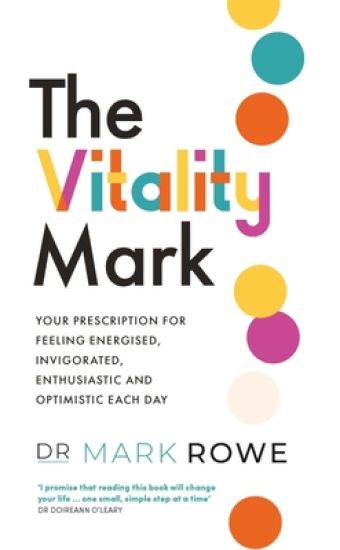
The Vitality Mark

The Vitality Mark

Mark Rowe

Gill Books
2022
nidottu
We all know the basic vital signs that indicate being alive, but true vitality means really feeling alive: feeling energised, invigorated, enthusiastic and optimistic every day. Through his work as a lifestyle-medicine practitioner, Dr Mark Rowe has come to see how the physical, mental, emotional and spiritual aspects of our wellbeing all impact on our health and our ability to stay well. Getting all these elements working in an interconnected, synergistic way forms the essence of vitality, or ‘the VitalityMark’ as Dr Rowe has come to define it. The Vitality Mark helps you to identify the gaps in your wellbeing and offers a programme to make small, sustainable improvements that will increase your vitality over time and put the bounce back in your step. ‘I promise that reading this book will change your life … one small, simple step at a time.’ Dr. Doireann O’Leary ‘Dr. Rowe’s book comes to help save the day, save your life and, most importantly, add life to your years as well as your days.’ Dr. Beth Frates, Harvard Medical School
Don't Panic

Don't Panic

Mark Rowe

The History Press Ltd
2010
nidottu
Between May and October 1940, following Hitler’s invasion of western Europe and the evacuation of the Expeditionary Force from Dunkirk, it was feared that the Germans would invade Britain. Over a million men volunteered for the Home Guard, beaches were covered with barbed wire, and pillboxes were scattered across the countryside. But even amid this frenzy of preparation, many Britons were indifferent to the perceived threat. In Don’t Panic, Mark Rowe presents the definitive account of Britain’s ‘finest hour’. Using diaries, official documents and many previously unpublished photographs, he recounts the history of the invasion that never was, including how Churchill interfered with the defence of Whitehall, the many false alarms such as the ‘Battle of Bewdley’, and the general who boasted his orders were ‘grandiloquent b*ll*cks’. Moreover, it shows how the people of Britain sought to defend their island against a truly formidable enemy, and how their preparations arguably prevented the invasion from ever taking place.
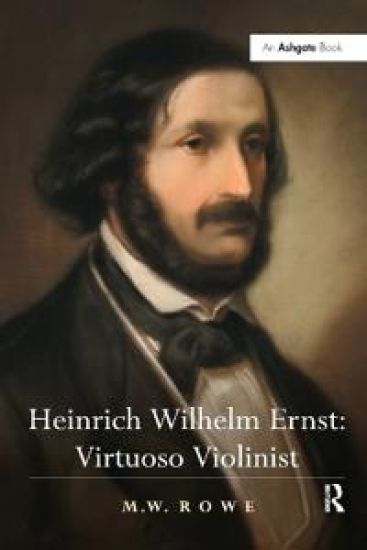
Heinrich Wilhelm Ernst: Virtuoso Violinist

Heinrich Wilhelm Ernst: Virtuoso Violinist

Mark Rowe

Ashgate Publishing Limited
2008
sidottu
From 1840-57, Heinrich Ernst was one of the most famous and significant European musicians, and performed on stage, often many times, with Berlioz, Mendelssohn, Chopin, Liszt, Wagner, Alkan, Clara Schumann, and Joachim. It is a sign of his importance that, in 1863, Brahms gave two public performances in Vienna of his own and Ernst's music to raise money for the now mortally ill violinist. Berlioz described Ernst as 'one of the artists whom I love the most, and with whose talent I am most sympathetique', while Joachim was in no doubt that Ernst was 'the greatest violinist I ever heard; he towered above the others'. Many felt that he surpassed the expressive and technical achievements of Paganini, but Ernst, unlike his great predecessor, was also a tireless champion of public chamber music, and did more than any other early nineteenth-century violinist to make Beethoven's late quartets widely known and appreciated. Ernst was not only a great virtuoso but also an accomplished composer. He wrote two of the most popular pieces of the nineteenth century - the Elegy and the Carnival of Venice - and he is best known today for two solo pieces which represent the ne plus ultra of technical difficulty: the transcription of Schubert's Erlking, and the sixth of his Polyphonic Studies, the variations on The Last Rose of Summer. Perhaps he made his greatest contribution to music through his influence on Liszt's outstanding masterpiece, the B minor piano sonata. In 1849, Liszt conducted Ernst playing his own Concerto Pathétique, a substantial single-movement work, in altered sonata form, using thematic transformation. Soon after this performance, Liszt wrote his Grosses Konzertsolo (1849-50), his first extended single-movement work, using altered sonata form, and thematic transformation. This is now universally acknowledged to be the immediate forerunner of the sonata, which refines and develops all these techniques. Liszt made his debt clear when, three years after completi
Heinrich Wilhelm Ernst: Virtuoso Violinist
From 1840-57, Heinrich Ernst was one of the most famous and significant European musicians, and performed on stage, often many times, with Berlioz, Mendelssohn, Chopin, Liszt, Wagner, Alkan, Clara Schumann, and Joachim. It is a sign of his importance that, in 1863, Brahms gave two public performances in Vienna of his own and Ernst's music to raise money for the now mortally ill violinist. Berlioz described Ernst as 'one of the artists whom I love the most, and with whose talent I am most sympathetique', while Joachim was in no doubt that Ernst was 'the greatest violinist I ever heard; he towered above the others'. Many felt that he surpassed the expressive and technical achievements of Paganini, but Ernst, unlike his great predecessor, was also a tireless champion of public chamber music, and did more than any other early nineteenth-century violinist to make Beethoven's late quartets widely known and appreciated. Ernst was not only a great virtuoso but also an accomplished composer. He wrote two of the most popular pieces of the nineteenth century - the Elegy and the Carnival of Venice - and he is best known today for two solo pieces which represent the ne plus ultra of technical difficulty: the transcription of Schubert's Erlking, and the sixth of his Polyphonic Studies, the variations on The Last Rose of Summer. Perhaps he made his greatest contribution to music through his influence on Liszt's outstanding masterpiece, the B minor piano sonata. In 1849, Liszt conducted Ernst playing his own Concerto Pathétique, a substantial single-movement work, in altered sonata form, using thematic transformation. Soon after this performance, Liszt wrote his Grosses Konzertsolo (1849-50), his first extended single-movement work, using altered sonata form, and thematic transformation. This is now universally acknowledged to be the immediate forerunner of the sonata, which refines and develops all these techniques. Liszt made his debt clear when, three years after completi
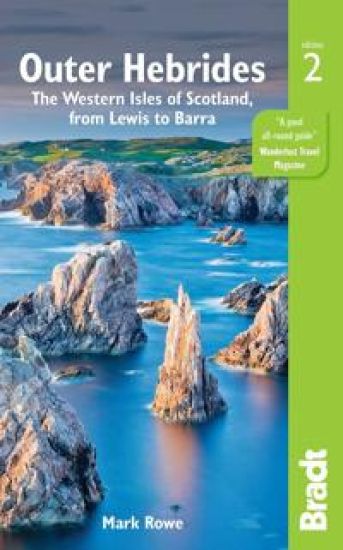
Outer Hebrides

Outer Hebrides

Mark Rowe

Bradt Travel Guides
2020
nidottu
This new, thoroughly updated second edition of Bradt's Outer Hebrides: The Western Isles of Scotland, from Lewis to Barra by experienced writer and journalist Mark Rowe is the only full-size guide to focus solely on the islands of Lewis, Harris, St Kilda, Berneray, North Uist, Benbecula, South Uist, Eriskay, Barra and Vatersay. Masses of background information is included, from geography and geology to art and architecture, with significant coverage of wildlife, too, as well as all the practical details you could need: when to visit, suggested itineraries, public holidays and festivals, local culture, plus accommodation and where to eat and drink. Walkers, birdwatchers, wildlife photographers, beach lovers and genealogists are all catered for, and this is an ideal guide for those who travel simply with curious minds to discover far-flung places of great cultural, historical and wildlife interest. The Outer Hebrides is an archipelago of 14 inhabited islands and more than 50 others that are free of human footprint. Huge variations in landscape are found across the islands, from Lewisian gneiss, which dates back almost three billion years, to rugged Harris with its magnificent sands running down its western flanks and the windswept, undulating flatness and jagged sea lochs of the Uists. This is a land where Gaelic is increasingly spoken and ancient monuments abound, where stunning seabird colonies and birds of prey can be watched, and where the grassy coastal zones known as the machair are transformed into glorious carpets of wildflowers in late spring and summer. Whether visiting the Standing Stones of Callanish, the Uig peninsula, Barra's Castlebay, or historic St Kilda, or if you just want to experience the romance of the Sound of Harris, one of the most beautiful ferry journeys in the world, Bradt's Outer Hebrides: The Western Isles of Scotland, from Lewis to Barra has all the information you need.
Things Your Future Self Will Thank You For
As a family doctor, Dr Mark Rowe has seen first-hand the impact of investing in your future self with simple, small changes to your daily routine that leverage the science of habits for lasting results. Take a sauna – it could improve your metabolism and your pain threshold. Drink great coffee – it can lower your risk of heart disease and stroke. Make time for awe – it releases positive hormones. In this inspiring and practical book, Mark reveals the most important things we can do today to improve our lives tomorrow, with benefits that are so impressive you’ll want to get started straightaway. Become the CEO of your own health. Your future self starts today.
Orkney

Orkney

Mark Rowe

BRADT TRAVEL GUIDES
2024
nidottu
This thoroughly updated second edition of Bradt's guidebook to the alluring Scottish archipelago of Orkney is written by experienced author and journalist Mark Rowe, who is something of a specialist on the more remote parts of Scotland. Bradt's guidebook combines all the practical details a traveller could need (when to visit, suggested itineraries, local culture, accommodation, and where to eat and drink) together with insightful background that ranges from geography and geology to architecture and archaeology, plus significant coverage of wildlife. Comprising 70 islands, of which just 19 are inhabited, Orkney is extraordinary. The World Heritage Site of Neolithic Orkney harbours many archaeological treasures, including Skara Brae, the most important Stone-Age village in northern Europe, and Maeshowe chambered tomb, whose entrance is aligned with the setting sun on the winter solstice. Here you'll also find the Old Man of Hoy, a spectacular 140m-high sea stack; Scapa Flow, scene of the dramatic scuttling of the German fleet in 1919; and dramatic nature reserves with cliffs upon which one in six UK seabirds nests. The deeper you delve - made easy with Bradt's Orkney - the more you uncover. Foodies will be delighted by an astonishing number of local food outlets and family producers, some going back more than 100 years. Discover Scotland's first carbon-neutral island (or that's the plan!), the island whose past may have included sky burials, and the world's shortest scheduled commercial flight (just 60 seconds!). Or why not attend one of the world's leading science festivals or Scotland's sole wine festival? New for this edition are additional mapped walks; greater detail on history; expanded coverage of archaeological developments, the outer isles, new or enhanced visitor attractions including croft tours - all in the UK's top destination for cruise ships and an increasingly popular location for family staycations. With much to enchant archaeology enthusiasts, walkers, cyclists, wildlife watchers, beach lovers and genealogists, Bradt's Orkney is the ideal guide for those who travel with curious minds to discover far-flung places of great cultural, historical and wildlife interest.
Life After Nuclear War

Life After Nuclear War

Mark Rowe

Helion Company
2020
nidottu
The twin atomic bombs that savaged Hiroshima and Nagasaki showed a horrified world what a Third World War might look like; its survivors even included British prisoners of war. Philosophers and politicians sought to come to terms with the new weaponry. As the Cold War began, and especially the Korean War in 1950, the UK set up the Civil Defence Corps, mainly of volunteers, much like Air Raid Precautions of the 1939-45 war. At local, regional, and national level, exercises to test preparedness for nuclear war required planners to imagine how war would come, and what bombing would look like. Exercises affected not only the obvious departments of government – police and fire services, and hospitals – but everyone; the railways, mines, retail and agriculture. The authorities faced dilemmas, beyond how much to tell the people, who in the main did not want to face another war, as the persistent trouble in recruiting and retaining civil defence volunteers showed. Should the official advice be, as in September 1939, to evacuate women and children from cities and towns most at risk of bombing? Or was it safer to stay put? A change from Hiroshima-strength atom bombs to megaton bombs in the later 1950s made for profound and sinister changes in civil defence. Hiroshima-style attacks were on a par with the very worst non-nuclear bombing of 1939-45, containable by Civil Defence; whereas a megaton bomb would wipe out housing and create fires for miles around, and spread radiation across the country. Farmland and cattle could be contaminated; making evacuation pointless, even harmful. How feasible was it for the authorities to send people by bus from lethally radioactive areas to less radioactive places? And if millions would survive, as the authorities assured the public, what would they eat? Life After Nuclear War is a blood-chilling, detailed reconstruction of official planning by the British authorities in the event of a nuclear war in Great Britain: a story revealing details of what officials thought would happen, and what the days, weeks, months and the years ‘after’ would look like, and how the Civil Defence Corps was planning for the ‘unthinkable’.
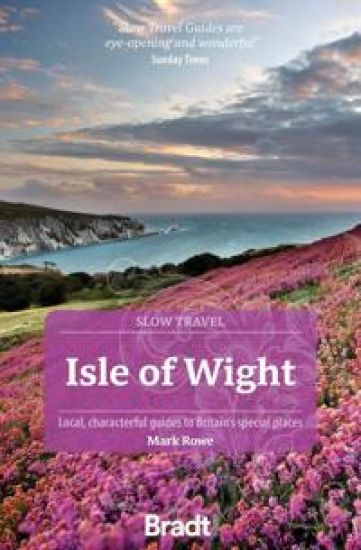
Bradt Slow Travel Guide: Isle of Wight

Bradt Slow Travel Guide: Isle of Wight

Mark Rowe

BRADT TRAVEL GUIDES
2026
nidottu
Part of Bradt's distinctive, award-winning series of 'Slow' travel guides to UK regions, the new, thoroughly updated second edition of Isle of Wight (Slow Travel) remains by far the longest and most detailed guidebook to this charming English island. Written by expert travel journalist Mark Rowe, who has visited the island over 30 times since childhood, it is the perfect companion to help you get the most out of your visit, replete with not just all the practical information you could need, but also all the intimate detail, anecdote and insider tips to make time spent there deeply rewarding. The Isle of Wight is an island that is astonishingly ? and unexpectedly ? rich in wildlife, natural beauty, history, archaeology, classy museums and Victoriana. This is all the more remarkable for it being so close to the densely populated southern edges of England. Covering just 25 miles by 13 miles, no other equivalent-sized area of Britain boasts such a variety of landscapes (downland, estuaries, hills, saltmarshes, meadows, riverine, beach) or such an intense concentration of food producers (50+ independents). Here there is a real island culture, a creative spirit that favours the independent and idiosyncratic. There is urban fascination too: Cowes is famous for its sailing jamboree, but is also packed with interest from narrow, medieval streets to local one-of-a-kind shops. Bradt's Isle of Wight encompasses the island's strong associations with British royalty ? from Queen Victoria's final home to the castle where Charles I was imprisoned ? and architectural history, including 15th-century manor houses. It also covers quirks, curiosities and attractions, including Jimi Hendrix's unusual love affair with the island, a day in the life of a ferry master, World War II history, the annual walk at low tide to look for marine creatures underneath Ryde's grand Victorian pier, award-winning wines and more dinosaur fossil-rich beaches than anywhere else in Britain! Twenty maps will help you navigate from one point of interest to another, take walks and enjoy cycle rides. Indeed, whatever your interest, Bradt's Isle of Wight (Slow Travel) will help you to plan and enjoy a visit to remember. AUTHOR: Mark Rowe is a wildlife and outdoors journalist with 20+ years' experience who has explored the Isle of Wight more than 30 times ? first as a teenager, then as a walker and birdwatcher, and now as a parent. He knows Wight inside out, taking delight in the quirky and unusual side of island life, which is very much part of the visitor's experience. Using his eye for detail, he feels strongly that the Isle of Wight has a great deal to offer a wide range of visitors interested in food, wildlife, stunning coastal landscapes and much more besides. He considers that this book celebrating slow travel on the sheltered climes of an island off the south coast of England is a reward for good behaviour and the many winters endured researching Bradt's guides to the Outer Hebrides and Orkney.