Kirjojen hintavertailu. Mukana 11 244 527 kirjaa ja 12 kauppaa.

Kirjahaku

Etsi kirjoja tekijän nimen, kirjan nimen tai ISBN:n perusteella.

423 kirjaa tekijältä Mark Twain

Mark Twain Audio CD Collection
"The reports of my death are greatly exaggerated." -- Mark TwainMark Twain (1835-1910) was the first American writer to capture the unique and colorful vernacular of his country's populace. Instead of striving to perfect any particular literary form, Twain strove to precisely imprint on paper the colloquial speech, mannerisms and experiences of the American people.Twain's books earned him an enduring reputation as a satirist and humorist, but he also wrote great short stories. These stories, with their wonderful characters and witty turns-of-phrase, have defined in Americans' minds what it means to have been at a time in our country which was at once optimistic, exploratory and recklessly exploitative.Listeners can still benefit today from hearing Mark Twain's stories and selections from his novels as they become again what they originally were: the oral history of our uniquely American consciousness.Includes selections from Life on the Mississippi, The Adventures of Huckleberry Finn, Roughing It, and The Autobiography of Mark Twain, and the short stories The Notorious Jumping Frog of Calaveras County, The 1,000,000 Bank-Note, The Joke That Made Ed's Fortune, A Dog's Tale, A Story Without an End and many more.Performed by Ed Begley, Sr., Walter Brennan, Brandon de Wilde, Will Geer, and David Wayne
Great Short Works Of Mark Twain

Great Short Works Of Mark Twain

Mark Twain

HARPERCOLLINS PUBLISHERS INC
2004
nidottu
Selected short works of humor and criticism by a revered American masterBeloved by millions, Mark Twain is the quintessential American writer. More than anyone else, his blend of skepticism, caustic wit and sharp prose defines a certain American mythos. While his novel The Adventures of Huckleberry Finn is still taught to nearly everyone who attends school and is considered by many to be the Great American Novel, Twain's shorter stories and criticisms have unequalled style and bite.In a review that's less than kind to the writing of James Fenimore Cooper, Twain writes: "Every time a Cooper person is in peril, and absolute silence is worth four dollars a minute, he is sure to step on a dry twig. There may be a hundred handier things to step on, but that wouldn't satisfy Cooper. Cooper requires him to turn out and find a dry twig; and if he can't do it, go and borrow one." It's difficult to imagine anyone else writing in quite this style, though many have tried, which is why Twain's legacy only continues to grow.The collection includes 20 works, including: Old Times on the MississippiThe Mysterious StrangerThe Man That Corrupted HadleyburgThe Jumping FrogJim Baker's Bluejay YarnA True StoryLetter to the EarthThe War Prayer
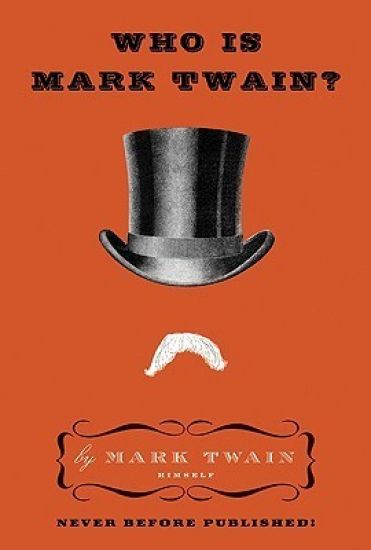
Who Is Mark Twain?

Who Is Mark Twain?

Mark Twain

HarperCollins
2009
muu
Considered to be way ahead of his time on issues of race and politics, Twain remains one of literature's greatest original stars. Best known perhaps for his legendary Huckleberry Finn and Adventures of Tom Sawyer - his writing actually reached beyond the simple, but perfectly crafted adventure story to tackle serious cultural issues like slavery that most either avoided or ignored. But although it had serious intentions, his writing was always infused with a great sense of humour - and here that is evident in abundance in these 24 never-published-before essays about all elements of life and culture. In the piece 'Jane Austen', for instance Twain wonders if Austen's goal is to 'make the reader detest her people up to the middle of the book and like them in the rest of the chapters' whilst the "Happy Memories of the Dental Chair" will make you seriously appreciate modern dentistry.
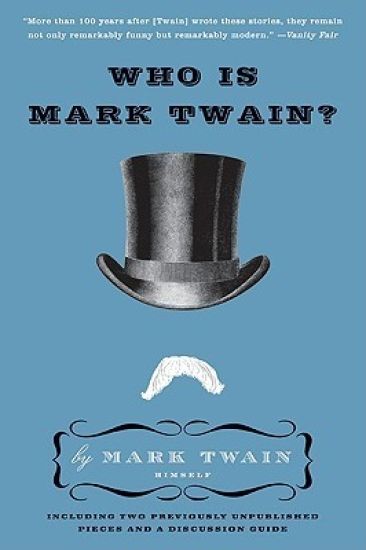
Who Is Mark Twain?

Who Is Mark Twain?

Mark Twain

HarperPerennial
2010
nidottu
You had better shove this in the stove, Mark Twain said at the top of an 1865 letter to his brother, 'for I don't want any absurd 'literary remains' and 'unpublished letters of Mark Twain' published after I am planted'. He was joking, of course. But when Mark Twain died in 1910, he left behind the largest collection of personal papers created by any nineteenth-century American author. Here, for the first time in book form, are twenty-four remarkable pieces by the American master - pieces that have been hand picked by Robert Hirst, General Editor of The Mark Twain Project at UC Berkeley. In "Jane Austen", Twain wonders if Austen's goal is to make the reader detest her people up to the middle of the book and like them in the rest of the chapters? "The Privilege of the Grave" offers a powerful statement about the freedom of speech while "Happy Memories of the Dental Chair" will make you appreciate modern dentistry. In "Frank Fuller" and "My Fist New York Lecture" Twain plasters the city with ads to promote his talk at the Cooper Union (he is terrified no one will attend). Later that day, Twain encounters two men gazing at one of his ads. One man says to the other: Who is Mark Twain? The other responds: God Knows-I Don't. Wickedly funny and disarmingly relevant, "Who is Mark Twain?" shines new light on one of America's most beloved literary icons - a man who was well ahead of his time.
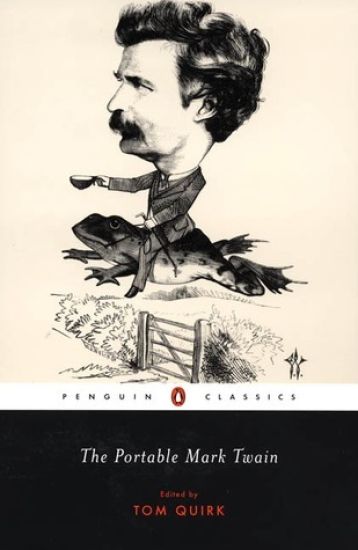
The Portable Mark Twain

The Portable Mark Twain

Mark Twain

Penguin Books Ltd
2004
pokkari
Satirist, novelist, and keen observer of the American scene, Mark Twain remains one of the world's best-loved writers. This delightful collection of Twain's favorite and most memorable writings includes selected tales and sketches such as The Celebrated Jumping Frog of Calaveras County, How I Edited an Agricultural Journal Once, Jim Baker's Blue-Jay Yarn, and A True Story. It also features excerpts from his novels and travel books (including Roughing It, The Innocents Abroad, and Life on the Mississippi, among others; autobiographical and polemical writings; as well as selected letters and speeches. The collection also reprints the complete text of Adventures of Huckleberry Finn, including the often omitted raftsmen passage. For more than seventy years, Penguin has been the leading publisher of classic literature in the English-speaking world. With more than 1,700 titles, Penguin Classics represents a global bookshelf of the best works throughout history and across genres and disciplines. Readers trust the series to provide authoritative texts enhanced by introductions and notes by distinguished scholars and contemporary authors, as well as up-to-date translations by award-winning translators.
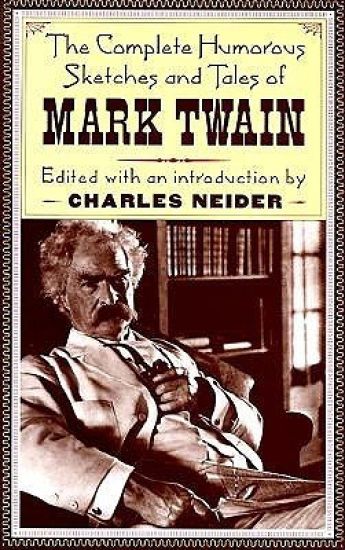
The Complete Humorous Sketches And Tales Of Mark Twain
This is the first and most complete collection of all 136 humorous sketches and tales that Samuel Clemens (1835-1910), a.k.a. Mark Twain, started writing as a young reporter for various newspapers and magazines and later saw fit to issue in book form. Many pieces appeared in rare, first printings, only to be dropped in subsequent editions for this reason, readers will encounter a number of yarns and tall tales unavailable elsewhere, even in the collected works. More unvarnished than his short stories or novels, and more willing to indulge in fun for its own sake, these sketches comprise a substantial share of his literary apprenticeship and legacy. As brilliant, representative nuggets of Twain's humour in its purest form, they carry the imprint of Twain's wit, imagination, and humanism, his fresh and always idiomatic prose. From 1862's "Curing a Cold" to 1904's "Italian Without a Master," this collection allows readers to share Twain's vision of life as a strange and comic affair. No one interested in American humour (or in need of a good laugh) can long remain indifferent to this uproarious book.
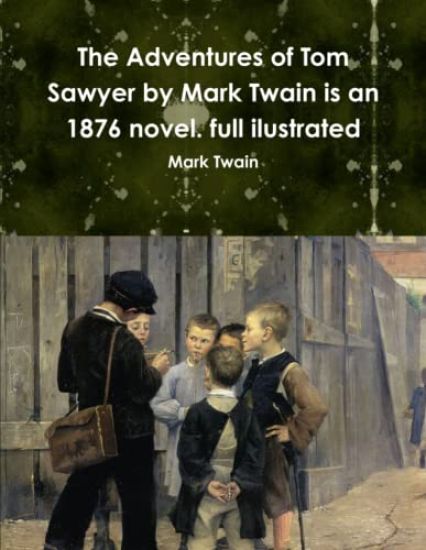
The Adventures of Tom Sawyer by Mark Twain is an 1876 novel. full ilustrated
The Adventures of Tom Sawyer by Mark Twain is an 1876 novel about a young boy growing up along the Mississippi River. It is set in the 1840s in the fictional town of St. Petersburg, inspired by Hannibal, Missouri, where Twain lived as a boy. In the novel Tom Sawyer has several adventures, often with his friend, Huck. One such adventure, Tom's whitewashing of a fence, has been adapted into paintings and referenced in other pieces of popular culture. Originally a commercial failure the book ended up being the best selling of any of Twain's works during his lifetime
The Prince and the Pauper is a novel by American author Mark Twain. ILLUSTRATED
The Prince and the Pauper is a novel by American author Mark Twain. It was first published in 1881 in Canada, before its 1882 publication in the United States. The novel represents Twain's first attempt at historical fiction. Set in 1537, it tells the story of two young boys who are identical in appearance: Tom Canty, a pauper who lives with his abusive father in Offal Court off Pudding Lane in London, and Prince Edward, son of King Henry VIII. Tom Canty, youngest son of a poor family living in Offal Court located in London, has always aspired to a better life, encouraged by the local priest, who has taught him to read and write. Loitering around the palace gates one day, he meets Edward Tudor, the Prince of Wales. Coming too close in his intense excitement, Tom is nearly caught and beaten by the Royal Guards.
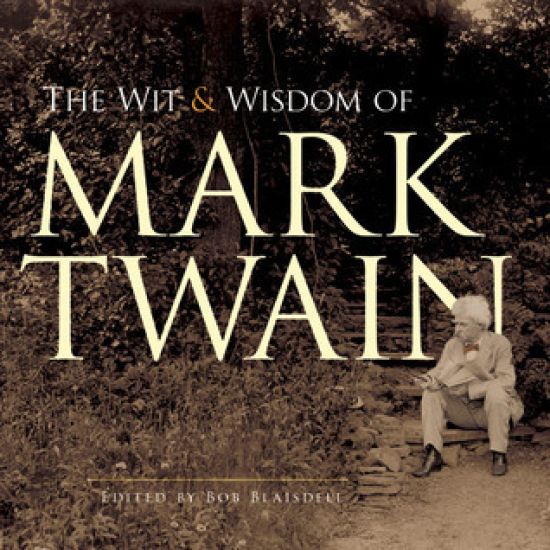
The Wit and Wisdom of Mark Twain

The Wit and Wisdom of Mark Twain

Mark Twain

Dover Publications Inc.
2013
nidottu
"Familiarity breeds contempt — and children." "When angry, count to four; when very angry, swear." "Heaven for climate. Hell for company." This attractive paperback gift edition of the renowned American humorist's epigrams and witticisms features hundreds of quips on life, love, history, culture, travel, and other topics from his fiction, essays, letters, and autobiography.
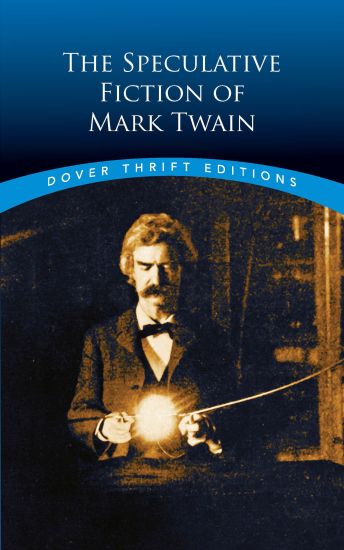
The Speculative Fiction of Mark Twain

The Speculative Fiction of Mark Twain

Mark Twain

Dover Publications Inc.
2018
nidottu
Although best known for his novels, Mark Twain was a prolific writer of short stories, many of which involved elements of science fiction--and this compilation highlights his finest works of speculative fiction. Twain applies his wit and imagination to the spinning of tales about mental telepathy, instantaneous communication, alternative histories, and utopian worlds. The collection begins with Twain's first science fiction story, an 1862 piece entitled "Petrified Man." The satirical newspaper item was interpreted literally by many readers and became an accidental hoax. Other selections include "Earthquake Almanac," "From the 'London Times' of 1904," "The Loves of Alonzo Fitz Clarence and Rosannah Ethelton," "Mental Telegraphy," "Mental Telegraphy, Again," "Extracts from Adam's Diary," "Eve's Diary," "The Great Dark," and "Captain Stormfield's Visit to Heaven," concluding with "The Mysterious Stranger."
Mark Twain's Satires and Burlesques

Mark Twain's Satires and Burlesques

Mark Twain

University of California Press
1966
sidottu
From the Introduction:It should always be with some misgivings that an editor presents to the public materials which an author has discarded. By returning the materials to his files, the author has voted against publication. By resurrecting them, the editor risks exposing the author to the adverse criticism which he wished to avoid. But, at the same time, the resurrection serves a valuable purpose by making available indispensable evidence to be used by those seeking to understand the creative process. It is because they serve such a purpose that the texts published in this volume have been salvaged from Mark Twain's files. Indeed, they are doubly valuable because they aid in dispelling a myth about his own creative process which Twain himself did much to establish. In several instances Twain gave the impression that for him plotting a novel was a rather simple affair...But in actuality, as the texts published in this volume illustrate, he experienced much more trouble than this statement would suggest in delimiting his fictional world, establishing its nature, and maintaining control over the characters placed therin.
Mark Twain's Correspondence with Henry Huttleston Rogers, 1893-1909
This collection of correspondence between Clemens and Rogers may be thought of as a continuation of Mark Twain's Letters to His Publishers, 1867-1894, edited by Hamlin Hill. It completes the story begun there of Samuel Clemens's business affairs, especially insofar as they concern dealings with publishers; and it documents Clemens's progress from financial disaster, with the Paige typesetter and Webster & Company, to renewed prosperity under the steady, skillful hand of H. H. Rogers. But Clemens's correspondence with Rogers reveals more than a business relationship. It illuminates a friendship which Clemens came to value above all others, and it suggests a profound change in his patterns of living. He who during the Hartford years had been a devoted family man, content with a discrete circle of intimates, now became again (as he had been during the Nevada and California years) a man among sporting men, enjoying prizefights and professional billiard matches in public, and-in private-long days of poker, gruff jest, and good Scotch whisky aboard Rogers's magnificent yacht.
Mark Twain's Hannibal, Huck, and Tom

Mark Twain's Hannibal, Huck, and Tom

Mark Twain

University of California Press
1969
sidottu
This volume provides authoritative texts of Twain's unpublished writings, both fictional and factual, about the people and places of his home town, Hannibal, Missouri. A significant part of only one of them, "Jane Lampton Clemens", has been published; it was inserted unjustifiably in "Twain's Authobiography". Written soon after the death of Clemens' mother on 27October 1890, it arranges and assesses a son's recollections of a vibrant personality important in shaping his life. At the start the author turns to the time when he, a six-year-old, knelt with his mother by the bed on which his dead brother lay - a harassing experience that understandably seared the boy's memory. The sketch moves on to a host of details about antebellum Hannibal, its society and its attitudes toward slavery, and to vivid memories about the child, his mother, and his father in the 1840's and 1850's. The movement from a single remembered episode to a series of loosely associated recollections was a typical performance in Clemens' 'autobiography' and his fiction.
Mark Twain's Fables of Man

Mark Twain's Fables of Man

Mark Twain

University of California Press
1972
sidottu
For years, many of Twain's philosophical, religious, and historical fantasies concerning the nature and condition of humanity remained unpublished. Thirty-six of these writings make their first appearance here.
Mark Twain's Notebooks & Journals, Volume I

Mark Twain's Notebooks & Journals, Volume I

Mark Twain

University of California Press
1976
sidottu
In the summer of 1855, when the nineteen-year-old Sam Clements traveled from Saint Louis to Hannibal, Paris, and Florida, Missouri, and then to Keokuk, Iowa, he carried with him a notebook in which he entered French lessons, phrenological information, miscellaneous observations, and reminders about errands to be performed. This first notebook thus took the random form which would characterize most of those to follow. About the text: In order to avoid editorial misrepresentation and to preserve the texture of autograph documents, the entries are presented in their original, often unfinished, form with most of Clemens' irregularities, inconsistencies, errors, and cancellations unchanged. Clemens' cancellations are included in the text enclosed in angle brackets, thus ; editorially-supplied conjectural readings are in square brackets, thus [word]; hyphens within square brackets stand for unreadable letters, thus [--]; and editorial remarks are italicized and enclosed in square brackets, thus [blank page}- A slash separates alternative readings which Clemens left unresolved, thus word/word. The separation of entries is indicated on the printed page by extra space between lines; when the end of a manuscript entry coincides with the end of a page of the printed text, the symbol [#] follows the entry. A full discussion of textual procedures accompanies the tables of emendation and details of inscription in the Textual Apparatus at the end of each volume; specific textual problems are explained in headnotes or footnotes when unusual situations warrant.
Mark Twain's Notebooks and Journals, Volume II

Mark Twain's Notebooks and Journals, Volume II

Mark Twain

University of California Press
1976
sidottu
The twelve notebooks in volume 1 provided information about the eighteen years in which the most profound, even dramatic, changes took place in Clemens' life. He early achieved the limits of his boyhood ambition by becoming a steamboat pilot on the Mississippi River, a position there is no reason to believe he would have abandoned if the Civil War had not forced him to do so. In fleeing from a war which principle and temperament prevented him from supporting, Clemens entered into the first stages of his literary career by serving as a reporter for newspapers in Virginia City and San Francisco. When the restricted experiences available to a local reporter had been thoroughly explored, he moved on as a traveling correspondent to the Sandwich Islands and then still farther to Europe and the Near East. The latter travels provided him with material for The Innocents Abroad, the book that established Mark Twain as a popular author with an international reputation in 1869. In 1872 he further exploited his personal history by publishing Roughing It and in the same year visited England to gather material on English people and institutions. He returned to England the following year, this time accompanied by his family and by a secretary who would record the observations printed as the last notebook in volume 1. Volume 2 of Mark Twain's Notebooks and Journals, documenting Clemens' activities in the years from 1877 to 1883, consists largely of the record of three trips which would serve as the source for three travel narratives: the excursion to Bermuda, a prolonged tour of Europe, and an evocative return to the Mississippi River. Despite the common impulse to preserve observations and impressions for literary use, the contents of the notebooks are remarkably different in their vitality-and the works which developed from the notes are correspondingly varied.
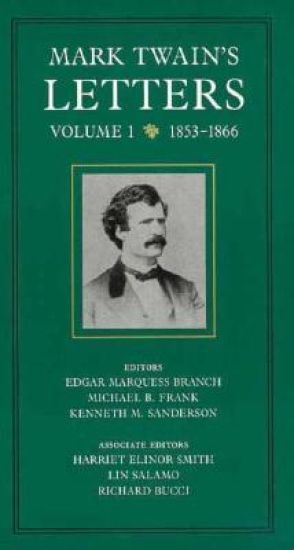
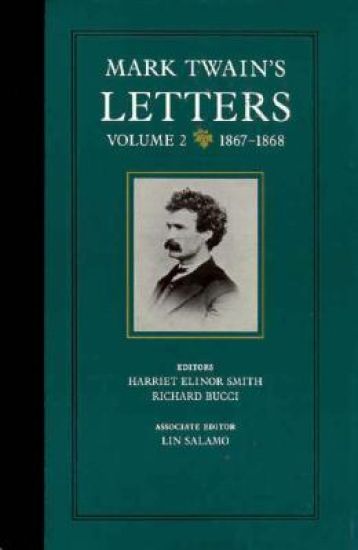
Mark Twain's Letters, Volume 2

Mark Twain's Letters, Volume 2

Mark Twain

University of California Press
1990
sidottu
Here is young Sam Clemens - in the world, getting famous, making love - in 155 magnificently edited letters that trace his remarkable self-transformation from a footloose, irreverent West Coast journalist to a popular lecturer and author of "The Jumping Frog", soon to be a national and international celebrity. And on the move he was - from San Francisco to New York, to St. Louis, and then to Paris, Naples, Rome, Athens, Constantinople, Yalta, and the Holy Land; back to New York and on to Washington; back to San Francisco and Virginia City; and, on to lecturing in Ohio, Michigan, Pennsylvania, and New York. Resplendent with wit, love of life, ambition, and literary craft, this new volume in the wonderful Bancroft Library edition of "Mark Twain's Letters" will delight and inform both scholars and general readers. This volume has been supported by the National Endowment for the Humanities, the Mark Twain Foundation, Jane Newhall, and The Friends of The Bancroft Library.