Kirjojen hintavertailu. Mukana 11 342 296 kirjaa ja 12 kauppaa.

Kirjahaku

Etsi kirjoja tekijän nimen, kirjan nimen tai ISBN:n perusteella.

4 kirjaa tekijältä Mark Valeri

Law and Providence in Joseph Bellamy's New England

Law and Providence in Joseph Bellamy's New England

Mark Valeri

Oxford University Press Inc
1995
sidottu
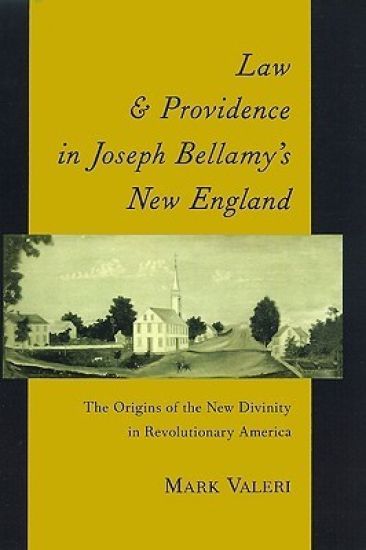
This study of religious thought and social life in early America focuses on the career of Joseph Bellamy (1719-1790), a Connecticut Calvinist minister noted chiefly for his role in originating the New Divinity--the influential theological movement that evolved from the writings of Bellamy's teacher, Jonathan Edwards. Tracing Bellamy's contributions as a preacher, noted controversialist, and church leader from the Great Awakening to the American Revolution, Mark Valeri explores why the New Divinity was so immensely popular. Set in social contexts such as the emergent market economy, the war against France, and the politics of rebellion, Valeri shows, Bellamy's story reveals much about the relationship between religion and public issues in colonial New England.
The Opening of the Protestant Mind

The Opening of the Protestant Mind

Mark Valeri

OXFORD UNIVERSITY PRESS INC
2023
sidottu
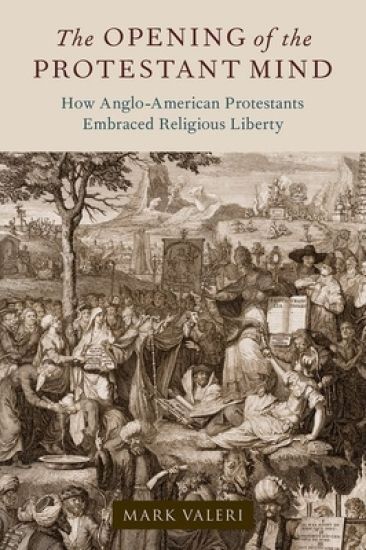
During the mid-seventeenth century, Anglo-American Protestants described Native American ceremonies as savage devilry, Islamic teaching as violent chicanery, and Catholicism as repugnant superstition. By the mid-eighteenth century, they would describe amicable debates between evangelical missionaries and Algonquian religious leaders about the moral appeal of Christianity, recount learned conversations between English merchants and Muslim scholars, and tell of encounters with hospitable and sincere priests in Catholic Canada and Europe. What explains this poignant shift? Using a variety of sources--travel narratives, dictionaries and encyclopaedias of the world's religions, missionary tracts, and sermons, The Opening of the Protestant Mind traces a transformation in how English and colonial American Protestants described other religions during a crucial period of English colonization of North America. After the English Revolution of 1688 and the subsequent growth of the British empire, observers began to link Britain's success to civic moral virtues, including religious toleration, rather than to any particular religious creed. Mark Valeri shows how a wide range of Protestants--including liberal Anglicans, Calvinist dissenters, deists, and evangelicals--began to see other religions not as entirely good or entirely bad, but as complex, and to evaluate them according to their commitment to religious liberty. In the view of these Protestants, varieties of religion that eschewed political power were laudable, while types of religion that combined priestly authority with political power were illegitimate. They also changed their evangelistic practices, jettisoning civilizing agendas in favor of reasoned persuasion. Valeri neither valorizes Anglo-Protestants nor condemns them. Instead, he reveals the deep ambiguities in their ideas while showing how those ideas contained the seeds of modern religious liberty.
Heavenly Merchandize

Heavenly Merchandize

Mark Valeri

Princeton University Press
2010
sidottu
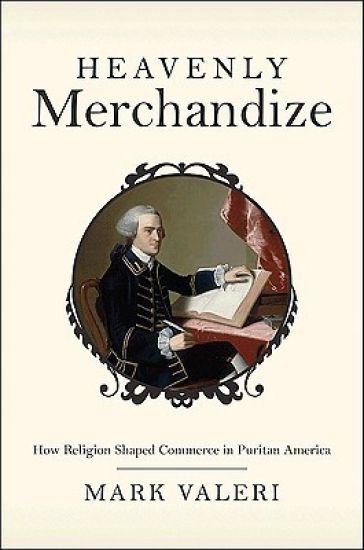
Heavenly Merchandize offers a critical reexamination of religion's role in the creation of a market economy in early America. Focusing on the economic culture of New England, it views commerce through the eyes of four generations of Boston merchants, drawing upon their personal letters, diaries, business records, and sermon notes to reveal how merchants built a modern form of exchange out of profound transitions in the puritan understanding of discipline, providence, and the meaning of New England. Mark Valeri traces the careers of men like Robert Keayne, a London immigrant punished by his church for aggressive business practices; John Hull, a silversmith-turned-trader who helped to establish commercial networks in the West Indies; and Hugh Hall, one of New England's first slave traders. He explores how Boston ministers reconstituted their moral languages over the course of a century, from a scriptural discourse against many market practices to a providential worldview that justified England's commercial hegemony and legitimated the market as a divine construct. Valeri moves beyond simplistic readings that reduce commercial activity to secular mind-sets, and refutes the popular notion of an inherent affinity between puritanism and capitalism. He shows how changing ideas about what it meant to be pious and puritan informed the business practices of Boston's merchants, who filled their private notebooks with meditations on scripture and the natural order, founded and led churches, and inscribed spiritual reflections in their letters and diaries. Unprecedented in scope and rich with insights, Heavenly Merchandize illuminates the history behind the continuing American dilemma over morality and the marketplace.
Heavenly Merchandize

Heavenly Merchandize

Mark Valeri

Princeton University Press
2014
pokkari
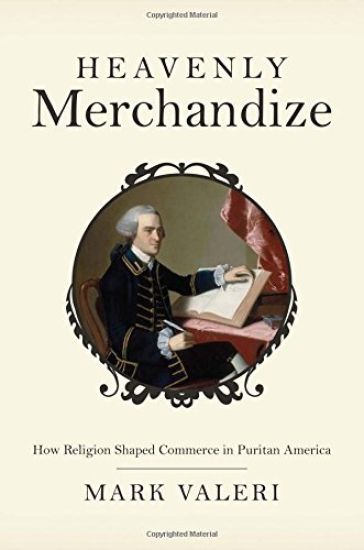
Heavenly Merchandize offers a critical reexamination of religion's role in the creation of a market economy in early America. Focusing on the economic culture of New England, it views commerce through the eyes of four generations of Boston merchants, drawing upon their personal letters, diaries, business records, and sermon notes to reveal how merchants built a modern form of exchange out of profound transitions in the puritan understanding of discipline, providence, and the meaning of New England. Mark Valeri traces the careers of men like Robert Keayne, a London immigrant punished by his church for aggressive business practices; John Hull, a silversmith-turned-trader who helped to establish commercial networks in the West Indies; and Hugh Hall, one of New England's first slave traders. He explores how Boston ministers reconstituted their moral languages over the course of a century, from a scriptural discourse against many market practices to a providential worldview that justified England's commercial hegemony and legitimated the market as a divine construct. Valeri moves beyond simplistic readings that reduce commercial activity to secular mind-sets, and refutes the popular notion of an inherent affinity between puritanism and capitalism. He shows how changing ideas about what it meant to be pious and puritan informed the business practices of Boston's merchants, who filled their private notebooks with meditations on scripture and the natural order, founded and led churches, and inscribed spiritual reflections in their letters and diaries. Unprecedented in scope and rich with insights, Heavenly Merchandize illuminates the history behind the continuing American dilemma over morality and the marketplace.