

Kirjahaku
Etsi kirjoja tekijän nimen, kirjan nimen tai ISBN:n perusteella.
42 kirjaa tekijältä Mark Williams

Uncontrolled Risk: Lessons of Lehman Brothers and How Systemic Risk Can Still Bring Down the World Financial System
Mark Williams
McGraw-Hill Professional
2010
sidottu
How Excessive Risk Destroyed Lehman and Nearly Brought Down the Financial Industry “Uncontrolled Risk will ruffle feathers—and for good reason—as voters and legislators learn thediffi cult lessons of Lehman’s collapse and demand that we never forget them.”Dr. David C. Shimko, Board of Trustees, Global Association of Risk Professionals“Uncontrolled Risk is a drama as gripping as any work of fiction. Williams’s recommendations forchanges in the governance of financial institutions should be of interest to anyone concernedabout the welfare of global financial markets.”Geoffrey Miller, Stuyvesant Comfort Professor of Law and Director, Center for the Study ofCentral Banks and Financial Institutions, New York University“The complex balance of free enterprise on Wall Street and the healthyregulation of its participants is the central economic issue of today.Williams’s forensic study of Lehman’s collapse may be the bestperspective so far on the issues that now face regulators.”Jeffrey P. Davis, CFA, Chief Investment Officer,Lee Munder Capital Group“Provides a very perceptive analysis of the fl aws inherent in risk management systems and modernfi nancial markets. Mandatory reading for risk managers and financial industry executives.”Vincent Kaminski, Professor in the Practice of Management,Jesse H. Jones Graduate School of Business, Rice University“Gives the reader much food for thought on the regulation of our financial system and its interplaywith corporate governance reform in the United States and around the world.”Professor Charles M. Elson, Edgar S. Woolard Jr. Chair in Corporate Governance,University of DelawareThe risk taking behind Wall Street's largest bankruptcy . . .In this dramatic and compelling account ofLehman Brothers’ spectacular rise and fall,author Mark T. Williams explains how uncontrolledrisk toppled a 158-year-old institution—and whatit says about Wall Street, Washington, D.C., and theworld financial system. A former trading floor executiveand Fed bank examiner, Williams sees Lehman’s2008 collapse as a microcosm of the industry—aworst-case scenario of smart decisions, stupid mistakes,ignored warnings, and important lessons inmoney, power, and policy that affect us all.This book reveals:The Congressional inquisition of disgracedCEO Dick Fuld: Did he really deserve it?How the investment-banking money machinebroke down: Can it be fixed?The key drivers that caused the financialmeltdown: Can lessons be learnedfrom them?The wild risk taking denounced by PresidentObama: Is Washington to blame, too?The ongoing debate on reform andregulation: Can meaningful reform avertanother financial catastrophe?This fascinating account traces Lehman’s historyfrom its humble beginnings in 1850 to its collapsein 2008. Lehman’s story exemplifies the everchangingtrends in finance—from investmentvehicles to federal policies—and exposes thedanger and infectious nature of uncontrolled risk.Drawing upon first-person interviews with riskmanagement experts and former Lehman employees,Williams provides more than just a frontlinereport: it’s a call to action for Wall Street bankers,Washington policymakers, and U.S. citizens—a livinglesson in risk management on which to build astronger fi nancial future. Williams provides a tenpointplan to implement today—so another Lehmandoesn’t collapse tomorrow.Includes aten-point plan toensure a strongfinancial future forboth Wall Street andMain Street
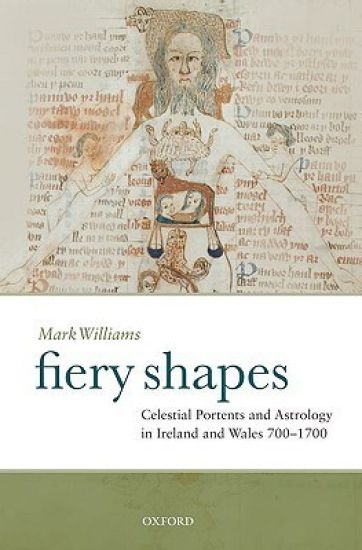
The presentation of the magical and mantic in Celtic literature has persistently been dogged by misunderstanding and over-romanticized readings. Among the misconceptions about the ancient and medieval Celtic peoples, the notion of a specifically 'Celtic' astrology remains widespread in the popular mind. This study aims to counter such myth-making, and to demonstrate how a number Irish and Welsh literary writers in the medieval and Early Modern period conceived of portents in the heavens - comets, blood-coloured moons, darkened suns - and what they knew of the complex art of astrology. Early Irish churchmen felt that the end of the world was imminent, and this book explores the ways in which they saw signs in the heavens as evidence of impending apocalypse, and how they adapted such millenarian imagery for use in native sagas in Irish. It then moves on to an extended discussion of the cloud-divination ascribed to Irish druids in high medieval literary texts; this has sometimes naively been taken as evidence for the actual customs of the druidic caste, but it is shown here to be a development of the later Middle Ages, long after the druids' disappearance. Turning to Wales, the cosmological knowledge of two linked figures is scrutinized: the super-poet Taliesin, and King Arthur's prophet Merlin, whom Geoffrey of Monmouth represented in the mid 12th century as an astrological sage with a purpose-built observatory. Evidence for the knowledge of astrology amongst the learned poets of later medieval Wales is then laid out, with an analysis of a powerful late 15th century poem indicting the evil influence of the planet Saturn; such knowledge seems to have been largely medical in nature, and the book concludes with an examination of a number of Welsh astrological texts in manuscript, setting them against the longest astrological poem in a Celtic language, the mid 17th century Puritan mystic Morgan Llwyd's spiritualizing and evangelical 'Heavenly Science'.
The Republic of Indonesia is a rising great power in the Asia-Pacific, set to become the eighth largest economy in the world in the coming decades. It is the most populous Muslim majority country in the world. The largest Islamic organizations and parties have supported Indonesia’s participation with global markets, but this has not come from an ideological support for capitalism or economic liberalization. Islamic political culture has denounced the injustices caused by global capitalism and its excesses. In fact, support for Indonesia’s engagement with the international political economy is born from political pragmatism, and from Indonesia’s struggles to achieve economic development. This book examines the role of Islamic identity in Indonesia’s foreign economic relations and in its engagement with the world order. There is no single expression of Islam in Indonesia, the politics espoused by Islamic parties and organizations are far from monolithic. Islamic sentiment has been invoked by the state to justify heinous acts of brutality, as well as by violent, subnational revolutionary groups. However, these expressions of Islam have deviated from the dominant narrative, which is in favour of international cooperation and economic development. Economic exploitation, political alienation, financial volatility, and aggression toward Muslims around the world that has caused some Islamic groups to radicalize. The political culture of Islam in Indonesia is a social force that is helping to foster a peaceful rise for Indonesia. However, a peaceful expression of Islam is not inevitable for the republic, nor can it be assumed that Islamic identity in Indonesia will unwaveringly support the global economic order, regardless of what might occur in global politics.

The Republic of Indonesia is a rising great power in the Asia-Pacific, set to become the eighth largest economy in the world in the coming decades. It is the most populous Muslim majority country in the world. The largest Islamic organizations and parties have supported Indonesia’s participation with global markets, but this has not come from an ideological support for capitalism or economic liberalization. Islamic political culture has denounced the injustices caused by global capitalism and its excesses. In fact, support for Indonesia’s engagement with the international political economy is born from political pragmatism, and from Indonesia’s struggles to achieve economic development. This book examines the role of Islamic identity in Indonesia’s foreign economic relations and in its engagement with the world order. There is no single expression of Islam in Indonesia, the politics espoused by Islamic parties and organizations are far from monolithic. Islamic sentiment has been invoked by the state to justify heinous acts of brutality, as well as by violent, subnational revolutionary groups. However, these expressions of Islam have deviated from the dominant narrative, which is in favour of international cooperation and economic development. Economic exploitation, political alienation, financial volatility, and aggression toward Muslims around the world that has caused some Islamic groups to radicalize. The political culture of Islam in Indonesia is a social force that is helping to foster a peaceful rise for Indonesia. However, a peaceful expression of Islam is not inevitable for the republic, nor can it be assumed that Islamic identity in Indonesia will unwaveringly support the global economic order, regardless of what might occur in global politics.
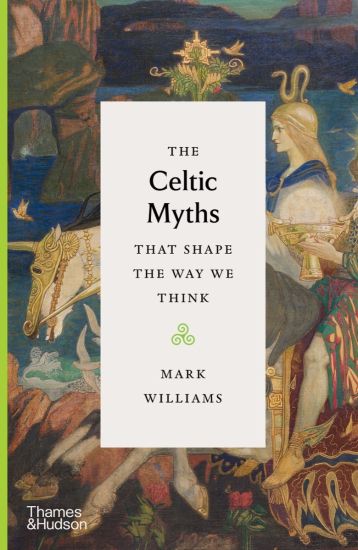
How do myths that were deeply embedded in the customs and beliefs of their original culture find themselves retold and reinterpreted across the world, centuries or even millennia later? Focusing on ten myths that have had the greatest cultural impact and are the most relevant to our lives today, Mark Williams reveals the lasting influence of Celtic mythology, from medieval literature to the modern fantasy genre. Ten chapters recount the myths and explore the lasting influence of legendary figures including King Arthur, the Celtic figure who paradoxically became the archetypal English national hero; Cú Chulainn, the hero of the Táin, Ireland’s great medieval epic, who became a symbol of the reborn Irish nation; the Irish and Scottish hero Finn, who as ‘Fingal’ caught the imagination of Napoleon, Goethe and Mendelssohn; and the Welsh mythical figure Blodeuwedd, magically created from flowers of the oak, who inspired Yeats. Williams also explores the contentious use of mythic imagery in nationalist ideology, and how characters and concepts from Celtic legends have been relevant to past and present discussions on national identity. His elegantly written retellings capture the beauty of the original myths while also delving deeper into the history of their meanings, offering the reader an intelligent and engaging take on these powerful stories. Beautiful illustrations of the artworks these myths have inspired over the centuries are presented in a colour-plates section and in black-and-white within the text. Mark Williams' mythological expertise and captivating writing style makes this book essential reading for anyone who appreciates the myths that have shaped our artistic and literary canons and continue to inspire today. With 77 illustrations

Competition Policy and Law in China, Hong Kong and Taiwan
Mark Williams
Cambridge University Press
2009
pokkari
This book provides a comprehensive guide to the competition regimes of China, Hong Kong and Taiwan. Chinese developments are placed in the context of the adoption of competition regimes by developing and transitional states worldwide and also in relation to the influence of trans-national organisations on transitional states to adopt market-based economic strategies. The book adopts an inter-disciplinary approach considering the political, economic and legal issues relevant to competition policy adoption. The paradoxical phenomenon of Communist mainland China seeking to adopt a pro-competition law, whilst capitalist Hong Kong refuses to do so, is explained and contrasted with the successful Taiwanese adoption of a competition regime over a decade ago. The underlying economic and political forces that have shaped this unusual matrix are discussed and analysed with a theoretical explanation offered for its consequences.

Competition Policy and Law in China, Hong Kong and Taiwan
Mark Williams
Cambridge University Press
2005
sidottu
This is the first book in English to comprehensively examine competition policy and law in Greater China - the People’s Republic, Hong Kong, and Taiwan. The evolution of pro-competition policies in each jurisdiction is traced in the context of the international developments in competition policy adoption by developing and transitional economies as well as the advocacy of competition adoption by international organizations - WTO, OECD, UNCTAD, the World Bank and the IMF. The particular political and economic settings of China, Hong Kong, and Taiwan are examined, laws and policies analyzed and an assessment made of the success of competition law adoption. China’s considerable governance problems are highlighted. Hong Kong’s claim to be the paradigm of capitalist-free markets is critically examined. Taiwan’s shift in economic and political arrangements are analyzed. A theoretical explanation of the observed phenomena is proposed that without a functioning democratic system, successful competition policy adoption is unlikely to succeed.

Poems that are reflections on Mystical encouters with God, creation and others. Spiritually charged poems.


Voices from the Heights is an anthology of works from at-risk students at innovative, award-winning North Heights Alternative School in Amarillo, Texas. The stories are often gritty & personal but these young writers are courageous, creative & talented. Read more about this book and school in this article: http://www.amarillo.com/stories/050408/fea_10069474.shtml Bruce Beck, Am Globe News: Many of the writers in "Voices" found a safe haven at North Heights Alternative School and are not shy about telling how they ended up there and their amazement at what they found when they arrived - a caring, nonjudgmental staff that looks beyond the surface to the potential that lies beneath. The children whose writings populate "Voices" are young single mothers, children of single-parent households, liberals, conservatives, idealists, cynics, pro-President Bushies, anti-President Bushies, drug-users, former drug-users, friends of drug-users, the children of drug-users. They are us.

A sweeping history of Ireland's native gods, from Iron Age cult and medieval saga to the Celtic Revival and contemporary fictionIreland’s Immortals tells the story of one of the world’s great mythologies. The first account of the gods of Irish myth to take in the whole sweep of Irish literature in both the nation’s languages, the book describes how Ireland’s pagan divinities were transformed into literary characters in the medieval Christian era—and how they were recast again during the Celtic Revival of the late nineteenth and early twentieth centuries. A lively narrative of supernatural beings and their fascinating and sometimes bizarre stories, Mark Williams’s comprehensive history traces how these gods—known as the Túatha Dé Danann—have shifted shape across the centuries. We meet the Morrígan, crow goddess of battle; the fire goddess Brigit, who moonlights as a Christian saint; the fairies who inspired J.R.R. Tolkien’s elves; and many others. Ireland’s Immortals illuminates why these mythical beings have loomed so large in the world’s imagination for so long.


A bartender, Charlie Grifter, is taught the 'tricks of the trade' by a pool tournament champion, Big Milwaukee, shortly before his demise. Eventually, this prot g becomes involved in tournament play, as well as the convivial and corrupt aspects surrounding it. Bets, the Mafia, drugs and a woman, all blockade the road he must take to win the Tournament Championship.

Flipping Houses: How to Find, Buy, Refurbish, and Sell Houses for Profit
Mark Williams
Createspace Independent Publishing Platform
2017
nidottu