Kirjojen hintavertailu. Mukana 11 244 527 kirjaa ja 12 kauppaa.

Kirjahaku

Etsi kirjoja tekijän nimen, kirjan nimen tai ISBN:n perusteella.

37 kirjaa tekijältä Markus Gabriel

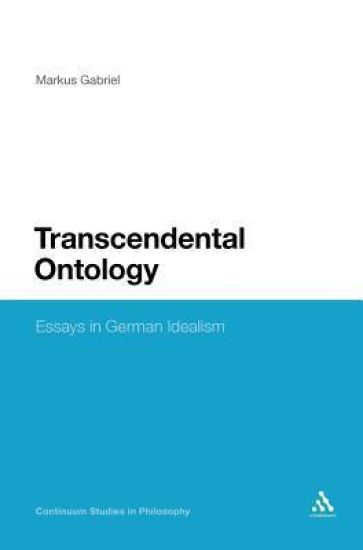
Transcendental Ontology

Transcendental Ontology

Markus Gabriel

Bloomsbury Academic
2013
nidottu
Transcendental Ontology in German Idealism: Schelling and Hegel sheds remarkable light on a question central to post-Kantian philosophy: after the Copernican Revolution in philosophy, what can philosophy say about the world or reality as such? What remains of ontology's task after Kant? This is a question often overlooked in contemporary scholarship on German Idealism. Markus Gabriel offers a refreshing reinvigoration of a range of questions concerning scepticism, corporeality, freedom, the question of being, the absolute and the modal status of our determinations and judgments, all crucial to our understanding of the truly radical nature of post-Kantian philosophy. Gabriel's assessment of the experiments undertaken in post-Kantian ontology reaffirms Schelling's and Hegel's place at the heart of contemporary metaphysics. The book shows how far we still have to go in mining the thought of Hegel and Schelling and how exciting, as a result, we can expect twenty-first century philosophy to be.
Sense, Nonsense, and Subjectivity

Sense, Nonsense, and Subjectivity

Markus Gabriel

HARVARD UNIVERSITY PRESS
2024
sidottu
A leading German philosopher offers his most ambitious work yet on the nature of knowledge, arguing that being wrong about things defines the human condition.For millennia, philosophers have dedicated themselves to advancing understanding of the nature of truth and reality. In the process they have amassed a great deal of epistemological theory—knowledge about knowledge. But negative epistemological phenomena, such as ignorance, falsity, illusion, and delusion, are persistently overlooked. This is surprising given that we all know how fallible humans are.Sense, Nonsense, and Subjectivity replies with a theory of false thought, demonstrating that being wrong about things is part and parcel of subjectivity itself. For this reason, knowledge can never be secured without our making claims that can always, in principle, be wrong. Even in successful cases, where we get something right and thereby gain knowledge, the possibility of failure lingers with us. Markus Gabriel grounds this argument in a novel account of the relationship between sense, nonsense, and subjectivity—phenomena that hang together in the temporal unfolding of our cognitive lives.While most philosophers continue to theorize subjectivity in terms of conscious self-representation and the supposedly infallible grip we have on ourselves as thinkers, Sense, Nonsense, and Subjectivity addresses the age-old Platonic challenge to understand situations in which we do not get reality right. Adding a stimulating perspective on epistemic failures to the work of New Realism, Gabriel addresses long-standing ontological questions in an age where the line between the real and the fake is increasingly blurred.
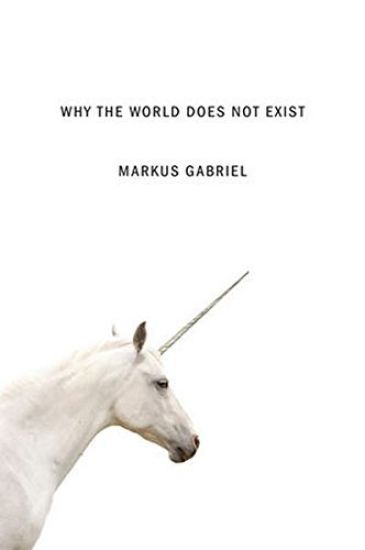
Why the World Does Not Exist

Why the World Does Not Exist

Markus Gabriel

Polity Press
2015
sidottu
Where do we come from? Are we merely a cluster of elementary particles in a gigantic world receptacle? And what does it all mean? In this highly original new book, the philosopher Markus Gabriel challenges our notion of what exists and what it means to exist. He questions the idea that there is a world that encompasses everything like a container life, the universe, and everything else. This all-inclusive being does not exist and cannot exist. For the world itself is not found in the world. And even when we think about the world, the world about which we think is obviously not identical with the world in which we think. For, as we are thinking about the world, this is only a very small event in the world. Besides this, there are still innumerable other objects and events: rain showers, toothaches and the World Cup. Drawing on the recent history of philosophy, Gabriel asserts that the world cannot exist at all, because it is not found in the world. Yet with the exception of the world, everything else exists; even unicorns on the far side of the moon wearing police uniforms. Revelling in witty thought experiments, word play, and the courage of provocation, Markus Gabriel demonstrates the necessity of a questioning mind and the role that humour can play in coming to terms with the abyss of human existence.
Why the World Does Not Exist

Why the World Does Not Exist

Markus Gabriel

Polity Press
2017
nidottu
Where do we come from? Are we merely a cluster of elementary particles in a gigantic world receptacle? And what does it all mean? In this highly original new book, the philosopher Markus Gabriel challenges our notion of what exists and what it means to exist. He questions the idea that there is a world that encompasses everything like a container life, the universe, and everything else. This all-inclusive being does not exist and cannot exist. For the world itself is not found in the world. And even when we think about the world, the world about which we think is obviously not identical with the world in which we think. For, as we are thinking about the world, this is only a very small event in the world. Besides this, there are still innumerable other objects and events: rain showers, toothaches and the World Cup. Drawing on the recent history of philosophy, Gabriel asserts that the world cannot exist at all, because it is not found in the world. Yet with the exception of the world, everything else exists; even unicorns on the far side of the moon wearing police uniforms. Revelling in witty thought experiments, word play, and the courage of provocation, Markus Gabriel demonstrates the necessity of a questioning mind and the role that humour can play in coming to terms with the abyss of human existence.
Fields of Sense

Fields of Sense

Markus Gabriel

Edinburgh University Press
2015
sidottu
It is still a widespread assumption that metaphysics and ontology deal with roughly the same questions. They are supposed to be concerned with the fundamental nature of reality and to give an account of the meaning of 'existence' or 'being' in line with the broadest possible metaphysical assumptions. Against this, Markus Gabriel proposes a radical form of ontological pluralism that divorces ontology from metaphysics, understood as the most fundamental theory of absolutely everything (the world). He argues that the concept of existence is incompatible with the existence of the world and therefore proposes his innovative no-world-view. In the context of recent debates surrounding new realism and speculative realism, Gabriel also develops the outlines of a realist epistemological pluralism. His idea here is that there are different forms of knowledge that correspond to the plurality of fields of sense that must be acknowledged in order to avoid the trap of metaphysics.
Fields of Sense

Fields of Sense

Markus Gabriel

Edinburgh University Press
2015
nidottu
Presents a new realist ontology based on the concept of fields of sense. Markus Gabriel presents us with an innovative answer to one of the central questions of philosophy: what is the meaning of 'being' - or, rather, 'existence' - and how does that concept relate to the totality of what there is? This ontology hinges on Gabriel's concept of fields of sense, which shows that he fundamentally opposes the idea that mathematics or the natural sciences could ever replace a richer philosophical understanding of what there is and how we know about it. The first contribution to a speculative epistemology on the basis of an ontology first method and develops a new realist ontology as well as outlining a realist epistemology grounded in ontology.
Transcendental Ontology

Transcendental Ontology

Markus Gabriel

Continuum Publishing Corporation
2011
sidottu
Markus Gabriel re-assesses the contributions of Hegel and Schelling to post-Kantian metaphysics and the contributions of these great German Idealist thinkers to contemporary thought. "Transcendental Ontology in German Idealism: Schelling and Hegel" sheds remarkable light on a question central to post-Kantian philosophy: after the Copernican Revolution in philosophy, what can philosophy say about the world or reality as such? What remains of ontology's task after Kant? This is a question often overlooked in contemporary scholarship on German Idealism. Markus Gabriel offers a refreshing reinvigoration of a range of questions concerning scepticism, corporeality, freedom, the question of being, the absolute and the modal status of our determinations and judgments, all crucial to our understanding of the truly radical nature of post-Kantian philosophy. Gabriel's assessment of the experiments undertaken in post-Kantian ontology reaffirms Schelling's and Hegel's place at the heart of contemporary metaphysics. This book shows how far we still have to go in mining the thought of Hegel and Schelling and how exciting, as a result, we can expect twenty-first century philosophy to be. Continuum Studies in Philosophy presents cutting-edge scholarship in all the major areas of research and study. The wholly original arguments, perspectives and research findings in titles in this series make it an important and stimulating resource for students and academics from a range of disciplines across the humanities and social sciences.
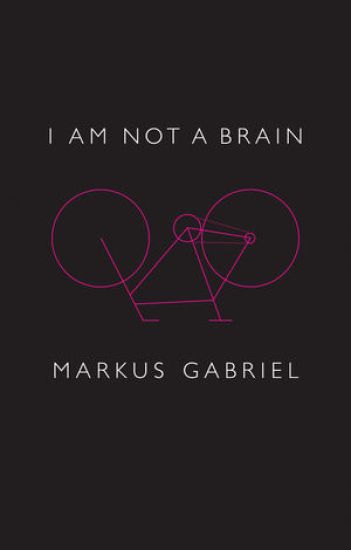
I am Not a Brain

I am Not a Brain

Markus Gabriel

Polity Press
2017
sidottu
Many consider the nature of human consciousness to be one of the last great unsolved mysteries. Why should the light turn on, so to speak, in human beings at all? And how is the electrical storm of neurons under our skull connected with our consciousness? Is the self only our brain’s user interface, a kind of stage on which a show is performed that we cannot freely direct? In this book, philosopher Markus Gabriel challenges an increasing trend in the sciences towards neurocentrism, a notion which rests on the assumption that the self is identical to the brain. Gabriel raises serious doubts as to whether we can know ourselves in this way. In a sharp critique of this approach, he presents a new defense of the free will and provides a timely introduction to philosophical thought about the self – all with verve, humor, and surprising insights. Gabriel criticizes the scientific image of the world and takes us on an eclectic journey of self-reflection by way of such concepts as self, consciousness, and freedom, with the aid of Kant, Schopenhauer, and Nagel but also Dr. Who, The Walking Dead, and Fargo.
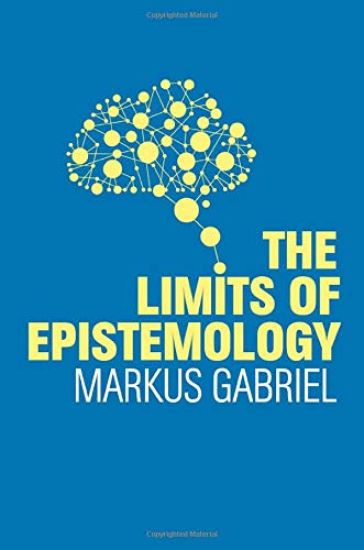
The Limits of Epistemology

The Limits of Epistemology

Markus Gabriel

Polity Press
2019
sidottu
At the centre of modern epistemology lurks the problem of scepticism: how can we know that the forms of our cognition are compatible with the world? How can we state success conditions for knowledge claims without somehow transcending our discursive and fallible nature as knowers? By distinguishing different forms of scepticism, Markus Gabriel shows how all objective knowledge relies on shared discourses and how the essential corrigibility of knowledge claims is a crucial condition of their objectivity. We should understand scepticism not so much as posing a threat, but as offering a vital lesson about the fallibility of discursive thinking. By heeding this lesson, we can begin to reintegrate the solipsistic subject of modern epistemology back into the community of actual knowers. Taking his cue from Hegel, Wittgenstein and Brandom, Gabriel shows how intentionality as such is a public rather than a private phenomenon. He concedes that the sceptic can prove the necessary finitude of objective knowledge, but denies that this has to lead us into an aporia. Instead, it shows us the limits of the modern project of epistemology. Through an examination of different kinds of sceptical paradoxes, Gabriel not only demonstrates their indispensable role within epistemological theorising, but also argues for the necessary failure of all totalizing knowledge claims. In this way, epistemology, as the discipline that claims knowledge about knowledge, begins to grasp its own fallibility and, as a result, the true nature of its objectivity. The Limits of Epistemology will be of great value to students and scholars of philosophy.
The Limits of Epistemology

The Limits of Epistemology

Markus Gabriel

Polity Press
2019
nidottu
At the centre of modern epistemology lurks the problem of scepticism: how can we know that the forms of our cognition are compatible with the world? How can we state success conditions for knowledge claims without somehow transcending our discursive and fallible nature as knowers? By distinguishing different forms of scepticism, Markus Gabriel shows how all objective knowledge relies on shared discourses and how the essential corrigibility of knowledge claims is a crucial condition of their objectivity. We should understand scepticism not so much as posing a threat, but as offering a vital lesson about the fallibility of discursive thinking. By heeding this lesson, we can begin to reintegrate the solipsistic subject of modern epistemology back into the community of actual knowers. Taking his cue from Hegel, Wittgenstein and Brandom, Gabriel shows how intentionality as such is a public rather than a private phenomenon. He concedes that the sceptic can prove the necessary finitude of objective knowledge, but denies that this has to lead us into an aporia. Instead, it shows us the limits of the modern project of epistemology. Through an examination of different kinds of sceptical paradoxes, Gabriel not only demonstrates their indispensable role within epistemological theorising, but also argues for the necessary failure of all totalizing knowledge claims. In this way, epistemology, as the discipline that claims knowledge about knowledge, begins to grasp its own fallibility and, as a result, the true nature of its objectivity. The Limits of Epistemology will be of great value to students and scholars of philosophy.
Neo-Existentialism

Neo-Existentialism

Markus Gabriel

Polity Press
2018
sidottu
In this highly original book, Markus Gabriel offers an account of the human self that overcomes the deadlocks inherent in the standard positions of contemporary philosophy of mind. His view, Neo-Existentialism, is thoroughly anti-naturalist in that it repudiates any theory according to which the ensemble of our best natural-scientific knowledge is able to account fully for human mindedness. Instead, he shows that human mindedness consists in an open-ended proliferation of mentalistic vocabularies. Their role in the human life form consists in making sense of the fact that the human being does not merely blend in with inanimate nature and the rest of the animal kingdom. Humans rely on a self-portrait that locates them in the broadest conceivable context of the universe. What distinguishes this self-portrait from our knowledge of natural reality is that we change in light of our true and false beliefs about the human being. Gabriel’s argument is challenged in this volume by Charles Taylor, Andrea Kern and Jocelyn Benoist. In defending his argument against these and other objections and in spelling out his theory of self-constitution, Gabriel refutes naturalism’s metaphysical claim to epistemic exclusiveness and opens up new paths for future self-knowledge beyond the contemporary ideology of the scientific worldview.
Neo-Existentialism

Neo-Existentialism

Markus Gabriel

Polity Press
2018
nidottu
In this highly original book, Markus Gabriel offers an account of the human self that overcomes the deadlocks inherent in the standard positions of contemporary philosophy of mind. His view, Neo-Existentialism, is thoroughly anti-naturalist in that it repudiates any theory according to which the ensemble of our best natural-scientific knowledge is able to account fully for human mindedness. Instead, he shows that human mindedness consists in an open-ended proliferation of mentalistic vocabularies. Their role in the human life form consists in making sense of the fact that the human being does not merely blend in with inanimate nature and the rest of the animal kingdom. Humans rely on a self-portrait that locates them in the broadest conceivable context of the universe. What distinguishes this self-portrait from our knowledge of natural reality is that we change in light of our true and false beliefs about the human being. Gabriel’s argument is challenged in this volume by Charles Taylor, Andrea Kern and Jocelyn Benoist. In defending his argument against these and other objections and in spelling out his theory of self-constitution, Gabriel refutes naturalism’s metaphysical claim to epistemic exclusiveness and opens up new paths for future self-knowledge beyond the contemporary ideology of the scientific worldview.
The Meaning of Thought

The Meaning of Thought

Markus Gabriel

Polity Press
2020
sidottu
From populist propaganda attacking knowledge as ‘fake news’ to the latest advances in artificial intelligence, human thought is under unprecedented attack today. If computers can do what humans can do and they can do it much faster, what’s so special about human thought? In this new book, bestselling philosopher Markus Gabriel steps back from the polemics to re-examine the very nature of human thought. He conceives of human thinking as a ‘sixth sense’, a kind of sense organ that is closely tied our biological reality as human beings. Our thinking is not a form of data processing but rather the linking together of images and imaginary ideas which we process in different sensory modalities. Our time frame expands far beyond the present moment, as our ideas and beliefs stretch far beyond the here and now. We are living beings and the whole of evolution is built into our life story. In contrast to some of the exaggerated claims made by proponents of AI, Gabriel argues that our thinking is a complex structure and organic process that is not easily replicated and very far from being superseded by computers. With his usual wit and intellectual verve, Gabriel combines philosophical insight with pop culture to set out a bold defence of the human and a plea for an enlightened humanism for the 21st century. This timely book will be of great value to anyone interested in the nature of human thought and the relations between human beings and machines in an age of rapid technological change.
I am Not a Brain

I am Not a Brain

Markus Gabriel

Polity Press
2019
nidottu
Many consider the nature of human consciousness to be one of the last great unsolved mysteries. Why should the light turn on, so to speak, in human beings at all? And how is the electrical storm of neurons under our skull connected with our consciousness? Is the self only our brain’s user interface, a kind of stage on which a show is performed that we cannot freely direct? In this book, philosopher Markus Gabriel challenges an increasing trend in the sciences towards neurocentrism, a notion which rests on the assumption that the self is identical to the brain. Gabriel raises serious doubts as to whether we can know ourselves in this way. In a sharp critique of this approach, he presents a new defense of the free will and provides a timely introduction to philosophical thought about the self – all with verve, humor, and surprising insights. Gabriel criticizes the scientific image of the world and takes us on an eclectic journey of self-reflection by way of such concepts as self, consciousness, and freedom, with the aid of Kant, Schopenhauer, and Nagel but also Dr. Who, The Walking Dead, and Fargo.
The Power of Art

The Power of Art

Markus Gabriel

Polity Press
2020
sidottu
We live in an era of aesthetics. Art has become both pervasive and powerful – it is displayed not only in museums and galleries but also on the walls of corporations and it is increasingly fused with design. But what makes art so powerful, and in what does its power consist? According to a widespread view, the power of art – its beauty – lies in the eye of the beholder. What counts as art appears to be a function of individual acts of evaluation supported by powerful institutions. On this account, the power of art stems from a force that is not itself aesthetic, such as the art market and the financial power of speculators. Art expresses, in a disguised form, the power of something else – like money – that lies behind it. In one word, art has lost its autonomy. In this short book, Markus Gabriel rejects this view. He argues that art is essentially uncontrollable. It is in the nature of the work of art to be autonomous to such a degree that the art world will never manage to overpower it. Ever since the cave paintings of Lascaux, art has taken hold of the human mind and implemented itself in our very being. Thanks to the emergence of art we became human beings, that is, beings who lead their lives in light of an image of the human being and its position in the world and in relation to other species. Due to its structural, ontological power, art itself is and remains radically autonomous. Yet, this power is highly ambiguous, as we cannot control its unfolding. In this book, a leading proponent of New Realism applies this philosophical perspective to art to create a new aesthetic realism.
The Power of Art

The Power of Art

Markus Gabriel

Polity Press
2020
nidottu
We live in an era of aesthetics. Art has become both pervasive and powerful – it is displayed not only in museums and galleries but also on the walls of corporations and it is increasingly fused with design. But what makes art so powerful, and in what does its power consist? According to a widespread view, the power of art – its beauty – lies in the eye of the beholder. What counts as art appears to be a function of individual acts of evaluation supported by powerful institutions. On this account, the power of art stems from a force that is not itself aesthetic, such as the art market and the financial power of speculators. Art expresses, in a disguised form, the power of something else – like money – that lies behind it. In one word, art has lost its autonomy. In this short book, Markus Gabriel rejects this view. He argues that art is essentially uncontrollable. It is in the nature of the work of art to be autonomous to such a degree that the art world will never manage to overpower it. Ever since the cave paintings of Lascaux, art has taken hold of the human mind and implemented itself in our very being. Thanks to the emergence of art we became human beings, that is, beings who lead their lives in light of an image of the human being and its position in the world and in relation to other species. Due to its structural, ontological power, art itself is and remains radically autonomous. Yet, this power is highly ambiguous, as we cannot control its unfolding. In this book, a leading proponent of New Realism applies this philosophical perspective to art to create a new aesthetic realism.
Fictions

Fictions

Markus Gabriel

JOHN WILEY AND SONS LTD
2024
sidottu
From ancient philosophy to contemporary theories of fiction, it is a common practice to relegate illusory appearances to the realm of the non-existent, like shadows on the wall of Plato’s cave. Contrary to this traditional mode of drawing a metaphysical distinction between reality and fiction, Markus Gabriel argues that the realm of the illusory, fictional, imaginary and conceptually indeterminate is as real as it gets. Being in touch with reality need not and cannot require that we overcome appearances in order to grasp a meaningless reality which exists ‘out there’, outside and maybe even beyond our minds. Human mindedness (Geist) exists in the mode of fictions through which we achieve self-consciousness. This novel approach provides a fresh perspective on our existence as subjects who lead their lives in the light of self-conceptions. Fictions also develops a social ontology according to which the social unfolds as a constant renegotiation of dissent, of different points of view onto the same reality. Thus we cannot ever hope to ground human society in a fiction-free realm of objective transactions. However, this does not mean that truth and reality are somehow outdated concepts. On the contrary, we need to enlarge our conception of reality so that it fully encompasses ourselves as specifically minded social animals. This major new work of philosophy will be of interest to students and scholars throughout the humanities and to anyone interested in contemporary philosophy and social thought.
Moral Progress in Dark Times

Moral Progress in Dark Times

Markus Gabriel

JOHN WILEY AND SONS LTD
2022
sidottu
The challenges we face today are unprecedented, from the existential crisis of climate change to the global security threats posed by aggression in Ukraine and elsewhere. Add to this the crisis of liberal democracy and we seem to be swirling in a state of moral disarray, unsure whether there are any principles to which we can appeal today that would be anything other than particularistic. In contrast to this view, Markus Gabriel puts forward the bold argument that there are guiding moral principles for human behaviour. These guiding principles extend across cultures; they are universally valid and form the source of universal values in the twenty-first century. In developing what he calls a ‘New Moral Realism’, Gabriel breathes fresh life into the idea that humanity’s task on our planet is to enable moral progress through cooperation. It is only by achieving moral progress in a way that incorporates universal values – and thus embraces all of humanity – that we can avoid the abyss into which we will otherwise slide. Written with verve, wit and imagination, Gabriel's call for a new enlightenment is a welcome antidote to the value relativism and nihilism of our times, and it lays out a moral framework within which we can work together – as surely we must – to deal with the great challenges we now face.
The Human Animal

The Human Animal

Markus Gabriel

JOHN WILEY AND SONS LTD
2024
sidottu
The climate crisis has forced us to recognize that we are not separate from nature but are part of the natural world on which we depend: human beings are animals and we must understand much better our place in nature and our impact on our environment if we are to avoid our own annihilation as a species. And yet we feel nevertheless that we do not entirely fit into nature, that we stand apart from other animals in some way – in what way, exactly?Markus Gabriel argues that what distinguishes humans from other animals is that humans are minded living beings who seek to understand the world and themselves and who possess ethical insight into moral contexts. Mind is the capacity to lead one’s life in the light of a conception of who or what one is. The undeniable difference between us and other animals defines the human condition and places a special responsibility on us to consider our actions in the context of other living beings and our shared habitat. It also calls on us to cultivate an ethics of not-knowing: to recognize that, however much we may seek to understand the world, we will never completely master it. Our grasp of reality, mediated by our animal minds, will always be limited: much is and will remain alien to us, lending itself only to speculation – and to remember this is to stand us in better stead for carving out an existence among the environmental crisis that looms before us all.
Der Mensch im Mythos

Der Mensch im Mythos

Markus Gabriel

De Gruyter
2006
sidottu
The series, founded in 1970, publishes works that combine philosophical-historical studies with a systematic approach or systematic studies with philosophical-historical reconstructions. It accepts monographs both in German and in English. A condition for inclusion in the series is a positive peer review process. The series is open for open access publications. Current editors are: Michael Quante (Westfälische Wilhelms-Universität Münster) and Dominik Perler (Humboldt-Universität zu Berlin). Founding editors are: Erhard Scheibe (editor until 1991), Günther Patzig (until 1999) and Wolfgang Wieland (until 2003). From 1990 to 2007 the series was co-edited by Jürgen Mittelstraß and from 2005 to 2020 by Jens Halfwassen.