Kirjojen hintavertailu. Mukana 12 016 292 kirjaa ja 12 kauppaa.

Kirjahaku

Etsi kirjoja tekijän nimen, kirjan nimen tai ISBN:n perusteella.

2 kirjaa tekijältä Markus J. Buehler

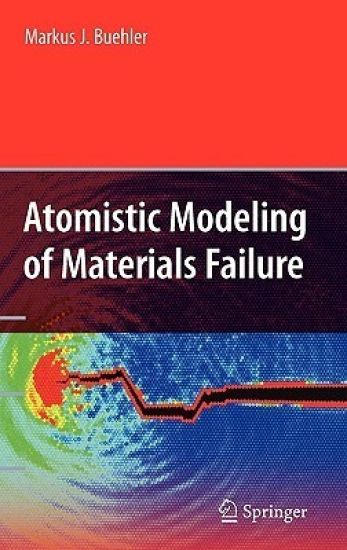
Atomistic Modeling of Materials Failure

Atomistic Modeling of Materials Failure

Markus J. Buehler

Springer-Verlag New York Inc.
2008
sidottu
Atomistic Modeling of Materials Failure is an introduction to molecular and atomistic modeling techniques applied to solid fracture and deformation. Focusing on a variety of brittle, ductile, geometrically confined and biological materials, this detailed overview includes computational methods at the atomic scale, and describes how these techniques can be used to model the dynamics of cracks and other deformation mechanisms. A full description of molecular dynamics (MD) as a numerical modeling tool covers the use of classical interatomic potentials and implementation of large-scale massively parallelized computing facilities in addition to the general philosophies of model building, simulation, interpretation and analysis of results. Readers will find an analytical discussion of the numerical techniques along with a review of required mathematical and physics fundamentals. Example applications for specific materials (such as silicon, copper, fibrous proteins) are provided as case studies for each of the techniques, areas and problems discussed. Providing an extensive review of multi-scale modeling techniques that successfully link atomistic and continuum mechanical methods, Atomistic Modeling of Materials Failure is a valuable reference for engineers, materials scientists, and researchers in academia and industry.
Atomistic Modeling of Materials Failure

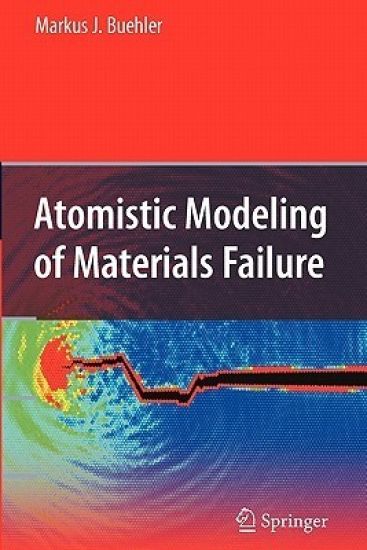
Atomistic Modeling of Materials Failure

Markus J. Buehler

Springer-Verlag New York Inc.
2010
nidottu
Atomistic Modeling of Materials Failure is an introduction to molecular and atomistic modeling techniques applied to solid fracture and deformation. Focusing on a variety of brittle, ductile, geometrically confined and biological materials, this detailed overview includes computational methods at the atomic scale, and describes how these techniques can be used to model the dynamics of cracks and other deformation mechanisms. A full description of molecular dynamics (MD) as a numerical modeling tool covers the use of classical interatomic potentials and implementation of large-scale massively parallelized computing facilities in addition to the general philosophies of model building, simulation, interpretation and analysis of results. Readers will find an analytical discussion of the numerical techniques along with a review of required mathematical and physics fundamentals. Example applications for specific materials (such as silicon, copper, fibrous proteins) are provided as case studies for each of the techniques, areas and problems discussed. Providing an extensive review of multi-scale modeling techniques that successfully link atomistic and continuum mechanical methods, Atomistic Modeling of Materials Failure is a valuable reference for engineers, materials scientists, and researchers in academia and industry.