Kirjojen hintavertailu. Mukana 12 390 323 kirjaa ja 12 kauppaa.

Kirjahaku

Etsi kirjoja tekijän nimen, kirjan nimen tai ISBN:n perusteella.

5 kirjaa tekijältä Marsha S. Collins

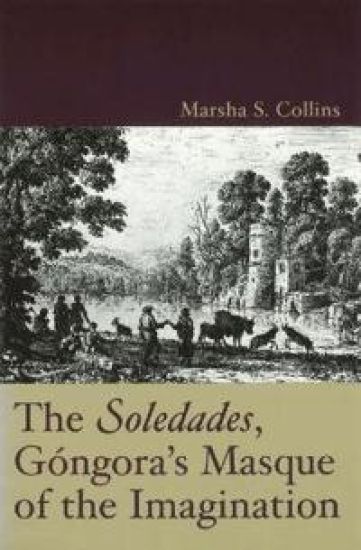
The ""Soledades"", Gongora's Masque of the Imagination

The ""Soledades"", Gongora's Masque of the Imagination

Marsha S. Collins

University of Missouri Press
2002
sidottu
Prince of Darkness or Angel of Light? The pastoral masterpiece the Soledades garnered both titles for its author, Luis de Gongora, one of Spain's premier poets. In The Soledades Gongora's Masque of the Imagination, Marsha S. Collins focuses on the brilliant seventeenth-century Spanish poet's contentious work of art. The Soledades have sparked controversy since they were first circulated at court in 1612-1614 and continue to do so even now, as Gongora has become for some critics the poster child of postmodernism. These perplexing 2,000 plus-line pastoral poems garnered endless debates over the value and meaning of the author's enigmatic, challenging poetry and gave rise to his reputation, causing his very name to become an English term for obscurity. Collins views these controversial poems in a different light, as a literary work that is a product of European court culture. She shows that the Soledades are in essence a court masque, an elaborate theatrical genre that combines a variety of cultural forms and that unfolds in the mind of the reader. Collins maintains that far from serving as an example of ""art for art's sake,"" the Soledades represent Gongora's bid to transform poetic language into a new kind of visionary discourse that allows readers to access secret truths invisible to the average member of the reading public. Each of the Collins's four chapters analyzes a different facet of the Soledades, offering readers varied means of approaching Gongora's great work and helping the audience read the poems with greater understanding and appreciation. The Soledades, Gongora's Masque of the Imagination demystifies the daunting, hermetic language of the Soledades to make this masterpiece of imperial Spain accessible to a new, and wider, circle of modern readers. Collins's book transports readers to the court of Habsburg Spain, offering a window to court culture - art, music, alchemy, emblems, garden architecture - and revealing the remarkable beauty of one of Spain's greatest literary masterpieces. Interdisciplinary and cross-cultural in approach, this book will appeal to all Hispanists, including those interested in the current ""New Baroque"" vogue in Hispanic scholarship, as well as specialists in Renaissance and Baroque English and European literature.
Novel Friendships and Community in Cervantes’s “Don Quixote”
Novel Friendships and Community in Cervantes’s “Don Quixote” analyzes Don Quixote through the critical lens of friendship studies. Turning a critical spotlight on the friendship of Don Quixote and Sancho Panza, this book examines the formation, growth, and dynamics of their friendship as the nucleus of the first modern novel in the West and the source of the work’s enduring power. Novel Friendships also studies the theme of amity in relationship to the evolving concept of community as a throughline in Cervantes’s fiction in, before, and after Don Quixote. This book shows the power of the arts, especially storytelling, to build friendships and community, and highlights how Cervantes deploys fiction to cultivate his readers’ friendship and create a community of readers. Novel Friendships suggests how today's readers may find that Cervantes's views on amity and community prove relevant to our contemporary world.
Imagining Arcadia in Renaissance Romance

Imagining Arcadia in Renaissance Romance

Marsha S. Collins

Routledge
2019
nidottu
From Theocritus’ Idylls to James Cameron’s Avatar, Arcadia remains an enduring presence in world culture and a persistent source of creative inspiration. Why does Arcadia still exercise such a powerful pull on the imagination? This book responds by arguing that in sixteenth-century Europe, a dramatic shift took place in imagining Arcadia. The traditional visions of Arcadia collided and fused with romance, the new experimental form of prose fiction, producing a hybrid, dynamic world of change and transformation. Emphasizing matters of fictional function and world-making over generic classification, Imagining Arcadia in Renaissance Romance analyzes the role of romance as a catalyst in remaking Arcadia in five, canonical sixteenth-century texts: Sannazaro’s Arcadia; Montemayor’s La Diana; Cervantes’ La Galatea; Sidney’s Arcadia; and Lope de Vega’s Arcadia. Collins’ analyses of the re-imagined Arcadia in these works elucidate the interplay between timely incursions into the fictional world and the timelessness of art, highlighting issues of freedom, identity formation, subjectivity and self-fashioning, the intersection of public and private activity, and the fascination with mortality.This book addresses the under-representation of Spanish literature in Early Modern literary histories, especially regarding the rich Spanish contribution to the pastoral and to idealizing fiction in the West. Companion chapters on Cervantes and Sidney add to the growing field of Anglo-Spanish comparative literary studies, while the book’s comparative and transnational approach extends discussion of the pastoral beyond the boundaries of national literary traditions. This book’s innovative approach to these fictional worlds sheds new light on Arcadia’s enduring presence in the collective imagination today.
Imagining Arcadia in Renaissance Romance

Imagining Arcadia in Renaissance Romance

Marsha S. Collins

Routledge
2016
sidottu
From Theocritus’ Idylls to James Cameron’s Avatar, Arcadia remains an enduring presence in world culture and a persistent source of creative inspiration. Why does Arcadia still exercise such a powerful pull on the imagination? This book responds by arguing that in sixteenth-century Europe, a dramatic shift took place in imagining Arcadia. The traditional visions of Arcadia collided and fused with romance, the new experimental form of prose fiction, producing a hybrid, dynamic world of change and transformation. Emphasizing matters of fictional function and world-making over generic classification, Imagining Arcadia in Renaissance Romance analyzes the role of romance as a catalyst in remaking Arcadia in five, canonical sixteenth-century texts: Sannazaro’s Arcadia; Montemayor’s La Diana; Cervantes’ La Galatea; Sidney’s Arcadia; and Lope de Vega’s Arcadia. Collins’ analyses of the re-imagined Arcadia in these works elucidate the interplay between timely incursions into the fictional world and the timelessness of art, highlighting issues of freedom, identity formation, subjectivity and self-fashioning, the intersection of public and private activity, and the fascination with mortality.This book addresses the under-representation of Spanish literature in Early Modern literary histories, especially regarding the rich Spanish contribution to the pastoral and to idealizing fiction in the West. Companion chapters on Cervantes and Sidney add to the growing field of Anglo-Spanish comparative literary studies, while the book’s comparative and transnational approach extends discussion of the pastoral beyond the boundaries of national literary traditions. This book’s innovative approach to these fictional worlds sheds new light on Arcadia’s enduring presence in the collective imagination today.